

China Comes
0
  • Home
  • Voices
  • Tastes
  • Decode
  • Futures
  • Unseen
    • Galleries
  • Playbook
    • About Us
    • Terms of Use
    • Privacy Policy
    • About
      • Services
      • Subscribe
– Advertisement –
China Comes
China Comes
China Comes
  • Home
  • Voices
    "We Sat Down and Talked": Solving a Parking Dispute in a Hutong
    “We Sat Down and Talked”: Solving a Parking Dispute in a Hutong
    Gen Z on 'Guochao': Patriotism or Just Fashion?
    Gen Z on ‘Guochao’: Patriotism or Just Fashion?
    Zhengzhou or Shanghai: The Real Costs and Rewards of Choosing Where to Live in China
    Zhengzhou or Shanghai: The Real Costs and Rewards of Choosing Where to Live in China
    The Pre-Made Meal Controversy: Is It Saving or Destroying Traditional Chinese Cuisine?
    The Pre-Made Meal Controversy: Is It Saving or Destroying Traditional Chinese Cuisine?
    Scan to Order: Progress or Regression? The Digital Duality of China’s Dining Scene
    Scan to Order: Progress or Regression? The Digital Duality of China’s Dining Scene
    Previous Next
  • Tastes
    No Label Needed: The Unbranded Regional Dishes Selling Thousands of Portions Daily
    No Label Needed: The Unbranded Regional Dishes Selling Thousands of Portions Daily
    From Shenyang's Zhongjie to Taiyuan Street: Finding the Soul in Northeast China's Retail Transformation
    From Shenyang’s Zhongjie to Taiyuan Street: Finding the Soul in Northeast China’s Retail Transformation
    A Day in Jiangsu: From Crispy Crab Roe Buns to Duck Blood Noodles
    A Day in Jiangsu: From Crispy Crab Roe Buns to Duck Blood Noodles
    Eating for the Crowd: The Digital Ritual of Mukbang in China
    Eating for the Crowd: The Digital Ritual of Mukbang in China
    Not Just for Tourists: Why Young Chinese Are Rediscovering Love for Traditional Snack Shops
    Not Just for Tourists: Why Young Chinese Are Rediscovering Love for Traditional Snack Shops
    Previous Next
  • Decode
    WeChat vs. Alipay: How Two Apps Reshaped Socializing and Payments in China
    WeChat vs. Alipay: How Two Apps Reshaped Socializing and Payments in China
    Stepping into a Traditional Chinese Medicine Pharmacy: Wisdom in Wooden Drawers
    Stepping into a Traditional Chinese Medicine Pharmacy: Wisdom in Wooden Drawers
    A Day in the Life of a Food Delivery Rider: The Capillaries of Urban China
    A Day in the Life of a Food Delivery Rider: The Capillaries of Urban China
    Beyond the QR Code: A Foreigner’s Journey Through China's Cashless Supermarkets
    Beyond the QR Code: A Foreigner’s Journey Through China’s Cashless Supermarkets
    Why Chinese Seniors Are on Douyin: The Other Side of the Digital Divide
    Why Chinese Seniors Are on Douyin: The Other Side of the Digital Divide
    Previous Next
  • Futures
    The Tech Park at 3 AM: How Chinese Engineers Define Speed and Innovation
    The Tech Park at 3 AM: How Chinese Engineers Define Speed and Innovation
    An American Designer's View of Shenzhen: Where No Prototyping Cycle is Impossible
    An American Designer’s View of Shenzhen: Where No Prototyping Cycle is Impossible
    "Made in China" 2.0: The Shift from Mass Production to Precision Engineering
    “Made in China” 2.0: The Shift from Mass Production to Precision Engineering
    Gardens That Breathe: Why Hangzhou’s Traditional Design Inspires Modern Urban Planning
    Gardens That Breathe: Why Hangzhou’s Traditional Design Inspires Modern Urban Planning
    Welcome to the Restaurant Where Your Food Arrives on a Drone
    Welcome to the Restaurant Where Your Food Arrives on a Drone
    Previous Next
  • Unseen
    • Galleries
    Beyond the Algorithm: How Young Chongqing Residents Navigate Their City Without GPS
    Beyond the Algorithm: How Young Chongqing Residents Navigate Their City Without GPS
    When GPS Fails: How Locals Navigate Chongqing’s Vertical City
    When GPS Fails: How Locals Navigate Chongqing’s Vertical City
    Lost in Chongqing: A Practical Guide to Finding Your Way Through China’s Vertical Metropolis
    Lost in Chongqing: A Practical Guide to Finding Your Way Through China’s Vertical Metropolis
    Urban Renewal in China: Balancing Modernization with the Charm of Local Street Life
    Urban Renewal in China: Balancing Modernization with the Charm of Local Street Life
    Previous Next
  • Playbook
    • About Us
    • Terms of Use
    • Privacy Policy
    • About
      • Services
      • Subscribe
    Labor Contracts in China: What to Look Out For Before Signing
    Labor Contracts in China: What to Look Out For Before Signing
    Taxes for Expats: A Basic Guide to the Chinese Tax System
    Taxes for Expats: A Basic Guide to the Chinese Tax System
    Navigating 'Wu Ye': The Power and Protocol of Chinese Property Management
    Navigating ‘Wu Ye’: The Power and Protocol of Chinese Property Management
    Top 10 Must-Have Apps for Your First Trip to China
    Top 10 Must-Have Apps for Your First Trip to China
    Previous Next
0
Trending Now
Jinzhou BBQ at Night: Charcoal, Beer, and the Social Code of Northeast China

Jinzhou BBQ at Night: Charcoal, Beer, and the Social Code of Northeast China

April 1, 2026
Dating Apps in China: How Tantan and Momo Actually Work

Dating Apps in China: How Tantan and Momo Actually Work

May 2, 2026
A Foreigner's Guide to Mastering Alipay and Taobao: Your Digital Life in China

A Foreigner’s Guide to Mastering Alipay and Taobao: Your Digital Life in China

April 26, 2026
Renting in China: A Guide to Finding a Safe Home via Apps in a New City

Renting in China: A Guide to Finding a Safe Home via Apps in a New City

April 30, 2026
China Comes
  • Home
  • Voices
    "We Sat Down and Talked": Solving a Parking Dispute in a Hutong
    “We Sat Down and Talked”: Solving a Parking Dispute in a Hutong
    Gen Z on 'Guochao': Patriotism or Just Fashion?
    Gen Z on ‘Guochao’: Patriotism or Just Fashion?
    Zhengzhou or Shanghai: The Real Costs and Rewards of Choosing Where to Live in China
    Zhengzhou or Shanghai: The Real Costs and Rewards of Choosing Where to Live in China
    The Pre-Made Meal Controversy: Is It Saving or Destroying Traditional Chinese Cuisine?
    The Pre-Made Meal Controversy: Is It Saving or Destroying Traditional Chinese Cuisine?
    Scan to Order: Progress or Regression? The Digital Duality of China’s Dining Scene
    Scan to Order: Progress or Regression? The Digital Duality of China’s Dining Scene
    Previous Next
  • Tastes
    No Label Needed: The Unbranded Regional Dishes Selling Thousands of Portions Daily
    No Label Needed: The Unbranded Regional Dishes Selling Thousands of Portions Daily
    From Shenyang's Zhongjie to Taiyuan Street: Finding the Soul in Northeast China's Retail Transformation
    From Shenyang’s Zhongjie to Taiyuan Street: Finding the Soul in Northeast China’s Retail Transformation
    A Day in Jiangsu: From Crispy Crab Roe Buns to Duck Blood Noodles
    A Day in Jiangsu: From Crispy Crab Roe Buns to Duck Blood Noodles
    Eating for the Crowd: The Digital Ritual of Mukbang in China
    Eating for the Crowd: The Digital Ritual of Mukbang in China
    Not Just for Tourists: Why Young Chinese Are Rediscovering Love for Traditional Snack Shops
    Not Just for Tourists: Why Young Chinese Are Rediscovering Love for Traditional Snack Shops
    Previous Next
  • Decode
    WeChat vs. Alipay: How Two Apps Reshaped Socializing and Payments in China
    WeChat vs. Alipay: How Two Apps Reshaped Socializing and Payments in China
    Stepping into a Traditional Chinese Medicine Pharmacy: Wisdom in Wooden Drawers
    Stepping into a Traditional Chinese Medicine Pharmacy: Wisdom in Wooden Drawers
    A Day in the Life of a Food Delivery Rider: The Capillaries of Urban China
    A Day in the Life of a Food Delivery Rider: The Capillaries of Urban China
    Beyond the QR Code: A Foreigner’s Journey Through China's Cashless Supermarkets
    Beyond the QR Code: A Foreigner’s Journey Through China’s Cashless Supermarkets
    Why Chinese Seniors Are on Douyin: The Other Side of the Digital Divide
    Why Chinese Seniors Are on Douyin: The Other Side of the Digital Divide
    Previous Next
  • Futures
    The Tech Park at 3 AM: How Chinese Engineers Define Speed and Innovation
    The Tech Park at 3 AM: How Chinese Engineers Define Speed and Innovation
    An American Designer's View of Shenzhen: Where No Prototyping Cycle is Impossible
    An American Designer’s View of Shenzhen: Where No Prototyping Cycle is Impossible
    "Made in China" 2.0: The Shift from Mass Production to Precision Engineering
    “Made in China” 2.0: The Shift from Mass Production to Precision Engineering
    Gardens That Breathe: Why Hangzhou’s Traditional Design Inspires Modern Urban Planning
    Gardens That Breathe: Why Hangzhou’s Traditional Design Inspires Modern Urban Planning
    Welcome to the Restaurant Where Your Food Arrives on a Drone
    Welcome to the Restaurant Where Your Food Arrives on a Drone
    Previous Next
  • Unseen
    • Galleries
    Beyond the Algorithm: How Young Chongqing Residents Navigate Their City Without GPS
    Beyond the Algorithm: How Young Chongqing Residents Navigate Their City Without GPS
    When GPS Fails: How Locals Navigate Chongqing’s Vertical City
    When GPS Fails: How Locals Navigate Chongqing’s Vertical City
    Lost in Chongqing: A Practical Guide to Finding Your Way Through China’s Vertical Metropolis
    Lost in Chongqing: A Practical Guide to Finding Your Way Through China’s Vertical Metropolis
    Urban Renewal in China: Balancing Modernization with the Charm of Local Street Life
    Urban Renewal in China: Balancing Modernization with the Charm of Local Street Life
    Previous Next
  • Playbook
    • About Us
    • Terms of Use
    • Privacy Policy
    • About
      • Services
      • Subscribe
    Labor Contracts in China: What to Look Out For Before Signing
    Labor Contracts in China: What to Look Out For Before Signing
    Taxes for Expats: A Basic Guide to the Chinese Tax System
    Taxes for Expats: A Basic Guide to the Chinese Tax System
    Navigating 'Wu Ye': The Power and Protocol of Chinese Property Management
    Navigating ‘Wu Ye’: The Power and Protocol of Chinese Property Management
    Top 10 Must-Have Apps for Your First Trip to China
    Top 10 Must-Have Apps for Your First Trip to China
    Previous Next
0
Trending Now
Jinzhou BBQ at Night: Charcoal, Beer, and the Social Code of Northeast China

Jinzhou BBQ at Night: Charcoal, Beer, and the Social Code of Northeast China

April 1, 2026
Dating Apps in China: How Tantan and Momo Actually Work

Dating Apps in China: How Tantan and Momo Actually Work

May 2, 2026
A Foreigner's Guide to Mastering Alipay and Taobao: Your Digital Life in China

A Foreigner’s Guide to Mastering Alipay and Taobao: Your Digital Life in China

April 26, 2026
Renting in China: A Guide to Finding a Safe Home via Apps in a New City

Renting in China: A Guide to Finding a Safe Home via Apps in a New City

April 30, 2026
China Comes > Blog > Playbook > Opening a Chinese Bank Account on a Tourist or Work Visa: A Practical Guide
Playbook

Opening a Chinese Bank Account on a Tourist or Work Visa: A Practical Guide

Posted by admin May 5, 2026
Opening a Chinese Bank Account on a Tourist or Work Visa: A Practical Guide
Shares
READ NEXT
Taxes for Expats: A Basic Guide to the Chinese Tax System

The Reality of Opening a Bank Account in China

When Li Wei, a software engineer from Berlin, arrived in Shanghai for his new job, he expected one thing to be easy: opening a bank account. He had the right visa, a valid passport, and an employment contract. Instead, he was turned away by three different branches before finally succeeding at a small community branch of China Merchants Bank after two hours of explaining his source of income.

Li’s experience is not unique. Since 2022, China has tightened its anti-money laundering (AML) regulations significantly. For foreigners, this means that walking into a bank with just a passport and visa is rarely enough. The process has shifted from a simple administrative task to a compliance-heavy verification step.
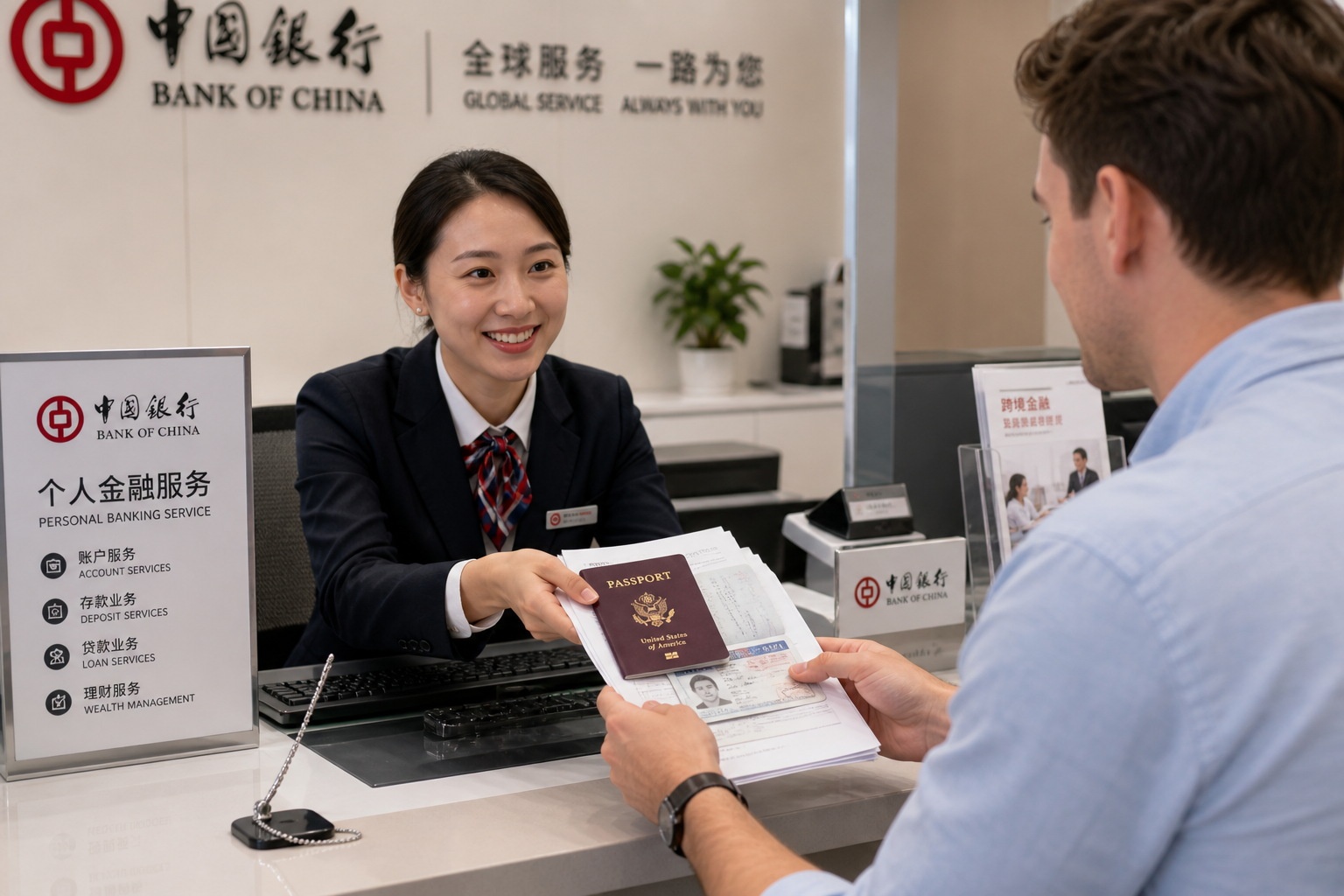
Foreign applicant submitting passport and visa documents at a Chinese bank counter for account opening
The verification process requires strict documentation under current anti-money laundering regulations.

Why Is It So Strict Now?

To understand the difficulty, you must understand the context. China’s financial system operates on real-name registration and strict transaction monitoring. In recent years, authorities have cracked down on fraudulent accounts used for illegal fund transfers or online gambling.

As a result, bank tellers are under immense pressure to verify every non-resident account thoroughly. They need proof of your identity, your legal status in China, and crucially, the purpose of the account. If you cannot clearly explain why you need a local bank account, or if your answer seems inconsistent with your visa type, the application will likely be rejected.

Tourist Visas (L Visa) vs. Work Residency Permits (Z/R Visa)

The ease of opening an account depends heavily on your visa status.

1. Tourist Visas (L Visa)

Technically, Chinese banking regulations allow foreigners with short-term tourist visas to open accounts. However, in practice, most major banks will refuse these applications. Tellers often lack the authority or willingness to process a long-term account for someone whose stay may last only a few weeks.

If you are on a tourist visa and insist on opening an account, you will likely need to visit smaller, local branches rather than large commercial hubs. You must provide extensive proof of your ties to China, such as hotel bookings, return flight tickets, and sometimes even a letter from your employer or university in your home country.

2. Work Visas (Z Visa) and Residence Permits

This is the most straightforward path. Once you have converted your Z visa into a Temporary Residence Permit, banks view you as a stable, long-term resident. You will need to provide:

  • Your valid passport.
  • Your valid Chinese residence permit.
  • A certificate of employment or a letter from your employer confirming your salary and position.

Even with these documents, some banks may still ask for additional proof, such as a local rental contract or registration form from the police station.

Which Banks Are Most Foreigner-Friendly?

Not all banks treat foreigners equally. The “Big Four” state-owned banks (ICBC, CCB, ABC, BOC) have vast networks but are often bureaucratic and slow to adapt to foreign needs. Branches in business districts or near international communities tend to be more helpful.
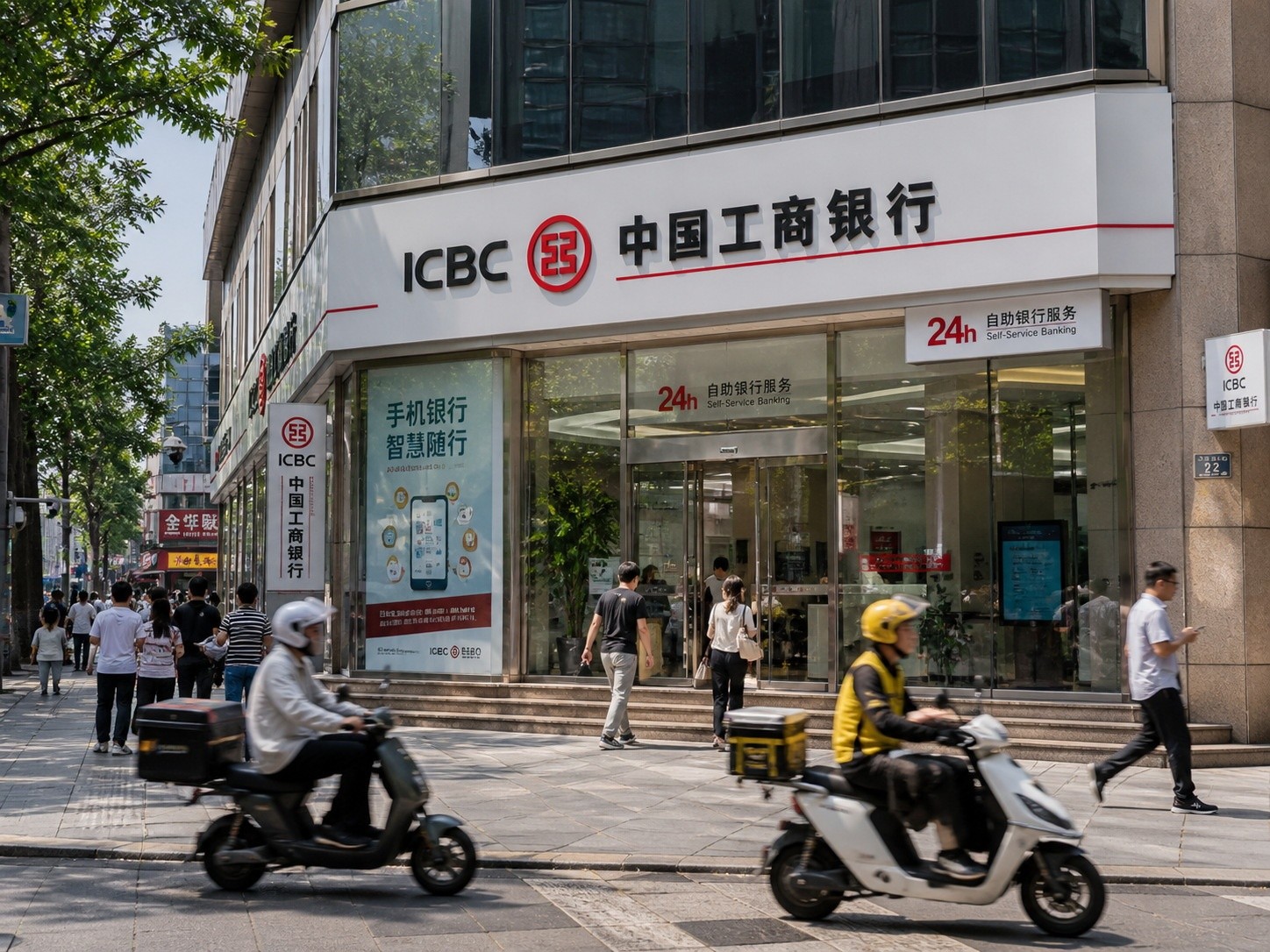
Modern exterior of a major Chinese bank branch like ICBC or CMB in an urban setting
Major banks like China Merchants Bank are often more accessible to foreigners than smaller local branches.

Top Recommendations:

  • China Merchants Bank (CMB): Widely regarded as the most service-oriented for foreigners. Their app interface has an English mode, and staff in major cities are generally more accustomed to international clients.
  • Industrial and Commercial Bank of China (ICBC): The largest bank by assets. While bureaucratic, their branches in Beijing’s Sanlitun or Shanghai’s Jing’an district often have dedicated foreign language services.
  • Bank of Communications: A solid alternative with a growing number of English-speaking staff in tier-1 cities.

Avoid smaller rural commercial banks unless you are applying for your first account and cannot get service elsewhere; they may lack the training to handle foreign compliance checks.

The Essential Document Checklist

Before visiting a branch, prepare these documents. Bring originals and clear photocopies of every page.

  1. Passport: Must be valid for at least six more months.
  2. Valid Visa/Residence Permit: Tourist visas are risky; residence permits are preferred.
  3. Proof of Address: A rental contract stamped by the local police station (PSB) is the gold standard. Some banks accept utility bills or a letter from your employer confirming your address.
  4. Phone Number: You must have a Chinese SIM card registered under your name. Banks will send a verification code to this number during account setup.

Navigating the Branch Visit
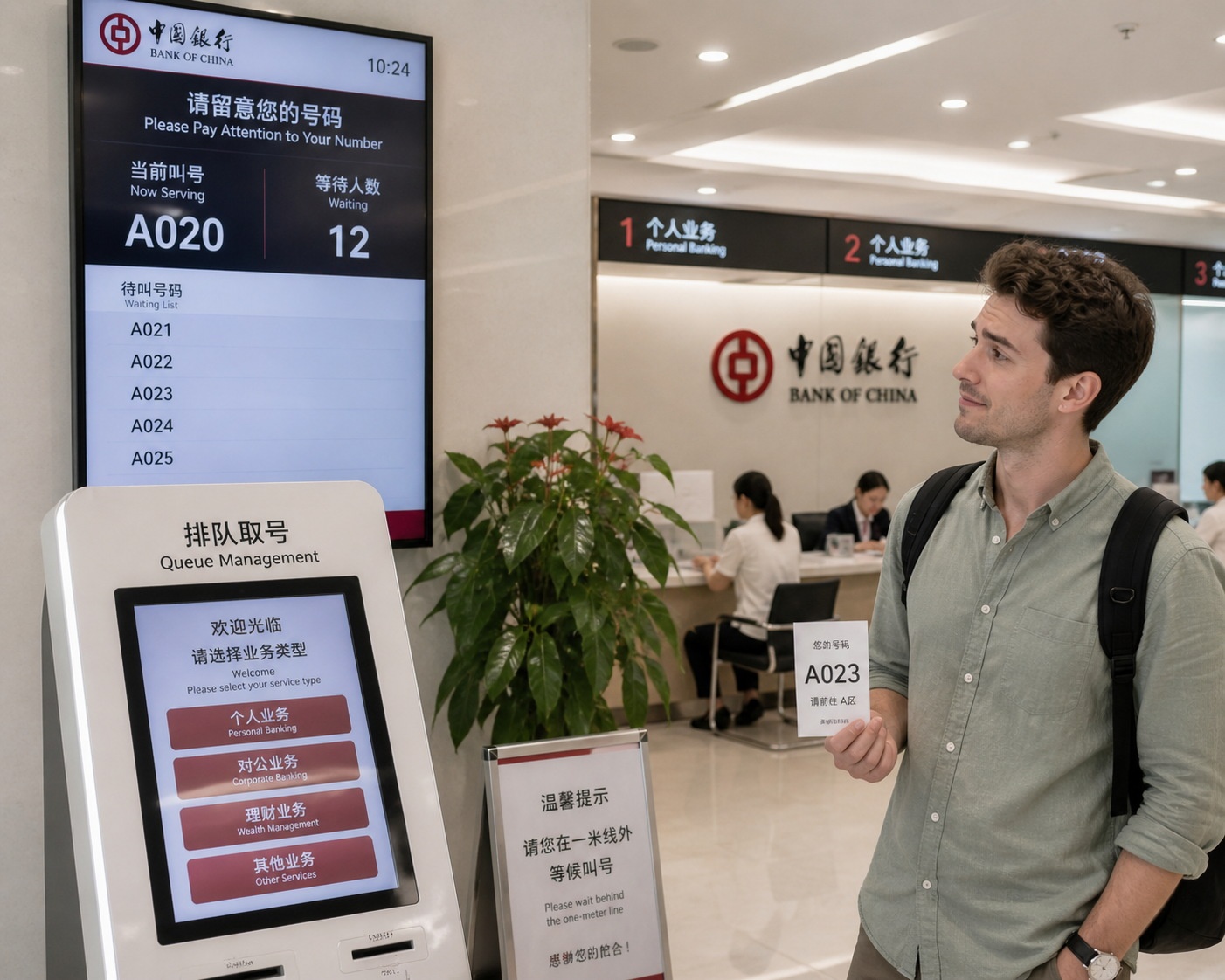
Foreign customer waiting for their turn at a Chinese bank branch using a queue ticket system
Appointments are often required in major cities to avoid long waits.

Step 1: Appointment and Arrival

Many branches in Shanghai, Beijing, and Shenzhen now require online appointments via their WeChat official accounts. Arriving without an appointment may mean waiting for days.

Step 2: The Interview

You will be separated from the general queue and taken to a counter or manager’s office. Expect questions such as:

  • “What is your job title?”
  • “Who is your employer?”
  • “Why do you need this account? (e.g., paying rent, receiving salary)”

Keep your answers simple and consistent with your documents. Do not mention investing in stocks or crypto unless you are prepared to provide extensive additional documentation.

Step 3: The Account Type

You will likely be issued a “Class II” account initially. This means there are daily transaction limits (often around 10,000 RMB). To upgrade to a “Class I” account with higher limits, you may need to provide additional proof of income or return after a few months.

Connecting Your Card to Digital Payments

In China, a bank card is useless without its digital counterpart. Once your account is active, immediately download the WeChat Pay and Alipay apps.

1. Go to “Me” > “Services” > “Wallet” in WeChat.
2. Click “Cards” and select “Add a Bank Card.”
3. Enter your card number, name (as it appears on your passport), and ID/passport number.
4. Verify via the SMS code sent to your Chinese phone.

Alipay follows a similar process but is often more user-friendly for foreigners due to its integrated verification system with Alipay’s own identity checks.

Final Tips

Patience is your most important asset. If one branch rejects you, do not despair. Try a different branch, preferably in an area with many expats. Policies can also change frequently; always call the bank’s customer service line or check their official WeChat account for the latest requirements before heading out.

Tags: Alipay for foreigners China anti-money laundering rules China banking guide Foreigner visa China Open bank account in China WeChat Pay foreigner

What’s your reaction?

Love
0
Sad
0
Happy
0
Sleepy
0
Angry
0
Dead
0
Wink
0
Shares
Share on Facebook Share on Twitter Share on Pinterest Share on Email
admin May 5, 2026
Previous Article Navigating Dianping: How to Spot Fake Reviews and Find Real Gems in China Navigating Dianping: How to Spot Fake Reviews and Find Real Gems in China
Next Article Breakfast Etiquette: The Unspoken Rules of Snagging a Seat Breakfast Etiquette: The Unspoken Rules of Snagging a Seat

Leave a Reply

View Comments

Leave a Reply Cancel reply

Your email address will not be published. Required fields are marked *

– Advertisement –

Latest Posts

Slow Cooking for Weekends: Why Urban Youth Are Trading Instant Meals for Labor-Intensive Regional Classics

Slow Cooking for Weekends: Why Urban Youth Are Trading Instant Meals for Labor-Intensive Regional Classics

May 9, 2026
Beyond Cats: The Rise of Owl, Alpaca, and Raccoon Cafes

Beyond Cats: The Rise of Owl, Alpaca, and Raccoon Cafes

May 8, 2026
City Living Rooms: Why 24-Hour Bookstores Are Thriving in China

City Living Rooms: Why 24-Hour Bookstores Are Thriving in China

May 8, 2026
No Label Needed: The Unbranded Regional Dishes Selling Thousands of Portions Daily

No Label Needed: The Unbranded Regional Dishes Selling Thousands of Portions Daily

May 8, 2026

Instagram

Explore Destinations

  • Decode79
  • Futures69
  • Playbook155
  • Pulse82
  • Tastes106
  • Unseen63
  • Voices61

You Might Also Enjoy

Navigating 'Wu Ye': The Power and Protocol of Chinese Property Management
Playbook

Navigating ‘Wu Ye’: The Power and Protocol of Chinese Property Management

In China, your property management company (Wuye) is more than just maintenance; it’s your administrative hub. Here is a practical ...

Posted by admin May 8, 2026
Top 10 Must-Have Apps for Your First Trip to China
Playbook

Top 10 Must-Have Apps for Your First Trip to China

Cash is barely used in China, and navigation, payments, and even doctor visits run through smartphones. Here is a practical, ...

Posted by admin May 7, 2026
The WeChat Power-User: 5 Hacks Even Locals Don't Know
Playbook

The WeChat Power-User: 5 Hacks Even Locals Don’t Know

WeChat is China's digital operating system, but most users only scratch the surface. Discover five practical settings and workflows that ...

Posted by admin May 7, 2026
Load More

Follow US on Social

Facebook like
Twitter follow
Pinterest pin
Instagram follow

Quick Links

  • About Us
  • Privacy Policy
  • Terms of Use

Useful Tips

  • Advertise
  • Online Best
  • Subscribe

Find Us on Socials

Don't let your life pass you by. Let's find some beautiful place to get lost.

© 2019–2026 Chinacomes with Love in Beijing, China.

Our website uses cookies to improve your experience. Learn more about: cookie policy

Accept

Join Newsletter

Let's find some beautiful place to get lost.
Please accept the terms of our newsletter. Please input your email address. That email is already subscribed. Your address has been added.