
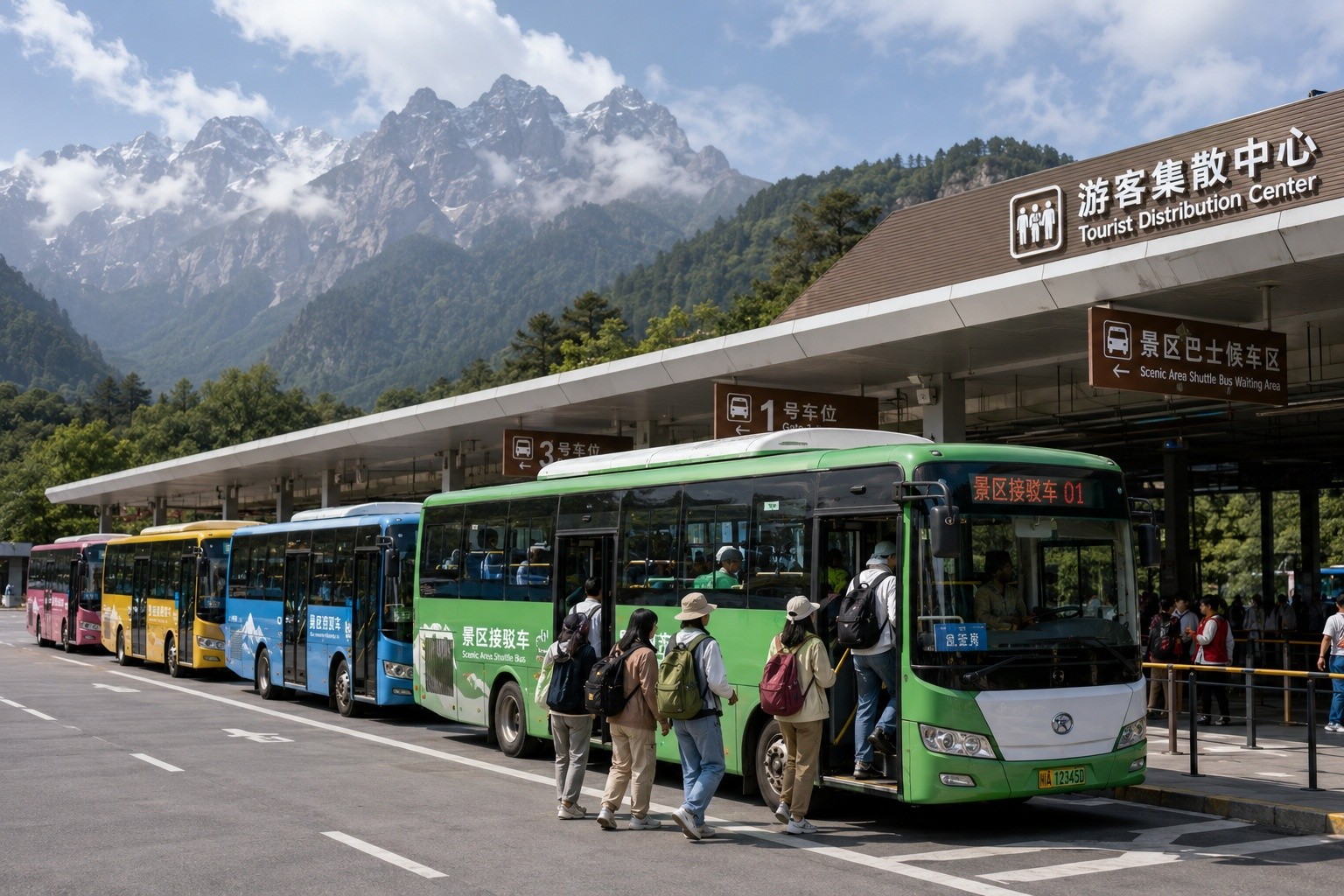

The Parking Surprise
Imagine arriving at the foot of Mount Huangshan (Yellow Mountain) or Zhangjiajie after a long drive. You expect to park your car, buy a ticket, and hike up. Instead, you find yourself parking in a massive, empty lot several kilometers away from the actual mountain entrance.
You are not lost. This is by design. In China’s most famous natural scenic areas, private cars are generally banned from accessing the core zones during peak seasons or permanently. To enter, visitors must park at an external “Tourist Distribution Center” and transfer to official shuttle buses, cable cars, or trains.
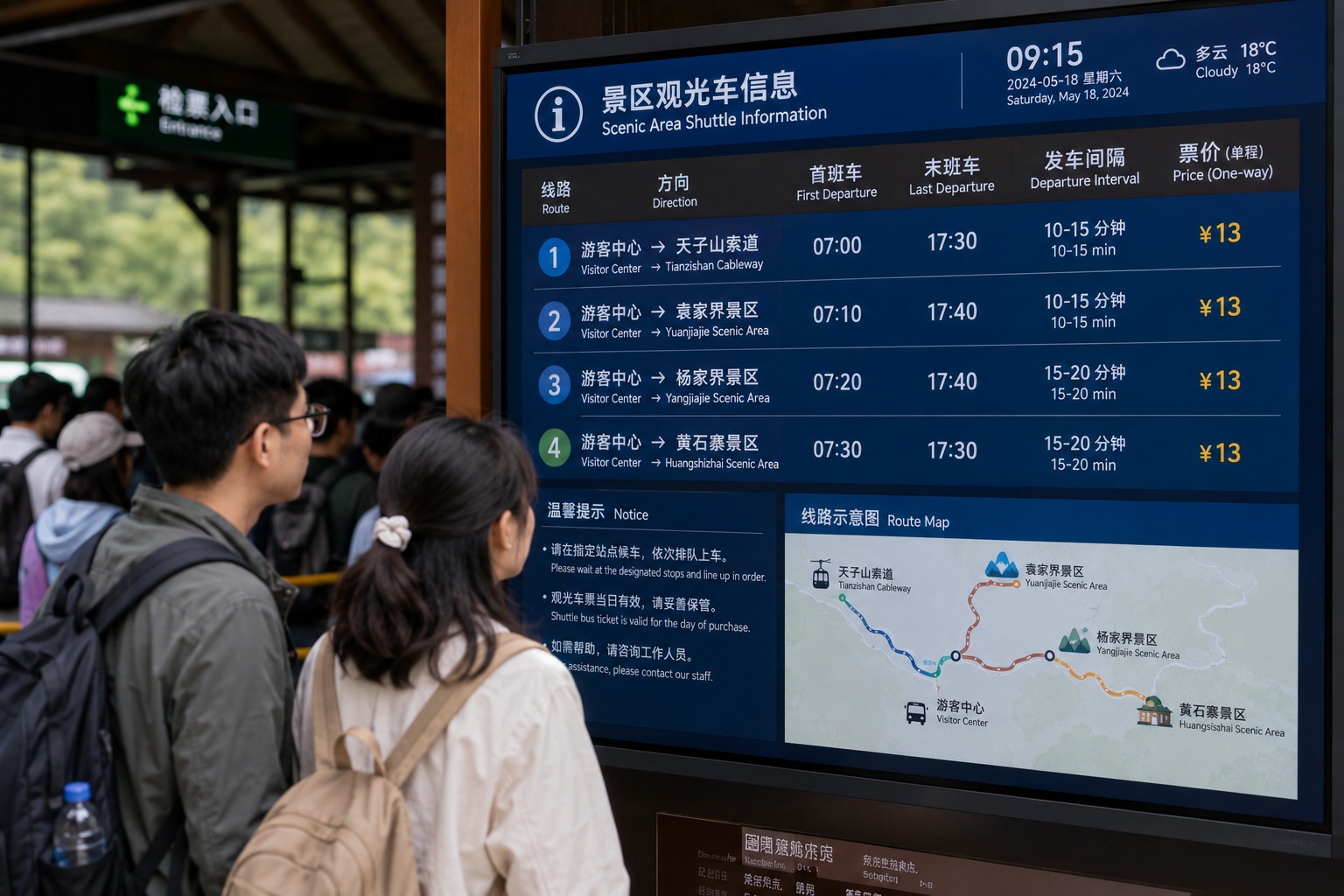
Why Not Just Drive Up?
If you live in Europe or North America, this might feel like unnecessary bureaucracy. But for China, it is a mix of environmental protection, crowd control, and safety.
1. Environmental Preservation
China’s top-tier scenic spots (known as “5A” attractions) are often fragile ecosystems. Thousands of cars emitting exhaust fumes in narrow valley roads would destroy the air quality that tourists come to enjoy. Banning private vehicles reduces carbon emissions and noise pollution, keeping the mountain quiet for everyone.
2. Managing Extreme Crowds
During holidays like Golden Week (early October) or Chinese New Year, popular spots see hundreds of thousands of visitors daily. If every tourist drove their own car, traffic jams would stretch for miles, making it impossible to enter the park at all. Centralized shuttle buses move people in large groups efficiently, acting like arteries for the mountain.
3. Safety on Steep Terrain
Many Chinese mountains have steep, winding roads that are dangerous for unaccustomed drivers. By using professional drivers and standardized buses, scenic areas reduce the risk of accidents caused by fatigue or unfamiliarity with local road conditions.
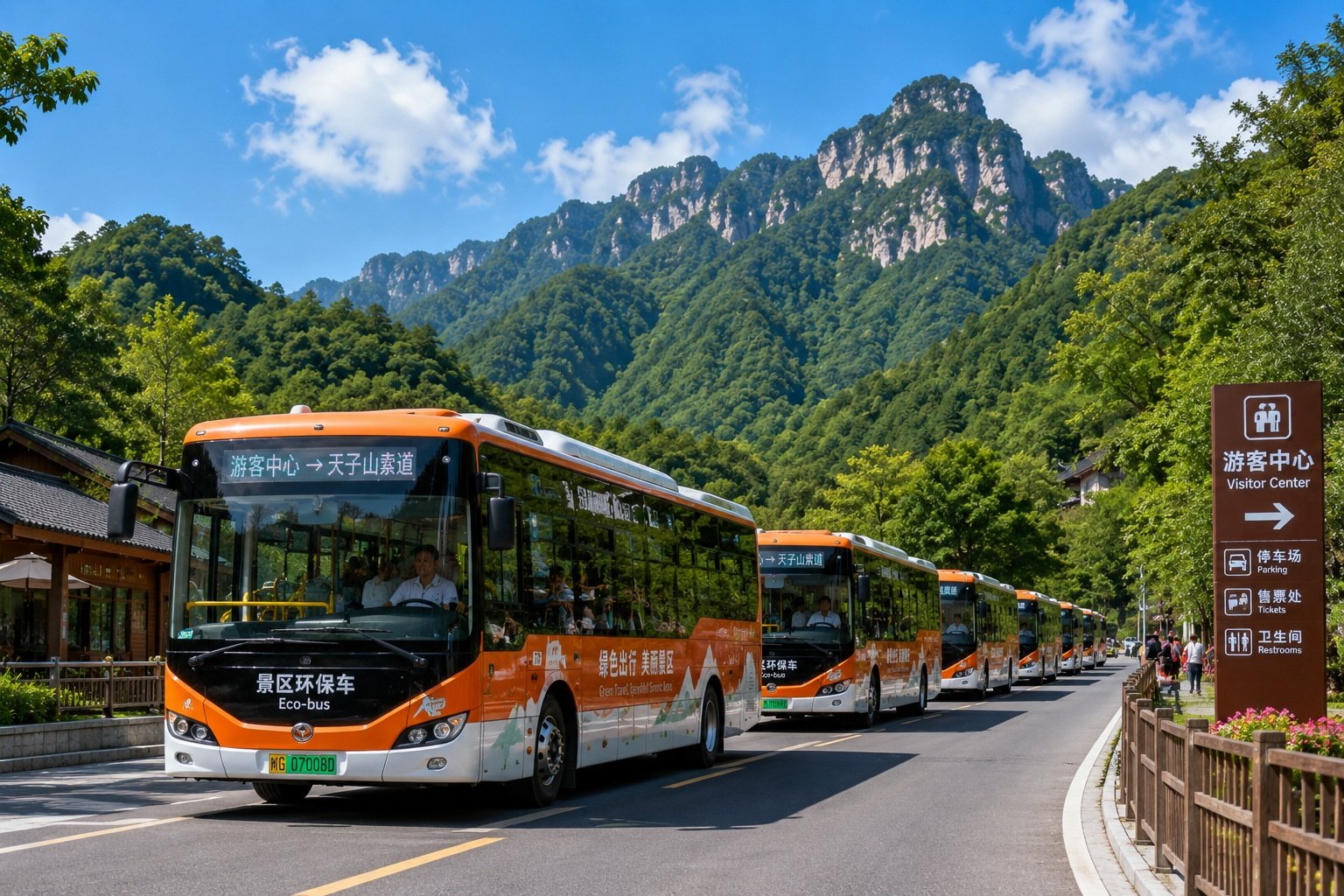
The “Eco-Bus” Fee: What to Expect
Here is where it gets tricky for foreign travelers. The shuttle bus fee is almost always mandatory, but it is rarely included in the main entrance ticket price.
You will see two separate costs:
- Entrance Ticket: Grants you access to the scenic area boundaries.
- Shuttle Bus / Eco-Bus Pass: Covers transport from the parking lot to the trailhead or cable car station. This typically costs between 20 and 50 RMB ($3–$7 USD) per person, one way or round trip.
You cannot enter the mountain without this pass. It is not a scam; it is a operational cost for maintaining the transport system that keeps the site accessible and protected. Without it, the main gates would be closed to pedestrians anyway due to safety regulations.
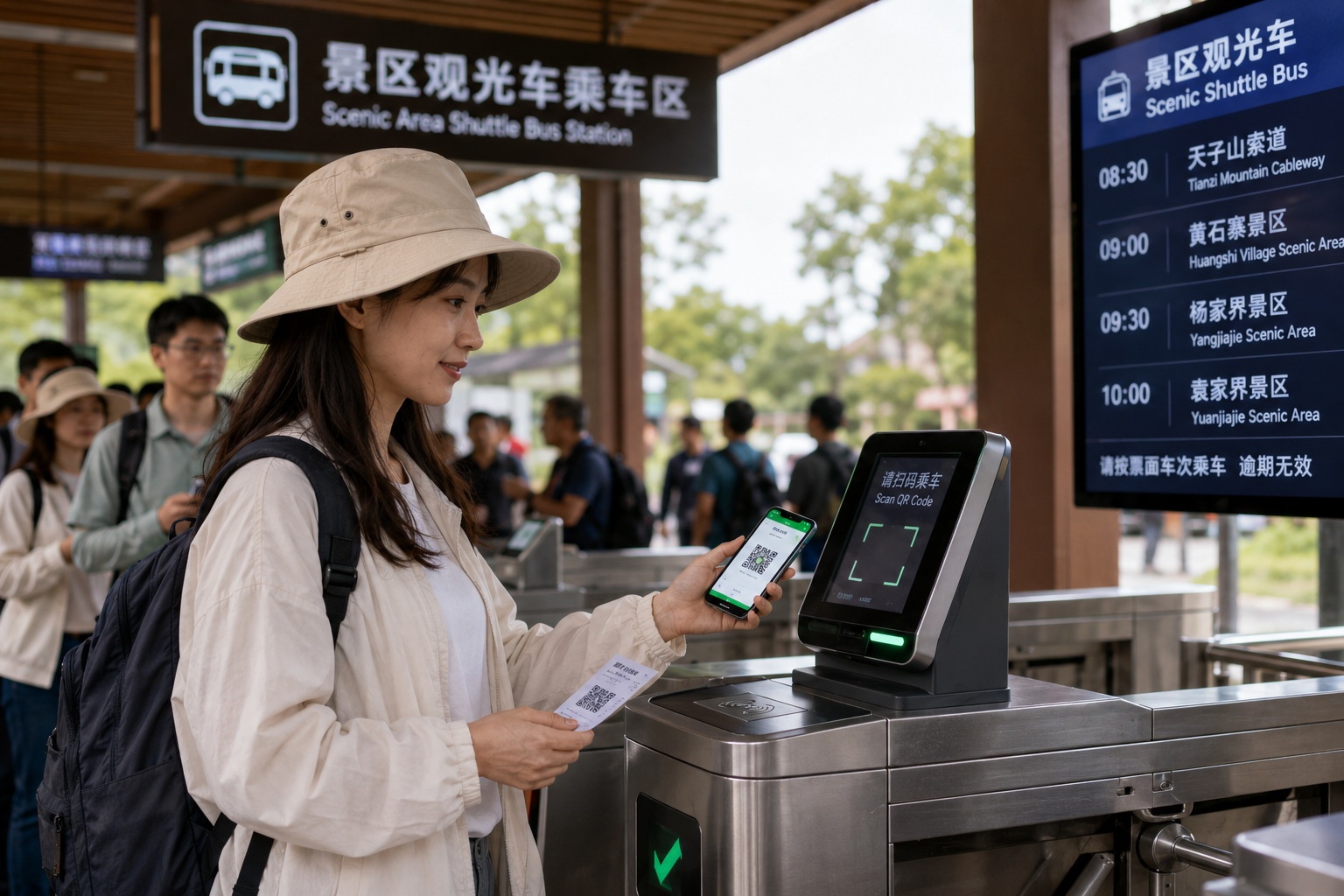
How to Plan Your Visit
To avoid stress, treat the shuttle bus not as a hassle, but as part of the experience. Here is how locals and savvy travelers handle it:
1. Arrive Early or Late
The longest queues for shuttle buses happen between 8:00 AM and 10:00 AM. If you can take an early morning bus (before 7:30 AM) or return in the late afternoon, you will bypass the worst crowds. Many travelers choose to stay overnight inside the scenic area to wake up with fewer people.
2. Check Cable Car Queues
The shuttle bus only gets you to the base of the cable car. The real bottleneck is often the lift itself. Use apps like Trip.com or Ctrip to check real-time queue times if available, or simply ask staff at the transfer center for the least crowded route.
3. Keep Small Change
While most places accept digital payments (Alipay/WeChat), having some cash is useful for small purchases or emergencies. However, most shuttle buses now have automated ticket machines or contactless card readers at the gates, so you rarely need to queue at a manual counter.
The Local Perspective
Do locals complain? Occasionally, yes. The queues can be long during holidays. But generally, residents understand the trade-off. They see the alternative: choked traffic and polluted valleys. For many Chinese families, taking the scenic shuttle bus is a safe, predictable way to enjoy nature without the stress of navigating mountain roads.
Ultimately, this system reflects a broader shift in China’s tourism model: moving from “mass quantity” to “managed quality.” It might feel less free than driving yourself, but it ensures that these mountains remain accessible and beautiful for generations to come.