

The Movable Banquet at 300 km/h
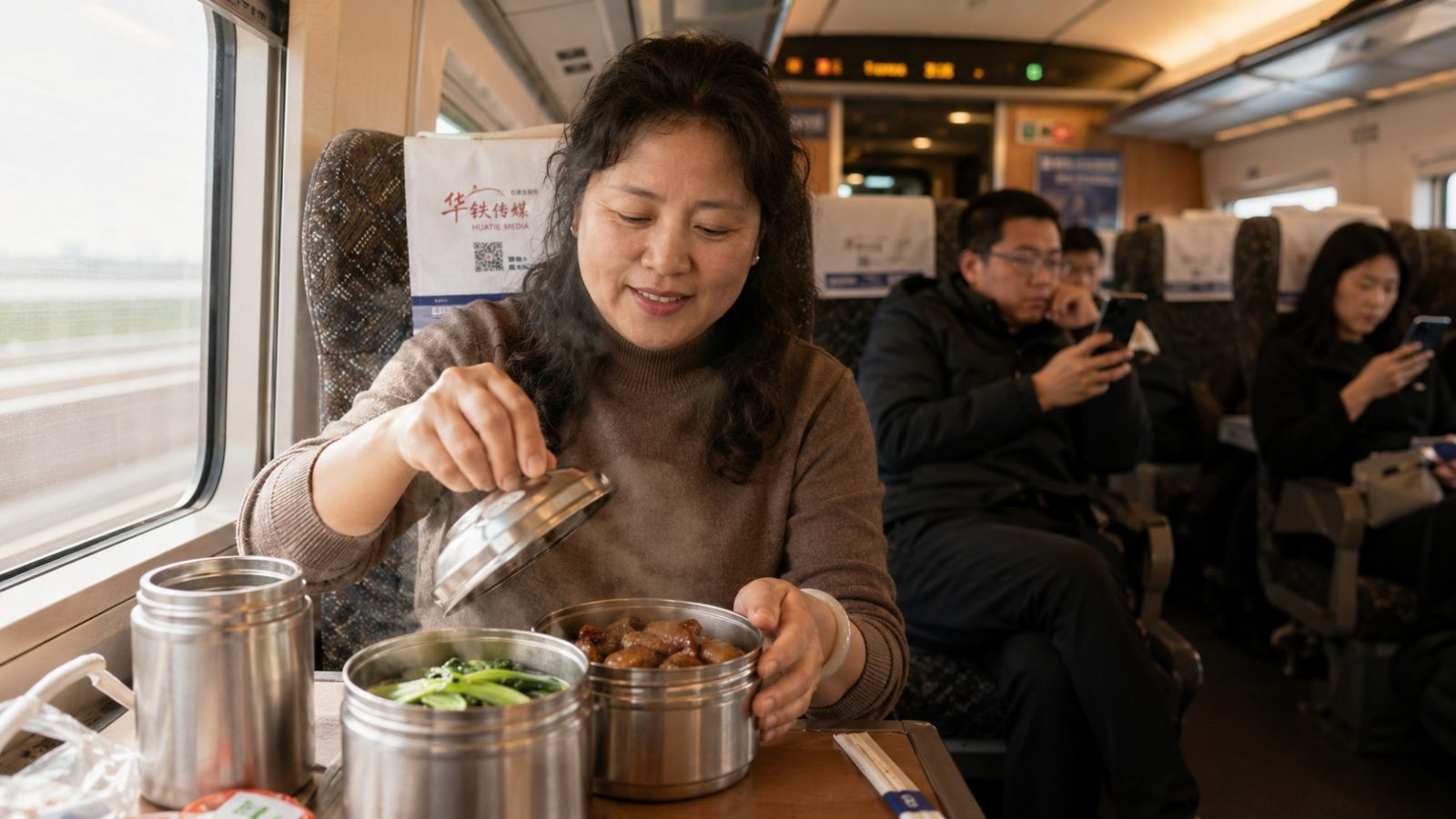
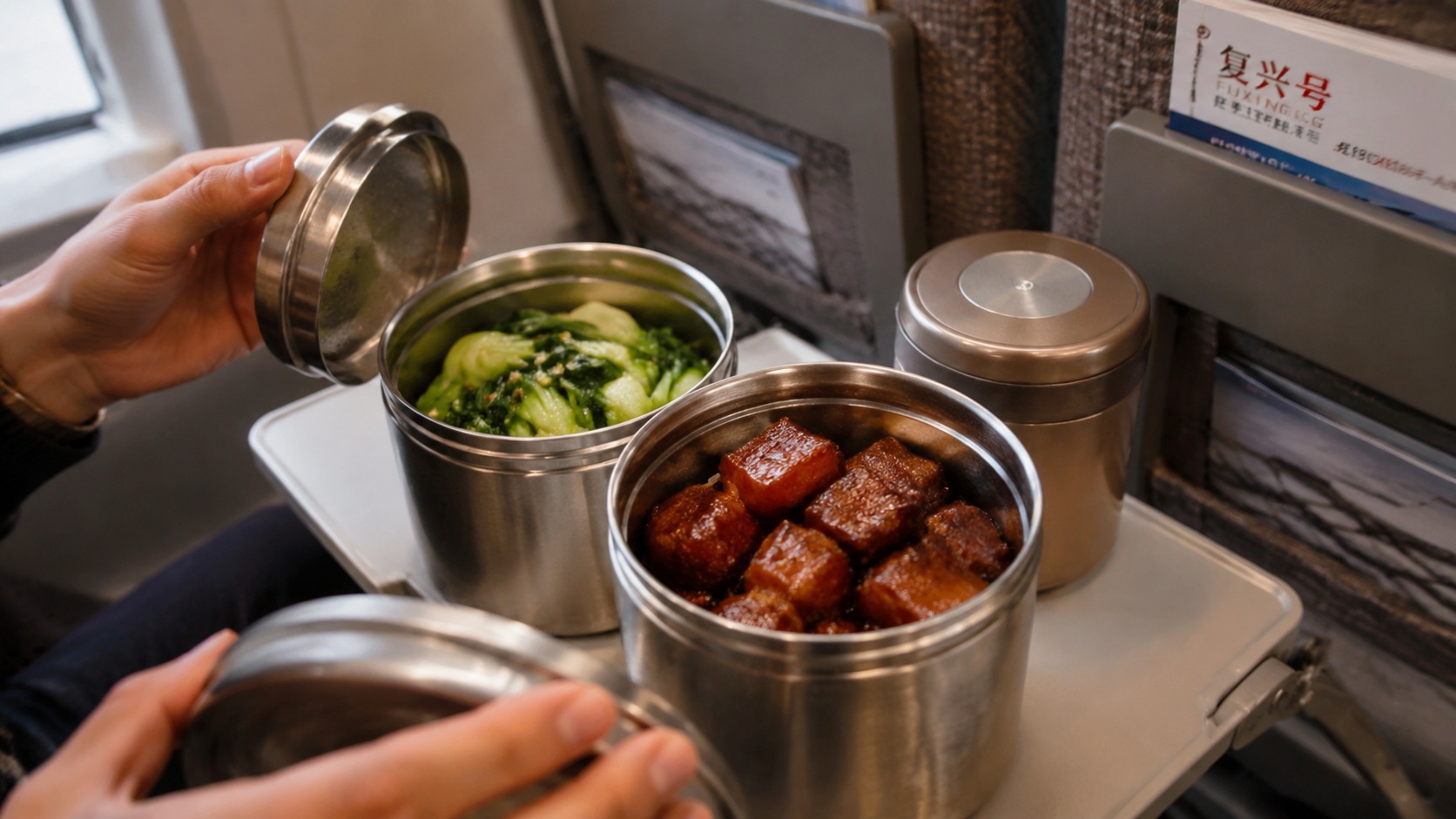
Imagine sitting in seat 12A of a Chinese high-speed train. The carriage is silent, air-conditioned, and glides smoothly through the countryside at 300 kilometers per hour. Then, a soft *click* breaks the quiet. A middle-aged woman across the aisle unlatches two large, stainless-steel thermos containers. She doesn’t pull out a sad, packaged sandwich or a lukewarm convenience store bento. Instead, she reveals steaming braised pork belly, bright green stir-fried bok choy, and pickled vegetables, all arranged neatly on disposable plates. Within minutes, the seatback pocket is no longer just for magazines; it’s a dining table.
This scene is surprisingly common on China’s extensive high-speed rail network. While international travelers often expect a standardized, pre-packaged meal service like airlines offer, Chinese passengers frequently opt for what locals call “carrying food” (dai fan). It is a pragmatic, sensory-rich ritual that clashes with the sterile efficiency of modern travel but perfectly aligns with deep-seated cultural habits.
The Obsession with Hot, Home-Cooked Food
Why go through the trouble? The answer lies in a fundamental cultural difference regarding food. In many Western countries, especially in the UK or Northern Europe, cold lunches on trains are a normalized part of commuting culture. A cheese sandwich and an apple are considered sufficient fuel for a journey.
In China, however, food is rarely viewed merely as fuel. It is comfort, memory, and care. There is a strong cultural aversion to eating “cold food” (leng shi) while traveling, as it is believed to be hard on the stomach and lacking in nourishment. The ideal travel meal must be hot, freshly cooked, and familiar—tasting like something a mother or grandmother would make.
This is why the thermos flask is the unsung hero of Chinese rail travel. These aren’t just for coffee; they are specialized containers designed to keep soup, stew, and rice warm for hours. The smell of garlic, star anise, and soy sauce drifting through the air-conditioned cabin is not a sign of poor hygiene, but a signal that someone is about to have a proper meal.
Price, Taste, and the Logic of Practicality
Beyond culture, there is a sharp economic logic at play. Chinese high-speed trains do offer meals for purchase, typically ranging from 35 to 80 RMB ($5–$11 USD). While these bento boxes are increasingly varied, many passengers find them overpriced for what is essentially industrial-grade cafeteria food. The rice can be mushy, the vegetables often overcooked, and the flavors uniform.
In contrast, a homemade meal costs a fraction of that price. More importantly, it offers superior taste control. A traveler might prepare their favorite spicy mapo tofu or a delicate steamed fish, knowing exactly how it was seasoned. For many, the difference between a 50-RMB train bento and a 10-RMB home-cooked lunch is not just money—it’s dignity and satisfaction.
This reflects a broader trend in Chinese consumer behavior: practicality over pretense. Young urbanites and older generations alike prefer value and quality. They are willing to spend on experiences like travel, but they are not willing to compromise on the basic pleasure of a good meal. The “train feast” is a small act of rebellion against the standardization of modern life.
Community, Controversy, and the Smell of Home
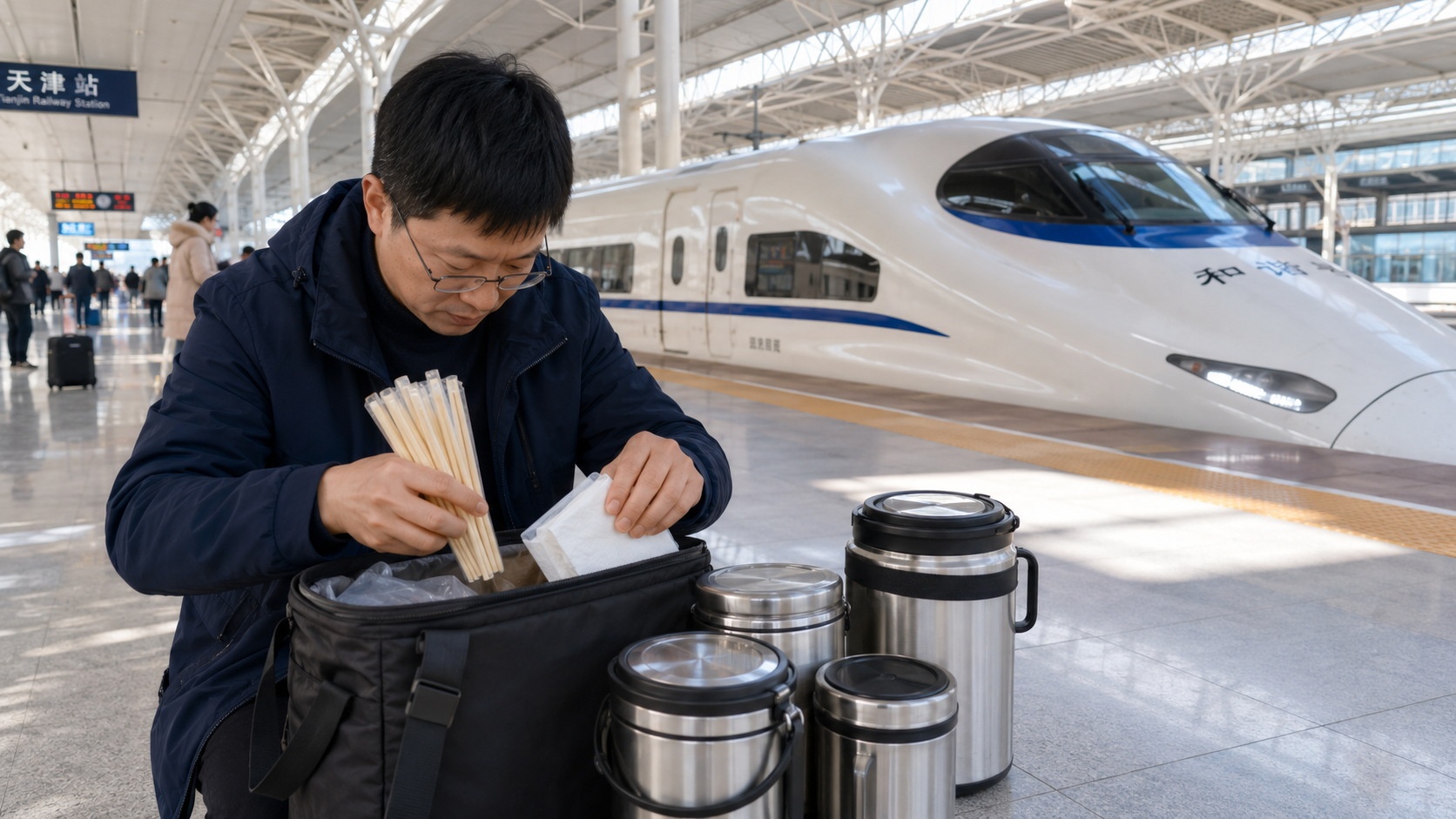
This practice does spark occasional debate. Some passengers complain about strong odors—like durian or fermented tofu—lingering in the enclosed space. Others worry about hygiene or the mess of disposable chopsticks. Train staff occasionally remind passengers to be mindful of their food choices, preferring neutral smells like steamed buns or noodles over pungent dishes.
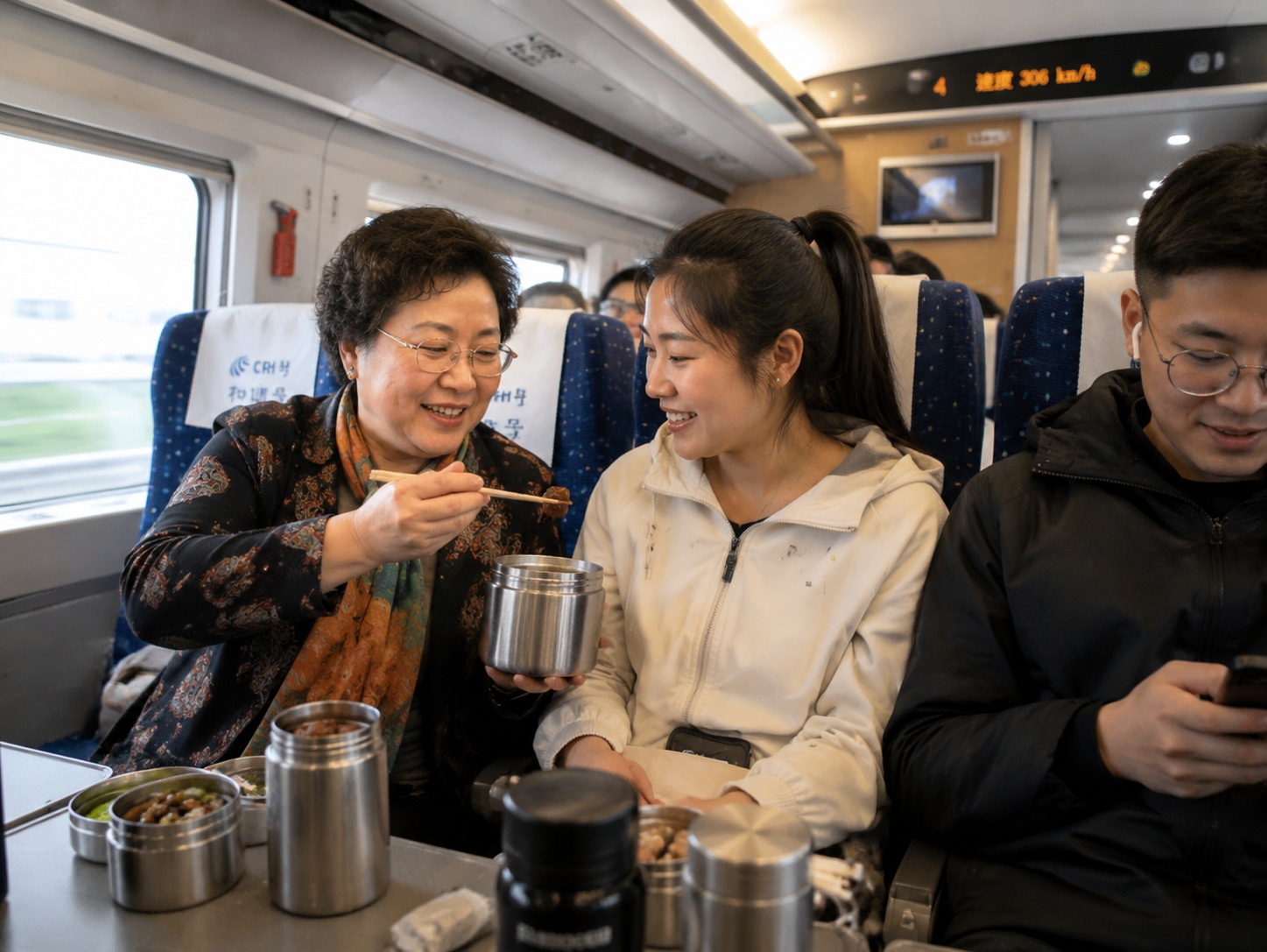
Yet, the phenomenon persists because it serves a social function too. Sharing food is a primary way Chinese people build rapport. It is not uncommon for a passenger to offer a taste of their homemade dumplings to a neighbor, instantly breaking the ice in a sea of strangers. The train carriage, for a few hours, becomes an extension of the dining room table.
More Than Just a Meal
When you see a Chinese traveler unpacking a multi-dish meal on a high-speed train, don’t just see “messy” or “unconventional.” See a person asserting their comfort in a fast-moving world. It is a reminder that despite China’s rapid technological advancement and hyper-modern infrastructure, the core of daily life remains rooted in traditional values: the importance of family, the joy of shared meals, and the belief that no matter how far you go, home should always taste like home.