

The Battle for the Park Bench
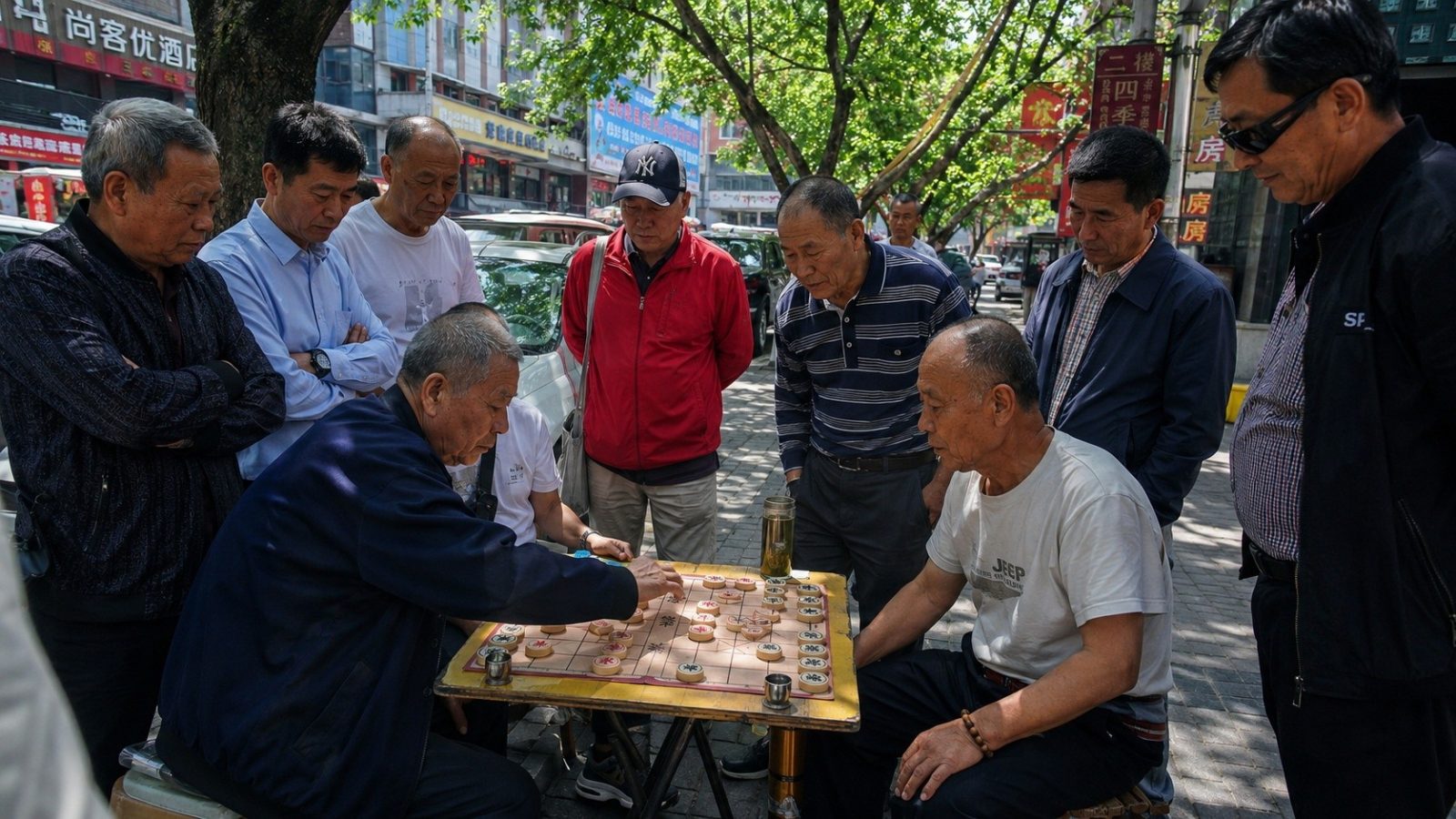
If you walk past any public park or tree-lined sidewalk in a Chinese city during the day, you might hear it before you see it: a sharp clack of wood on wood, followed by a collective gasp from a circle of onlookers.
There they are. Two old men, faces etched with decades of life, hunched over a small, worn folding table. Between them lies a board divided into two halves by a river—the Chu River and Han Border. This is Chinese Chess, or Xiangqi, and for these two players, this isn’t just a game. It’s a war.
A Silent Roar: The Rules of Engagement
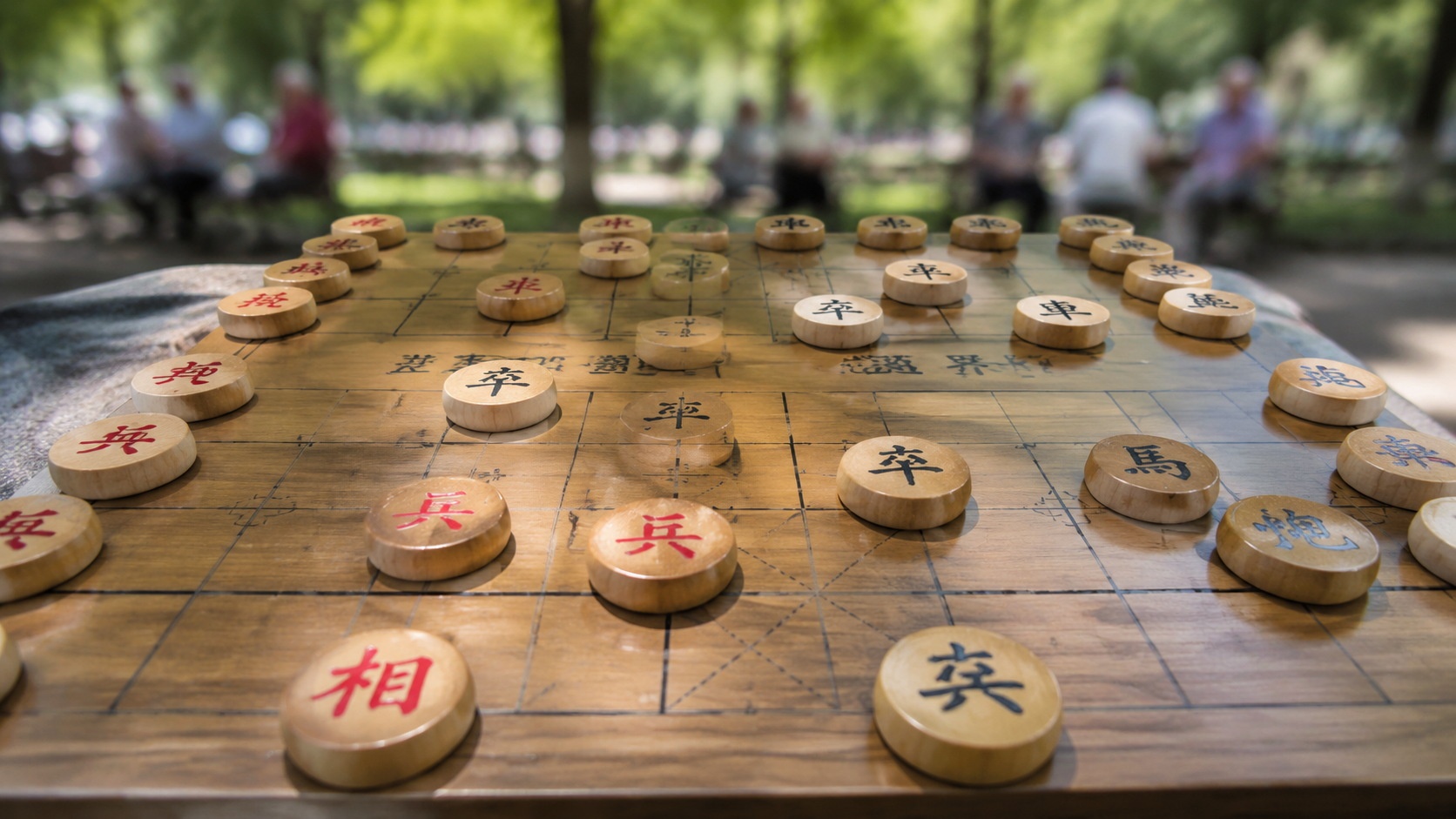
For those unfamiliar with Chinese Chess, it looks like International Chess’s grumpy cousin. The pieces are flat discs with Chinese characters, not carved figures. But don’t let the simplicity fool you.
The board is smaller (9×10), and the movement is distinct. The Chariot (Ju) moves like a rook in Western chess. The Cannon (Pao) is unique: it must jump over exactly one piece to capture, acting as a sniper. The General (Jiang/Shuai) is trapped in a 3×3 “palace” and cannot leave it, making his protection the ultimate priority.
What makes Xiangqi fascinating to watch is the speed. There are no clocks ticking here. The pace is dictated by the tension. Moves can be instant—clack, clack—or pause for minutes as players stare each other down, calculating ten steps ahead.
The Crowd: The Fourth Player
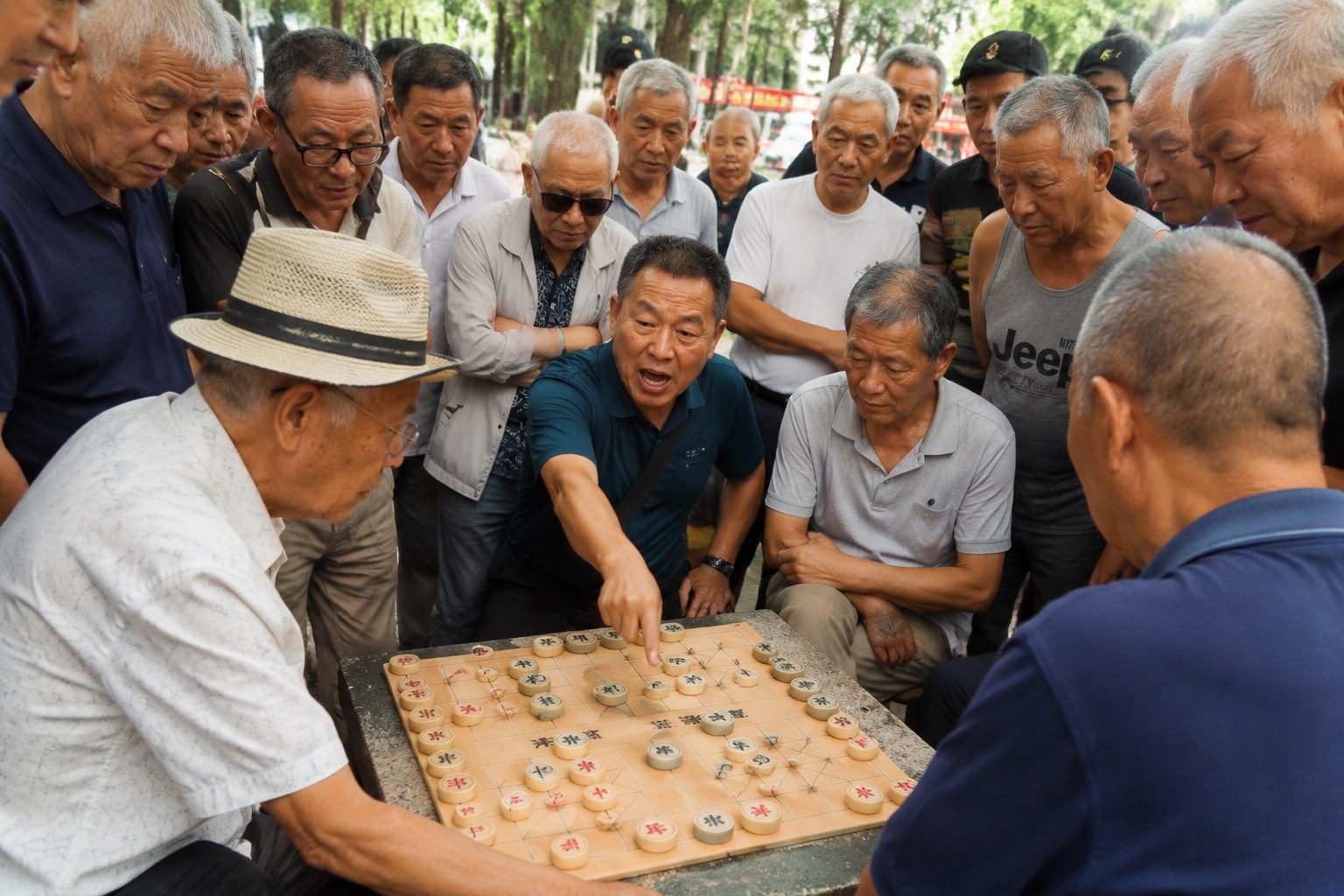
If you think the two men playing are the only ones involved, you’re missing half the story. In China, street chess is a communal sport. The circle of spectators is not passive; they are active participants.
As soon as a piece moves, voices erupt. “He’s trapped!” shouts one man, pointing aggressively. “No, he’s setting a trap!” argues another. People lean in, blocking your view of the board entirely. They shout advice, critique mistakes, and cheer loud victories. It sounds chaotic, but it’s a highly ritualized form of social bonding.
There is a unique aesthetic to this chaos. It’s raw, unfiltered, and deeply human. In a society that can feel fast-paced and digital, this analog gathering offers a rare pause. The onlookers aren’t just watching; they are sharing in the emotional rollercoaster of the game.
More Than Just a Game
Why do these men gather here every day? For many retired Chinese men, street chess is more than entertainment; it’s their social lifeline. In traditional Chinese culture, male social circles often revolve around shared activities—drinking tea, playing cards, or in this case, strategizing.
For these retirees, the chessboard is a place of identity. At home, they might be grandfathers or husbands. Here, on the corner, they are masters of strategy, respected elders with sharp minds. The loss of their professional titles doesn’t mean the loss of their dignity. As long as they can still defeat the newcomer, they remain relevant.
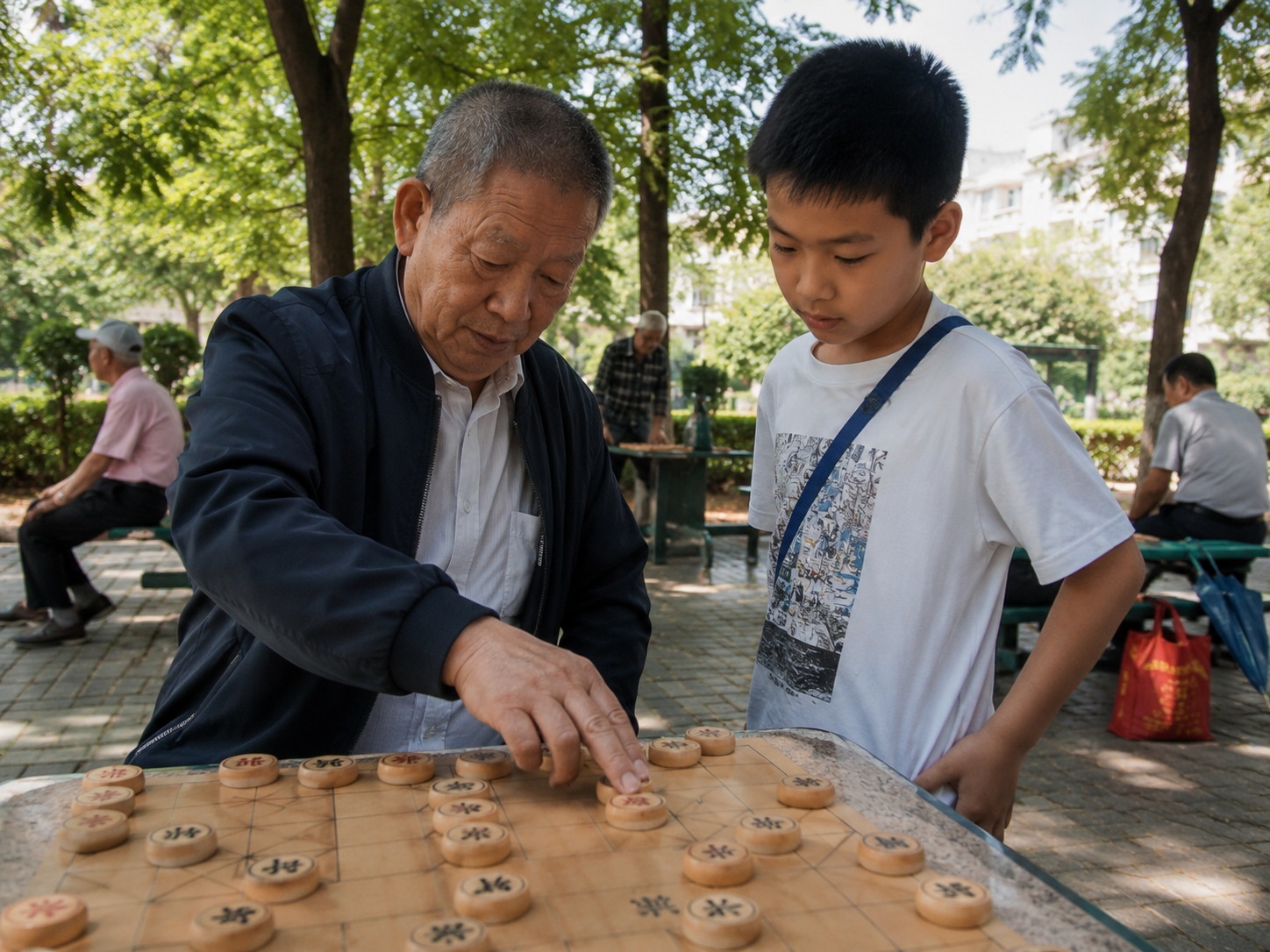
The game also bridges generations. While the players are old, the spectators include young people on lunch breaks, delivery riders taking a rest, and curious passersby. Sometimes, a young person will step in to challenge an old master. It’s a humble test of skill, where age is respected, but logic is king.
The Micro-Theater of Urban Life
In the hustle of modern China, where apps control everything from payments to dating, the street chess corner remains stubbornly analog. It requires no battery, no Wi-Fi, and no smartphone. Just a board, some pieces, and time.
This scene is a microcosm of Chinese urban life: dense, interactive, and layered with unspoken rules. It’s a reminder that beneath the glittering skyline of Shanghai or Shenzhen, daily life is still defined by human connection, patience, and the simple joy of a well-played move.
So, the next time you’re in a Chinese city, don’t just rush past the park. Stop. Watch. And if you dare, pick up a piece. But be warned: the old men are watching you back.