
The Salon as a Living Room
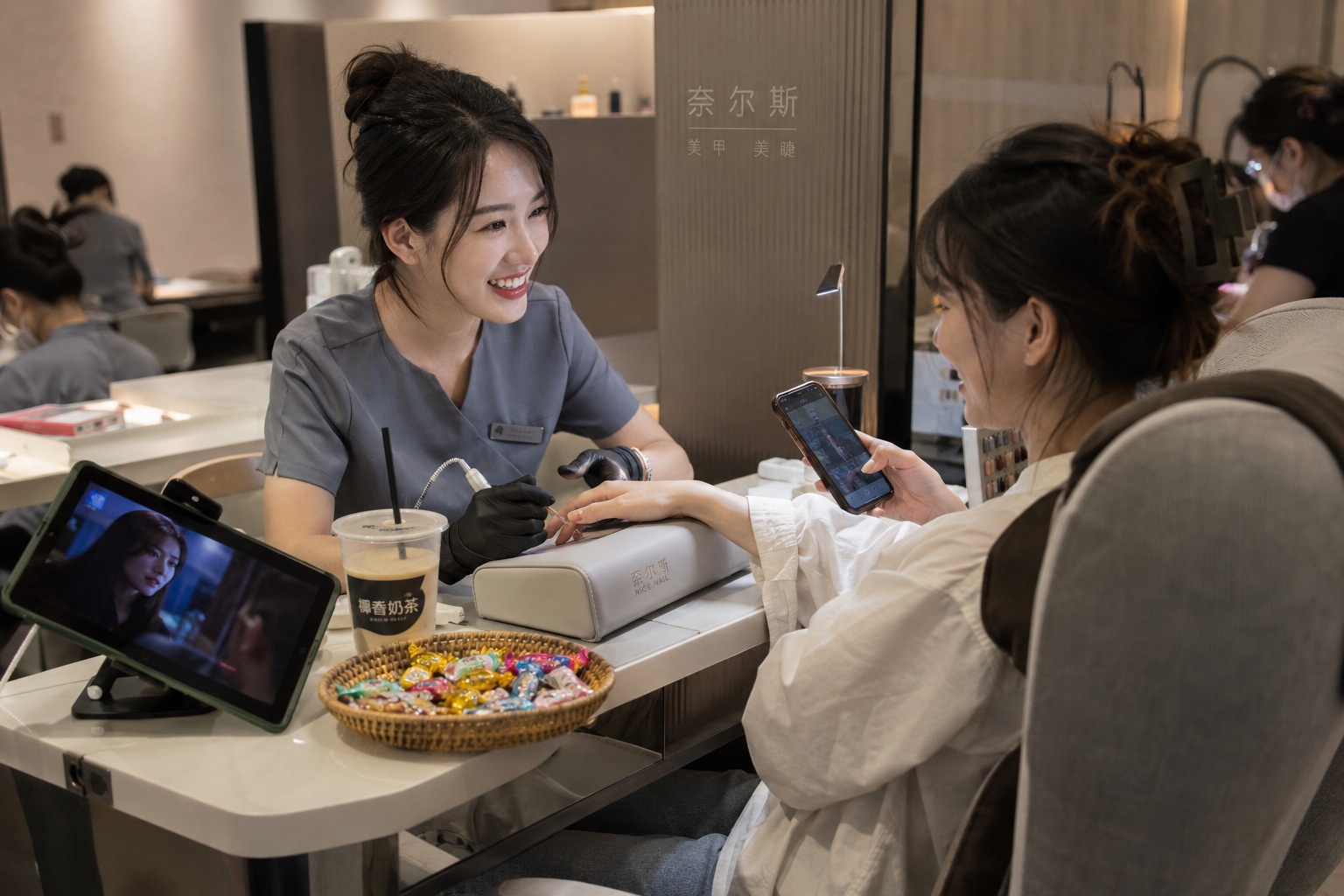
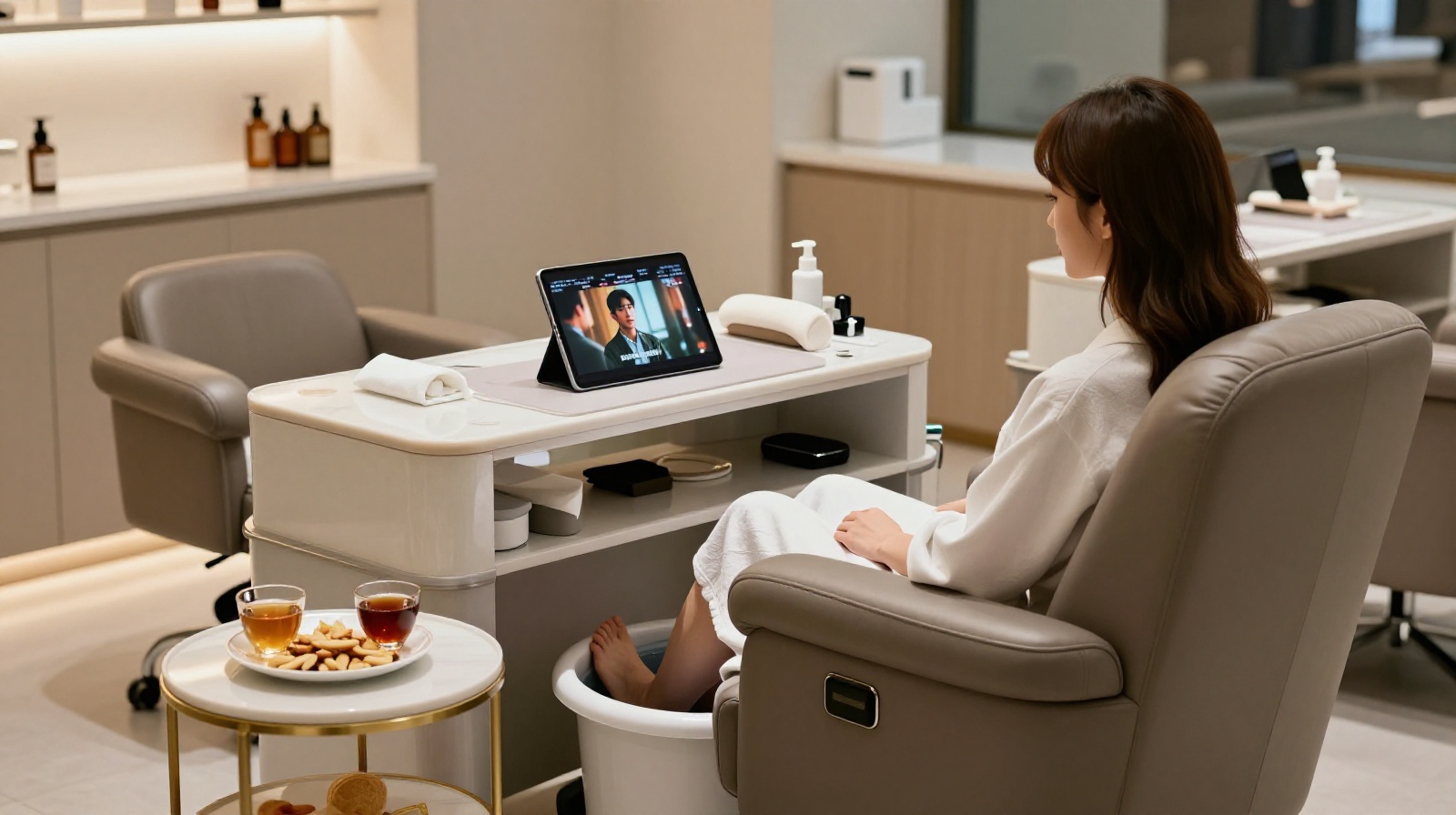
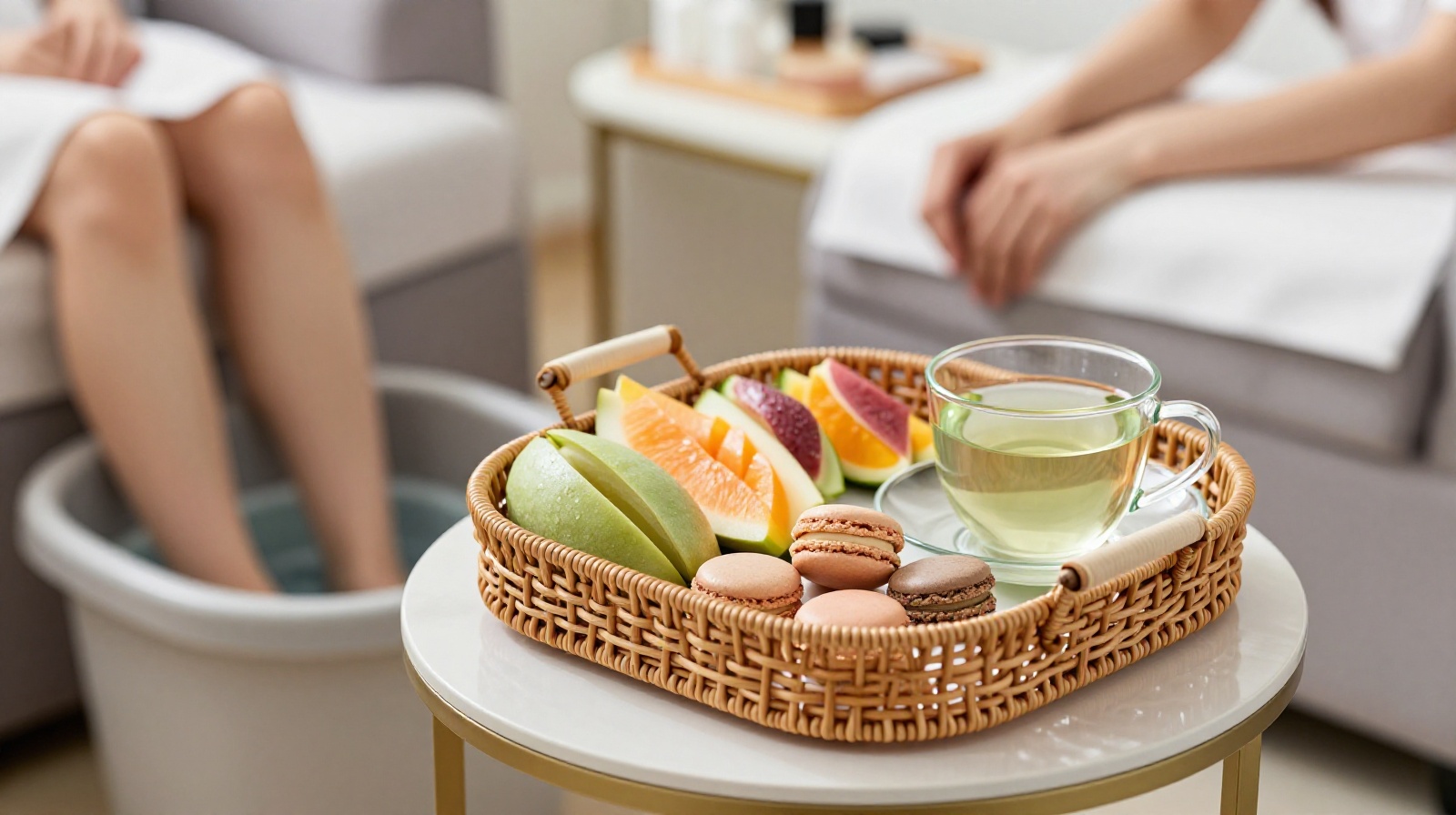
It is 2:30 PM on a rainy Tuesday in Hangzhou. Inside “Dreamscape Nails,” the air smells faintly of acetone and jasmine tea. In booth four, 28-year-old Lin sits reclined in a plush leather chair, her feet soaking in a heated tub with herbal salts. On the iPad mounted above her head, a romantic comedy is playing. Within arm’s reach, a basket of cut apples, macarons, and hot green tea waits untouched.
Lin is not here for a quick fix. She has booked the “Royal Spa” package, which takes three hours. The technician, Xiao Mei, is gently buffing Lin’s nails while chatting about the upcoming weekend. It is less a beauty treatment and more a social appointment.
Service Extremism: More Than Just Nails
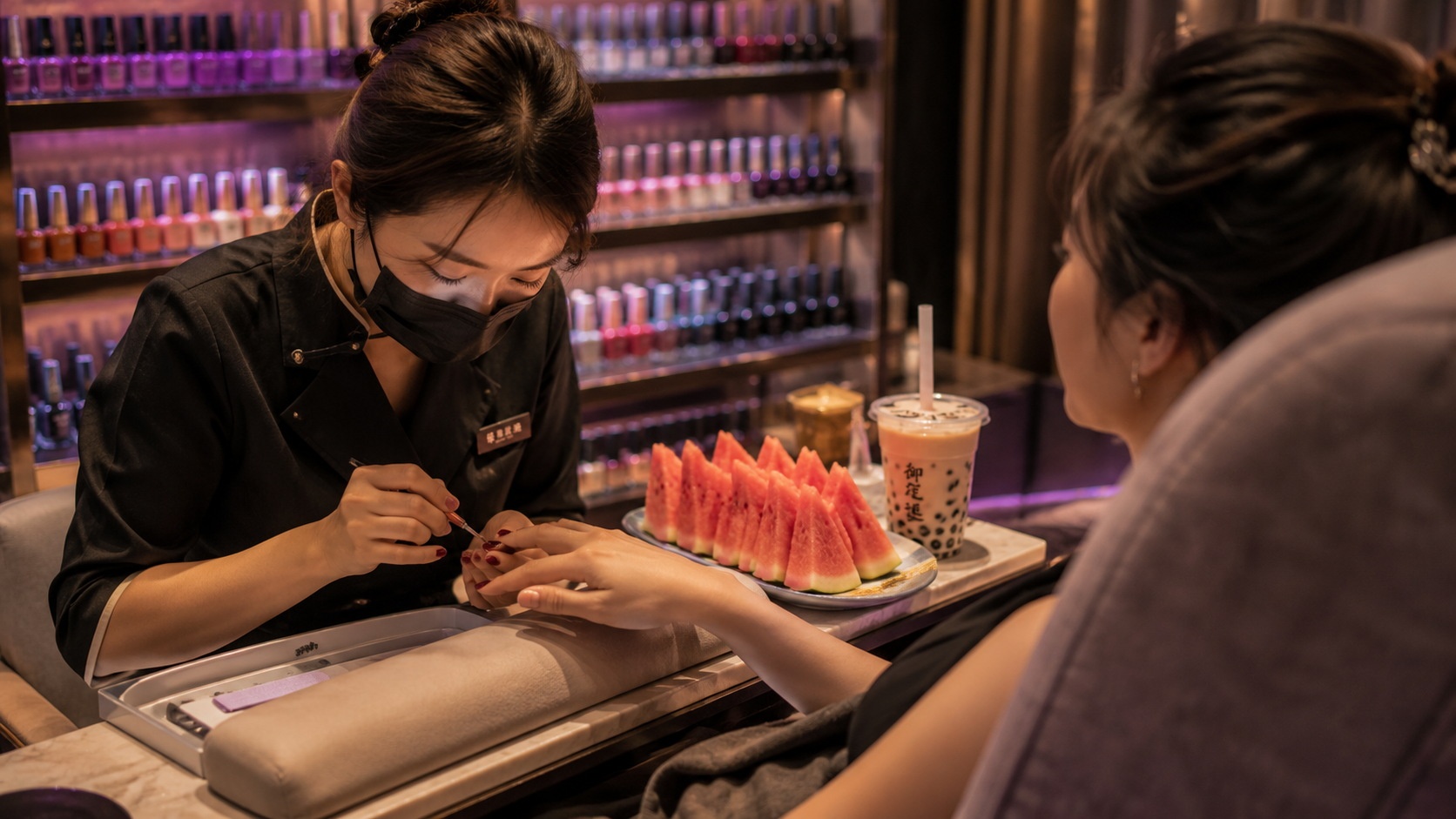
In Western countries, a standard manicure takes 45 minutes to an hour. The focus is efficiency: clean cuticles, even polish, leave. In China’s tier-1 and tier-2 cities, however, nail salons have evolved into “extreme service” hubs. It is common to find salons offering foot massages, head scrubs, manicure-pedicure combos, and even side chair massages for the shoulders and back.
This phenomenon, often called “service extremism,” stems from a fierce competitive market. In cities like Chengdu or Shanghai, nail salons are on almost every street corner. To survive, businesses cannot compete on price alone; they must compete on experience. A basic manicure might cost $10, but the “VIP Experience” with unlimited snacks and entertainment can run $40–$60.
Buying Time and Emotional Value
Why would young professionals pay a premium to sit still for three hours?
For many Chinese women, especially in high-pressure urban environments, the nail salon has become a rare “third space”—not home, not work. It is one of the few places where they are allowed to be idle without guilt. In a society that often glorifies hustle culture, spending three hours getting your nails done is a quiet act of rebellion.
“I don’t just want nice nails,” Lin tells me while eating a strawberry. “I want an hour where I don’t have to reply to work WeChat messages. The movie helps me zone out, and the massage relaxes my stiff neck.”
This is the core of the trend: emotional value. Consumers are not just buying a cosmetic service; they are buying a few hours of peace, attention, and care. The snacks and movies are not extras; they are essential props in this theater of relaxation.
The Nail Technician as Therapist
The role of the nail technician has shifted dramatically. They are no longer just skilled artisans; they are conversational partners, and often, informal therapists. Because the service lasts so long, deep conversations naturally emerge.
Technicians are trained to read their clients’ moods. If a customer is silent, they keep the chatter light, focusing on the technical details of the gel application. If the customer is chatty, the technician becomes an active listener, offering advice on relationships, career changes, or family issues. This level of intimacy is rare in other service industries.
“I know my clients better than their husbands sometimes,” says Xiao Mei, a technician with six years of experience. “When they cry during a pedicure, I just keep working gently. They know I won’t judge them.”
The Economics of Slow Living
Is this wasteful? From a traditional economic perspective, perhaps. But in China’s “experience economy,” time is the ultimate luxury.
As disposable incomes rise, consumption patterns have shifted from owning goods to experiencing moments. The nail salon model proves that Chinese consumers are willing to pay for comfort and personalization. It reflects a broader societal shift: after decades of rapid growth and intense competition, there is a growing demand for “slow living” and self-care.
This trend also highlights the resilience of China’s service sector. While manufacturing and tech dominate headlines, it is the grassroots service industry that absorbs millions of jobs and caters to the nuanced needs of urban life. The nail salon is a microcosm of this shift—small, intimate, and deeply human.
A Global Reflection
While Western salons are beginning to adopt “spa-like” elements, the Chinese model is still far more integrated. It challenges the notion that service must be fast and transactional. Instead, it proposes a different value system: where time spent with care is worth more than time saved through speed.
As Lin finishes her third hour, her nails are intricate floral designs in soft lavender. She checks her phone, replies to a few work messages, and stands up. The transformation is not just cosmetic; she looks lighter, as if the three hours of leisure have reset her mood for the week ahead.