

The $20,000 Walnut
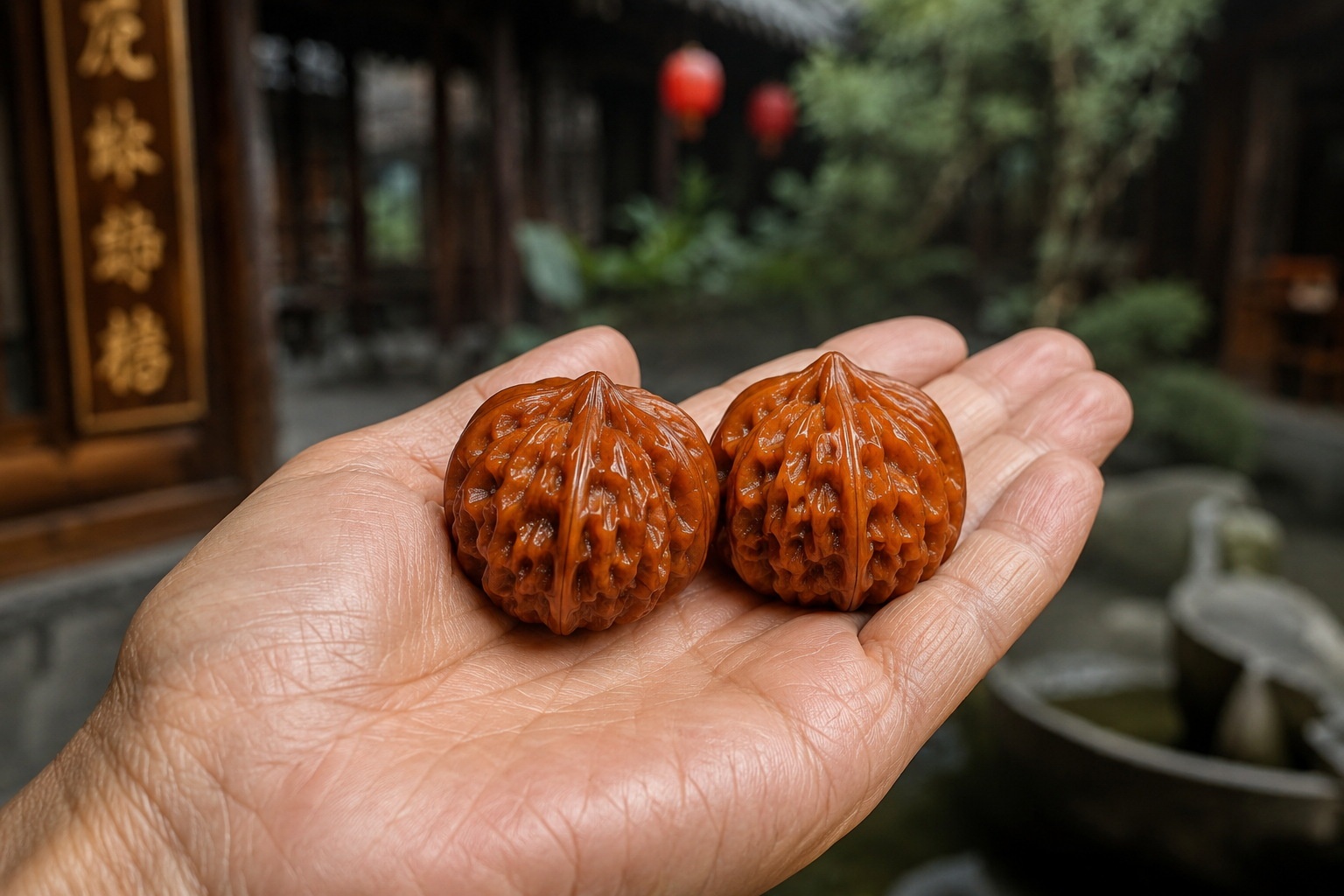
If you walked into a high-end antique auction house in Beijing last year, you might have seen something that defies logic: a pair of wrinkled, brown walnuts sold for over $20,000. Bidders didn’t care about the meat inside. They were bidding on the shell. And not just any shell—these were specific varieties, harvested from ancient trees in Hebei province, with perfectly symmetrical ridges and a history that supposedly guaranteed them a deep, glass-like luster after years of handling.
For Westerners, this sounds like a scam or a bizarre joke. How can dried fruit seeds be worth more than a gold watch? But to understand this, you have to look past the price tag and into the hands of everyday Chinese people. This is the world of wenwan (文玩), or “cultural playthings,” where the act of rubbing two walnuts together becomes a form of meditation, status symbol, and social currency all at once.
The Alchemy of Patience
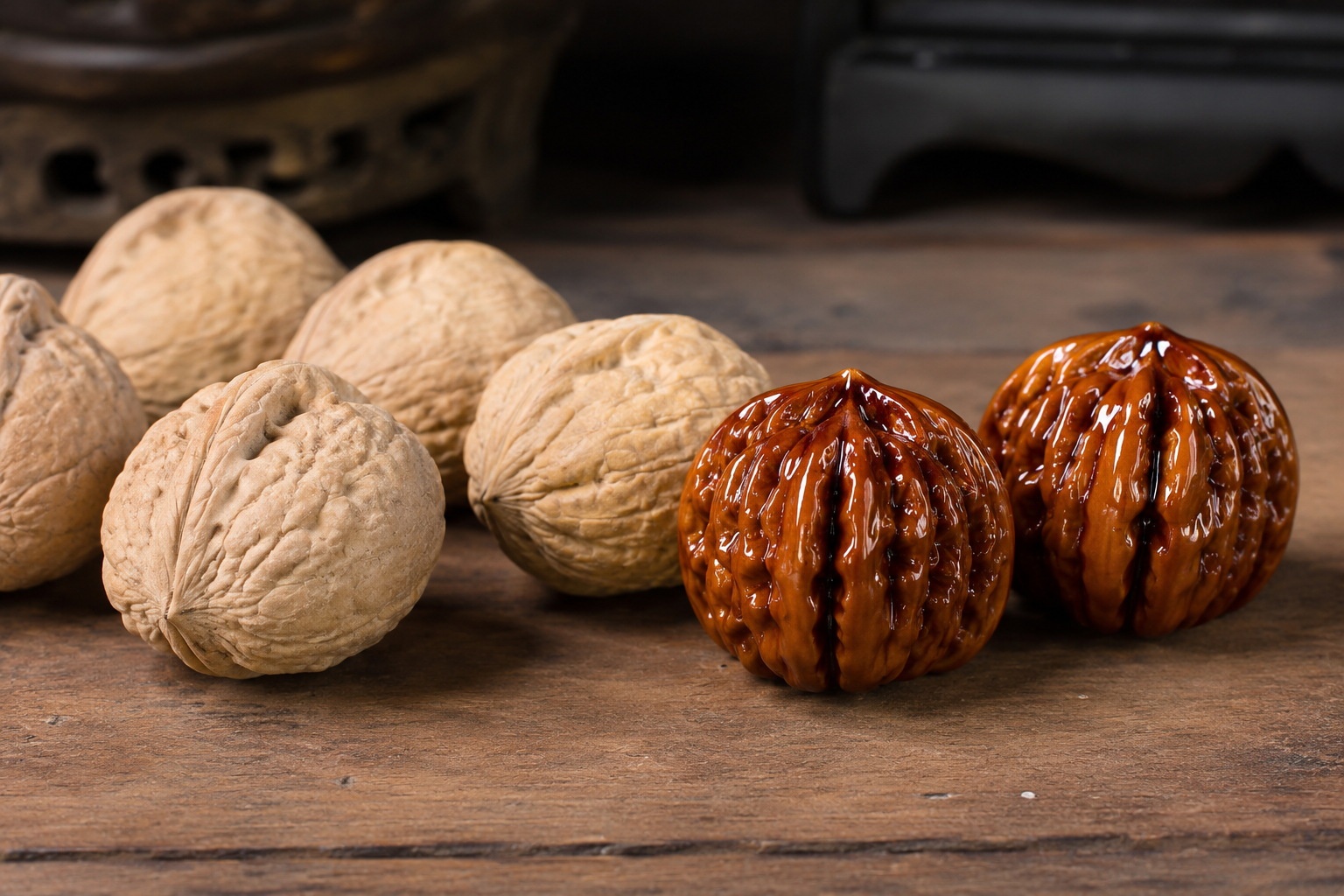
The core practice is simple: you take a pair of walnuts, usually of similar size and shape, and roll them continuously in your palm. This process is called panwan (盘玩). It sounds mundane, but the transformation is physical and almost magical.
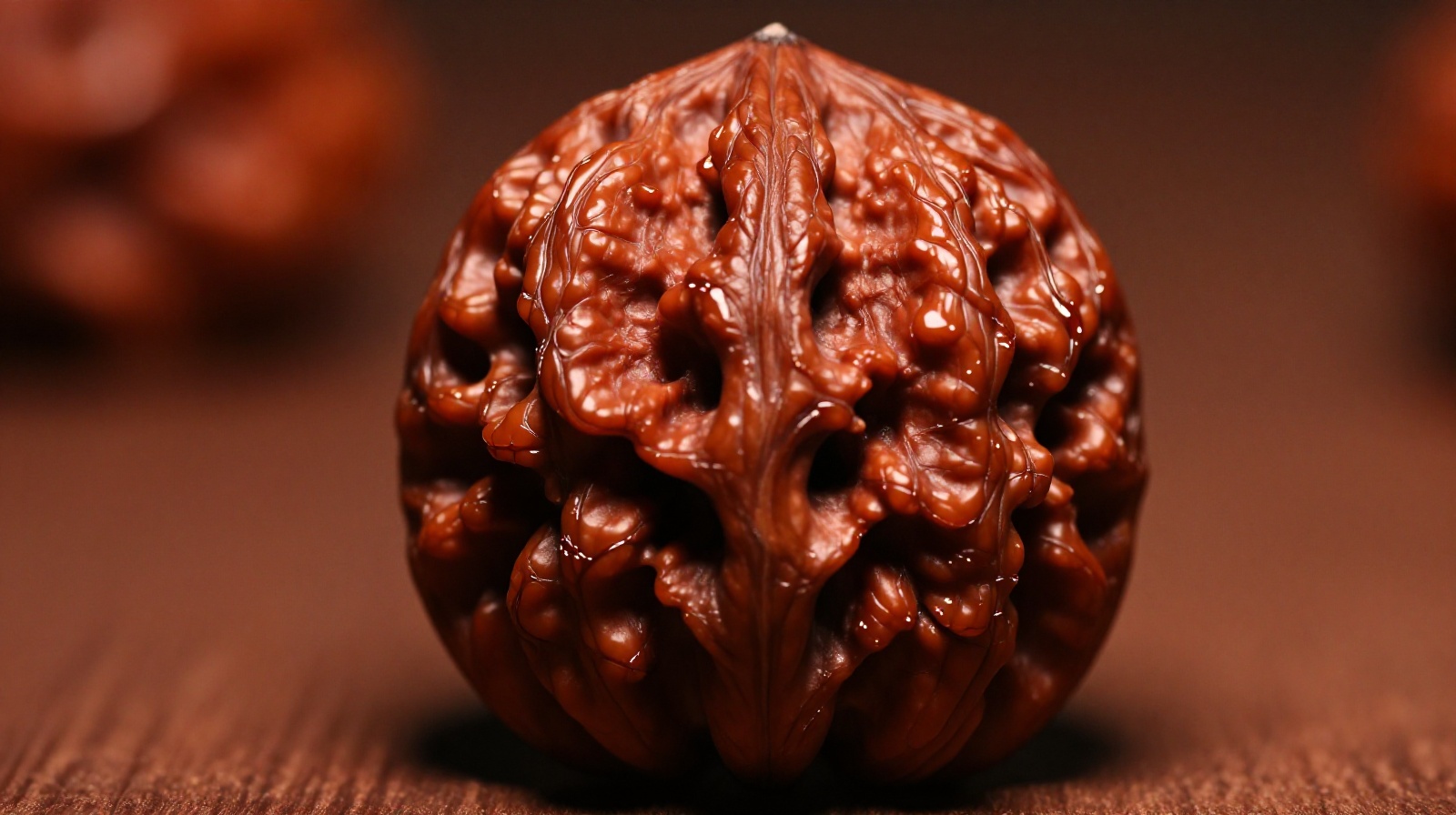
When you first buy them, the walnuts are dry, rough, and pale yellow or light brown. They feel dusty. But as you carry them with you—to the subway, to meetings, while watching TV—they absorb the natural oils from your skin. Slowly, over months and years, the color deepens. The rough surface smooths out. The once-dull shell begins to glow with a translucent, amber hue, resembling old jade or polished glass.
This is not just about aesthetics; it’s about time made visible. In a country where everything moves at breakneck speed, from 5G downloads to overnight delivery, panwan forces you to slow down. You cannot rush the process. If you use sandpaper or chemicals to fake the shine, the value drops to zero. The only way to get the coveted “glass bottom” (bo li di) is through consistent, patient friction. It is a tactile lesson in letting go of anxiety.

From Street Stalls to Social Media
Historically, this hobby belonged to older men sitting in parks, playing chess or listening to opera. But recently, wenwan has undergone a surprising revival among Chinese youth, particularly those working in tech hubs like Shenzhen or Beijing.
For many young professionals, the pressure is immense. Long working hours, high rents, and fierce competition create a background hum of stress. The walnut becomes a fidget tool with a soul. Unlike plastic fidget spinners that break or disappear, walnuts are durable, portable, and increasingly valuable. They sit in the pocket, a heavy, grounding reminder to breathe.
Social media platforms like Xiaohongshu (Little Red Book) and Douyin (TikTok) are filled with videos of young people showing off their “changed” walnuts. They compare colors, discuss the grain of the wood, and share tips on how to avoid black spots. It has become a niche social network. Talking about walnuts is a safe, neutral topic that bridges gaps between strangers, much like discussing sports or weather in the West, but with deeper philosophical undertones.

The Speculation Bubble
However, it’s impossible to ignore the financial side. The wenwan market has attracted significant capital. Just as tulip bulbs were once traded in the 17th century, certain rare walnut varieties have seen their prices skyrocket due to speculation.
Merchants will buy up entire harvests, claiming that a specific tree produced only ten pairs of “perfect” walnuts, driving the price up. While some of this is marketing hype, it reflects a broader trend in China: the monetization of culture and leisure. For investors, these walnuts are an alternative asset class. For collectors, they are a trophy of patience.
Yet, for the average person, the value isn’t in resale. It’s in the ritual. The walnut is not a stock certificate; it’s a companion. Its worth increases not because the market dictates it, but because your own connection to it deepens. The oil from your hand is literally part of its story.
A Philosophy in the Palm
So, why does this matter? Because wenwan represents a unique Chinese approach to modern life. It’s not about rejecting technology or progress; it’s about carving out a space for slowness within a fast world.
In the West, mindfulness is often practiced through apps, retreats, or expensive therapy. In China, it can be found in a five-dollar pair of walnuts from a street market. It’s an accessible, democratic form of meditation. You don’t need to sit on a cushion in silence. You just need your hands.
As I watched a young tech worker in a Shanghai subway station, nervously rolling his walnuts while waiting for the train, I realized he wasn’t just killing time. He was calibrating himself. The smooth, glowing surface of the nuts was a testament to his persistence. In a world of fleeting digital notifications, he held something tangible, slow, and enduring.
Next time you see someone in China rolling objects in their hands, don’t assume they are bored. They might just be practicing the ancient art of turning roughness into brilliance, one rub at a time.