

The 12:30 Silence in Shenzhen
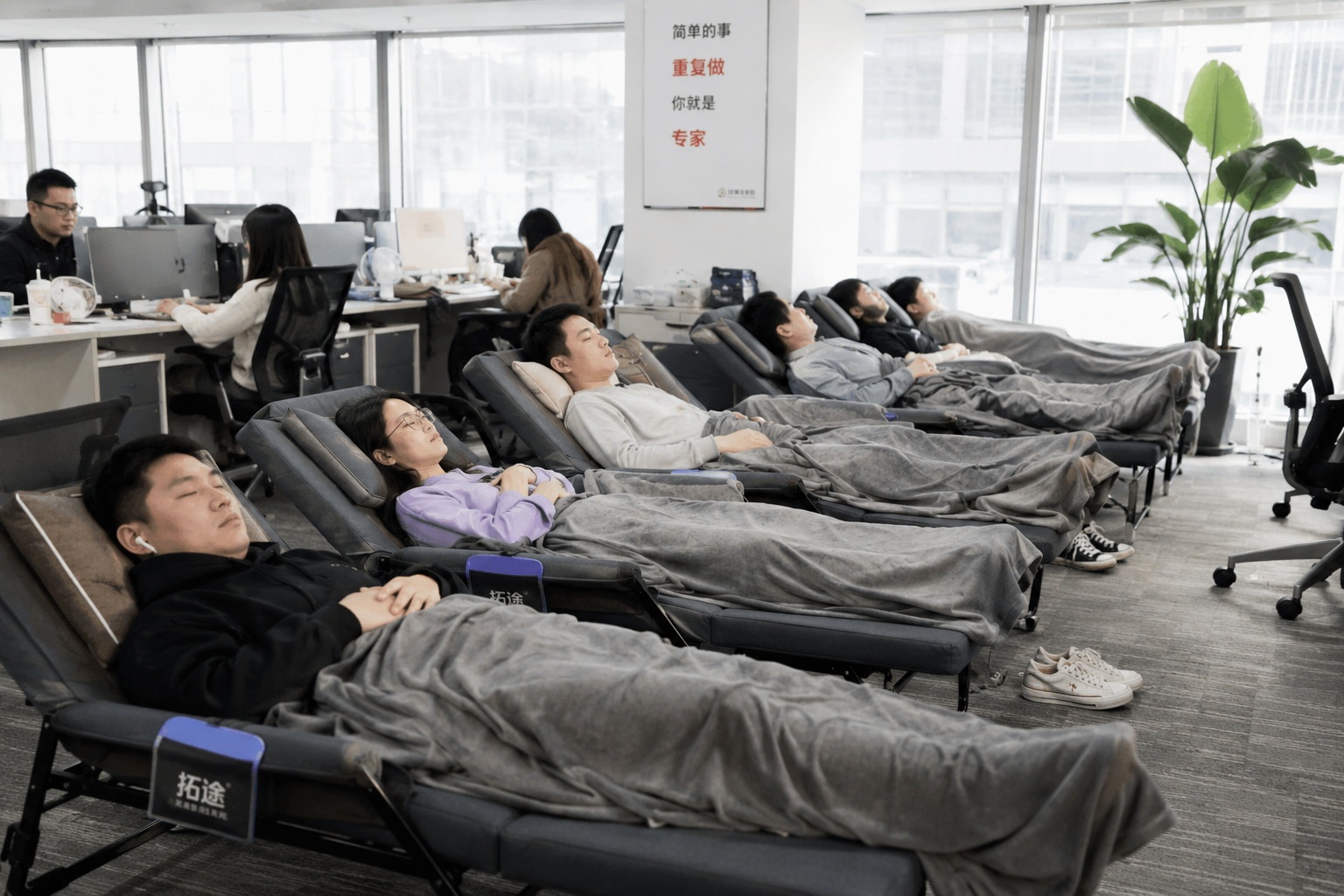
If you walk through the open-plan offices of Shenzhen or Hangzhou between 12:30 PM and 1:30 PM, the first thing you notice is not the hum of servers or the clacking of keyboards. It is silence. A deep, heavy, collective silence.
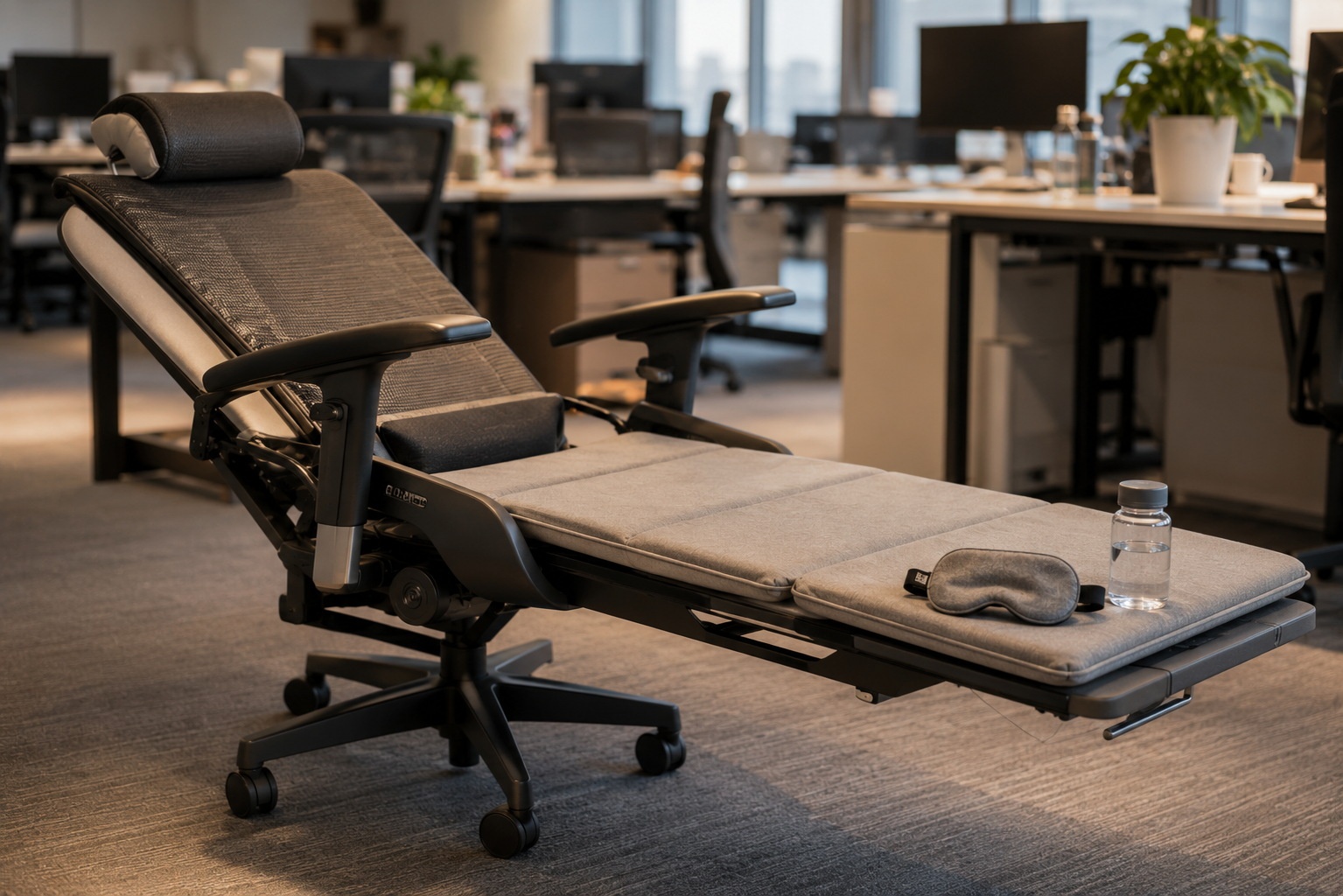
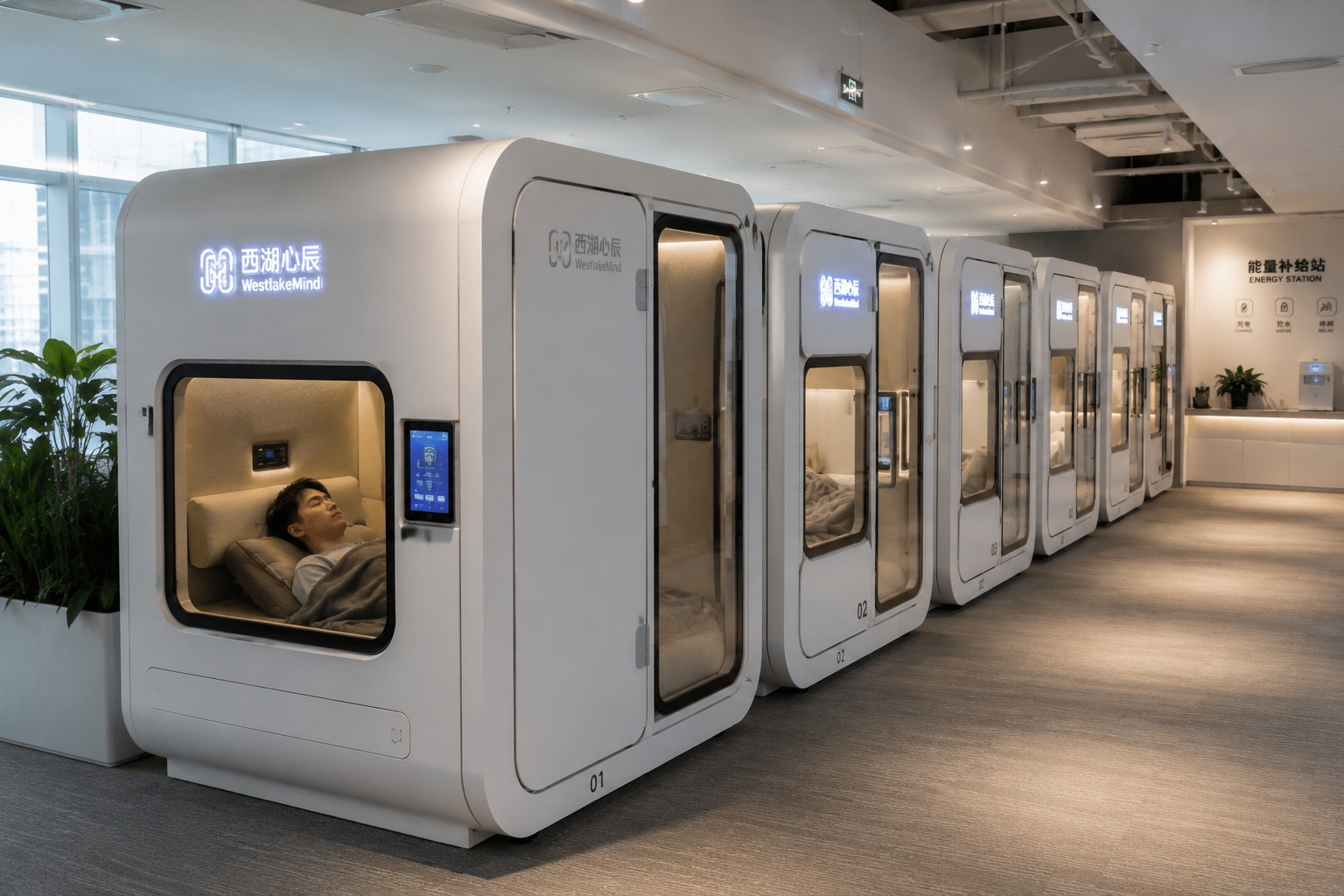
Unlike in many Western offices where colleagues might grab coffee to power through the afternoon slump, here, the air is thick with the scent of lavender eye masks and the soft rustle of unfolding fabric. On nearly every desk, a transformation is taking place. The ergonomic chair reclines to 180 degrees. A specialized mattress, often thinner than a standard twin but designed for portability, is laid over the lap desk. In some premium tech firms, entire rows of employees vanish into individual soundproof sleep pods that look like futuristic telephone booths.
This is not laziness. In China’s high-speed work culture, the 60-minute midday nap is considered a biological and professional necessity. It is a ritual as sacred as the morning stand-up meeting.
From Cardboard to Electric Recliners
The evolution of the office nap has been rapid and pragmatic. Ten years ago, the “nap kit” consisted of a cardboard box, a thin cushion, and a blanket tucked under the desk. It was uncomfortable, cold, and often smelled of stale air.
Today, the market has responded with surprising innovation. E-commerce platforms are flooded with specialized products designed for the modern Chinese office worker. You can buy a “desk bed” for as little as $20 that folds up like a briefcase but deploys into a surprisingly supportive lying surface. These beds often feature adjustable headrests and even built-in leg rests.
But the real luxury lies in the high-end segment. Companies like Huawei, Alibaba, and Tencent have invested heavily in office infrastructure. In their headquarters, you will find electric reclining chairs that sync with your calendar, automatically folding down when a meeting ends early. Some campuses even offer “rest cabins” where employees can book a 45-minute private sleep session for a small fee, complete with aromatherapy and white noise machines.
Why the Nap is Non-Negotiable
To understand this phenomenon, one must look at the working hours. The so-called “996” schedule (9 AM to 9 PM, 6 days a week) has faced increased regulatory scrutiny in recent years, but the intensity of work in sectors like tech, finance, and e-commerce remains high. A typical worker might spend 10 to 12 hours at their desk.
In such an environment, sleep is not a luxury; it is fuel. The Chinese concept of “Yang Sheng” (nourishing life) emphasizes restoring energy during the peak hours of the day. The time between 11 AM and 1 PM is believed to be when the heart meridian is most active, making it the ideal window for a short rest to prevent burnout.
Without this midday reset, productivity crashes hard. Many managers find that a well-rested team is more efficient in the remaining four hours of the afternoon than a caffeine-jittery one working through the fatigue. Therefore, providing nap facilities has become a subtle but powerful form of employee welfare—a way for companies to acknowledge the grind while offering a tool to survive it.
A Shared Vulnerability
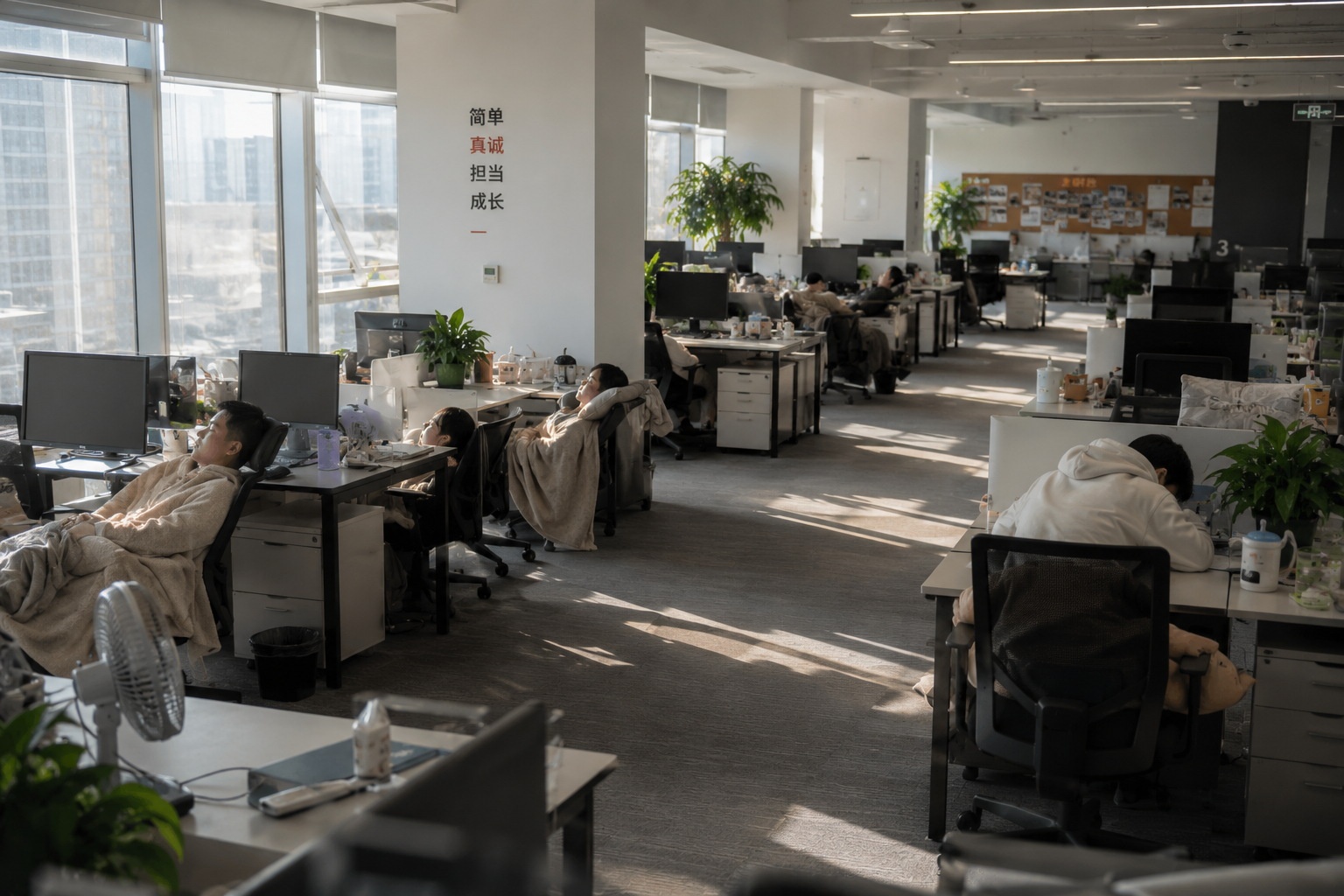
There is also a social dimension to the office nap. In a high-pressure environment, the act of sleeping on your desk is a moment of shared vulnerability. When everyone is asleep, hierarchies dissolve. The CEO and the intern are both snoring softly under their respective blankets.
This shared rhythm creates a unique sense of camaraderie. It is a collective agreement that, for one hour, we are not just cogs in a machine; we are human beings who need rest. It is a small rebellion against the relentless pace of modern life, played out in the quiet corners of open-plan offices.
While Western cultures often pride themselves on “hustle” and continuous productivity, China’s workplace has developed a pragmatic compromise. It acknowledges the demand for long hours but insists on the right to recover. The elaborate folding beds and sleep pods are not just furniture; they are symbols of this negotiation between ambition and survival.
As you leave an office in Shanghai at 7 PM, you might see employees still typing away. But if you walk by at 1 PM, you will see them lying down, eyes closed, breathing deeply. That hour is their sanctuary. And in the race of modern China, rest has become the ultimate competitive advantage.