

A Kitchen Full of Bamboo Leaves
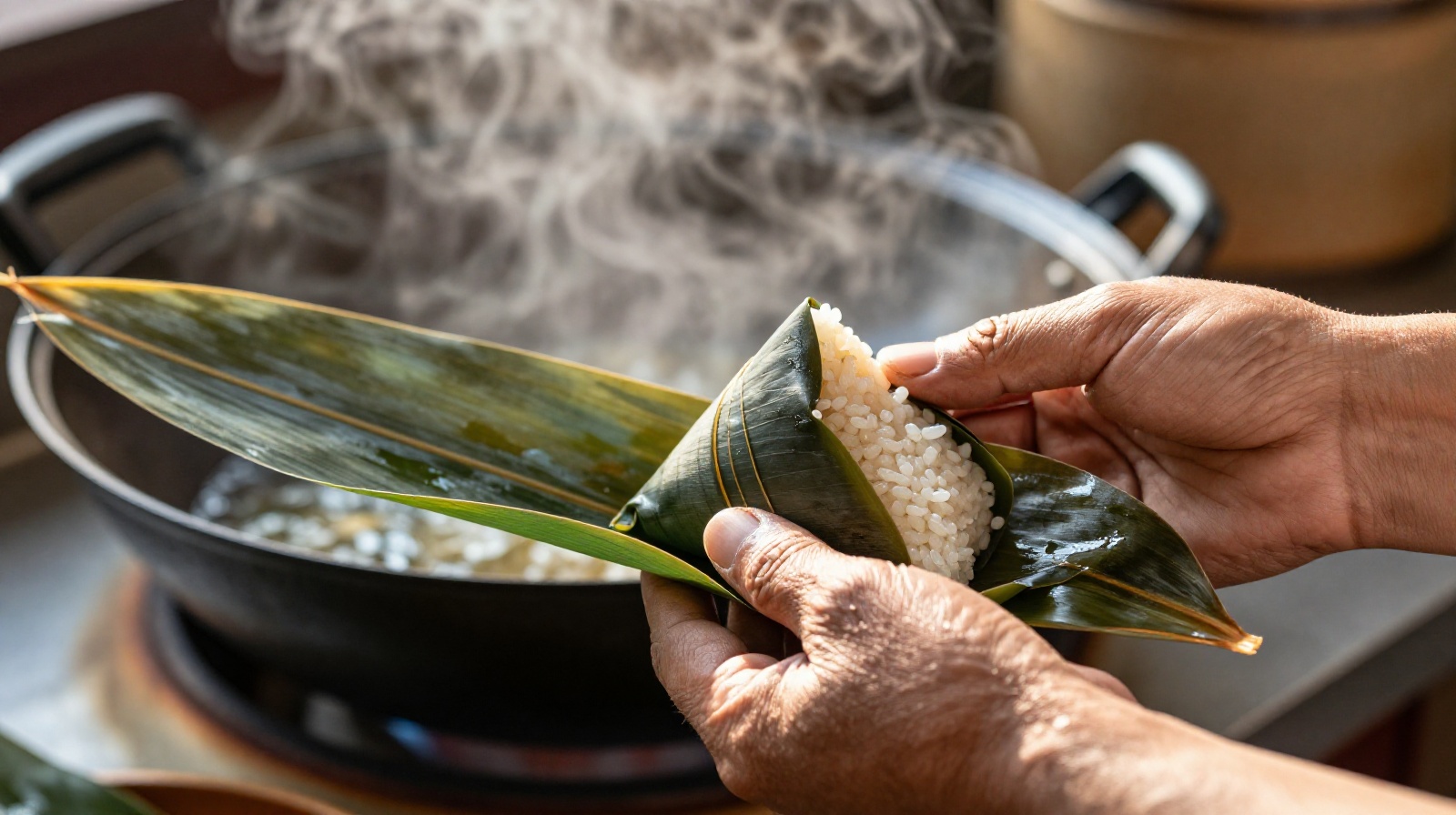
It is a humid Tuesday morning in Nanjing. The kitchen window is fogged from boiling water, and the air smells faintly of raw bamboo leaves and sweet beans. A woman named Li Wei sits at the low table, her fingers moving with practiced speed. She takes a dried leaf, folds it into a cone shape, stuffs it with glutinous rice mixed with salted pork yolk, adds a piece of marinated pork belly, ties it tight with a strip of green bamboo fiber, and drops it into the steaming pot.
This is not just cooking. It is a ritual repeated by millions every year during the Dragon Boat Festival. The dish she is making is called zongzi. To an outsider, it looks like a simple bundle of rice wrapped in leaves. But inside that green package lies a story nearly 2,300 years old.
The Poet Who Died by the River
Why does China celebrate with sticky rice? The answer lies in Qu Yuan, a statesman and poet from the Warring States period (475–221 BC). He served the Kingdom of Chu and was known for his loyalty and his beautiful poetry.
Qu Yuan opposed alliances with powerful neighboring states that he believed would destroy his homeland. When political rivals succeeded in exiling him, he watched his kingdom fall to invasion. Instead of fleeing or surviving, Qu Yuan walked into the Miluo River on the fifth day of the fifth lunar month and drowned himself, hoping his death would shame his countrymen into unity.
According to legend, when locals heard of his death, they raced out in boats to try to save him or retrieve his body. They beat drums to scare away fish, and threw rice balls wrapped in bamboo leaves into the water so that the fish would eat the rice instead of Qu Yuan’s body. This act of protection evolved over centuries into the zongzi we know today.

Sweet or Salty? It Depends on Where You Are
While the story is shared across China, the taste of zongzi changes depending on which side of the Yangtze River you are on. This regional divide is one of the most common debates among Chinese people during the festival.
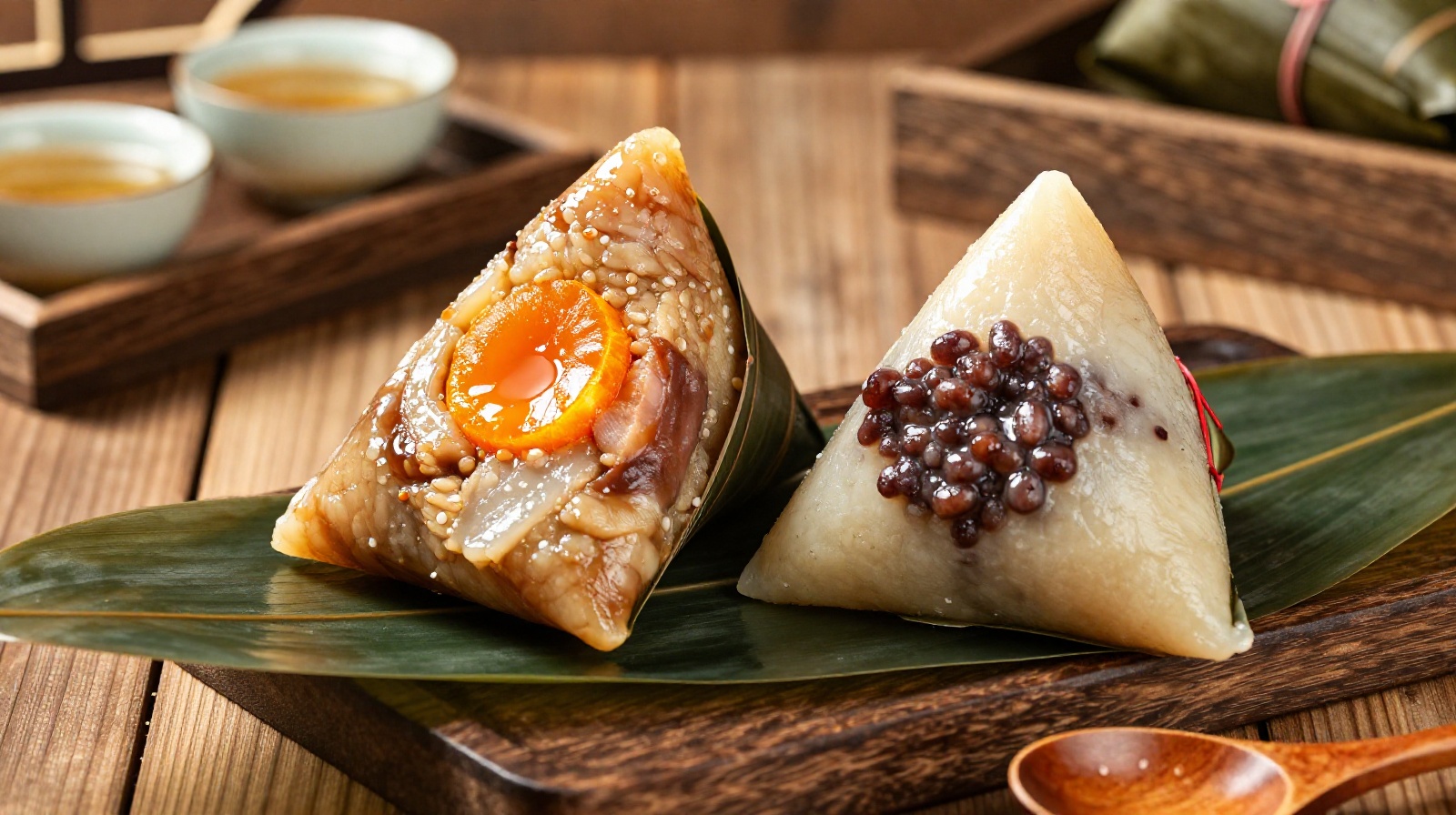
In the South, particularly in Jiangnan and Guangdong provinces, zongzi are often savory. The rice is mixed with soy sauce, salted egg yolk, and chunks of fatty pork. Some versions include mushrooms or chestnuts. The flavor profile is rich, salty, and umami-heavy, designed to be eaten as a meal.
In the North, zongzi tend to be sweet. Without meat, the rice is often just plain sticky rice mixed with red bean paste, jujube (Chinese date), or sometimes just sugar. These are treated more like desserts or snacks. A family in Beijing might offer a sweet zongzi after dinner, while a family in Guangzhou might eat a large savory one for lunch.
Modern Rituals in a Fast-Paced World
You might think that in today’s high-speed China, where people order food delivery in minutes and work 9-to-6 (or longer), such time-consuming traditions would fade. But they haven’t.
In Shanghai, offices often organize “zongzi-making days” before the holiday. Colleagues who usually type code or handle spreadsheets spend their lunch break folding leaves together. It is a rare moment of pause in a city that never seems to stop moving.
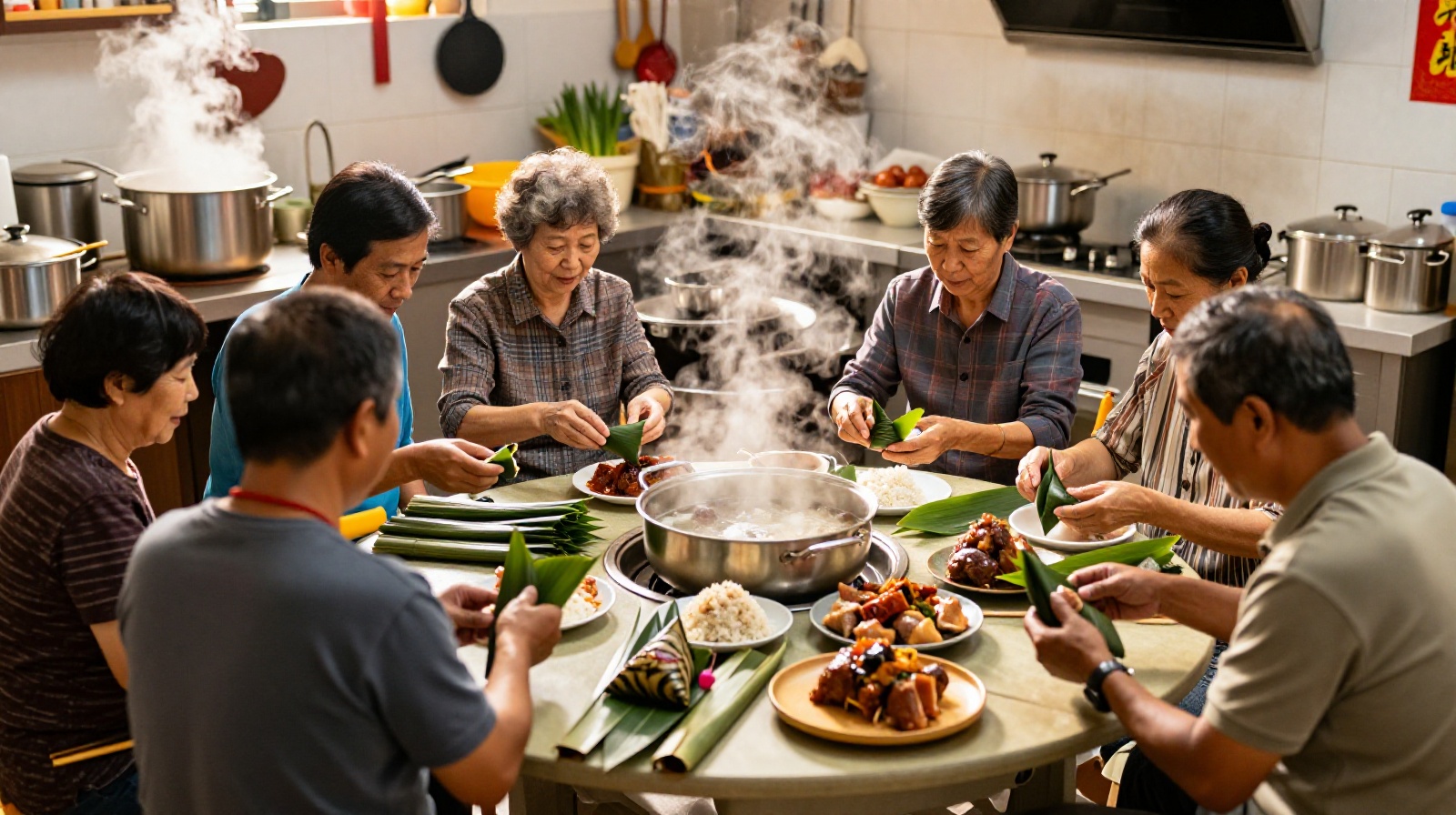
For many families, making zongzi remains a weekend chore that brings generations together. Grandmothers teach granddaughters how to fold the leaf without it tearing; fathers help tie the knots tight enough so the rice doesn’t leak. Even if they buy pre-made ones from supermarkets or online stores now, the act of boiling them at home and sitting down to eat them remains sacred.
The festival is not just about food. It is a reminder of history in an era that often feels disconnected from it. When you bite into a warm zongzi, whether sweet or salty, you are tasting the memory of a poet who chose death over compromise, and a community that has kept his story alive for millennia.