

The Unexpected Sight in a Chinese Bakery
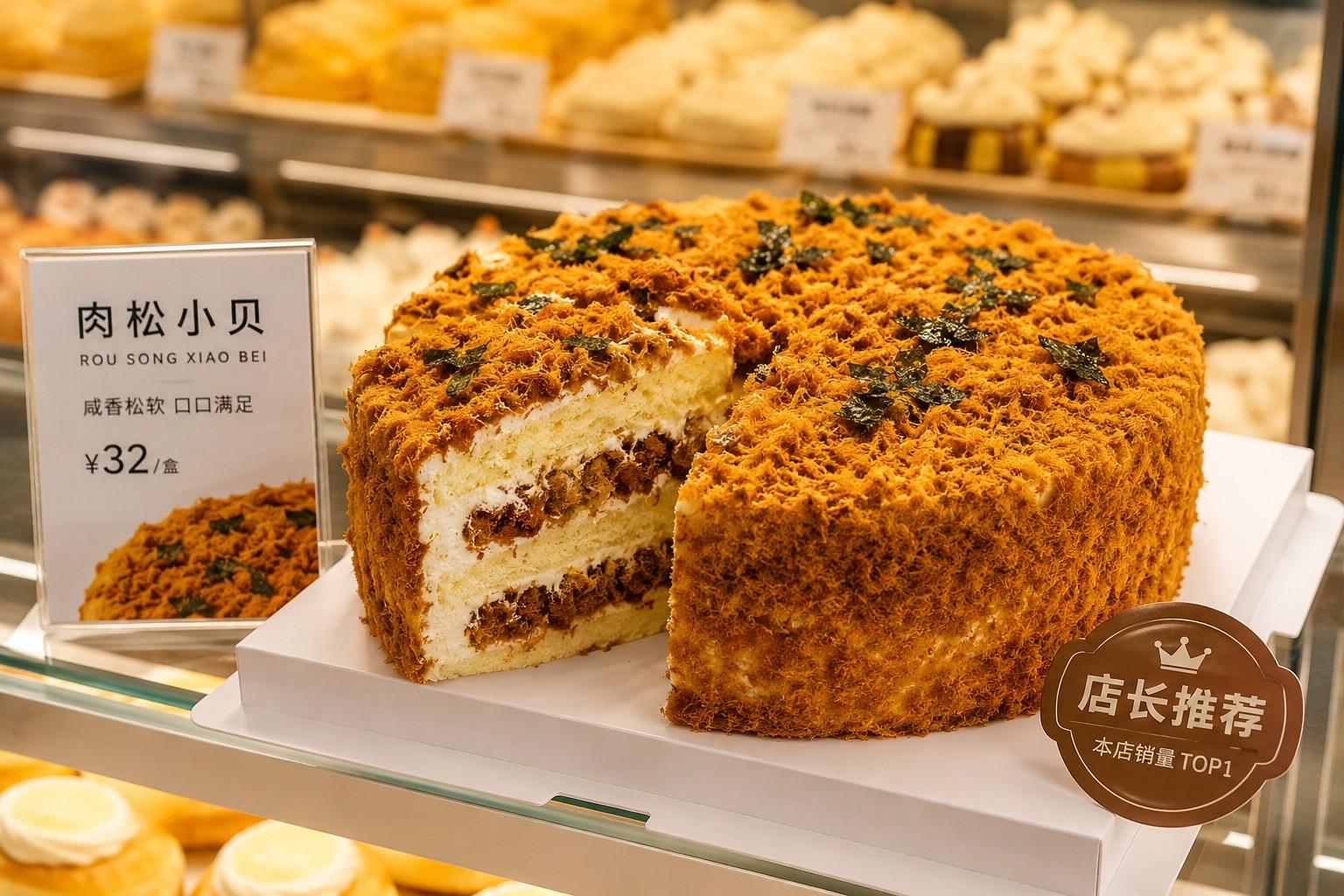
If you walk into a modern bakery in Shanghai or Chengdu, you might expect the smell of butter, vanilla, and croissants. Instead, you are greeted by the scent of toasted sesame seeds, sweet milk, and something distinctly savory. On the display counter, alongside standard chocolate danishes, sits a golden-brown pastry topped with a thick layer of fluffy, dark fibers.
This is rou song, or meat floss. Specifically, it is usually pork that has been boiled, shredded, and slow-cooked with sugar, soy sauce, and oil until it resembles fluffy cotton candy. When paired with sweet custard or mayonnaise inside a soft bread roll, it creates a flavor profile that might shock Western palates but delights millions of Chinese consumers: a complex mix of salty, savory, sweet, and umami.
The Great Sweet-Salty Debate
In the West, the debate between sweet and savory is usually binary. Is your pie dessert or dinner? In China, these boundaries are delightfully blurred, especially in baked goods. This phenomenon has sparked an online “sweet vs. salty” war, but for most young Chinese people, it’s not a conflict; it’s a preference.
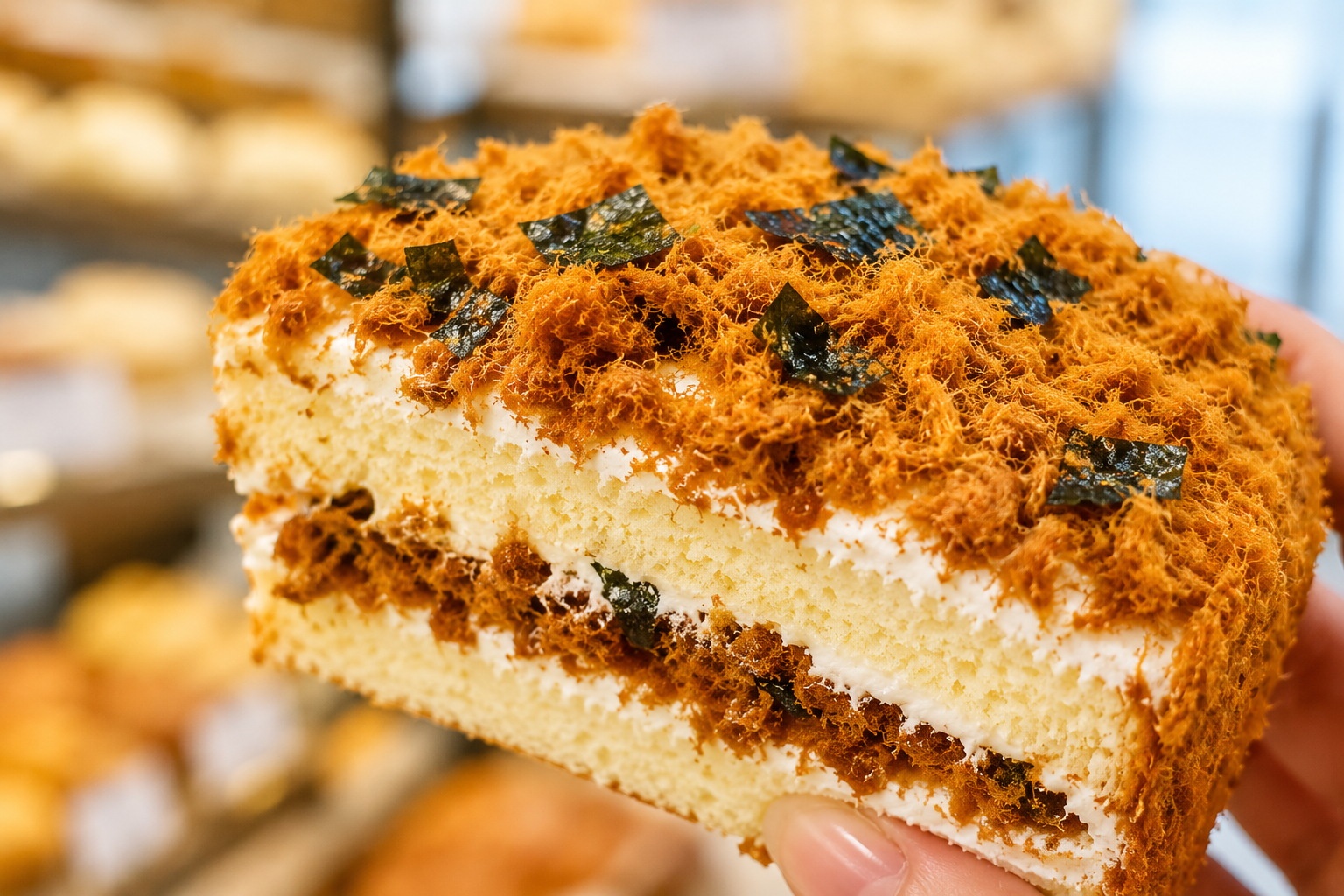
Take the Rou Song Xiao Bei (Meat Floss Cake), arguably the most iconic product of this genre. It consists of two small sponge cakes sandwiched with a generous amount of sweet mayonnaise cream, dusted with seaweed flakes, and generously coated in meat floss. The first bite is soft and sweet; the second reveals the salty crunch of the seaweed and the savory depth of the pork. It is essentially a portable breakfast or afternoon tea that satisfies multiple cravings at once.
Decoding the Menu: A Guide for Beginners
For visitors or newcomers, the menu can be intimidating. Here is how to navigate the most common items without making a mistake.
1. The Safe Bet: Sea Meat Floss Roll (Haizai Rou Song Juan)
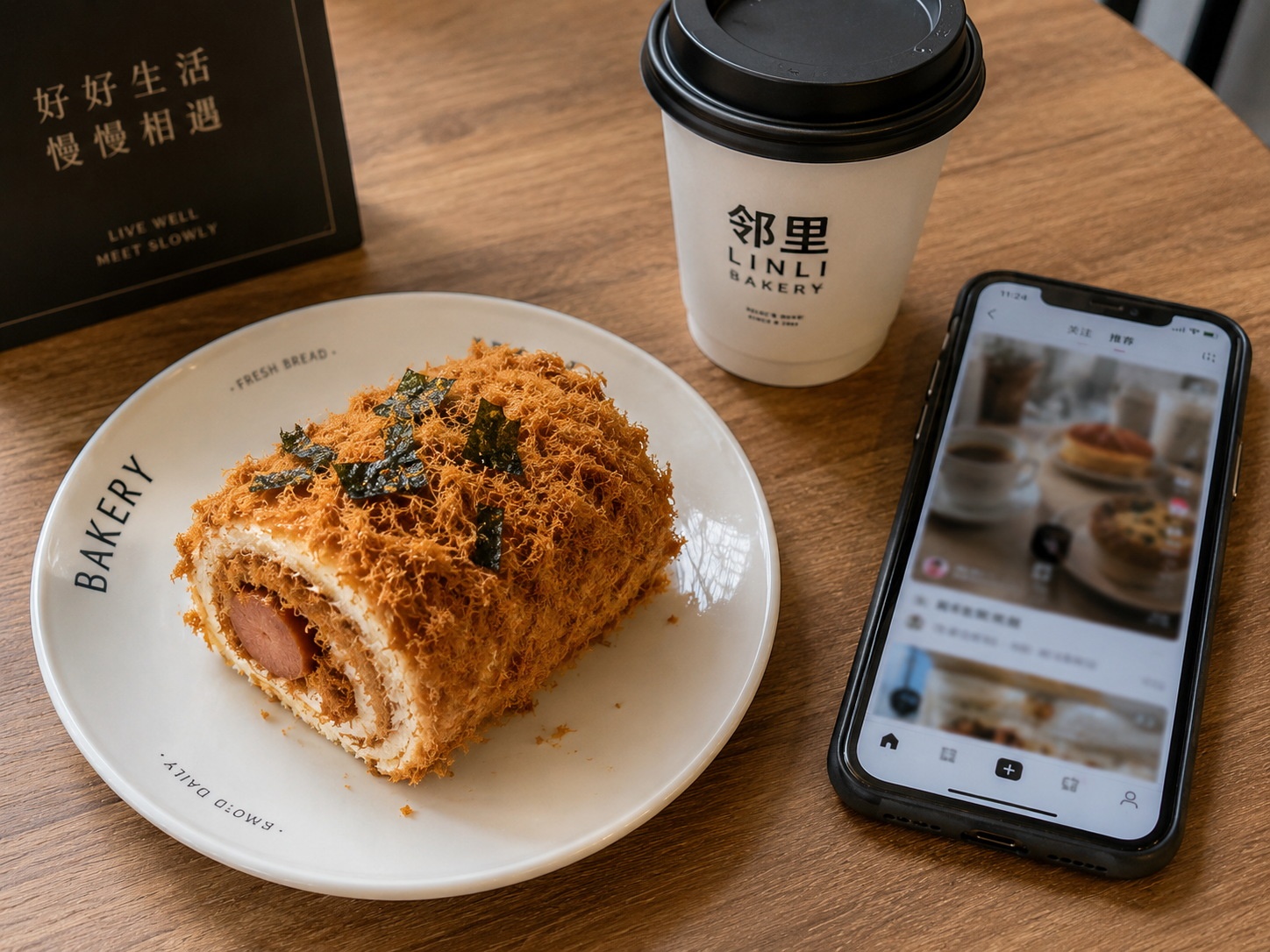
This is a Swiss roll-style cake, rolled with cream and topped with meat floss and dried seaweed. It is mild, moist, and widely considered the “gateway drug” to Chinese savory pastries. If you are unsure, start here. The seaweed adds a mineral crunch that cuts through the sweetness of the cream.
2. The Spicy Option: Scallion Sausage Bread (Congxiang Xiangchang Bao)
This bun is filled with a mini Chinese sausage (lap cheong) and chopped green onions, all wrapped in a slightly sweet dough. The sausage is cured, sweet, and salty, while the scallions provide a sharp, fresh bite. It is often eaten warm and is a staple for breakfast on the go.
3. The Adventure: Spicy Beef Floss Buns
For those who can handle heat, beef floss is often seasoned with chili powder and Sichuan peppercorns. It is drier than pork floss and has a stronger, gameier flavor. This is less common in standard chains but popular in local artisanal bakeries.
Why Do We Eat This? The Social Context
You might wonder why a nation known for savory breakfasts like congee and steamed buns has embraced meat floss in sweet pastries. The answer lies in the pace of modern urban life.
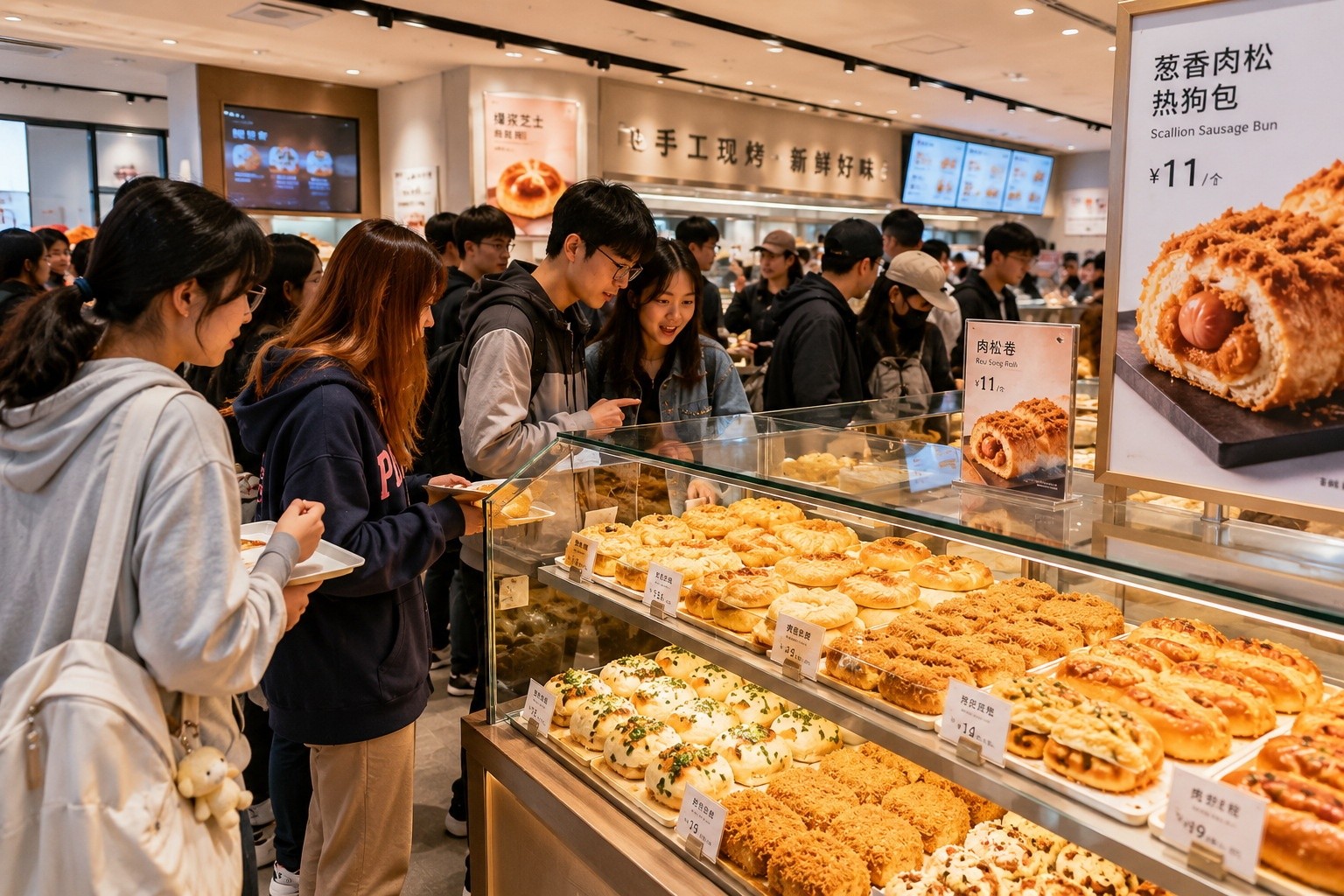
Chinese bakeries, particularly chains like Holiland or 85°C, have become ubiquitous convenience hubs. They offer hygiene, speed, and consistency. A Rou Song Xiao Bei costs roughly $1–$2 USD, takes seconds to buy, and requires no utensils. It is the perfect fuel for students rushing to class or office workers grabbing a quick coffee.
Moreover, social media plays a huge role. Chinese platforms like Xiaohongshu (Little Red Book) and Douyin are flooded with photos of “deconstructed” meat floss cakes, where layers of cream, floss, and cake are shown in cross-sections. The visual appeal—the contrast of golden bread, dark floss, and green seaweed—makes these items highly shareable. Eating them is as much about the photo as the taste.
How to Order Like a Local
If you want to try these items, here are a few tips:
- Check the freshness: Meat floss pastries are best eaten within 4 hours of purchase. The floss can become soggy if left too long in sealed plastic bags.
- Ask for “less sweet”: While you may not be able to customize the sugar level in a chain store, knowing that these items are generally sweeter than Western pastries will help manage your expectations.
- Pair with black coffee or tea: Because of the high sugar and fat content (from the mayo and oil in the floss), a strong black coffee or unsweetened oolong tea is the traditional accompaniment to balance the richness.
Conclusion
The Chinese bakery scene is not just about copying Western styles. It is a dynamic space where local tastes evolve rapidly. The “sweet and salty” combination might seem unusual at first, but it reflects a broader cultural openness to blending flavors. So, the next time you see those fluffy brown fibers on a pastry, don’t hesitate. Pick one up, take a bite, and join the millions who have already fallen in love with the chaotic harmony of meat floss and cream.