

The Smell of Garlic and Noise Before You See the Menu
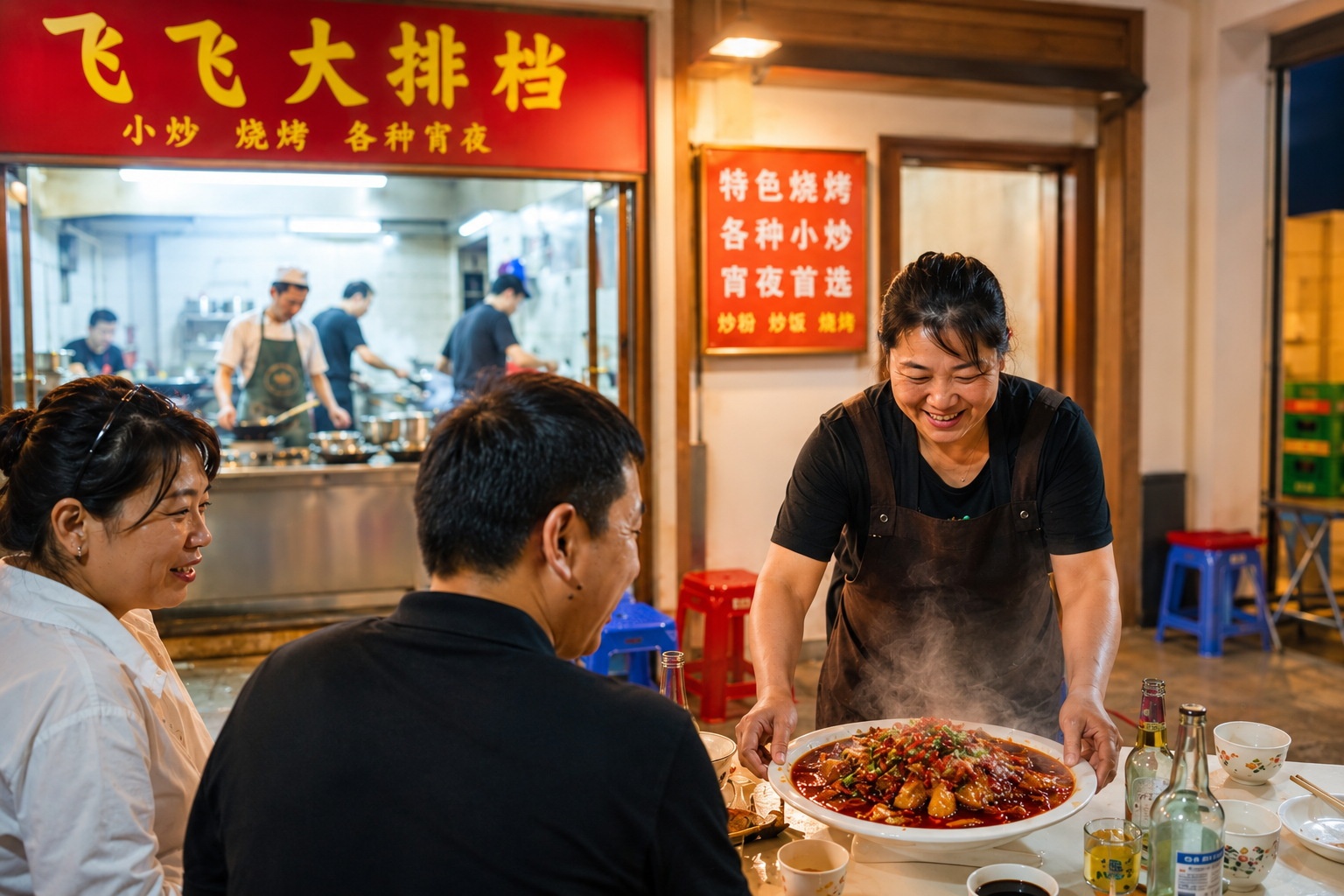
It is 7:30 PM on a Tuesday in Chengdu. The air outside is humid, carrying the scent of rain and exhaust. But inside the narrow alley, the air is thick with cumin, fried chili oil, and garlic. There is no signboard, just a faded red banner hanging crookedly above a doorway barely wide enough for two people to pass shoulder-to-shoulder.
You step in. The floor is sticky. The chairs are bright blue plastic stools, the kind you might find at any construction site or street corner. There are no menus. A waitress with a loud voice and a faded apron shouts over the clatter of woks: “Spicy beef? Garlic pork?” You point. Ten minutes later, a steaming plate lands on your table.
This is a “Cangying Guanzi” (Fly Restaurant). The name sounds unappealing to outsiders—implying dirt and pests—but locals know it differently. It means the food is so good that no one cares about the flies, or perhaps, no one has time to notice them because they are too busy eating.
Why “Fly” Means Flavor, Not Filth
To a Western eye, these places might seem unsafe. The lighting is dim, the walls are peeling, and the tables are often shared with three other families. But in China, this aesthetic signals something specific: efficiency and authenticity.
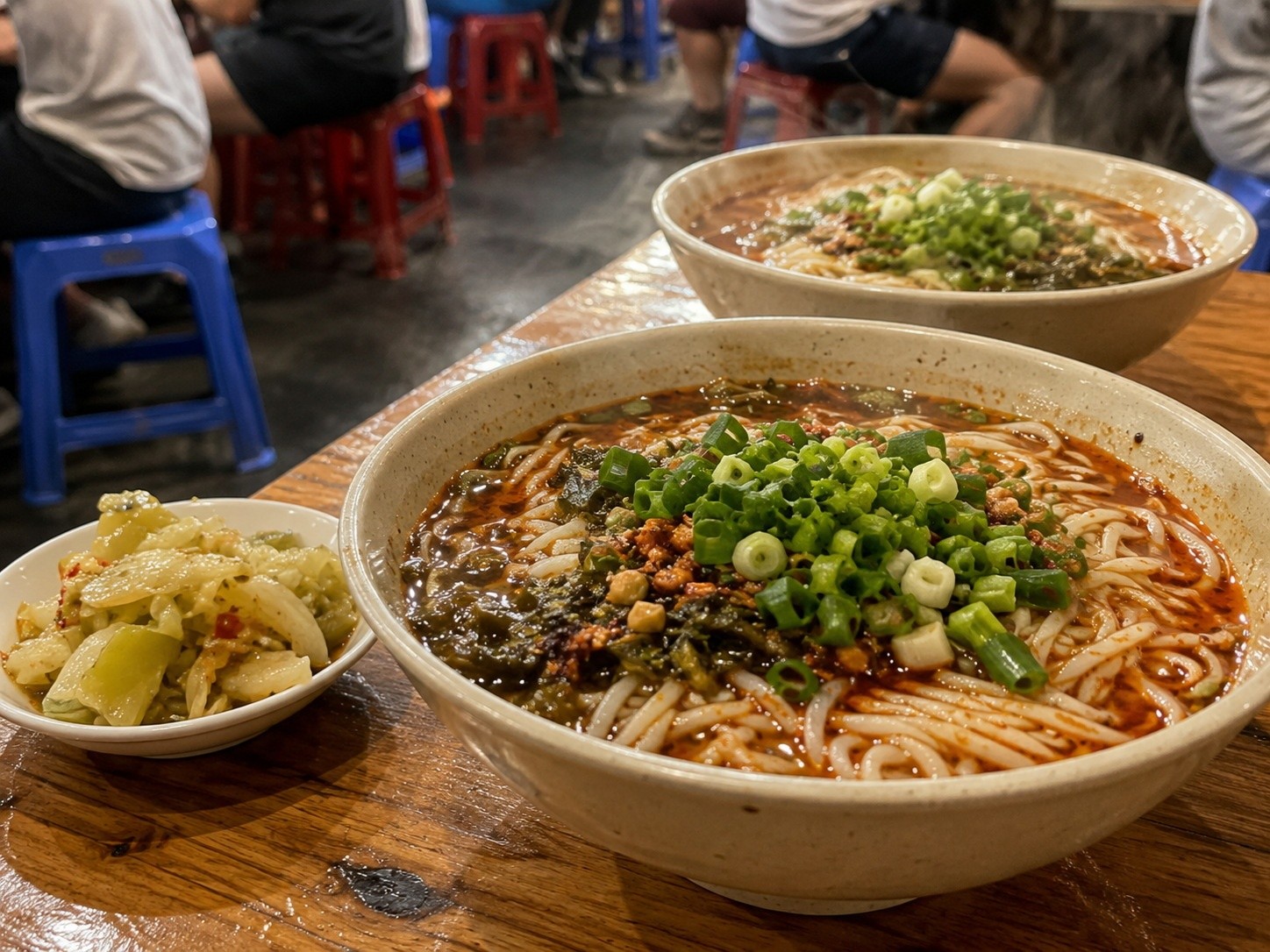
These restaurants survive on thin margins. They do not pay for expensive decor, air conditioning, or pretentious service. Every yuan saved on interior design goes into the ingredients. A bowl of noodle soup here might cost $2, yet it uses bones simmered for twelve hours and hand-pulled noodles that have a chewy, elastic texture you cannot find in chain restaurants.
The cooking style is equally intense. Woks are heated until they smoke. Chefs move with military precision, tossing ingredients in seconds. The result is “Wok Hei” (breath of the wok)—a smoky, charred flavor that defines Chinese stir-fry. You are not paying for ambiance; you are paying for the alchemy of fire and spice.
The Social Contract of the Shared Table
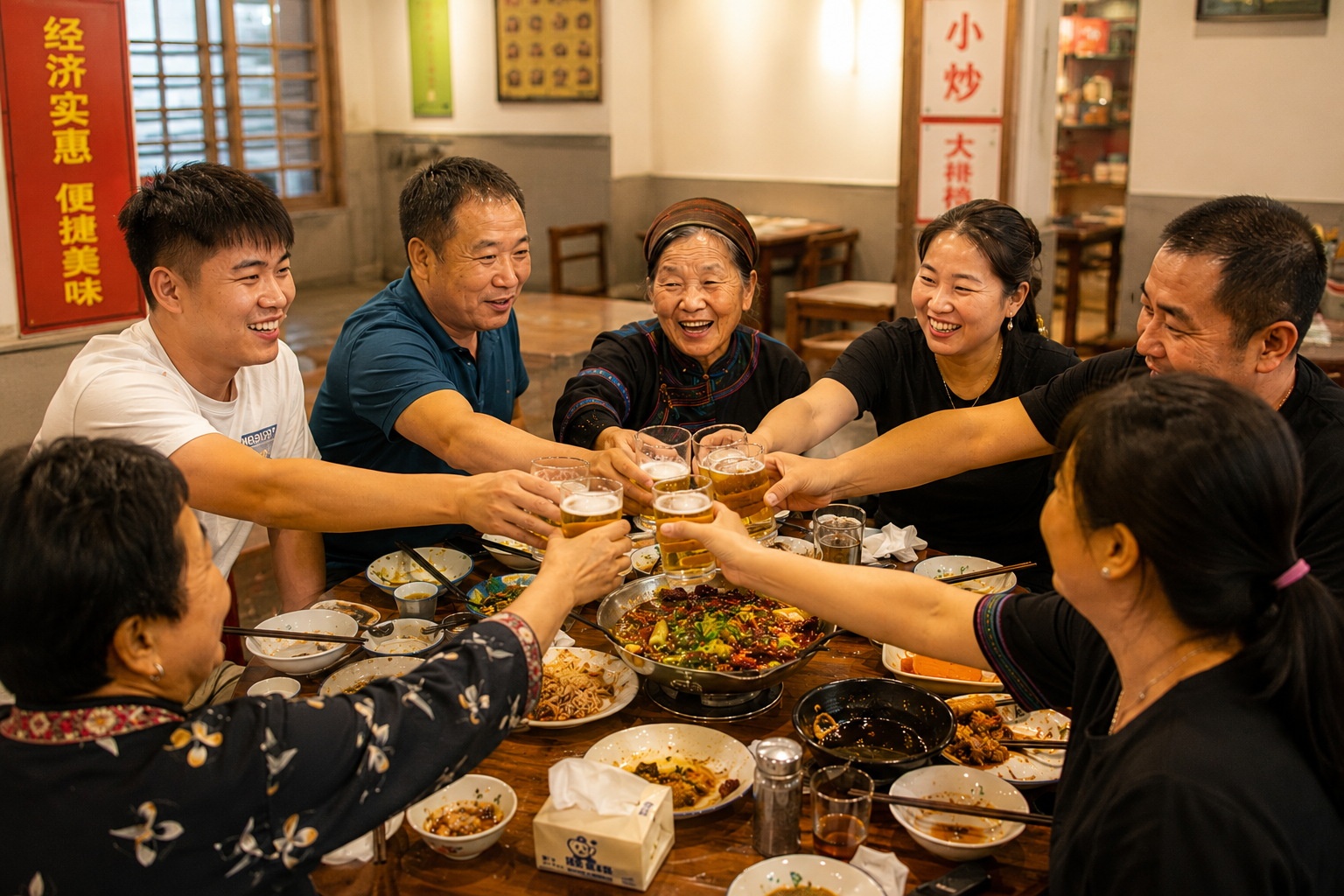
Perhaps the most startling experience for foreigners is the “pin zhuo” (sharing tables) culture. In a bustling fly restaurant, if there are no empty tables, you sit with strangers. A young programmer might find himself across from an elderly couple. A tourist sits next to a local laborer.
At first, this feels intrusive. But quickly, it becomes a low-stakes social experiment. Chinese society is often described as collectivist, and this dining habit reinforces that. You share space, you share noise, and sometimes, you share a bottle of beer.
I remember sitting in a fly restaurant in Wuhan, eating spicy crayfish. The man next to me noticed I was struggling with the shells. Without a word, he leaned over, showed me the trick to cracking them open quickly, and then returned to his own meal. We didn’t exchange names, but for thirty minutes, we were connected by the shared experience of messy, delicious food.
This is not forced intimacy. It is a practical acknowledgment that in a dense urban environment, privacy is a luxury, but connection is free. The noise isn’t background chaos; it is the sound of life happening.
Neighborhood Anchors in a Changing City
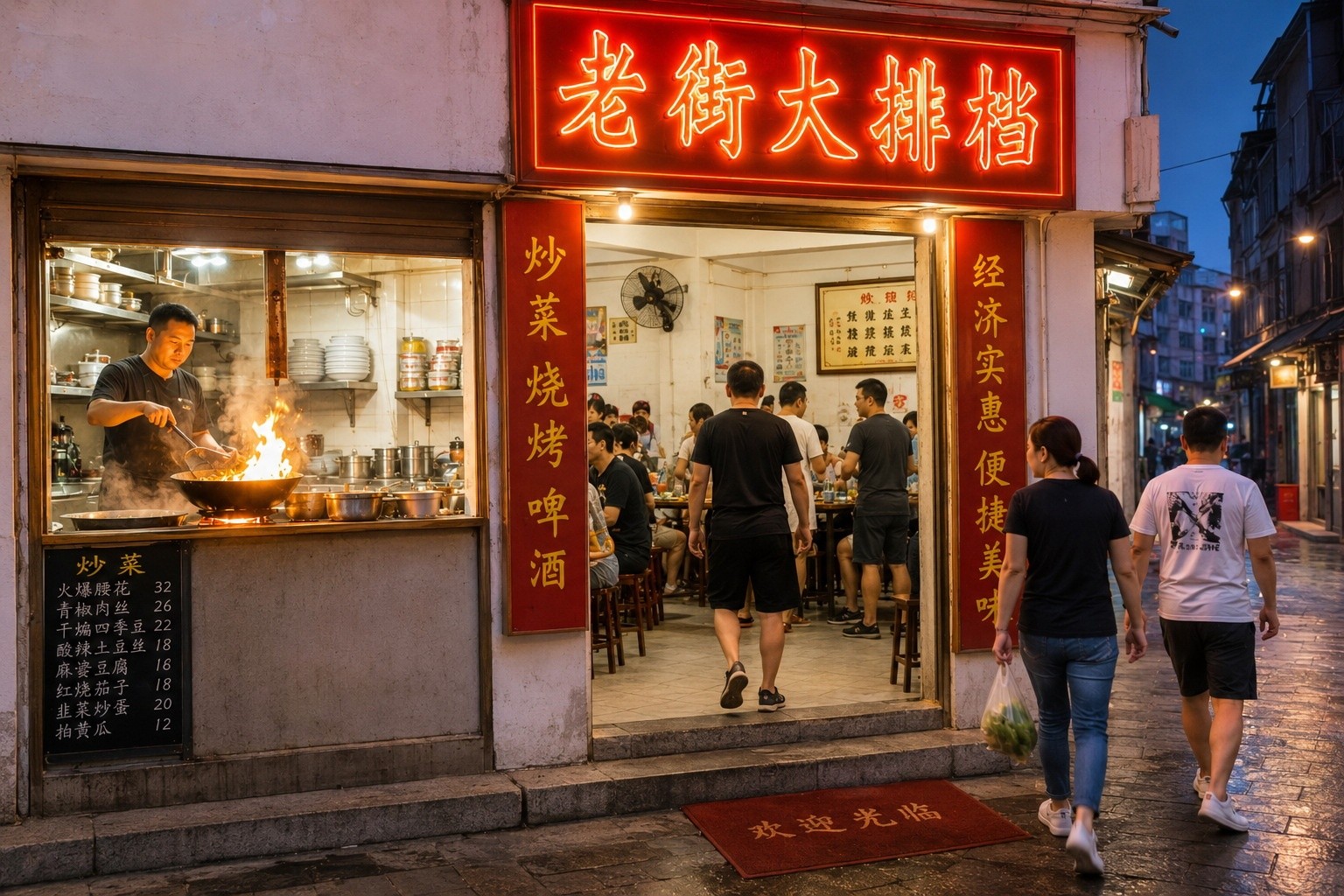
Fly restaurants are more than just places to eat; they are community archives. Many have been open for twenty or thirty years, serving the same neighborhood through waves of gentrification. They remember who moved away, who got married, and whose children came back from university.
In Shanghai, for example, as historic “longtang” (lane houses) are demolished to make way for skyscrapers, the fly restaurants often move with the locals. They become portable anchors of memory. For the elderly, these spots are the only places where prices haven’t skyrocketed and where the staff knows their orders by heart.
However, this world is under threat. Urban management campaigns frequently target these small businesses for “illegal” signage or sanitation issues. Meanwhile, rising rents push them out of prime locations. Yet, they persist. Why? Because they offer something the sleek, air-conditioned malls cannot: a sense of belonging.
The New Life of Old Flies
Interestingly, the internet has saved many of these restaurants. In the age of social media, “fly restaurants” have become trendy. Young people who usually dine in minimalist cafes now queue for hours to eat at these gritty spots. They post photos of the messy tables and the vibrant food on Xiaohongshu (Little Red Book) and Douyin.
This has created a paradox. The very attention that saves them also threatens their soul. Some owners have started to clean up, adding plastic tablecloths and better lighting. While this makes them more comfortable, it also strips away the raw authenticity that made them special.
But the core remains. You will still sit on a wobbly plastic stool. You will still share your table with someone whose life is completely different from yours. And when you leave, full and sweating, you will understand why we love these places. They are not just about hunger. They are about being part of the noisy, messy, vibrant heartbeat of China.