
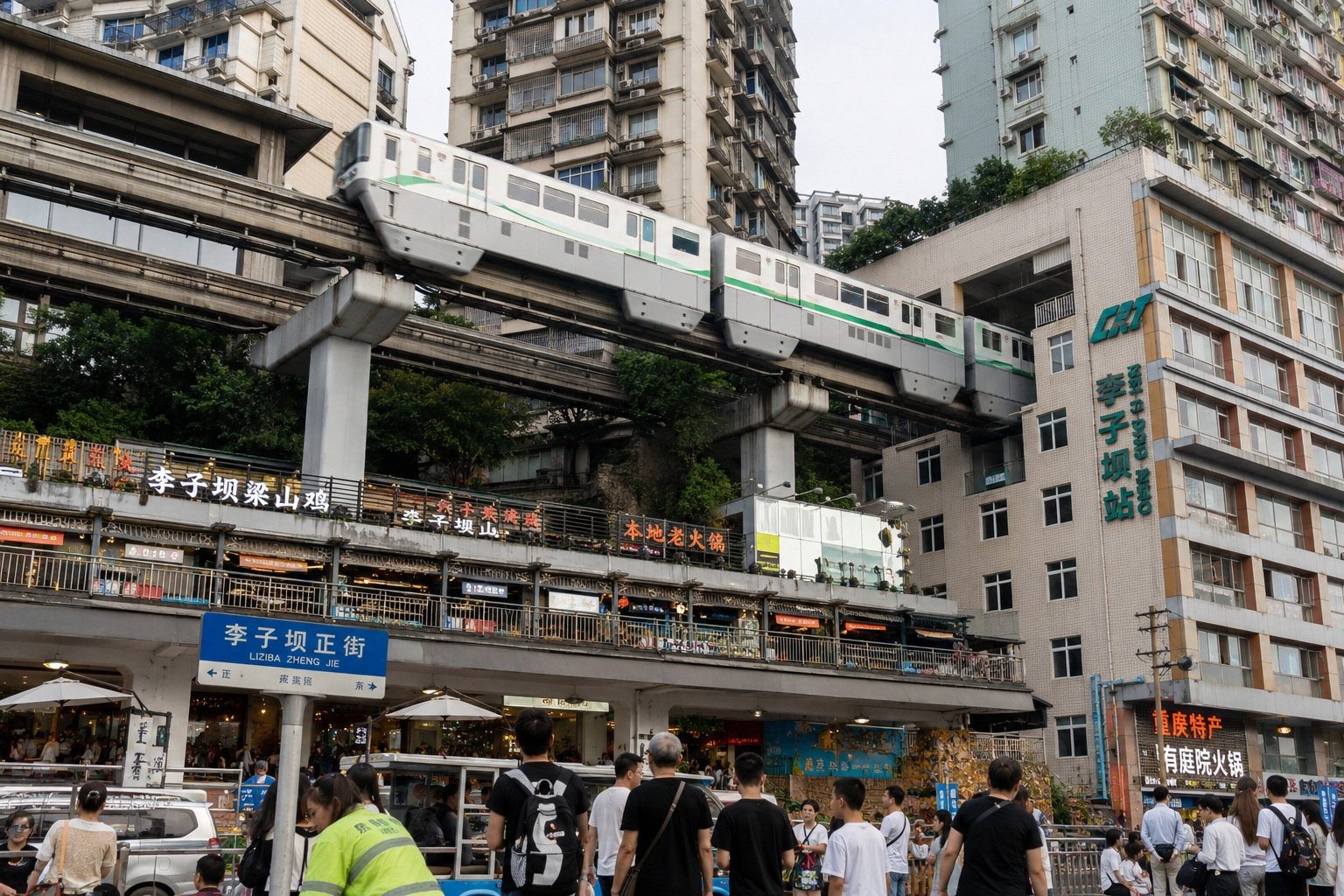

The City That Defies Flat Maps
If you look at a 2D map of Chongqing, it looks like any other Chinese metropolis. But stand on its streets, and the illusion shatters. Chongqing is not a city on a plane; it is a city in altitude. With an average elevation of 238 meters above sea level and steep mountainous terrain, the city has developed what locals jokingly call an “8D” infrastructure. In this vertical labyrinth, addresses are not just numbers; they are coordinates of height. A single building can have entrances on the first, tenth, and twenty-second floors, all leading to different parts of the same structure.
For outsiders, this often triggers images of “cyberpunk” films—neon lights, flying cars, and dystopian density. But the reality is far less cinematic and far more practical. The verticality is not a stylistic choice for a futuristic movie; it is a survival strategy for a city built on jagged hills where flat land is scarce and expensive. Here, geography dictates logic. If you think you are on the ground floor, check your map again. You might be standing on the roof of another building.
Living in the Vertical Labyrinth
To understand Chongqing, you must walk through a typical hillside neighborhood, such as those found in the Jiulongpo or Yubei districts. Imagine walking up a long flight of concrete stairs, only to emerge onto a bustling street level that is twenty meters above where you started. This is daily life.
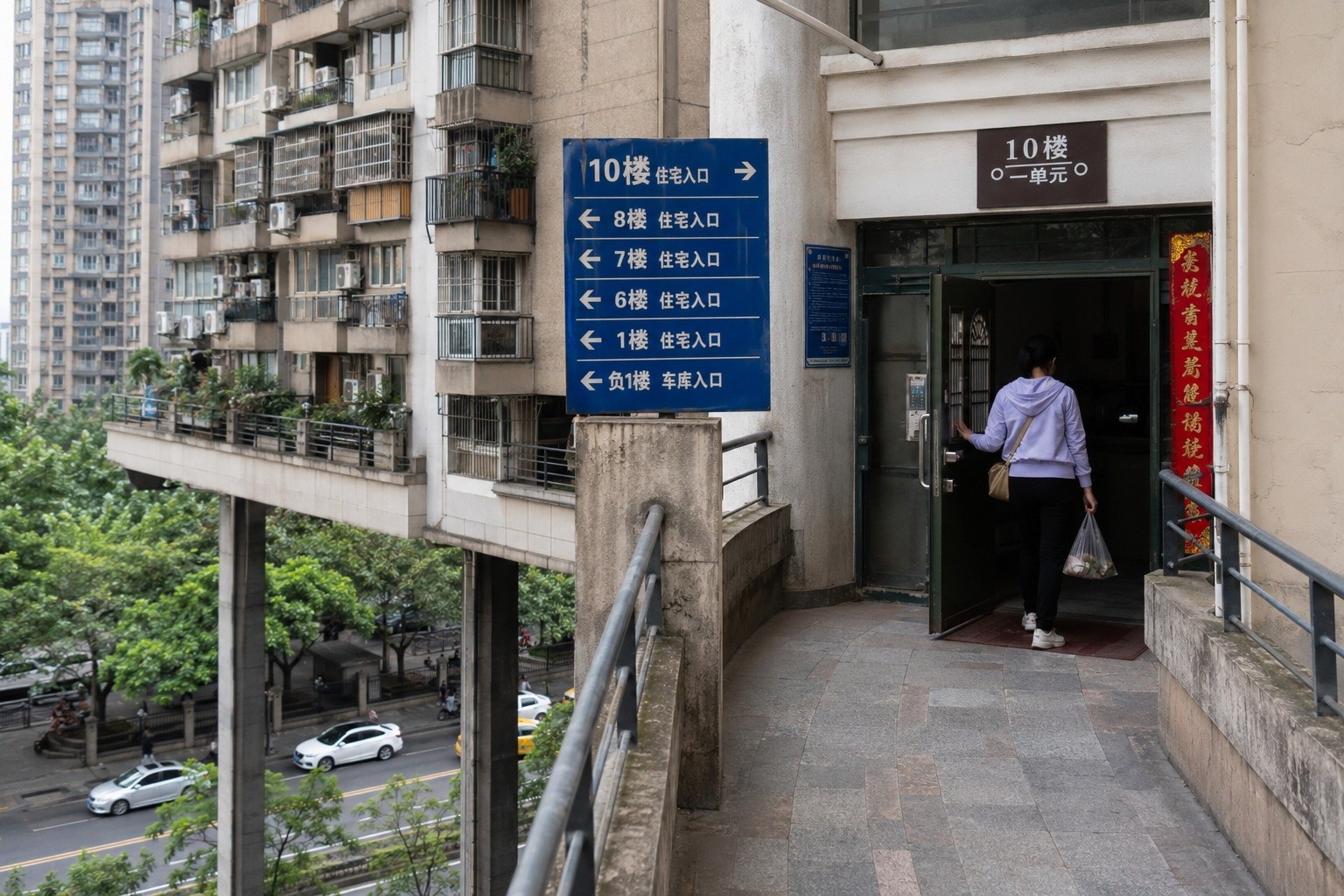
Residents have adapted to this disorienting geometry with remarkable ease. For locals, navigation is intuitive. They know that the “first floor” of their apartment complex is actually the 15th floor relative to the valley below. Elevators are not just for moving between floors within a building; they are essential public transport connecting different street levels. In many communities, you can enter your home from a subway station exit, a bus stop, or a shopping mall entrance—all at different elevations.
This architectural complexity has shaped a unique social fabric. Community life happens not just in living rooms, but on stairwells, balconies, and rooftop terraces. Neighbors meet on the “sky bridges” that connect older residential blocks. It is a place where privacy and community intersect in ways that flatland cities rarely experience. The verticality forces interaction; you cannot ignore your neighbor when your balcony overlooks theirs.
Young Creatives and the New Consumption
While the infrastructure is old-school in its engineering, the social life of Chongqing’s youth is modern and dynamic. The city has become a hub for young entrepreneurs, artists, and tech workers who are drawn by the lower cost of living compared to Shanghai or Beijing, combined with a vibrant cultural scene.
The unique geography has birthed new forms of consumption. Cafes are no longer just places for coffee; they are destinations. Many are hidden in basements, perched on cliff edges, or tucked inside abandoned factories repurposed as creative parks. Young people in Chongqing spend their evenings exploring these “hidden gems,” turning the act of finding a venue into a game of urban exploration.
Technology has also adapted to the terrain. Ride-hailing apps in Chongqing are notoriously complex because GPS signals can bounce off skyscrapers and get confused by multiple layers of roads. Drivers and passengers often have to coordinate via voice calls to pinpoint exact locations: “I’m on the 3rd floor, not the ground floor.” This logistical challenge has fostered a strong sense of local reliance and community knowledge that is absent in flatter cities.
Public Transport: Engineering as Social Policy
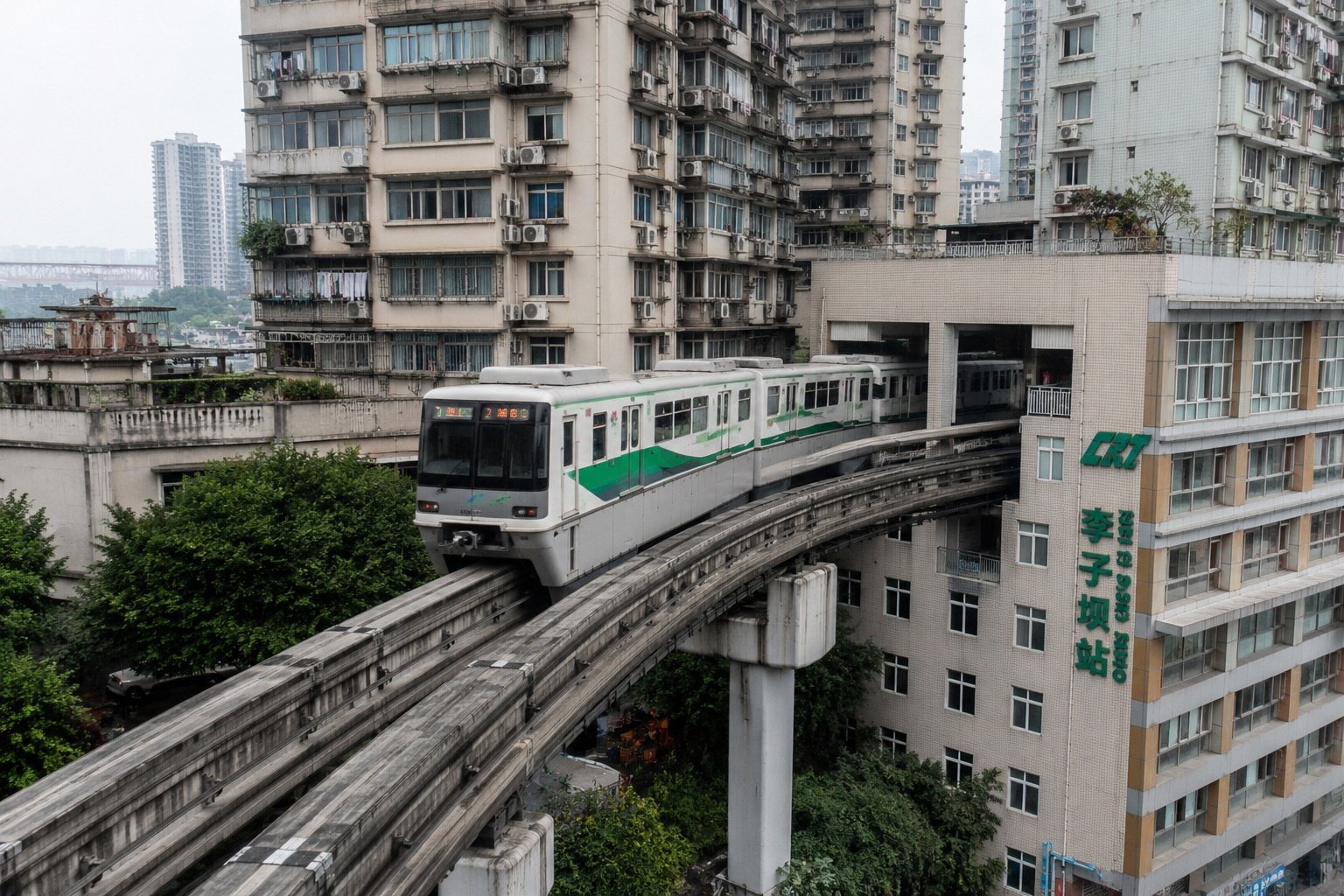
The most famous symbol of Chongqing’s urbanism is the monorail line that appears to pass through residential buildings. The most cited example is Line 2, where the Liziba station is embedded within a high-rise apartment block. For tourists, this is a photo opportunity. For city planners, it is a masterclass in spatial efficiency.
Chongqing has one of the highest densities of high-rise residential buildings in China. With limited flat land, the city had to build up and through its natural obstacles. The decision to route light rail through existing structures was not made lightly. It minimized displacement of residents and reduced construction costs by utilizing the building’s structural integrity. This reflects a broader philosophy of Chinese urban governance: pragmatism over aesthetics. The goal is not to create a visually striking but inefficient city, but to maximize utility for millions of people.
This approach extends to the city’s extensive network of tunnels and bridges. Chongqing has more than 50,000 bridges, including several cable-stayed bridges that span the Yangtze and Jialing rivers. These are not just engineering feats; they are lifelines connecting the city’s fragmented districts. In a city where walking between neighborhoods can take an hour due to elevation changes, bridges and tunnels are the arteries that keep the urban body alive.
A Walker’s Route: Connecting Old and New
To truly grasp Chongqing, one must walk. A recommended route starts at Hongyadong, the iconic stilt-house complex that looks like a scene from an anime. But instead of just admiring the view from the bottom, walk up the internal ramps. You will see locals buying groceries in supermarkets that are technically on the “top” floor but accessible from the street.
From there, head towards the Yangtze River Cableway. The ride offers a perspective shift, moving you horizontally across the river while looking down at the vertical chaos of the city. On the other side, explore the Ciqikou Ancient Town. Here, the pace slows. You see traditional tea houses and stone-paved alleys that have existed for centuries, untouched by the modern rush.
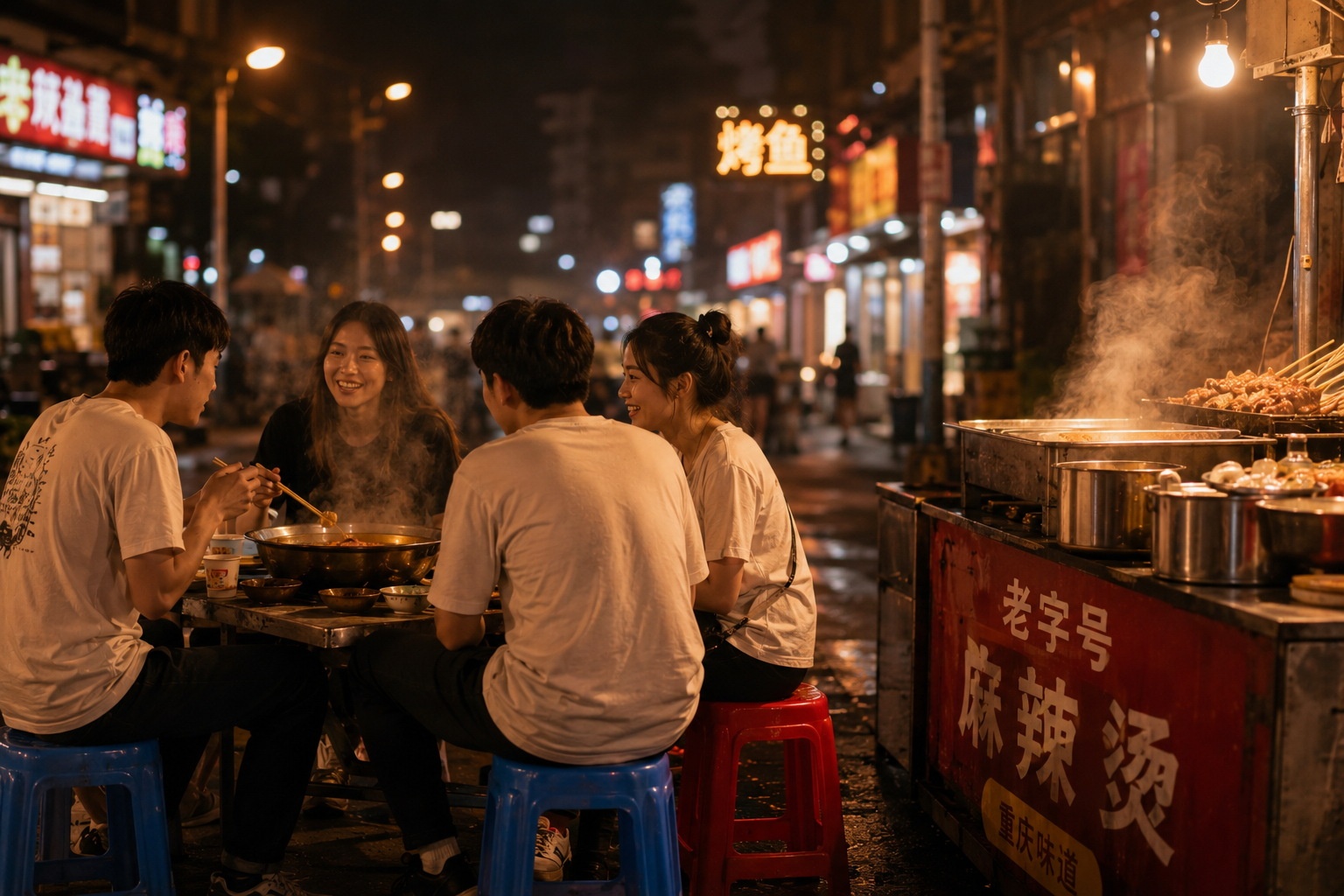
The final stop should be a local hotpot restaurant in a residential alleyway. This is where the city’s soul resides. The spicy, numbing broth is not just food; it is a social lubricant. In Chongqing, business deals are made, friendships are forged, and stress is released over bubbling pots of chili and Sichuan peppercorns. The heat of the food mirrors the heat of the city’s ambition.
Beyond the Aesthetic
Chongqing is often reduced to its visual quirks—the staircases that go nowhere, the trains through buildings, the fog. But to see Chongqing only as a spectacle is to miss its substance. It is a city of immense resilience. Its people have mastered a difficult geography, turning obstacles into opportunities for vertical living and dense community bonding.
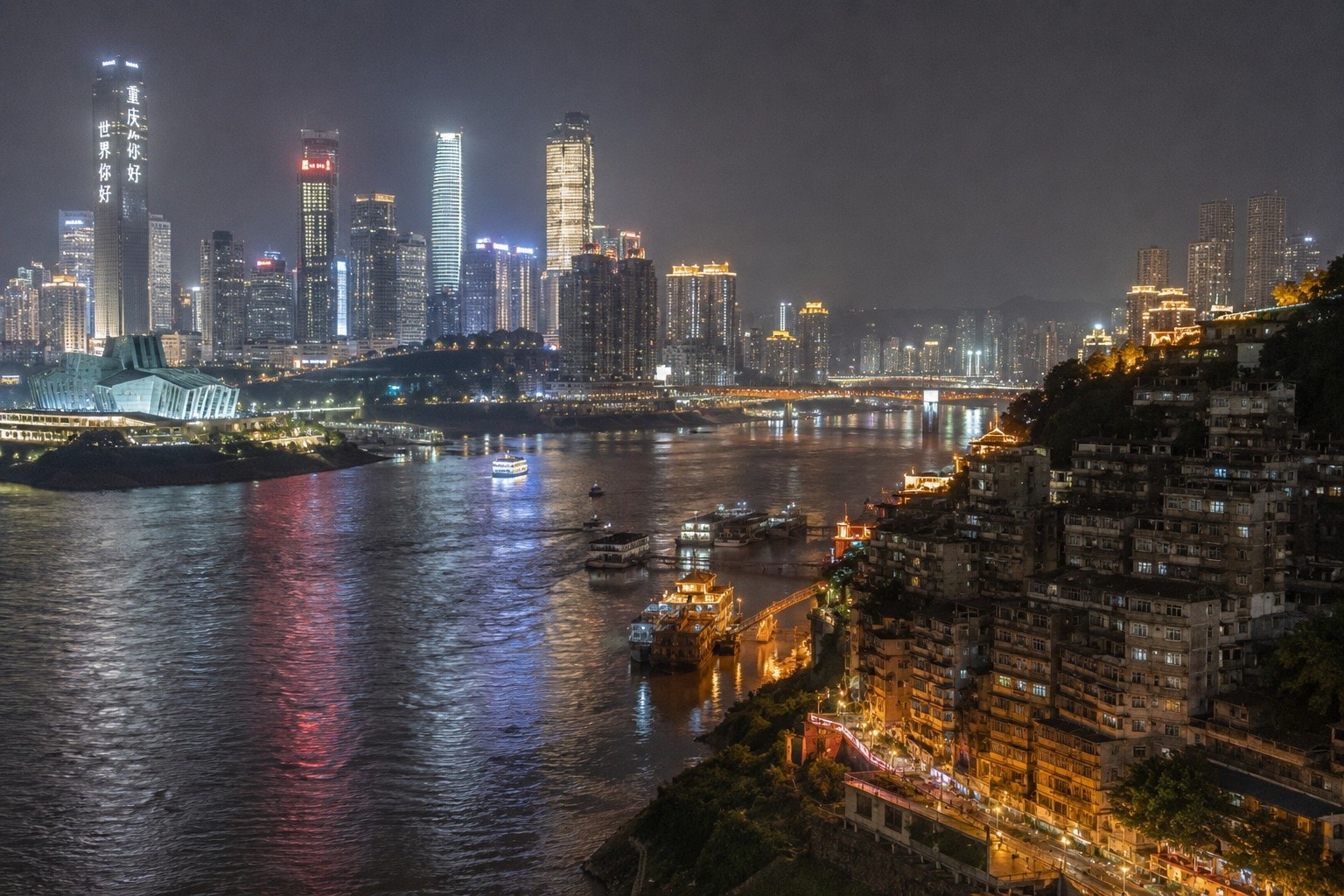
As China continues to urbanize, Chongqing offers a different model. It shows that density does not have to mean claustrophobia. Vertical cities can be humane, functional, and deeply social. The “cyberpunk” label is a convenient shorthand for foreign observers, but the reality is far more nuanced. It is a city of concrete and steel, yes, but also of steam, spice, and the relentless energy of people who have learned to live upwards.