

The Digital Lobby: Arriving at a Modern Cantonese Restaurant
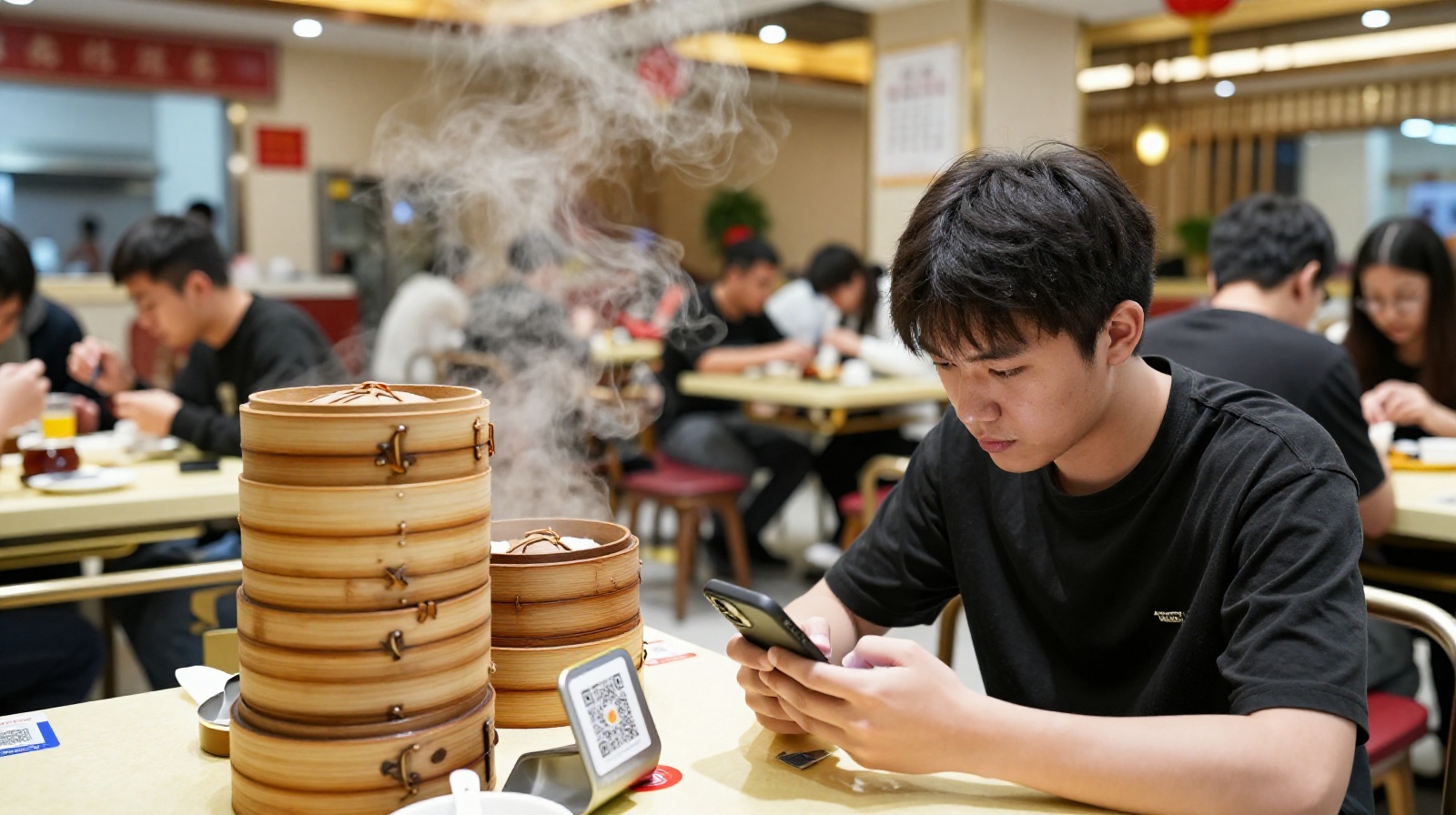
It is 10:30 AM on a Sunday in Guangzhou. The air inside the tea house is thick with the scent of steamed buns and jasmine tea. But instead of the usual cacophony of waiters shouting orders in traditional dialects, the dominant sound is the soft beep of scanners and the tapping of smartphone screens.
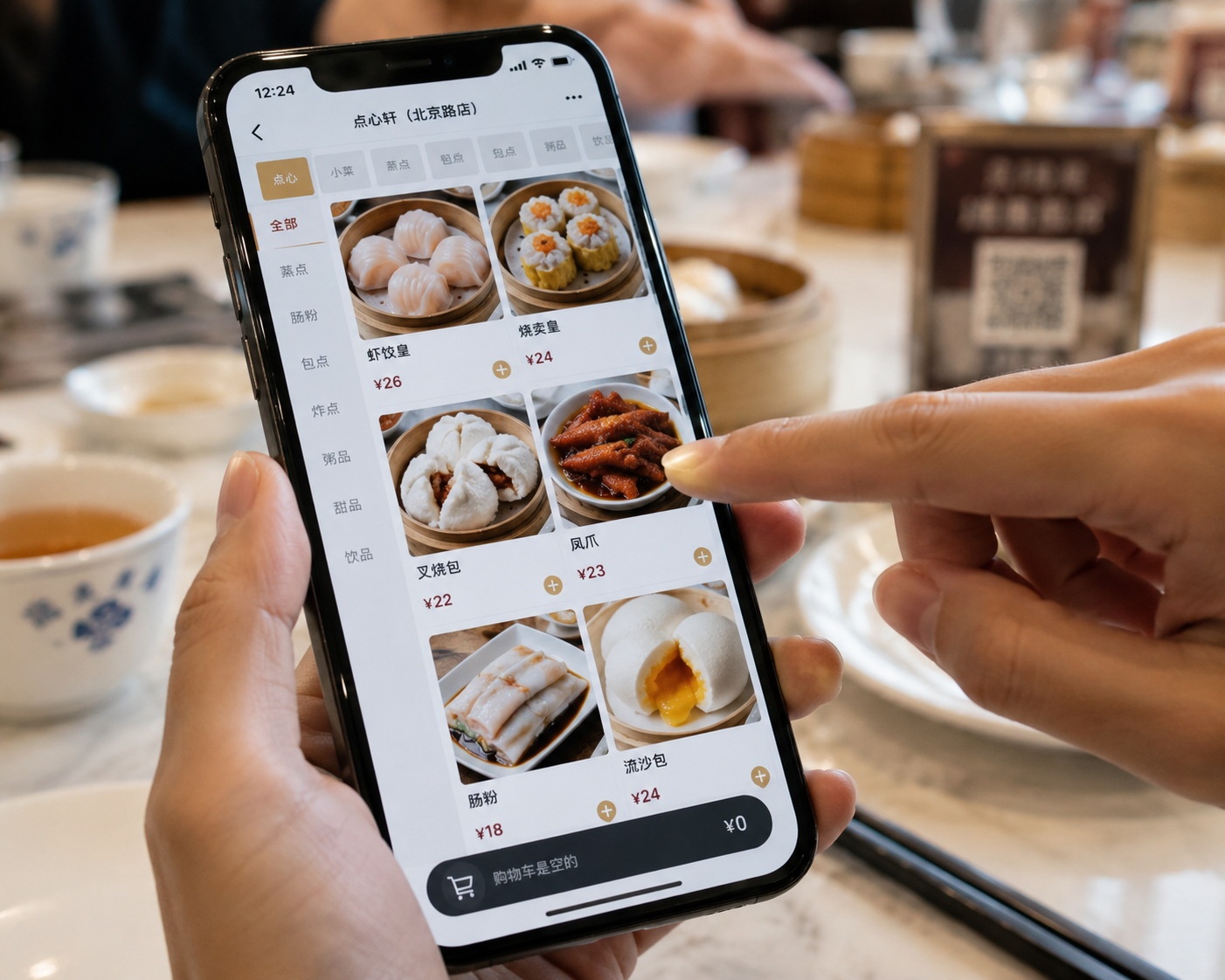
Li Wei, a 32-year-old software engineer, slides into a booth. He doesn’t wait for a menu. He pulls out his phone, scans a QR code printed on the table, and within seconds, the entire restaurant’s inventory appears on his screen. He selects his dim sum—har gow, char siu bao, and chicken feet—adds them to the cart, and pays via WeChat Pay before the first steamer basket arrives at his table.
This is the new normal for Yum Cha (morning tea) in China. The ancient tradition of leisurely weekend brunching has been overlaid with a layer of hyper-efficiency. While the food remains unchanged, the mechanics of dining have shifted dramatically. For tourists or newcomers, this can feel alienating. But for locals, it is simply the price of admission in a city that moves at 100 kilometers per hour.
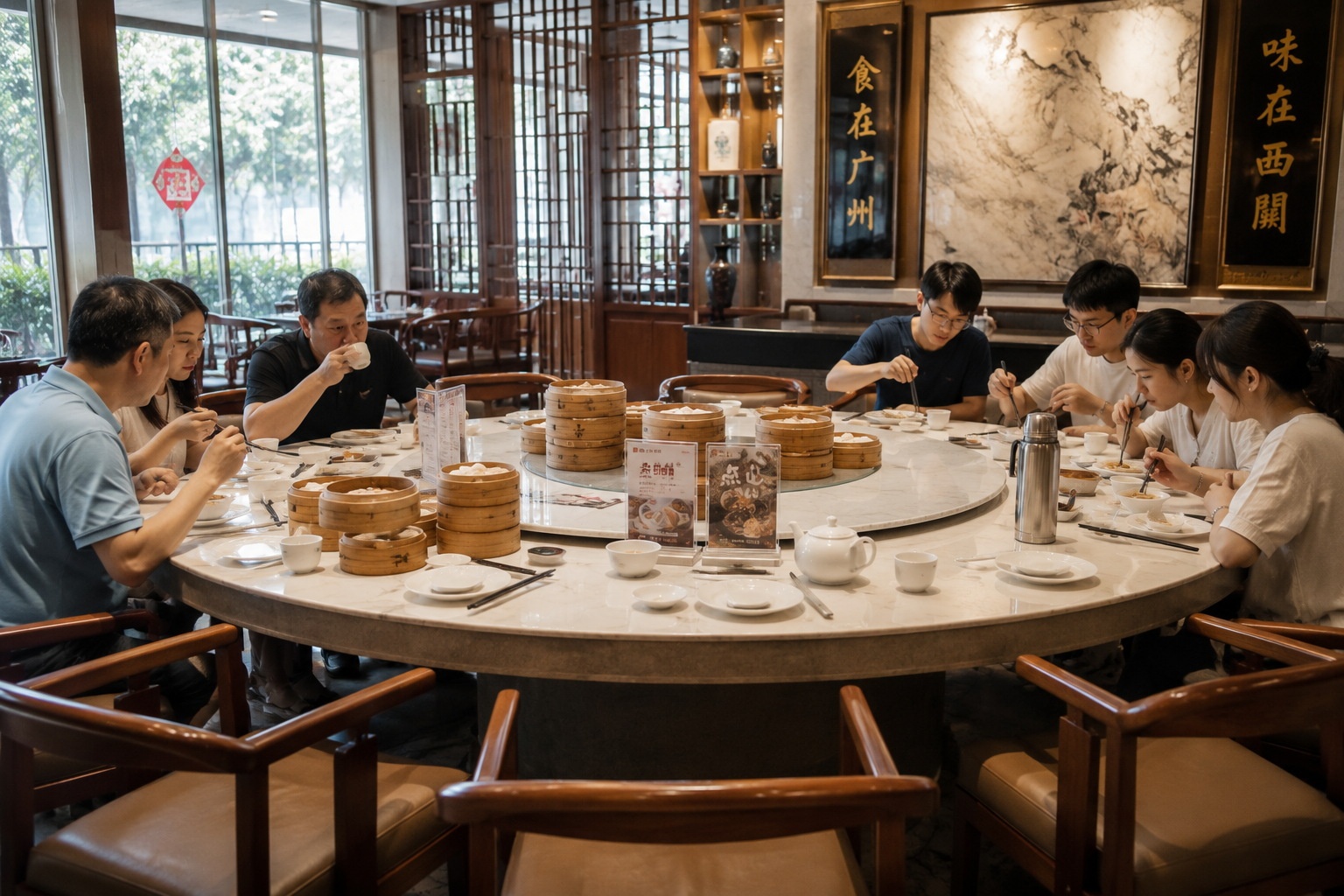
The most striking change, however, is not just the ordering process, but the seating arrangement itself. In many mid-to-high-end Cantonese restaurants, “shared tables” (gongzhuo) have become common. If you arrive alone or as a couple during peak hours, you might find yourself seated at a large round table intended for ten, alongside two other strangers. It sounds chaotic, but the digital system manages it seamlessly. The QR code on your specific section of the table links only to your order. Strangers share the space, but not the bill or the data.
The Tech Behind the Tradition
Why this shift? It is a response to the extreme density of Chinese urban life. In cities like Guangzhou, Shenzhen, and Shanghai, prime real estate for restaurants is expensive. Every minute a table sits empty while guests decide what to eat is lost revenue.
The algorithmic optimization of table turnover is subtle but powerful. By removing the friction of waiting for a waiter and the ambiguity of reading a paper menu, digital ordering reduces the average dining cycle time by 15-20 minutes. This allows restaurants to serve more customers without expanding their physical footprint.
Furthermore, the integration of payment platforms like Alipay and WeChat has eliminated the “bill splitting” anxiety that often slows down group meals. In the past, calculating who owes what for ten different dishes was a social headache. Now, the system auto-calculates shares based on individual scans, or allows one person to pay for the whole table with a single fingerprint scan. It is a frictionless transaction in a high-friction environment.
The Human Touch in a Digital Space
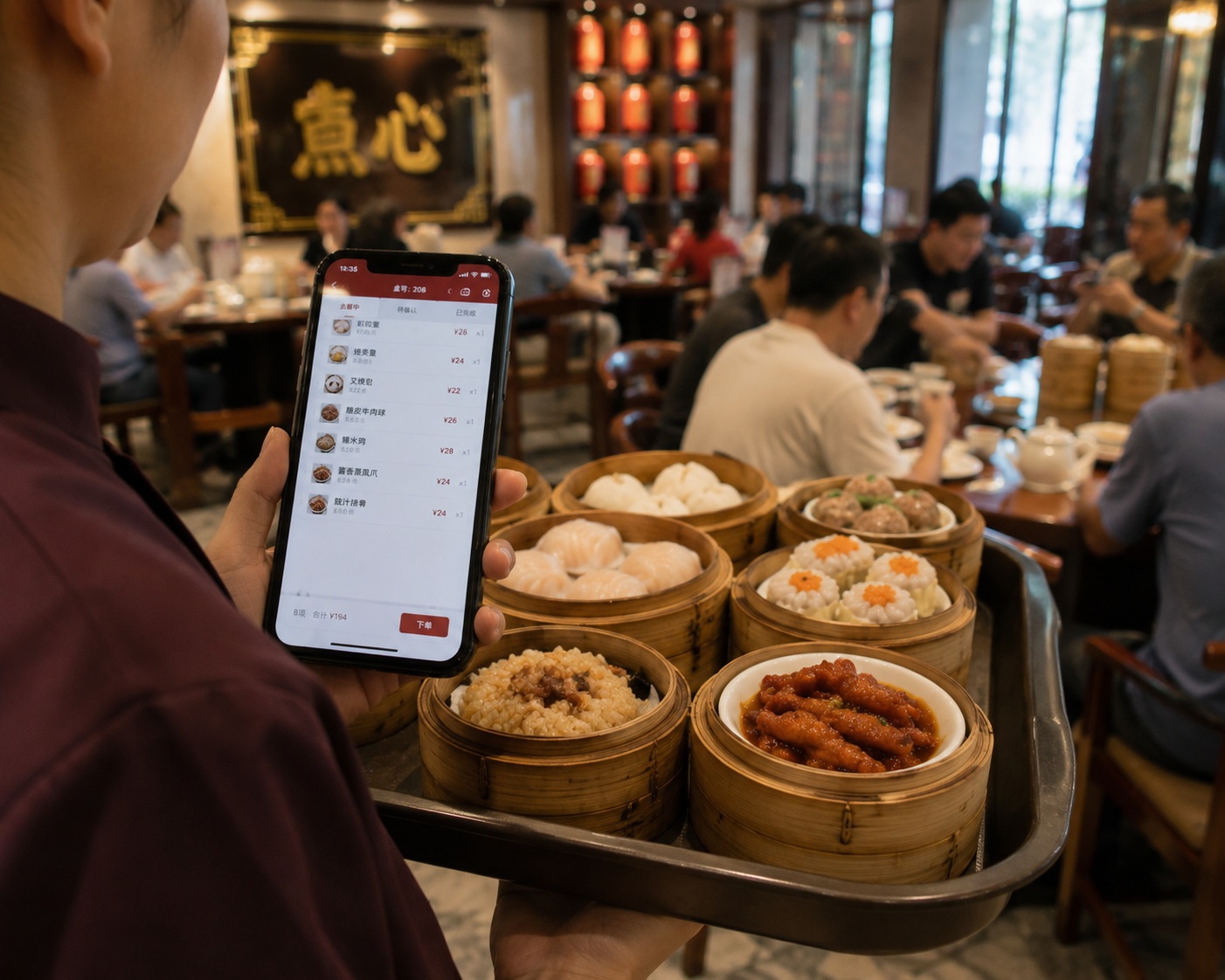
Does this technology erase the human element of service? Not entirely, but it redefines it. In these digital tea houses, waiters are no longer just order-takers; they are fulfillment specialists.
I watched a waitress, Xiao Lin, navigate the floor. She wasn’t holding a notepad or running back and forth to the kitchen with tickets. Her phone vibrated with orders. She picked up three steamer baskets, checked the digital display on her wrist, and delivered them to the correct tables. Her role shifted from memory-intensive ordering to efficient logistics.
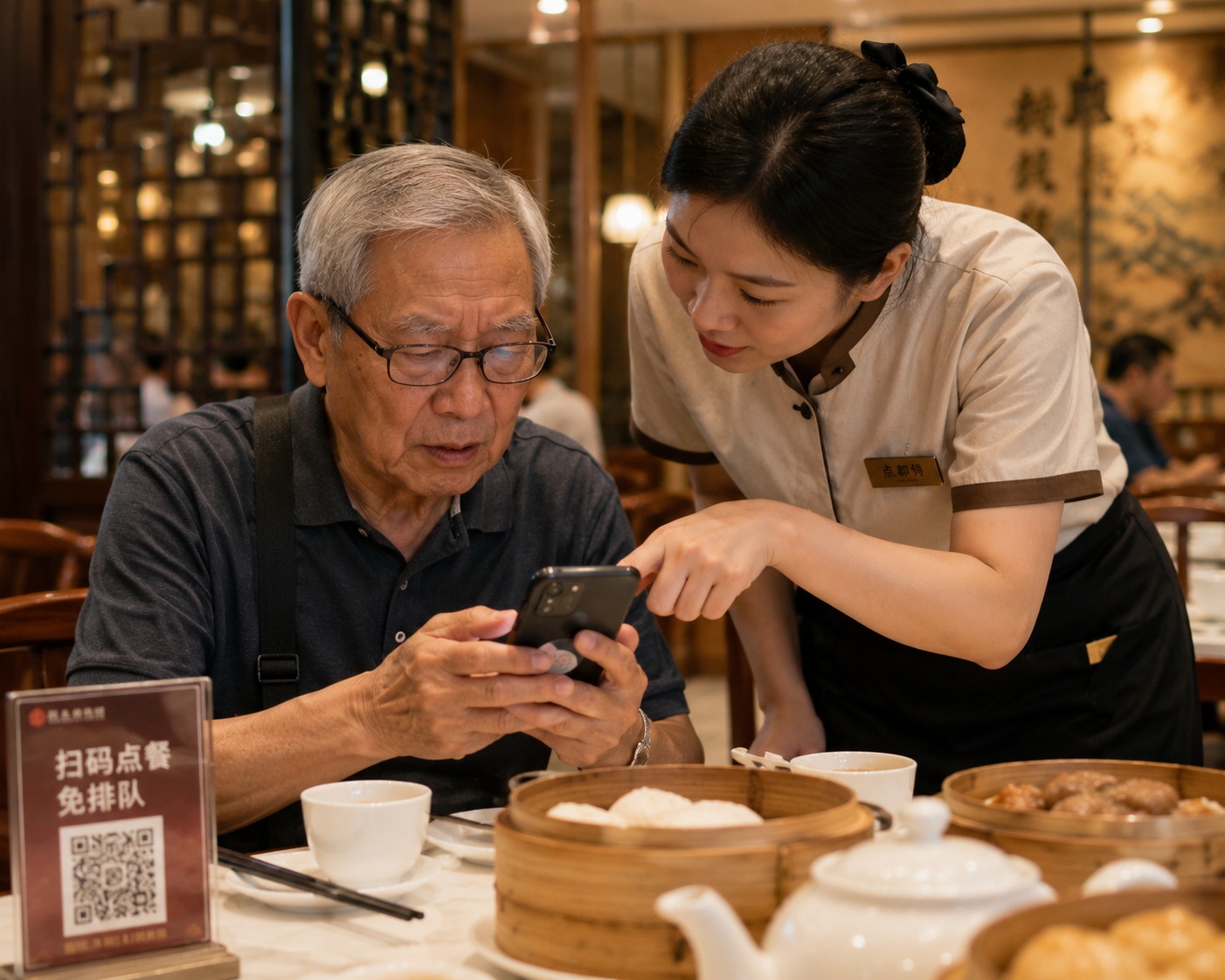
However, the digital divide is real. I observed an elderly man in his 70s struggling with the interface. He squinted at the small text, frustrated by the lack of a physical menu. Eventually, he waved down a staff member, who patiently guided him through the process on his own device. This moment highlights a crucial nuance: technology in China is not replacing service, but it is forcing an adaptation. Younger generations embrace the speed; older generations require a “digital bridge” to access it.
More Than Just Convenience
For foreign observers, the idea of sharing a table with strangers might seem intrusive. Yet, in the context of Chinese social culture, it is often tolerated—or even welcomed—as a pragmatic solution to overcrowding. It reflects a broader societal shift towards collective efficiency over private exclusivity in public spaces.
This model of “digital Yum Cha” is more than a gimmick. It represents how China’s service industry is leveraging technology to solve structural problems like labor shortages and high rent. It allows traditional cultures, which are inherently slow and social, to survive in a fast-paced, high-density economic engine.
As you leave the tea house, the steam still clinging to your clothes, you realize that the tradition hasn’t died; it has been optimized. The QR code is not just a tool for ordering food; it is the interface between China’s ancient culinary heritage and its relentless digital future. For those willing to scan, the experience is faster, cleaner, and surprisingly efficient. For those who prefer the old ways, the human staff remains, ready to bridge the gap.