


From Cash to Clicks – The Evolution of Retail Payments
The morning rush at a popular chain coffee shop in Shanghai is chaotic but efficient. There is no line snaking out the door, as seen in many Western cities. Instead, a young woman in a blazer walks up to the counter, glances briefly at a small camera mounted above the register, and sips her latte while she waits for it to be handed over.
She didn’t tap a phone against a terminal. She didn’t insert a credit card. She didn’t even pull out her wallet. In seconds, the barista says, “Your order is ready,” and hands over the cup. This is FaceID payment, a technology that has quietly transformed how millions of Chinese people buy coffee, groceries, and transit tickets.
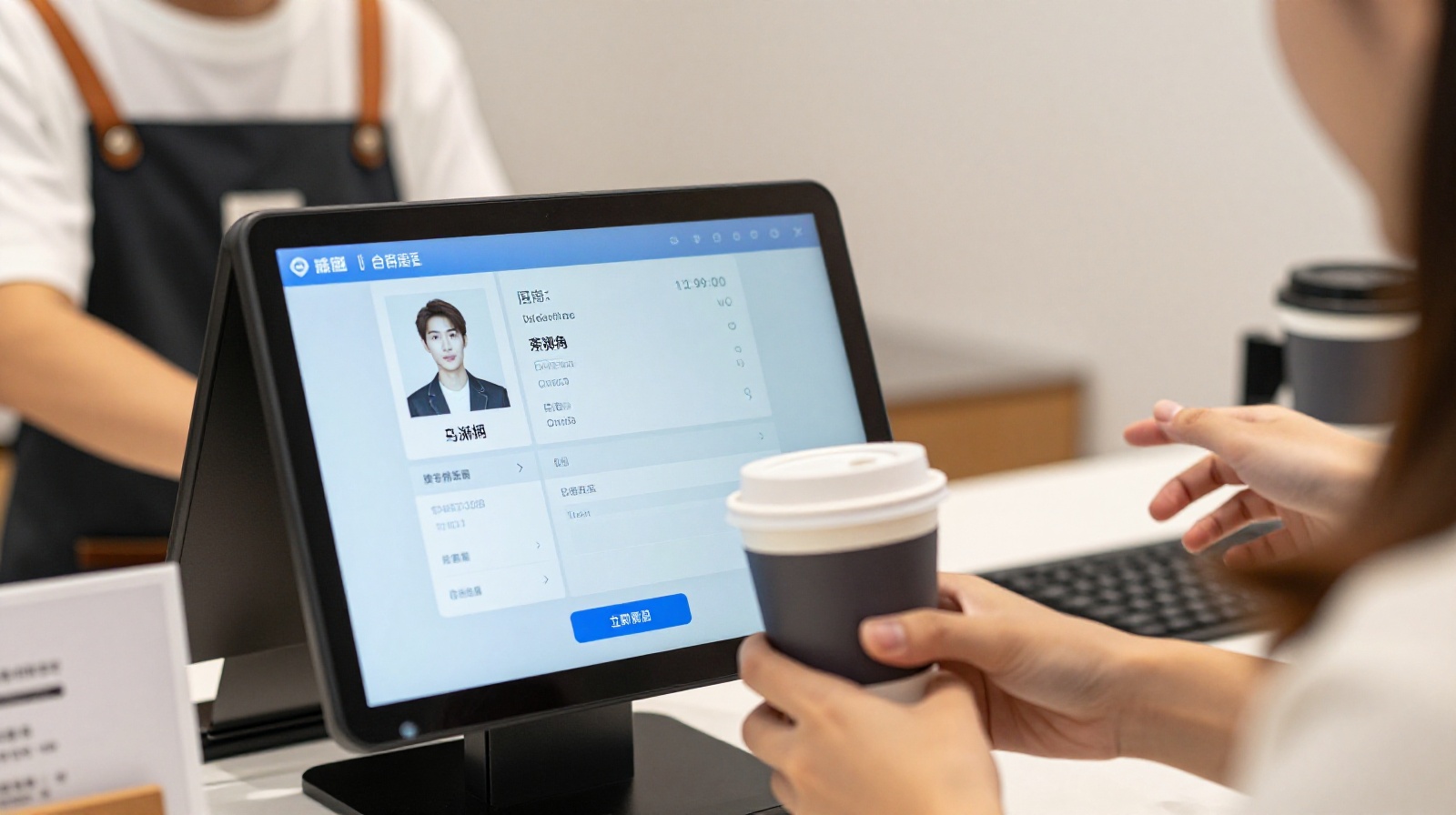
A ‘Just Walk Out’ Coffee Purchase: The Real-World Experience
To understand the speed, imagine standing in line for three minutes. Then, step forward. A digital display shows your profile picture and order total: “Matcha Latte – 32 RMB.” You look directly into the camera sensor. The screen flashes green, a soft chime sounds, and you walk away.
This entire process takes less than two seconds. For many regulars, this is now the default method of payment. It eliminates the friction of searching for change, fumbling with phone screens in the rain, or worrying about forgetting your wallet at home. The experience feels almost magical to visitors from countries where cash and cards still dominate.
How Biometric Encryption Ensures Secure Verification
It is natural to wonder: Is it safe? How does the system distinguish between a customer and a stranger, or prevent someone from taking a photo of your face to steal your identity?
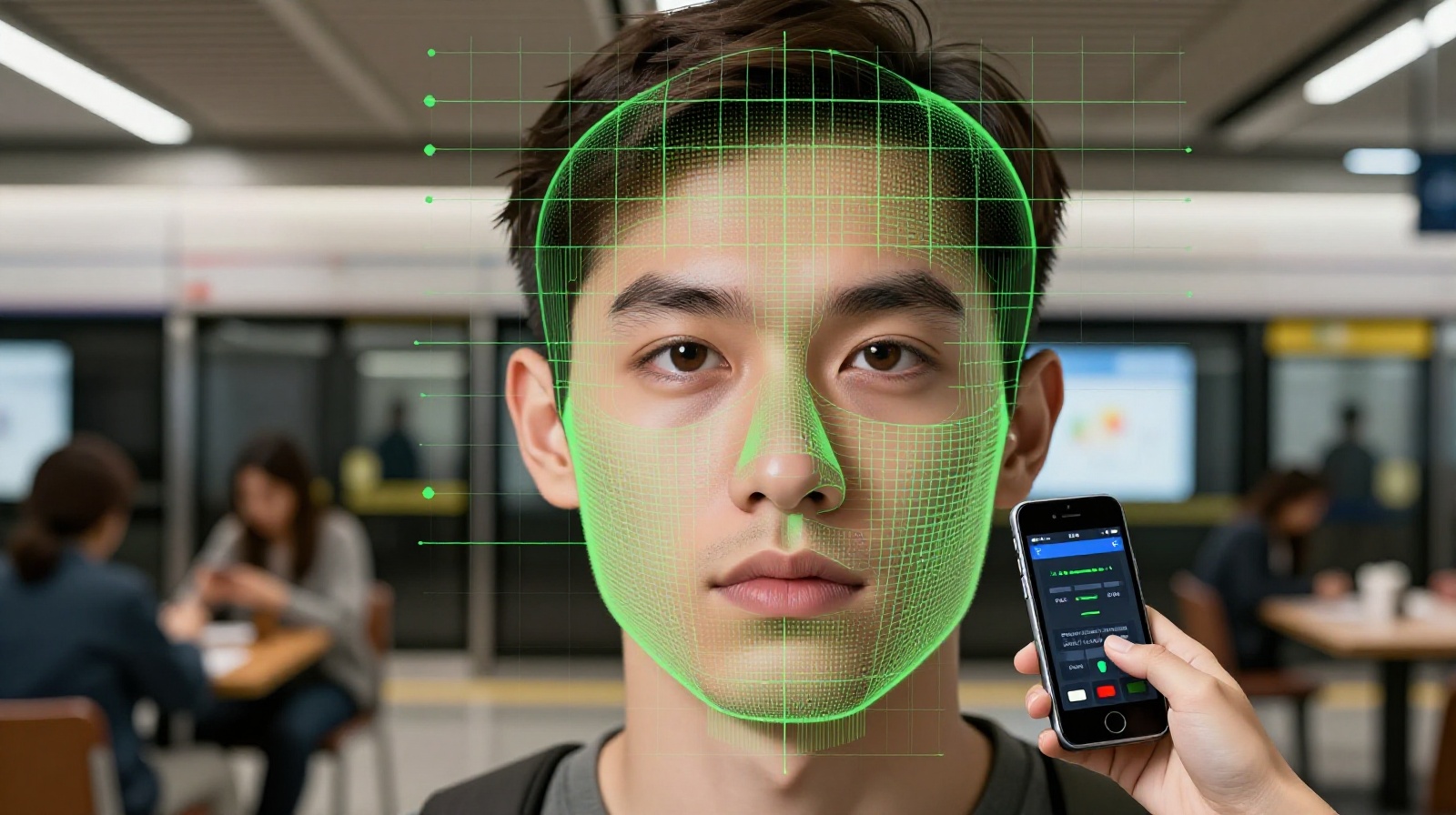
The technology relies on biometric security that goes far beyond simple 2D image matching. Modern systems use infrared sensors to map the unique depth of facial features—like the distance between eyes and the contour of the nose—creating a 3D mathematical model. This data is encrypted immediately upon capture and transmitted in a format that cannot be reverse-engineered.
Crucially, these systems are often designed with “liveness detection.” The camera can tell if it is looking at a live human face or a static photo on a phone screen. Furthermore, the facial data stored by payment providers is usually isolated from their marketing databases, meaning your face isn’t used to track your shopping habits across different stores without consent.
Why FaceID Outperforms Cards and Mobile Wallets
The primary driver for this shift is hygiene and speed. In the post-pandemic era, contactless payments have become a necessity, not just a luxury.
- Hygiene: There is no need to touch shared card terminals or screens that hundreds of people have touched with gloved hands.
- Speed: Scanning a face is faster than unlocking a phone, opening an app, selecting a payment method, and confirming. In high-traffic areas like subway stations or busy coffee shops, this time saving adds up to hours of productivity daily for the economy as a whole.
- Accessibility: For elderly users who might struggle with complex smartphone interfaces, looking at a camera is often more intuitive than navigating multiple app layers.
The convenience factor has driven rapid adoption. A recent survey indicated that over 40% of urban Chinese consumers regularly use facial recognition for small-ticket purchases under 100 RMB ($14).
Addressing Privacy Myths and Security Protocols
Despite the benefits, concerns about privacy in digital payments are valid and widespread. Critics often ask: Who owns this data? What happens if it is leaked?
In China, the rollout of FaceID payment has been accompanied by strict government regulations. Under the Personal Information Protection Law (PIPL), companies must obtain explicit consent before collecting biometric data. Users can also opt out at any time and choose traditional methods like mobile QR codes or NFC cards.
Moreover, in practice, many users find the trade-off acceptable because the alternative—carrying a wallet full of cash or relying on a phone that might run out of battery—is often less convenient. The technology has evolved to be transparent; when you pay, you see exactly how much is being deducted and where the money goes.

Beyond the Barista Counter: Future Applications
The coffee shop is just the beginning. This technology is rapidly expanding into other sectors of daily life across China.
In supermarkets, shoppers can now walk through automated gates that charge their accounts as they pick up items—no checkout line required. In transportation, commuters in cities like Beijing and Shanghai use face scans to enter subway stations and buses, replacing physical passes entirely. Even in entertainment venues, facial recognition is used for ticket entry and VIP access.
As the infrastructure matures, we are moving toward a future where your identity is your wallet. While questions about long-term data governance will always exist, the immediate reality for millions of people is a life that feels smoother, faster, and increasingly touchless. For the average observer, the question isn’t whether this technology is here to stay, but how quickly they can adapt to a world where paying for coffee requires nothing more than a glance.
Start the discussion at forum.chinacomes.com