

The First Bite: Beyond the Shock of Spice
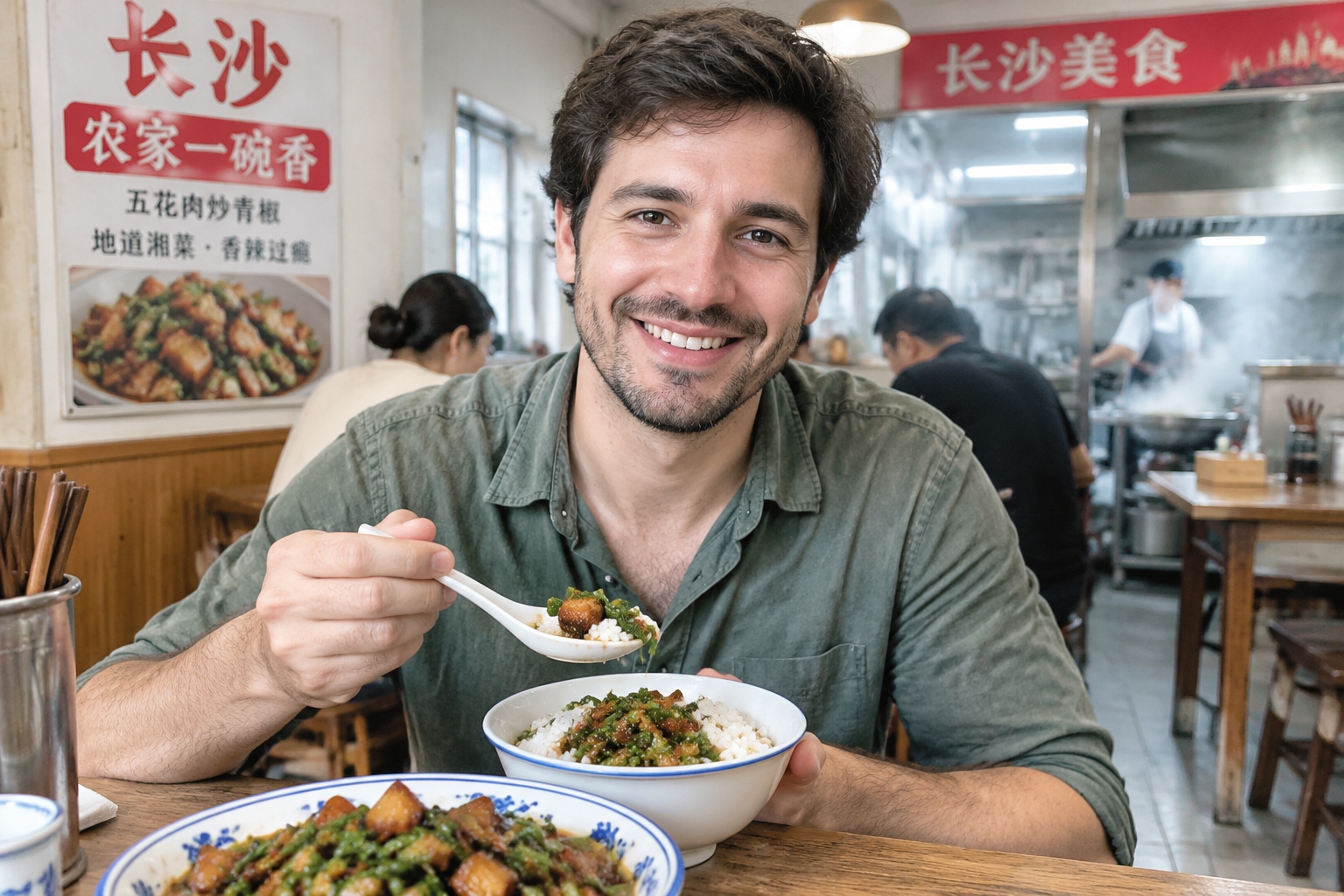
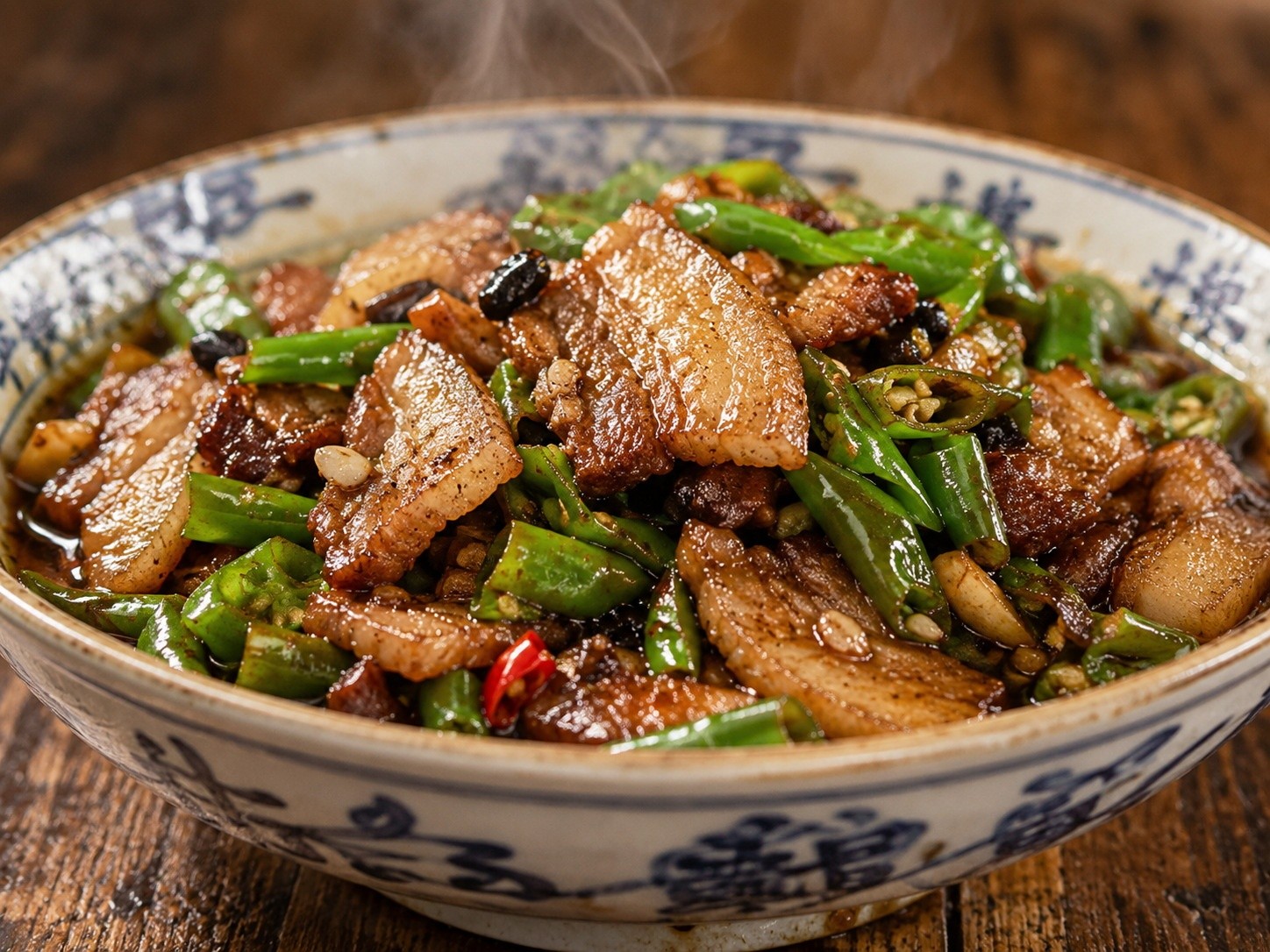
When Mark, a software engineer from Chicago, took his first bite of Nongjia Yiwangxiang (Farmhouse One-Bowl Fragrance), his eyes widened. Not in horror, but in sudden, intense realization. The dish arrived steaming in a simple ceramic bowl: stir-fried pork belly, sliced green chili peppers, and dark soy sauce, all glistening with oil.
“It’s so… alive,” he said, reaching for his rice bowl. “I expected it to just burn my tongue. But it tastes like comfort.”
For many Western visitors, Chinese food is often reduced to takeout boxes of General Tso’s chicken or sweet-and-sour pork. But in Hunan province, specifically Changsha, the culinary reality is different. It is louder, spicier, and deeply rooted in the rhythms of daily life. Nongjia Yiwangxiang is not a delicacy found in five-star hotels. It is a dish born from rural kitchens, designed to be eaten with heaps of white rice.
The Philosophy of the Leftovers
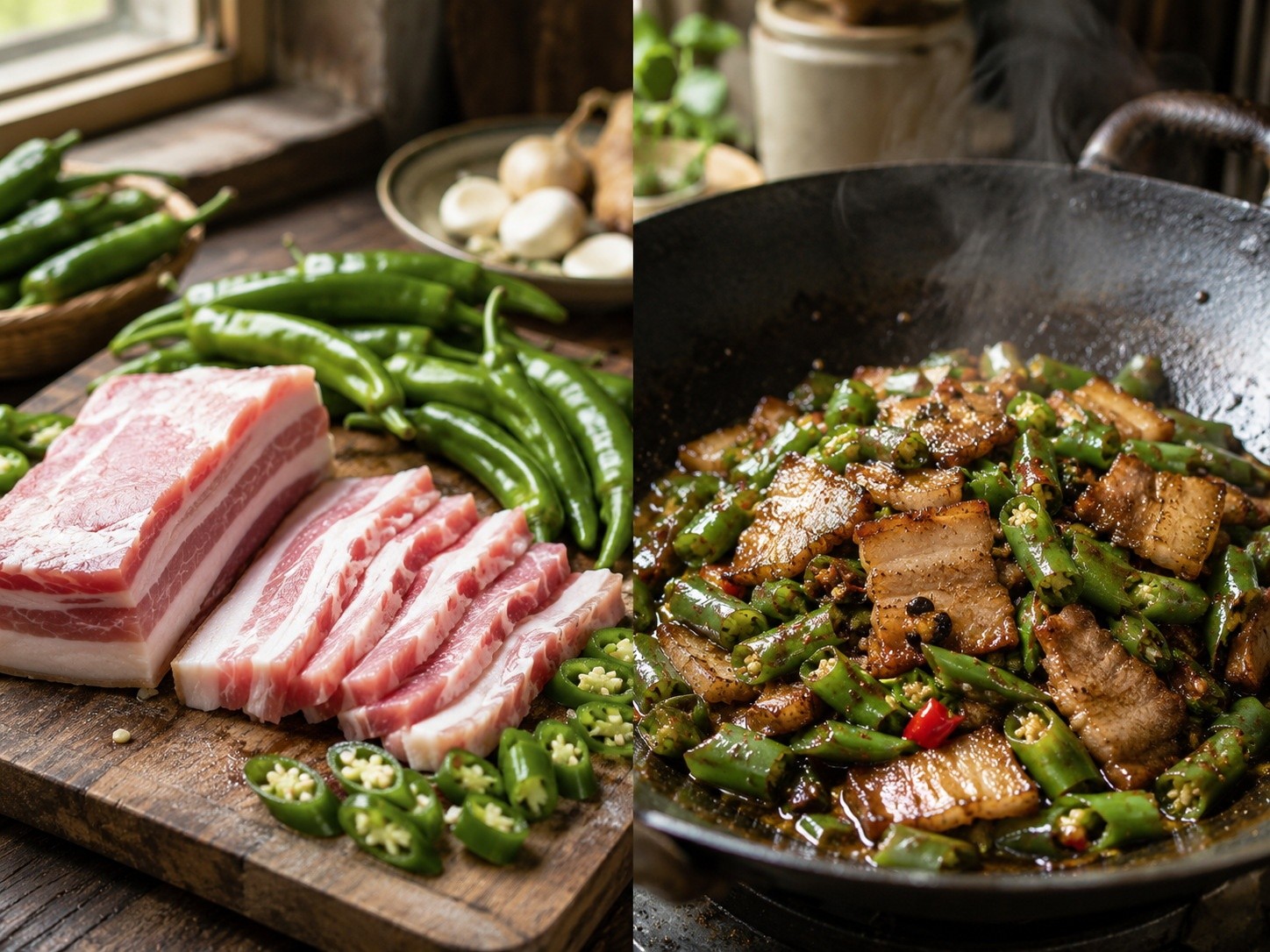
To understand this dish, you have to look at its ingredients. Traditionally, this meal started as a way to use up leftovers from New Year’s Eve. The pork belly was often cured or saved from a previous feast; the peppers were fresh from the garden.
In China, wasting food is culturally frowned upon. Nongjia Yiwangxiang embodies the concept of wu bu lin shi (nothing goes to waste). The fat from the pork renders out during stir-frying, coating the rice and making it rich. The chili adds heat that stimulates appetite, while the soy sauce provides umami depth.
“It’s smart cooking,” Mark observed, scraping the bottom of his bowl. “You take something simple, maybe even leftover, and you make it the best part of the meal. In the US, we often throw away the fat or trim the edges. Here, the fat is the flavor.”
This approach reflects a broader Chinese value: resourcefulness. In a country with a massive population and limited arable land per capita, making every ingredient count is not just a tradition—it’s a necessity that has evolved into an art form.
‘Xia Fan’: The Art of Killing Rice
There is a term in Chinese dining culture called xia fan (literally “rice-killing”). It refers to dishes so flavorful that they make you eat more rice than usual. Nongjia Yiwangxiang is the king of xia fan dishes.
For Western diners, the idea of pairing a meat dish with a large portion of plain white rice can seem unbalanced. But in Hunan, the rice is not an afterthought; it is the canvas. The saltiness of the pork and the heat of the chili are calibrated to cut through the neutrality of the rice.
Think of it like a hearty beef stew in France or a meatloaf in the US. It’s about warmth, abundance, and home. When Mark took a spoonful of rice mixed with the pork sauce, he nodded slowly. “It’s like mac and cheese, but savory and spicy. It hits the same emotional spot.”
This comparison helps bridge the cultural gap. Food is not just fuel; it is memory. For Chinese people, this dish evokes images of grandmother’s kitchen, rural holidays, and family gatherings. For Mark, it evoked a sense of immediate belonging.
Urban Nostalgia in a Fast-Paced City
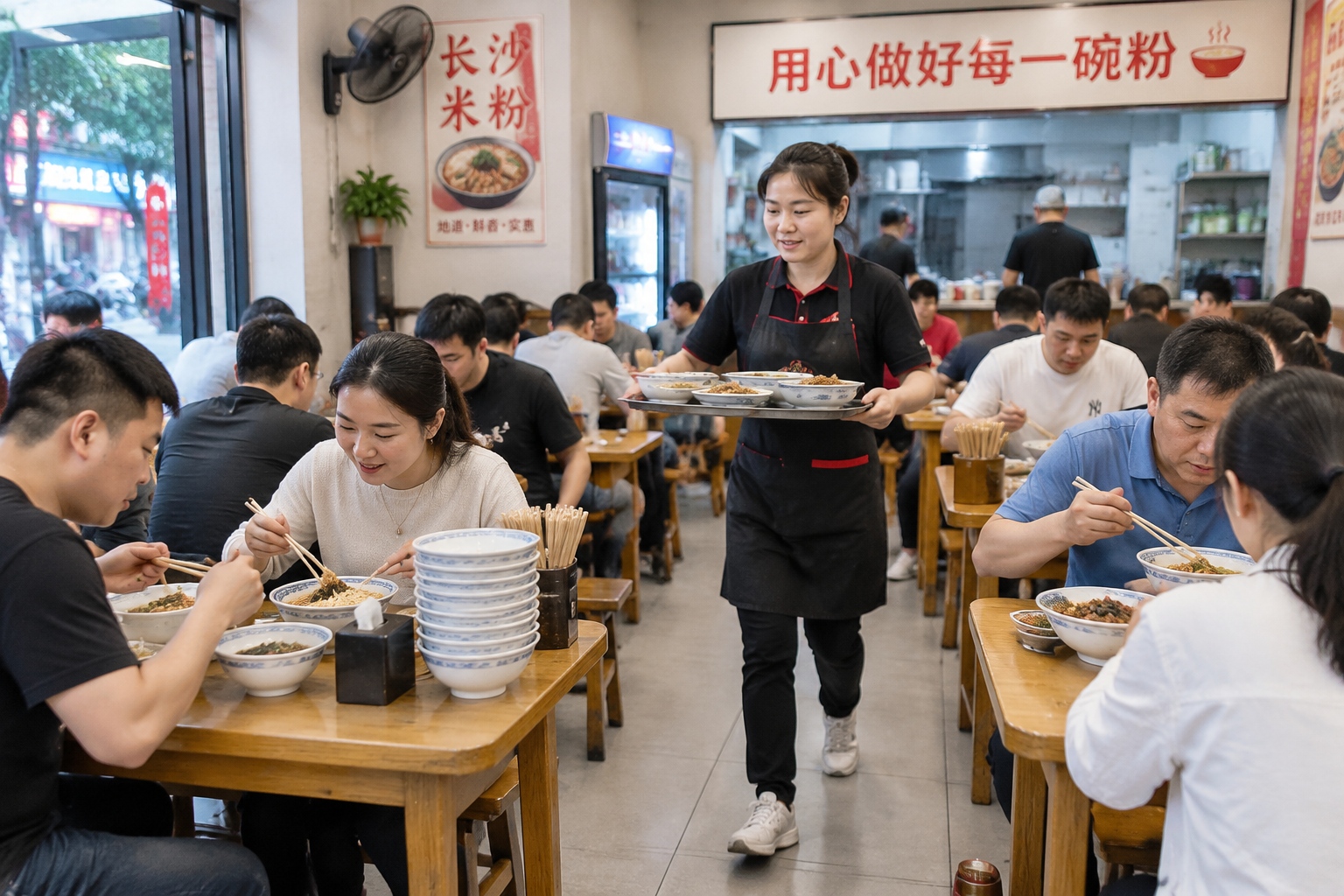
Changsha is a megacity of 10 million people, known for its media industry and young nightlife. Yet, in the small, plastic-stool-filled restaurants in older neighborhoods, time moves differently.
Eating Nongjia Yiwangxiang here is an act of urban nostalgia. City dwellers, despite their busy lives, return to these flavors to reconnect with a slower, more grounded version of China. The restaurant was noisy, filled with the clatter of bowls and the shouting of waiters calling out orders in rapid-fire Hunanese.
Mark watched an elderly couple in the next table share the same bowl. They didn’t need fancy utensils or conversation. The food spoke for them. “It’s interesting,” he noted. “In New York, we eat to socialize or to be seen. Here, it seems like people eat to feel full and warm. It’s very… honest.”
This honesty is key to understanding modern Chinese dining. While skyscrapers rise and digital payments replace cash, the core desire for a hot, satisfying meal remains unchanged. The preservation of home-style cooking in urban restaurants shows that China’s rapid development has not erased its culinary roots; it has merely relocated them.
A Universal Language
By the end of the meal, Mark had finished two bowls of rice. He laughed, rubbing his stomach. “I thought I would hate the spice,” he admitted. “But I think I’ll miss this taste.”
Nongjia Yiwangxiang is more than a dish. It is a window into the Chinese psyche: practical, resilient, and deeply communal. It teaches us that even in a globalized world, the simplest meals often carry the most meaning.
For any foreigner visiting Changsha, skipping the fancy tourist traps and sitting down for a bowl of this “one-bowl fragrance” is the best way to taste the real China. Not the China of headlines, but the China of daily life—spicy, savory, and surprisingly comforting.
Start the discussion at forum.chinacomes.com