
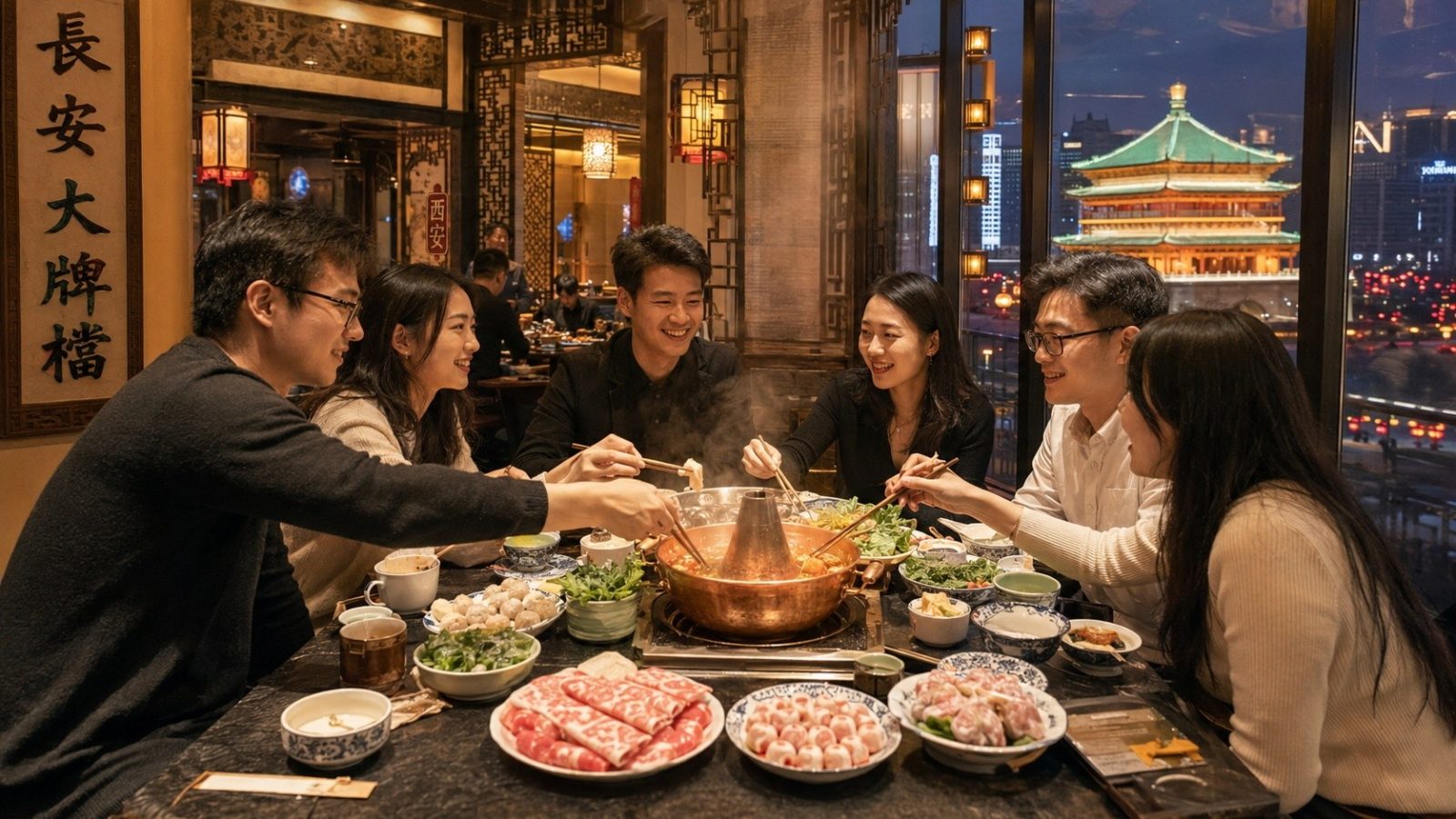

The Myth of Standardization
Li Wei ordered the “authentic Sichuan spicy hot pot” at a bustling restaurant in Xi’an. He expected the numbing, fiery punch of Sichuan peppercorns he had tasted in Chengdu. Instead, when the red broth arrived, there was something else—a subtle, tangy undertone that lingered on the tongue.
“Is this… vinegar?” he asked his waiter.
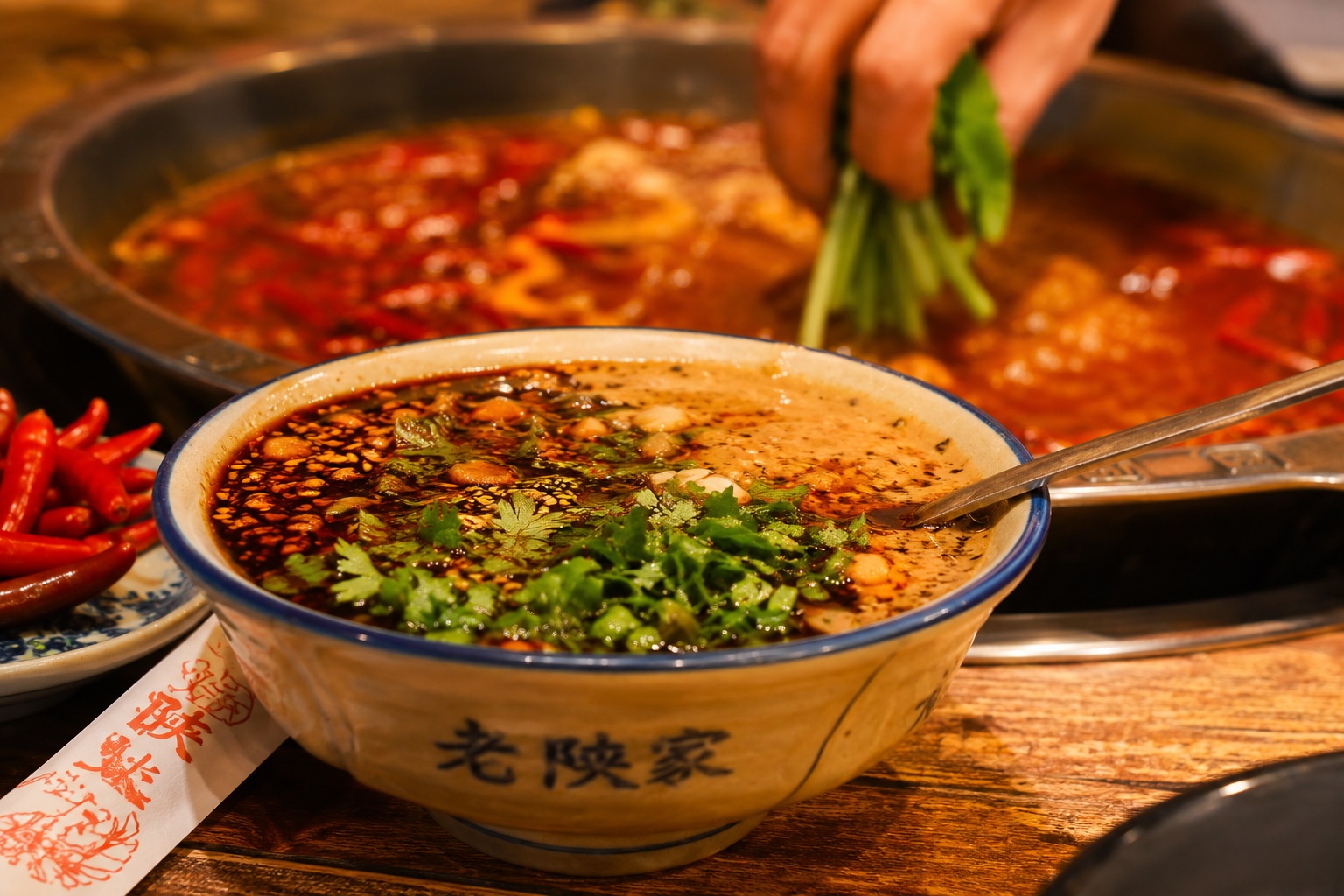
The waiter smiled. “Yes, we use Shaanxi aged vinegar in our dipping sauce. It cuts the grease. Locals prefer it that way.”\p>
This moment captures a common misconception among foreigners: that globalization and national chains are turning Chinese cuisine into a monolithic, bland uniformity. The fear is that from Beijing to Guangzhou, every restaurant serves the same industrialized food.
But Li Wei’s experience reveals a different reality. In China, “standardization” doesn’t mean erasing local flavor. It means creating a common baseline—a shared culinary language—upon which deep regional identities are built. The hot pot you eat in Xi’an is not just a copy of the Chengdu original; it is a conversation between two ancient cultures.
The Local Twist: Xi’an’s Culinary Identity
Xi’an, the eastern terminus of the Silk Road, has always been a melting pot. Its food culture reflects this history. While Sichuan hot pot is famous for its “mala” (numbing and spicy) profile, Shaanxi cuisine is rooted in wheat, vinegar, and lamb.
In Xi’an, the adaptation is tangible. Many hot pot restaurants offer a “Qin-style” dipping sauce that replaces the traditional sesame paste with a sharp, aromatic vinegar mix. Some even add crushed peanuts or cilantro in ways distinct from the Sichuan norm.
Then there is the meat. While Sichuan might favor beef tripe and duck intestines, Xi’an locals often prefer slices of local beef or mutton, marinated with cumin—a nod to the city’s Hui Muslim heritage. This isn’t just a menu tweak; it’s a reflection of how modern Chinese consumers negotiate their heritage. They want the social fun of Sichuan-style hot pot, but they eat it in a way that feels like home.
The Business of Taste: Standardization vs. Localization
How does this work on a business level? Major chains like Haidilao or Xiaolongkan have thousands of outlets across China. Critics argue this leads to “industrialized” blandness. However, the supply chain logistics in China have evolved to support hyper-localization.
These companies use centralized procurement for core ingredients (like the chili oil base) but allow local branches to source fresh produce regionally. This creates a “glocal” model: global brand consistency with local ingredient flexibility.
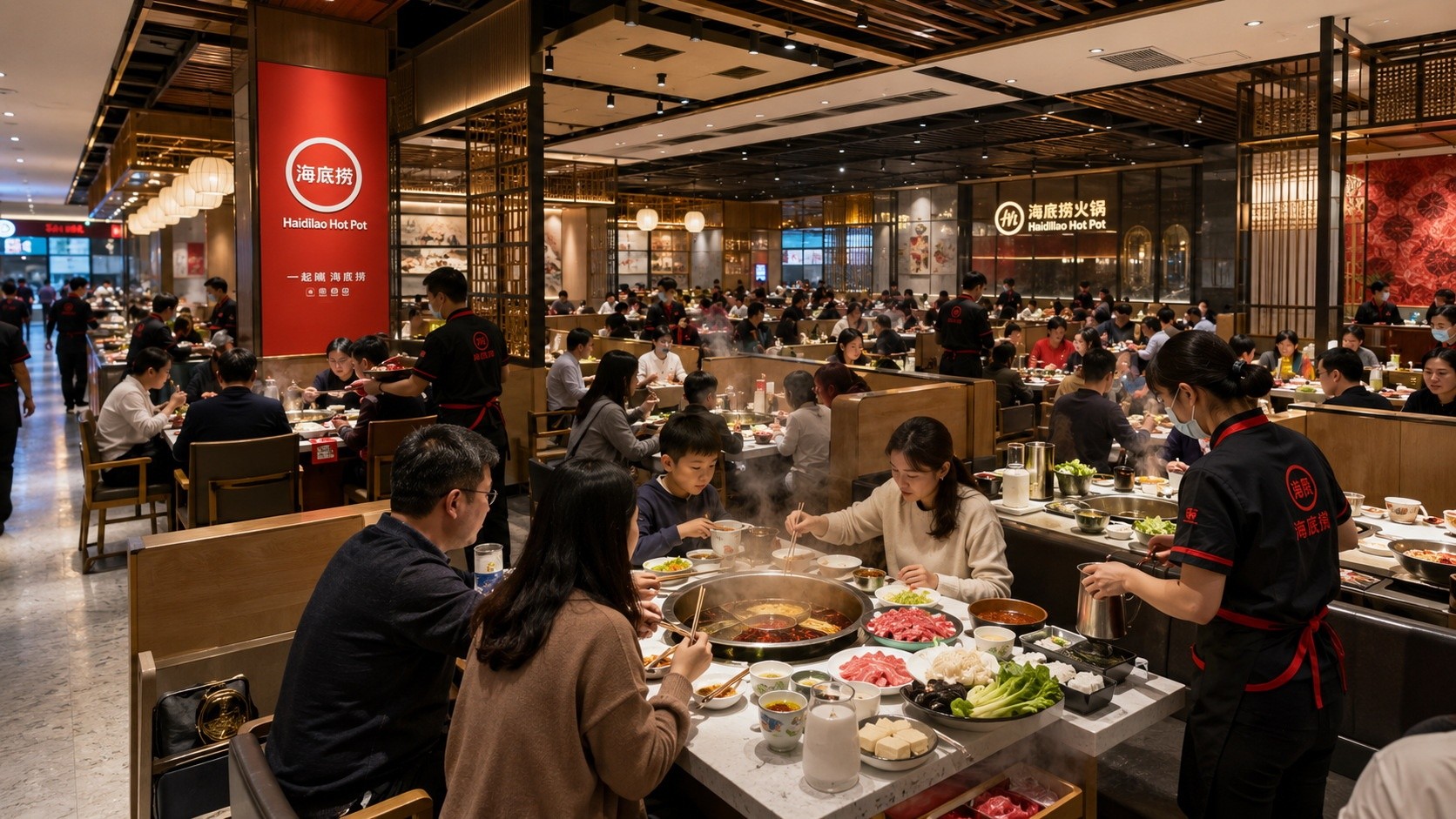
For the consumer, this means you can get the same high-level service and hygiene standards in a small city in Gansu as in Shanghai, but the food itself adapts to the local palate. A hot pot chain in Xi’an might introduce a “lantern pepper” variant, while one in Sichuan sticks to the classic “maLa.” This isn’t a failure of standardization; it’s a sophisticated form of market responsiveness. It shows that Chinese consumers are not passive recipients of corporate food; they are active curators of their own taste.
Social Dynamics: Hot Pot as a Community Hub
Beyond the flavors, hot pot is a social equalizer. In Xi’an, the atmosphere in a hot pot restaurant is often louder and more communal than in the quiet, individualistic dining scenes of the West.
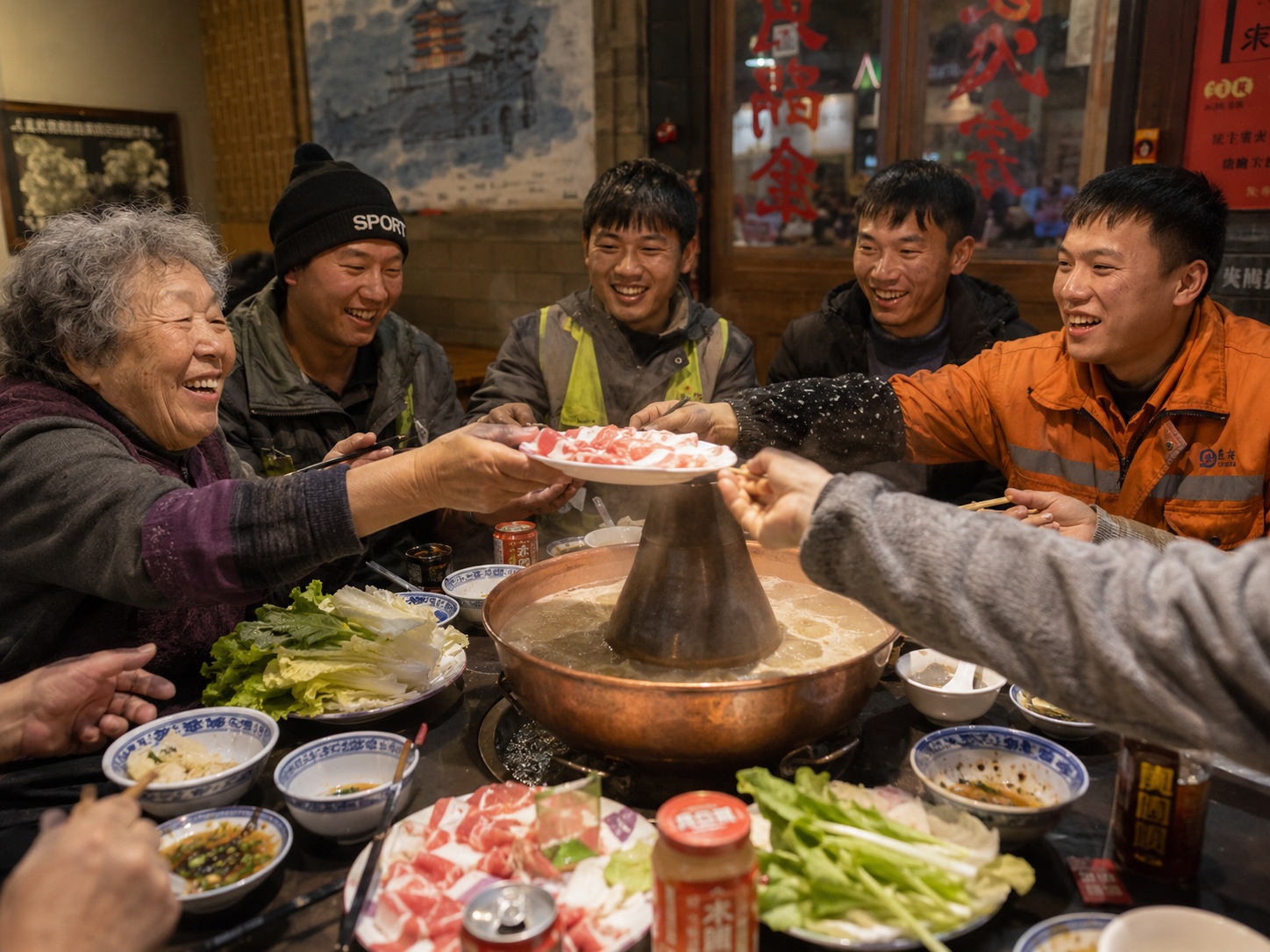
Imagine a table with four friends, a family of three, and a group of office workers. They all share one massive pot of boiling broth. Hot pot requires participation. You cook your own food, you serve others, you pass dishes around. It breaks down barriers.
In modern Chinese urban life, this is crucial. As young professionals move to cities for work, hot pot becomes a bridge. It’s a place where a local Xi’an resident and a migrant worker from Sichuan can sit together, argue playfully about whose hot pot is better, and ultimately agree that sharing a meal is what matters. This inclusivity is key to understanding modern Chinese social dynamics. Food is not just fuel; it’s the medium through which strangers become acquaintances, and acquaintances become friends.
A Microcosm of Modern China
So, does hot pot in Xi’an taste like Chengdu? Sometimes. But mostly, it tastes like Xi’an.
This culinary evolution mirrors the broader societal shift in China. There is a tension between the desire for national unity (standardized infrastructure, shared digital ecosystems) and the pride in local identity (dialects, regional foods, local customs). Rather than one erasing the other, they coexist.
For the foreign observer, this can be confusing. We often expect “authenticity” to mean something static and unchanging, preserved in amber. But in China, authenticity is dynamic. It is about how tradition adapts to the present.
The next time you eat hot pot in China, don’t just look for the “original” recipe. Look at who is sitting across from you, what they are dipping their food in, and how they share the pot. That is where the real story of modern China lies—not in the broth, but in the people stirring it.