


The Smell of Dye and the Noise of the Metro
At 6:30 a.m., the air in the Shanghai subway station still carries the damp chill of the morning. Tony, 22, stands in line with hundreds of others, his backpack heavy with a pair of scissors, a comb, and his personal care kit. He is twenty minutes away from the salon in Jing’an District, but the journey feels longer when you consider he is coming from a small county in Anhui province.
For the first few months after arriving in this megacity, Tony was overwhelmed. The noise of the traffic, the towering glass facades, and the speed at which people walked were all new to him. His previous experience as an apprentice was in a village shop where the biggest challenge was dealing with stubborn gray hair on elderly villagers. Here, the expectations are different. The customers want trends they see on Douyin (the Chinese version of TikTok), and they expect precision.
From Scissors to Smartphones: A Skill Upgrade
Tony’s first year has been defined by a steep learning curve. In his village, he learned the basics: short back and sides, simple trims. But Shanghai’s fashion moves fast. He spent his nights watching video tutorials on how to cut “textured crops” or create soft perms, styles that are popular among young office workers.
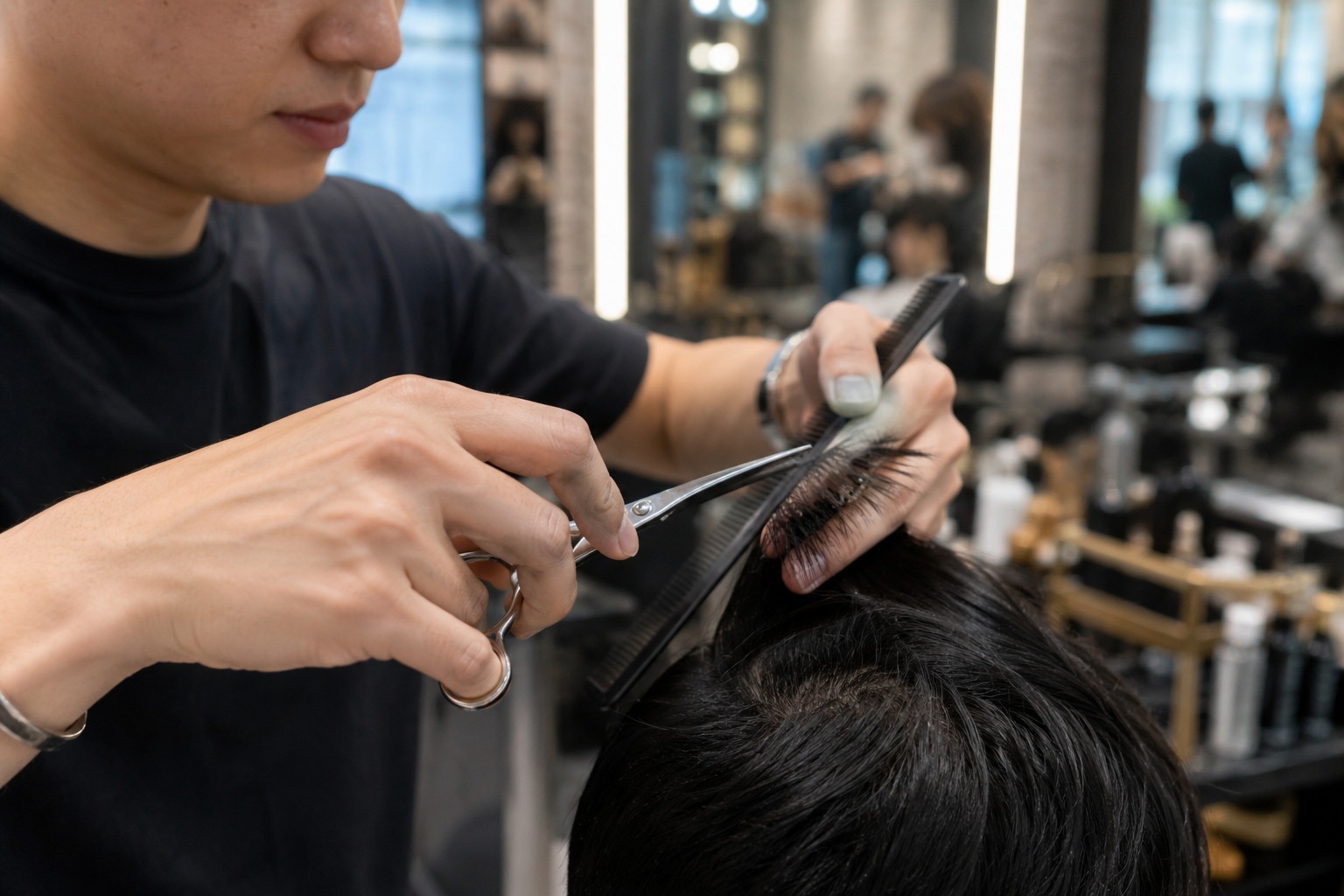
“I used to think cutting hair was just about skill,” Tony says, wiping down the station after a rush hour. “Now I realize it’s about aesthetics. I have to understand what looks good on a face with different shapes, not just follow a manual.”
The salon itself is a mix of old and new. While the chairs are worn leather and the mirrors show signs of use, the walls are covered with QR codes for social media follow-ups. Tony has had to adapt quickly. He no longer just cuts hair; he curates images. He learns which angles photograph well for Instagram-style posts, which is crucial for the salon’s marketing.
The Invisible Currency: Mobile Payments
One of the most jarring transitions for Tony was the shift from cash to digital payments. In his hometown, transactions were often physical—coins and bills exchanged hand-to-hand. It was slow, but it felt personal.
In Shanghai, money is invisible. The first time a customer asked Tony to scan a QR code, he froze. He had to pull out his own smartphone, open the Alipay app, and hold the screen steady while the other person scanned him. It took ten seconds. If he had asked for cash, the customer would have likely left in frustration.

“It changed everything,” Tony explains. “Now I don’t worry about giving change or counting bills. I can see the money hit my account instantly. But it also means the transaction is faster, colder. There’s less time to chat with the customer about their day.”
This efficiency is a hallmark of China’s urban economy. For small business owners like Tony’s boss, mobile payments mean better inventory tracking and lower risk of theft. For Tony, it means he can receive his weekly allowance directly into his bank account without waiting for the manager to count out cash.
The Math of Survival: Income vs. Cost
The economic reality of moving to a megacity is a constant calculation. Tony’s monthly salary starts at a modest level, but it increases with tips and commissions from selling hair products. In his village, he might have earned half this amount, but the cost of living was also lower.
Here, the bills are different. Rent for a shared room in a residential building nearby costs him about 1,500 RMB (approx. $210 USD) a month. Food, if he cooks in the communal kitchen, is cheap, but dining out or buying coffee is an occasional luxury.
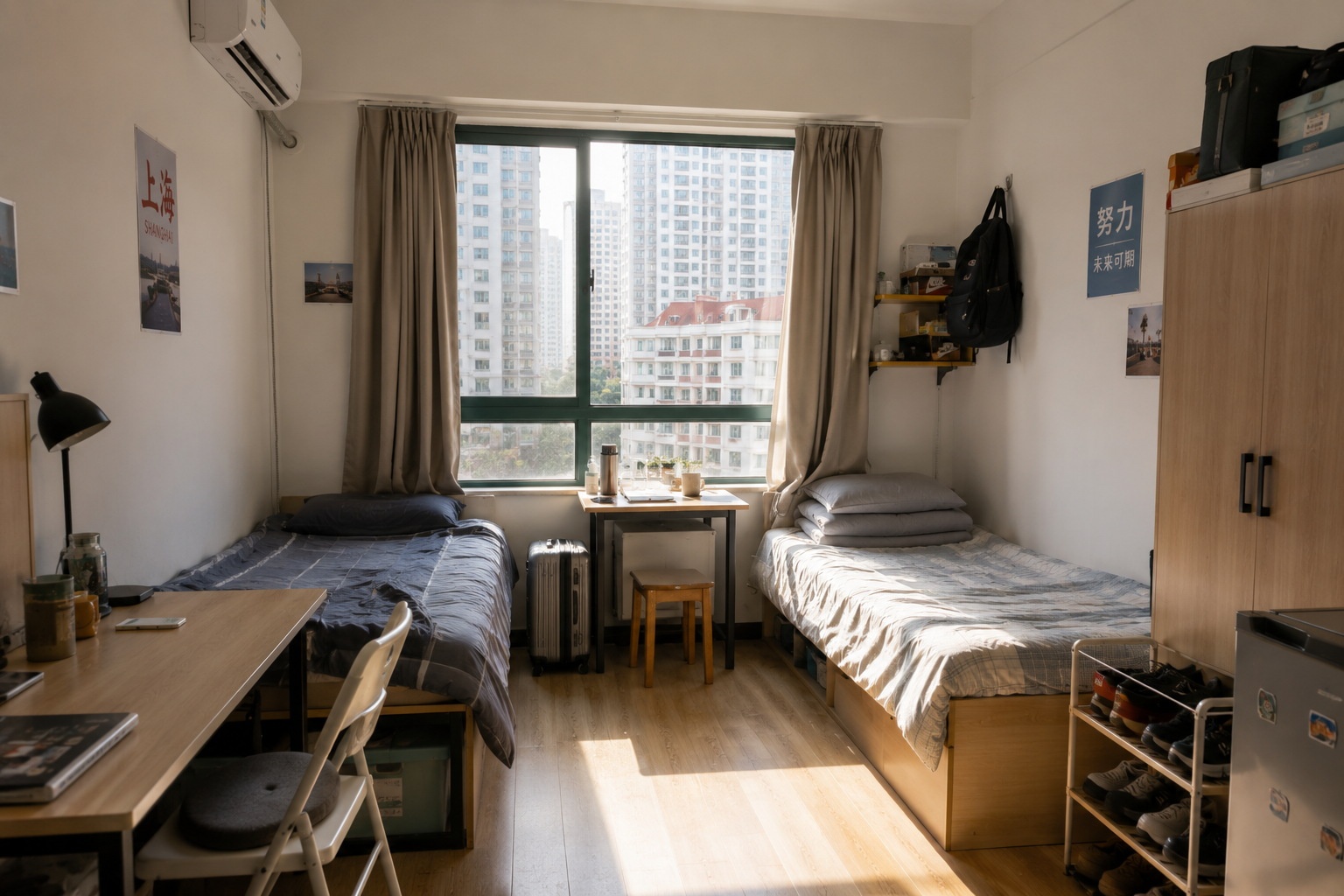
“I send most of my money home,” Tony says. “My parents use it to renovate our house and buy medicine for my grandmother. What’s left, I save for my own future. Maybe to open my own shop one day.”
This remittance economy is the backbone of China’s rural development. The money Tony earns in Shanghai flows back to Anhui, supporting local construction, healthcare, and consumption. It’s a microcosm of how urban growth fuels rural stability.
A Sanctuary in the City
Despite the fast pace, the salon has become Tony’s social anchor. In a city of millions, where neighbors rarely speak to each other, the salon chair is one of the few places where strangers engage in genuine conversation.
Clients talk about their jobs, their relationships, and their anxieties. Tony listens, offering advice he picked up from his own experiences or from the internet. The salon is not just a place for grooming; it’s a community hub.
“I met my best friend here,” Tony says with a smile. “He comes in every month for a trim. We talk about everything. In the village, everyone knew everyone. Here, I have to build those connections, one haircut at a time.”
For Tony, the first year in Shanghai was not just about learning to cut hair or use a smartphone. It was about finding his place in a complex, fast-moving world. He is no longer just a village apprentice; he is a young professional navigating the modern Chinese economy, one clipper pass at a time.