

Not What You Expect
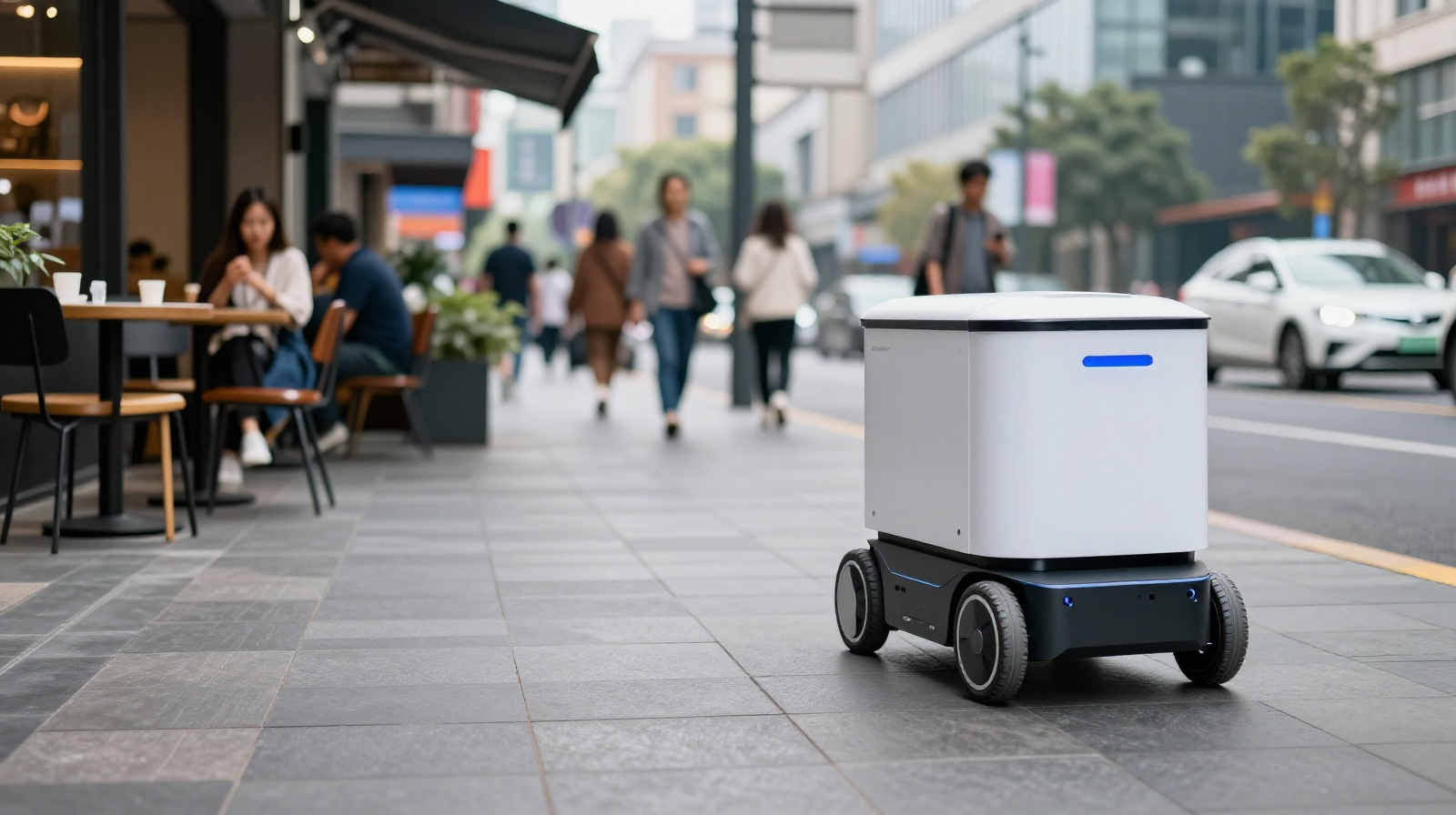
If you imagine a robot in China, you might picture a shiny, humanoid android walking down a neon-lit street, like something from Blade Runner. But if you walk through a typical Chinese city today, the reality is far less cinematic and much more practical.
The robots here aren’t trying to look like humans. They are solving specific, everyday problems. They are low, boxy, and often unassuming. They don’t talk much; they just work.
This is what I call “grounded” technology. It’s not about replacing human connection with cold metal. It’s about handling the tedious, heavy, or dangerous tasks so people can focus on what matters. From the moment you step out of your apartment building, you are likely surrounded by small machines doing jobs that used to require a lot of human effort.
The Invisible Workforce on Sidewalks
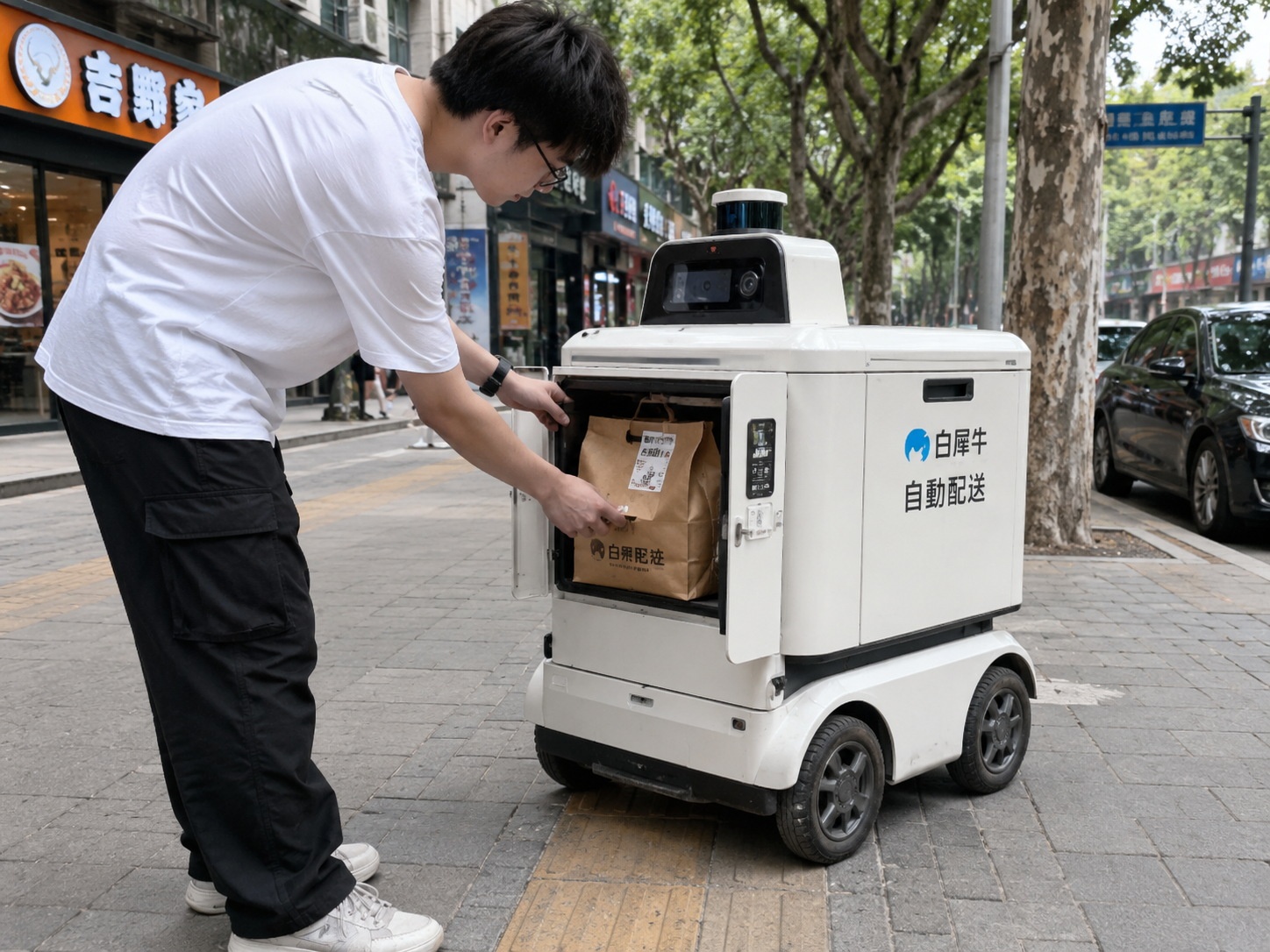
One of the most common sights in China’s tier-1 and tier-2 cities is the autonomous delivery robot. These small, box-like vehicles with four wheels roll along the sidewalks, navigating around pedestrians, bicycles, and parked cars.
They look like oversized mailboxes on wheels. When you order food or groceries via an app, these robots often take over the “last 100 meters.” You get a notification on your phone: “Your order is nearby. Come get it from compartment number 3.”
For many young professionals and students in university towns, this has become a routine part of life. There is no drama, no fear of a robot uprising. It’s just efficient. In places like Shenzhen or Hangzhou, you might see dozens of these robots working simultaneously during peak lunch hours.
Why This Matters
This isn’t just about convenience; it’s about labor dynamics. China has an aging population and a shrinking workforce in certain sectors. Delivery robots fill the gap. They don’t get tired, they don’t demand breaks, and they don’t complain about traffic. For the restaurants using them, it reduces costs. For the customers, it means faster delivery, especially in areas where traffic jams make bikes and cars slow.
Drones: The Sky Highways of Rural China
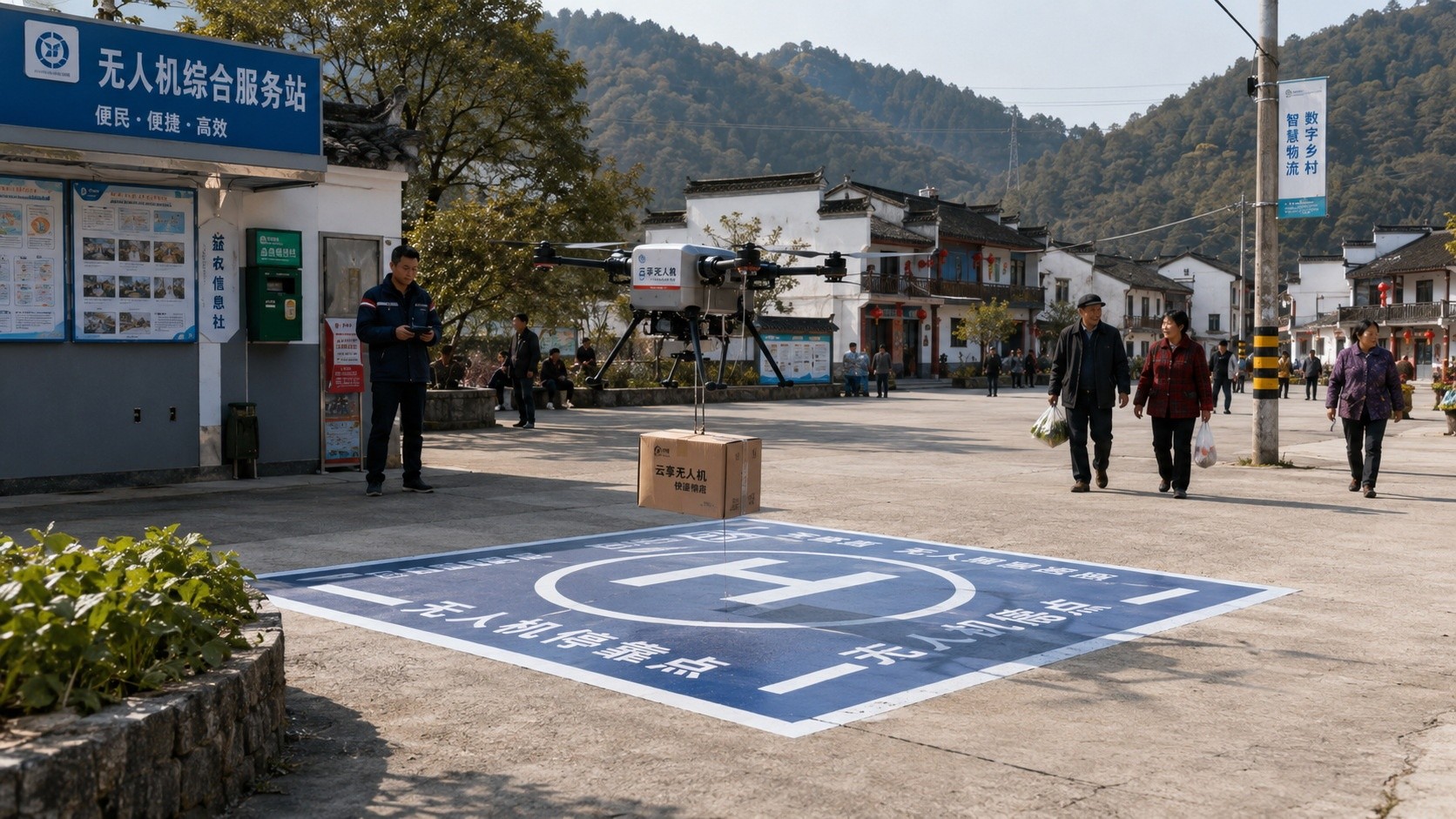
While city robots stay on the ground, drones are taking to the skies, but not for surveillance or racing. They are delivering goods.
In many rural and suburban areas, logistics have historically been a challenge. Delivering fresh produce or medical supplies to remote villages used to take hours. Now, drone delivery networks are transforming this. In provinces like Zhejiang and Sichuan, farmers can upload an order for feed or medicine, and a drone drops it off at a designated landing pad in the village square.
For villagers, this is a game-changer. It bridges the gap between rural isolation and urban convenience. I spoke to a farmer in rural Jiangsu who told me, “Before, if we needed seeds urgently, we had to drive an hour to the county town. Now, it takes ten minutes.”
Service Robots: The New Face of Hospitality
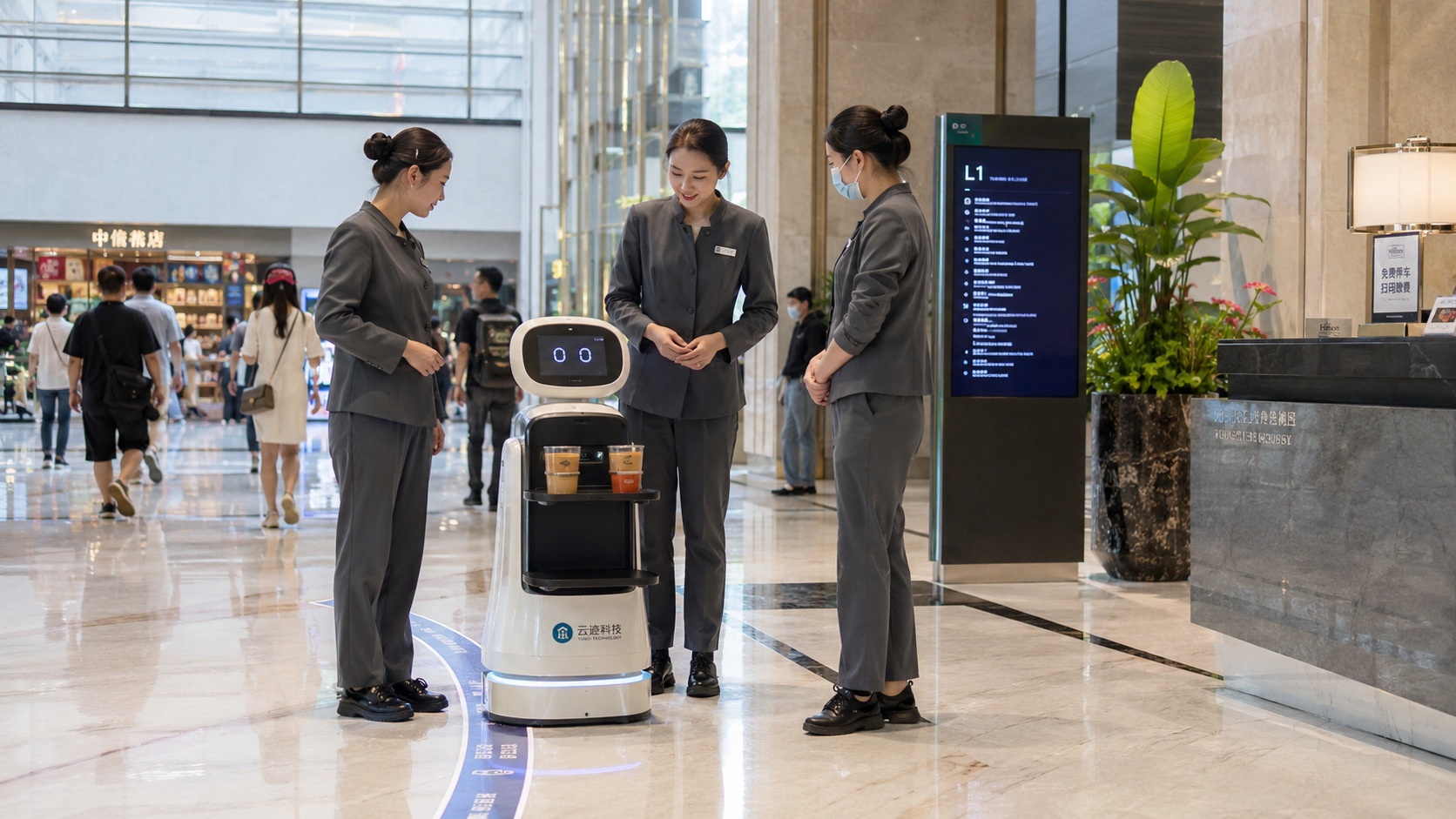
Step into a hotel or a mid-range restaurant in a Chinese city, and you might find your room service delivered by a robot. These machines navigate elevators independently, knock on doors with a pre-recorded voice message, and wait for you to open the compartment.
Similarly, in large shopping malls, you will see cleaning robots. They are not sleek, invisible discs like some Western brands. They are often larger, industrial-looking machines that sweep floors at night or clean spills during the day. They are equipped with cameras and sensors to avoid obstacles.
There is a subtle shift here. In the West, robot waiters can sometimes feel gimmicky or awkward. In China, they are accepted as a tool for efficiency. Staff still handle complex requests, but the robots take over the repetitive heavy lifting—carrying trays up stairs or delivering drinks across large dining halls.
Public Services: Keeping the City Clean and Safe
Look closer at the streets, and you’ll see robots maintaining public order. Autonomous sweeping machines are becoming common in parks and wide pedestrian zones. They follow a programmed route, sweeping leaves and dust, often operating during off-peak hours to avoid disturbing pedestrians.
In large campuses, universities, and corporate parks, security patrol bots roam the grounds. They have 360-degree cameras and can detect unusual activity or temperature anomalies. For employees and students, they are a reassuring presence, not an intimidating one. They represent a shift towards “smart city” infrastructure that works quietly in the background.
The Human Element: Curiosity Turns to Normalcy
When these robots first appeared, people stopped to take photos. Now, they barely glance at them. This normalization is key to understanding Chinese tech adoption.
It’s not about the technology itself being the star; it’s about how seamlessly it integrates into life. An elderly woman in a park might watch a cleaning robot with mild curiosity, but she doesn’t feel threatened by it. A delivery rider might navigate around a stationary robot without anger, recognizing it as just another part of the traffic flow.
This acceptance comes from utility. If a tool makes life easier, safer, or faster, Chinese consumers embrace it quickly. There is no romantic resistance to automation here. The question is never “Will it replace me?” but rather “Does it help me do my job better?”
Conclusion: Tech That Serves Life
The robots around you in China are not trying to be human. They are trying to be useful. They are grounded in the reality of daily life: heavy lifting, tedious cleaning, long-distance delivery, and routine security.
This approach reflects a broader trend in Chinese technology development. It is less about flashy futurism and more about practical utility. For the average person, this means fewer physical burdens, faster services, and cleaner public spaces. It’s a quiet revolution, happening right on your sidewalk, one small robot at a time.