
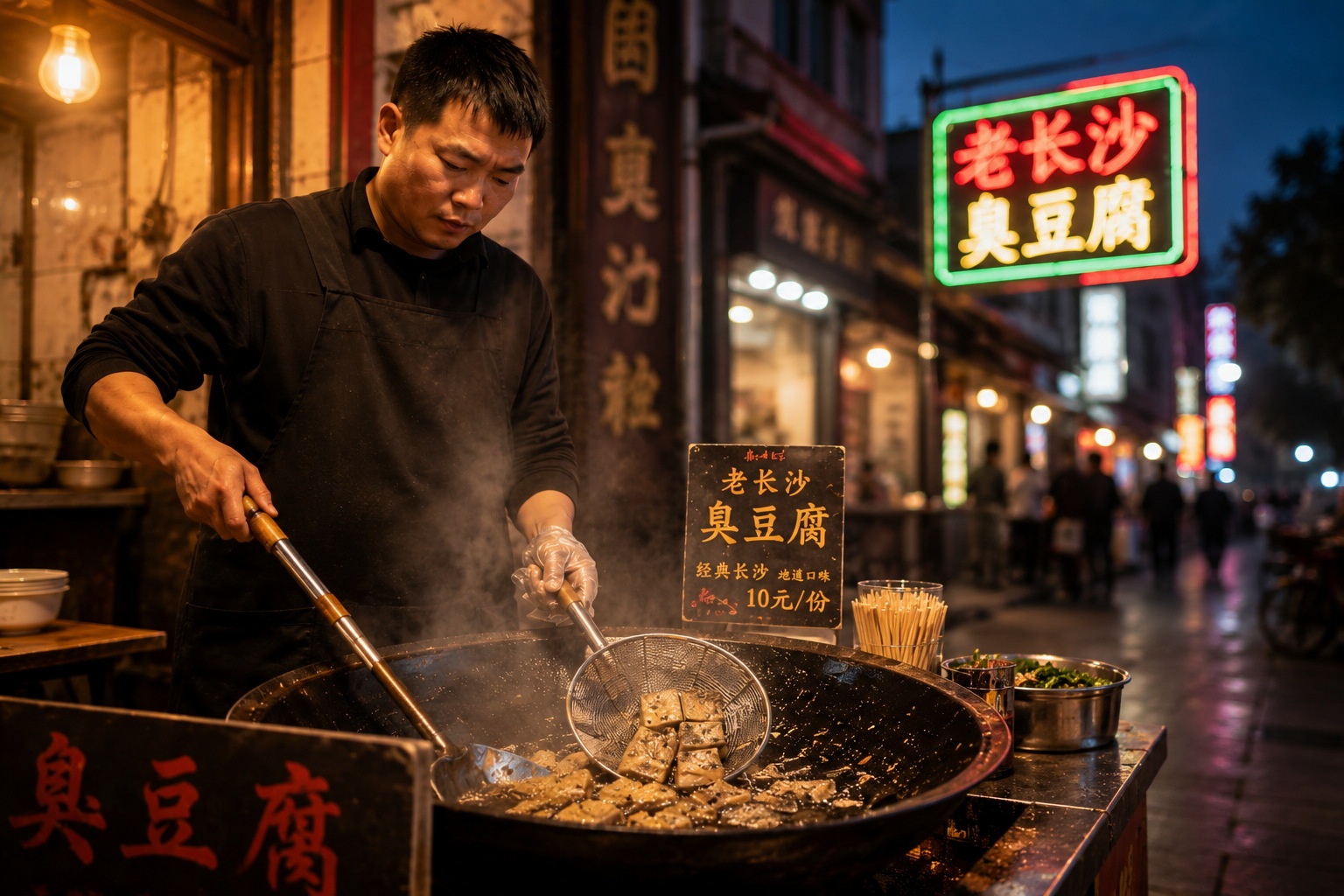

When the Sun Goes Down, the Real City Wakes Up
If you think China’s cities fall asleep at midnight, you haven’t been to a night market. While western suburbs might quiet down, Chinese urban centers are just getting started. The air turns thick with charcoal smoke, neon signs buzz with electric energy, and the sound of woks clanging against flames becomes the city’s new heartbeat.
I am standing behind a small folding table in a busy night market in Chengdu. In front of me is a deep fryer bubbling with oil. By 8 PM, the queue stretches past three other stalls. My job? Fry stinky tofu. It sounds contradictory—”stinky” and “delicious”—but that’s exactly why it works.
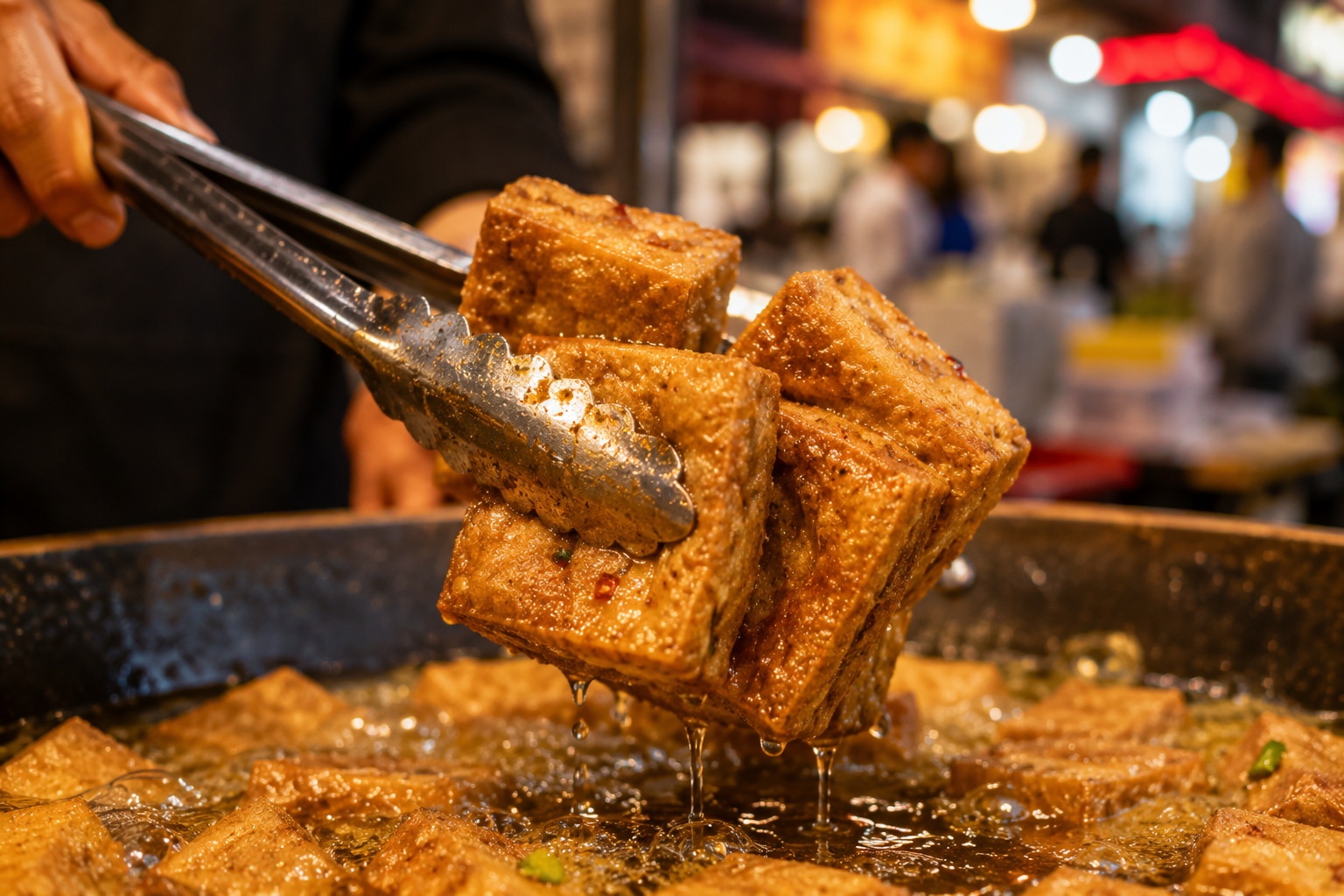
The Smell That Sells: Decoding the “Stinky” Appeal
Stinky tofu is a polarizing food. To the uninitiated, it smells like old socks or fermented cabbage. To locals, it’s an aroma of comfort and excitement. The secret isn’t in hiding the smell, but in managing it. I use a traditional brine that has been aging for years, giving the tofu its distinct odor. But once fried, the smell transforms into a crispy, savory delight.
Success in this business relies on two things: consistency and customization. Every batch of tofu is cut to the exact same size so it cooks in 90 seconds. No more, no less. Over-cooking makes it hard; under-cooking leaves it raw inside.
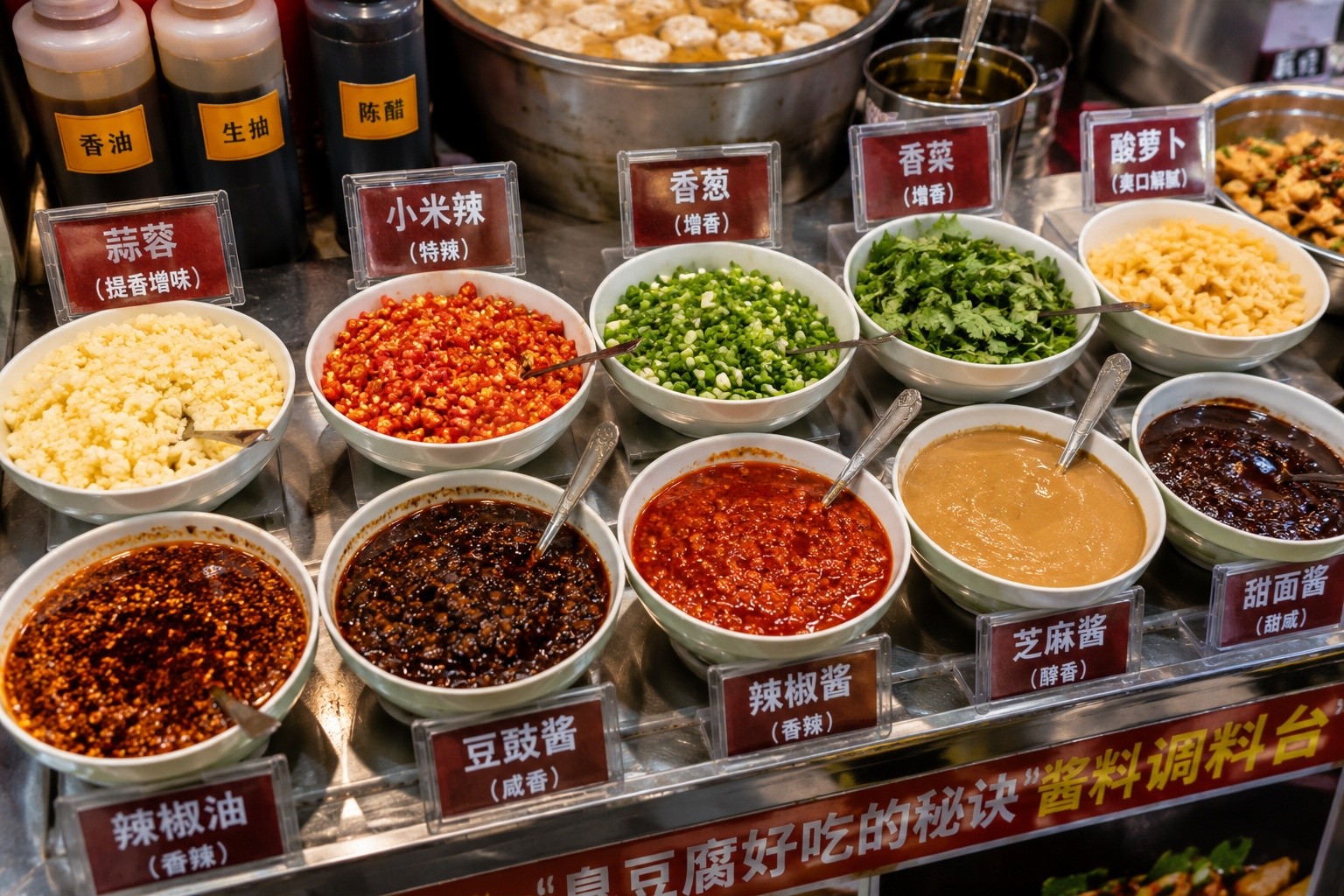
Then comes the sauce. This is where modern street food meets personalization. I offer three levels of spice and a choice between garlic sauce, chili oil, or sweet bean paste. In a city of millions, people want their food to reflect their mood. A young couple might ask for mild garlic; a group of students will demand extra chili. Remembering these preferences builds loyalty faster than any billboard.
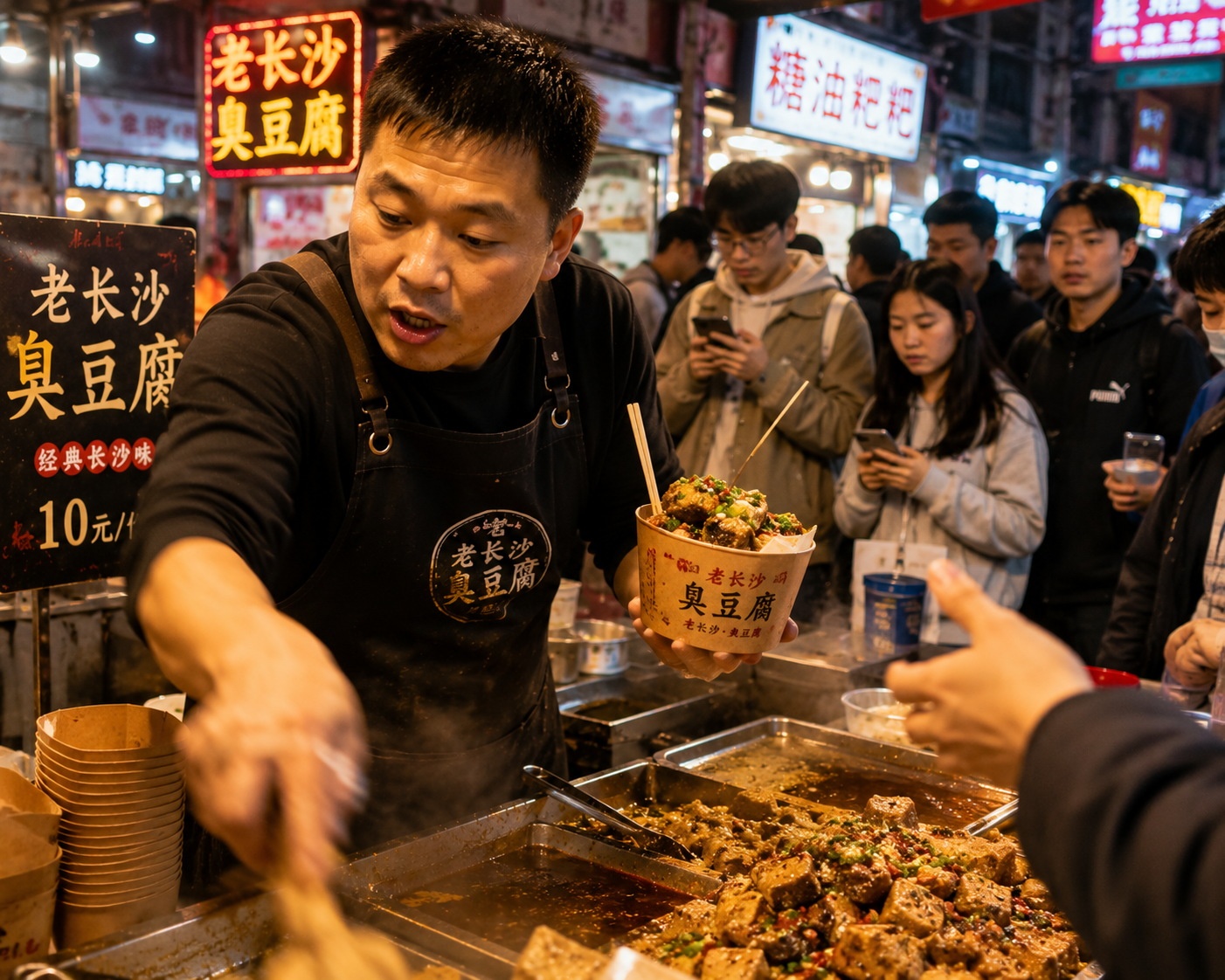
The Rhythm of the Rush: 500 Portions in 4 Hours
Let’s talk numbers. Selling 500 portions in four hours sounds impossible if you imagine a slow, chatty interaction. But night market service is a performance art. It requires muscle memory and extreme efficiency.
My station is organized like an assembly line. To my left, pre-soaked tofu blocks sit in a wire basket. In the center, the fryer. To my right, a station for sauces and chopsticks. I don’t just fry; I coordinate. While one batch is draining, I’m already brushing sauce onto the next. I never look up from the fryer unless I’m making eye contact to take an order.
Communication is brief and coded. “One spicy!” “Two garlic!” “Next!” There is no time for small talk about the weather. The transaction is purely functional, yet strangely intimate. You feed the crowd; they keep the energy high. If I slow down, the queue grows, and the noise level rises. If I speed up, the line moves, and people smile. It’s a feedback loop of adrenaline and income.
The Economics of Street Food: What Does This Actually Make?
There is a common misconception that street vendors in China are struggling to make ends meet. While some are, the top performers in high-traffic areas are running highly profitable micro-businesses.
Here is the math for a single night: I sell 500 portions at 12 RMB (about $1.65 USD) each. That’s 6,000 RMB in gross revenue. My costs? Oil, charcoal, tofu, sauces, and packaging cost roughly 1.5 to 2 RMB per portion. That leaves a gross profit of around 4,000–4,500 RMB for the night. After paying the daily stall fee (which varies by location but is often around 50-100 RMB), I take home nearly 4,000 RMB.
This isn’t a one-off luck. If I work four nights a week, that’s roughly 64,000 RMB ($8,800 USD) a month. This is significantly higher than the average white-collar salary in many Chinese cities. It’s not glamorous—it’s hot, smoky, and physically exhausting—but it’s real, cash-based income with low overhead and immediate feedback.
More Than Food: The Social Glue of the Night Market
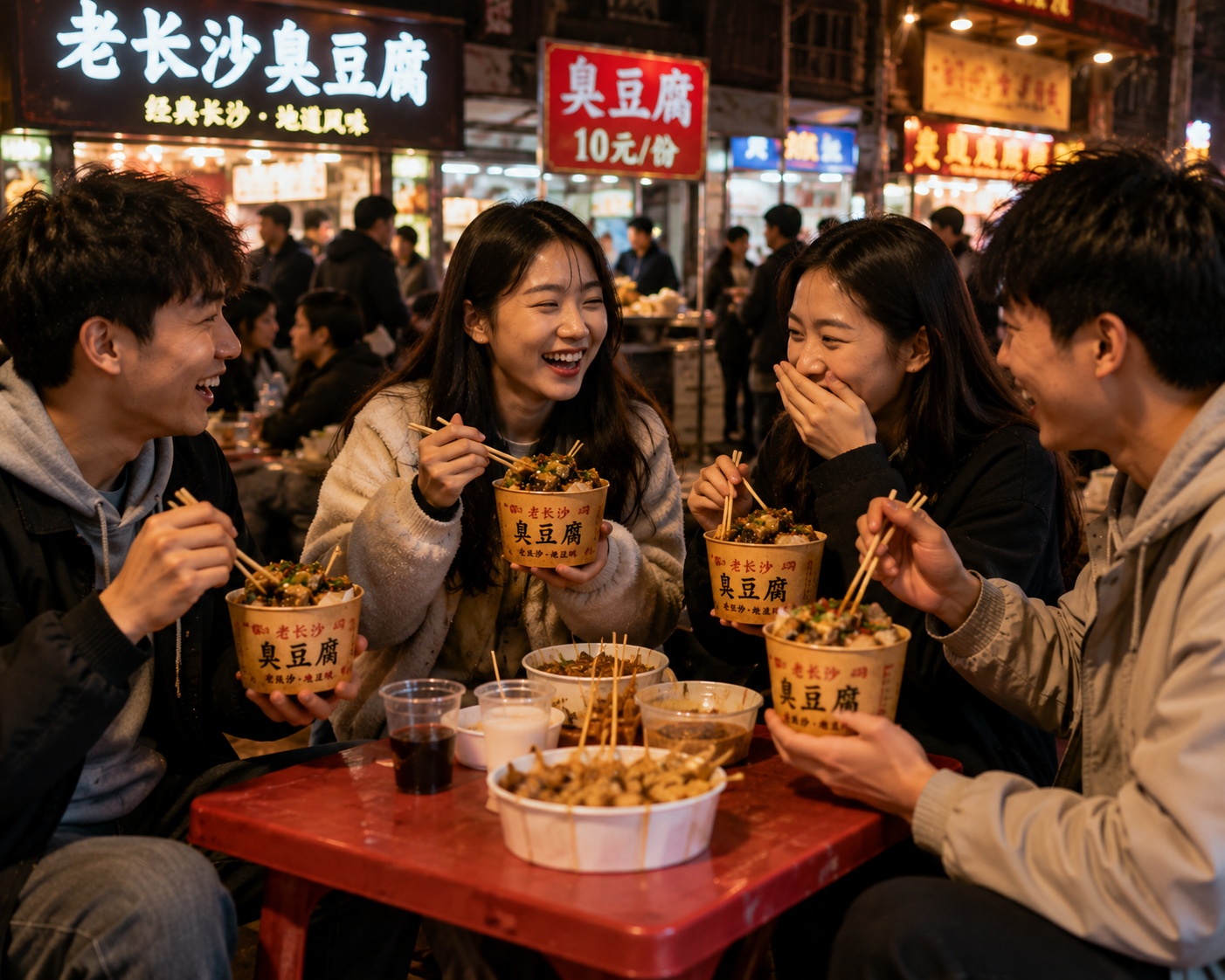
Beyond the sales figures, the night market is a social hub. It’s where office workers shed their suits and stress. It’s where students celebrate exams. It’s where grandparents watch their grandchildren eat messily with chopsticks.
When I hand a container of tofu to a customer, they are often already laughing with friends nearby. The food is just the catalyst. In a world that is increasingly digital and isolated, these physical spaces offer something rare: tangible connection. You can’t video-call your way through a night market experience. You have to be there, shoulder-to-shoulder, breathing in the same smoky air.
The “Stinky Tofu King” title isn’t about arrogance. It’s about survival and skill. It’s about understanding that in modern China, the street is not just a place to pass through—it’s a place to live, eat, and connect. And for four hours a night, I am the conductor of that energy.