

The Moment of Truth: When Clay Becomes Art
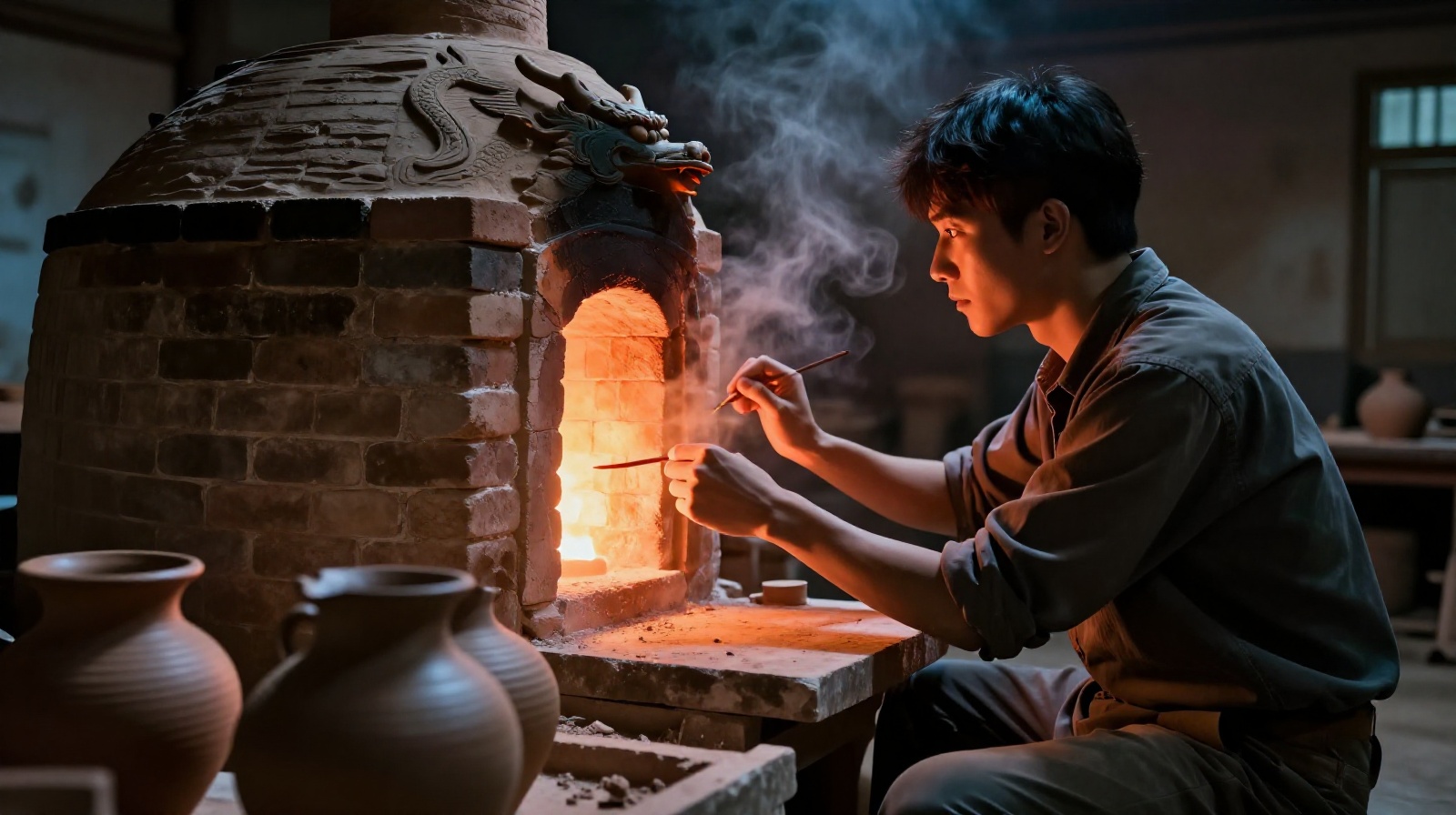
It is 3 AM in Jingdezhen. The air outside the kiln room is cool, but inside, temperatures soar past 1,300°C. For Lin Hao, a 25-year-old artisan, this is not just waiting; it is holding his breath. He leans against the heavy brick wall of an ancient dragon kiln, his eyes fixed on the firing door. Inside, simple clay pots are undergoing a violent, beautiful transformation known as ‘Yao Bian’—or kiln transformation.
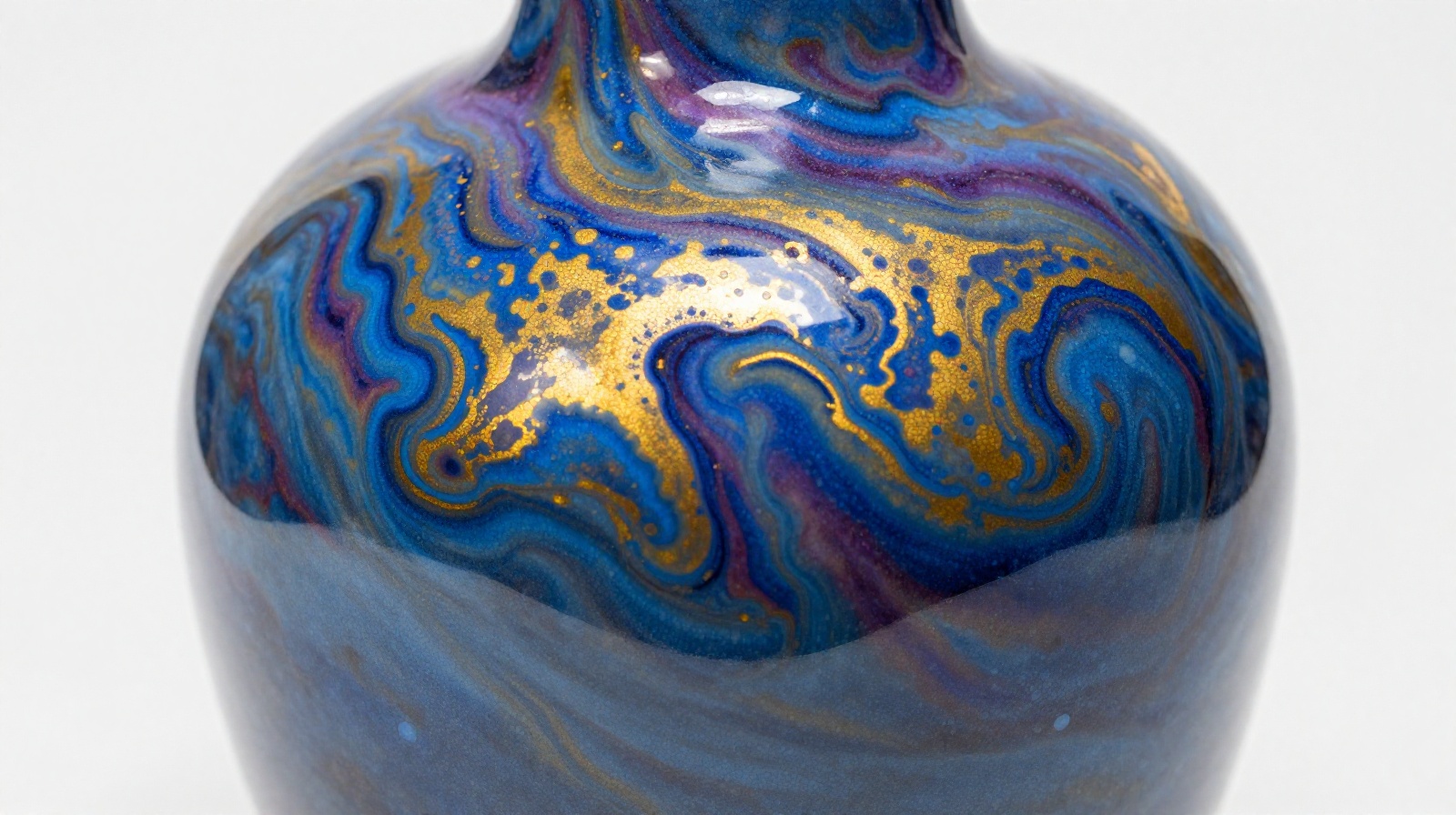
Unlike standard pottery where glaze color is predictable, Yao Bian relies on chemistry and chance colliding in extreme heat. The minerals in the clay react with smoke and ash from the burning wood, creating patterns that look like flowing galaxies, storm clouds, or liquid gold. No two pieces are ever alike. In centuries past, only the Emperor’s court could afford these ‘lucky’ accidents, often discarding 90% of the batch if they didn’t meet strict aesthetic standards.
The Lost Magic: Why It Vanished
For a long time, Yao Bian was considered a lost art. The traditional method relied entirely on the master’s intuition and luck. A slight shift in humidity, a different type of wood, or even the wind direction could ruin a batch worth thousands of dollars. Artisans spent decades mastering the ‘feel’ of the fire, but they couldn’t explain it scientifically.
As industrialization swept through China, mass-produced ceramics took over. The unpredictable nature of Yao Bian made it impossible for factories to scale. For many, it seemed like a relic of a bygone era—a beautiful failure that no modern economy could support. The knowledge was fading, kept only in the memories of an aging generation of potters.
Taming the Wild Fire with Modern Science
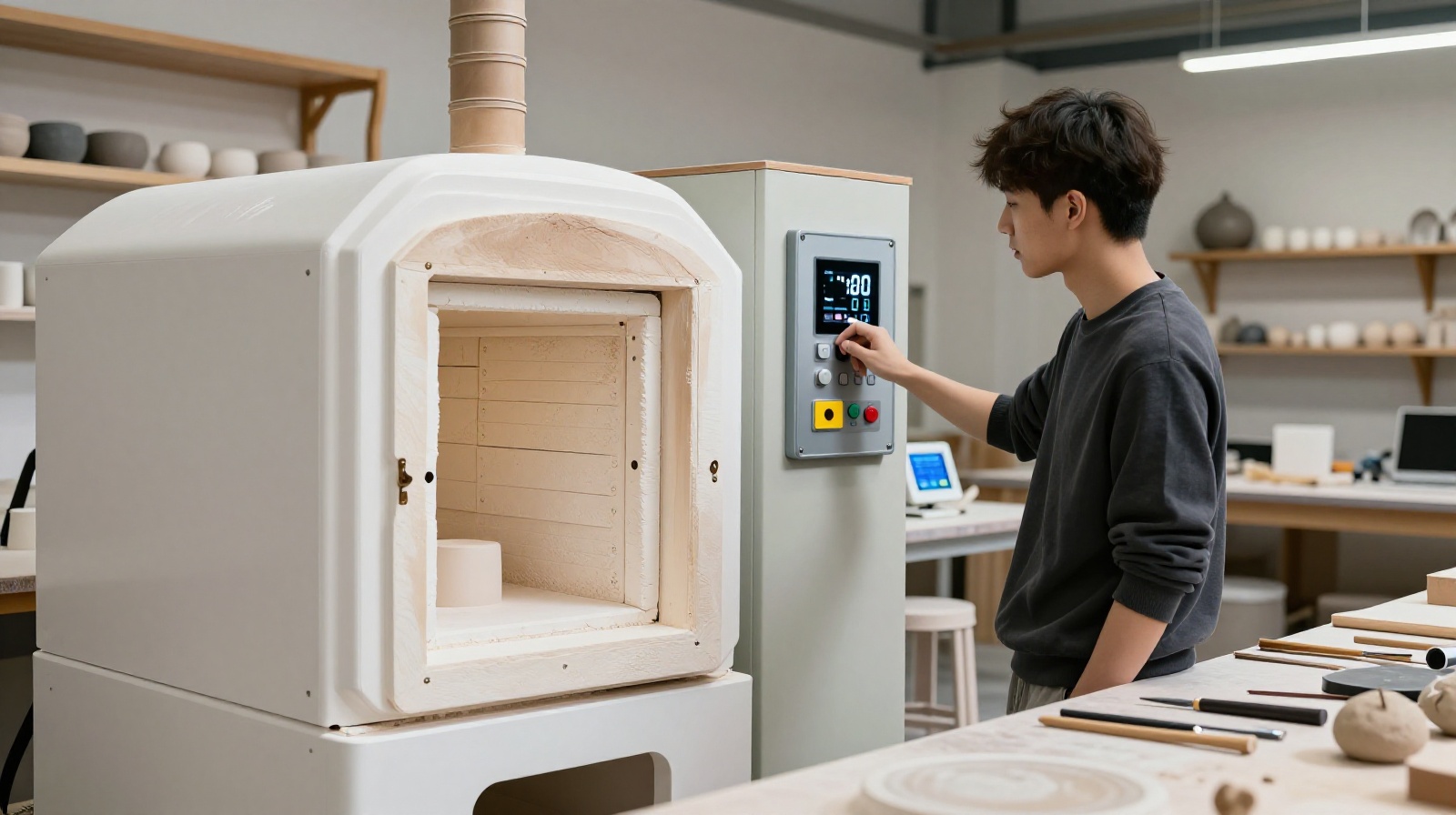
Today, a new generation is rewriting this story. Lin and his peers are not just copying ancient techniques; they are decoding them. Inside their workshops, you’ll find high-tech temperature sensors, humidity controllers, and digital spectrometers sitting right next to traditional wood-fired kilns.
By mapping the chemical reactions of ancient glazes with modern data, artisans can now predict how different variables affect the final color. They use computer models to simulate the fire’s path, allowing them to guide the ‘wild’ transformation rather than just hoping for it. The result is a hybrid art form: the soul of ancient tradition powered by the precision of 21st-century science.
It is no longer about luck; it is about understanding the language of fire and earth. This shift has made Yao Bian more accessible, allowing young designers to experiment without the fear of total loss that haunted their predecessors.
A Day in the Life: Patience and Failure
Being a kiln master today requires immense patience. Lin’s day begins at dawn, checking wood quality and arranging pots with surgical precision. The firing process takes days. During this time, he cannot touch the pieces or check them directly.
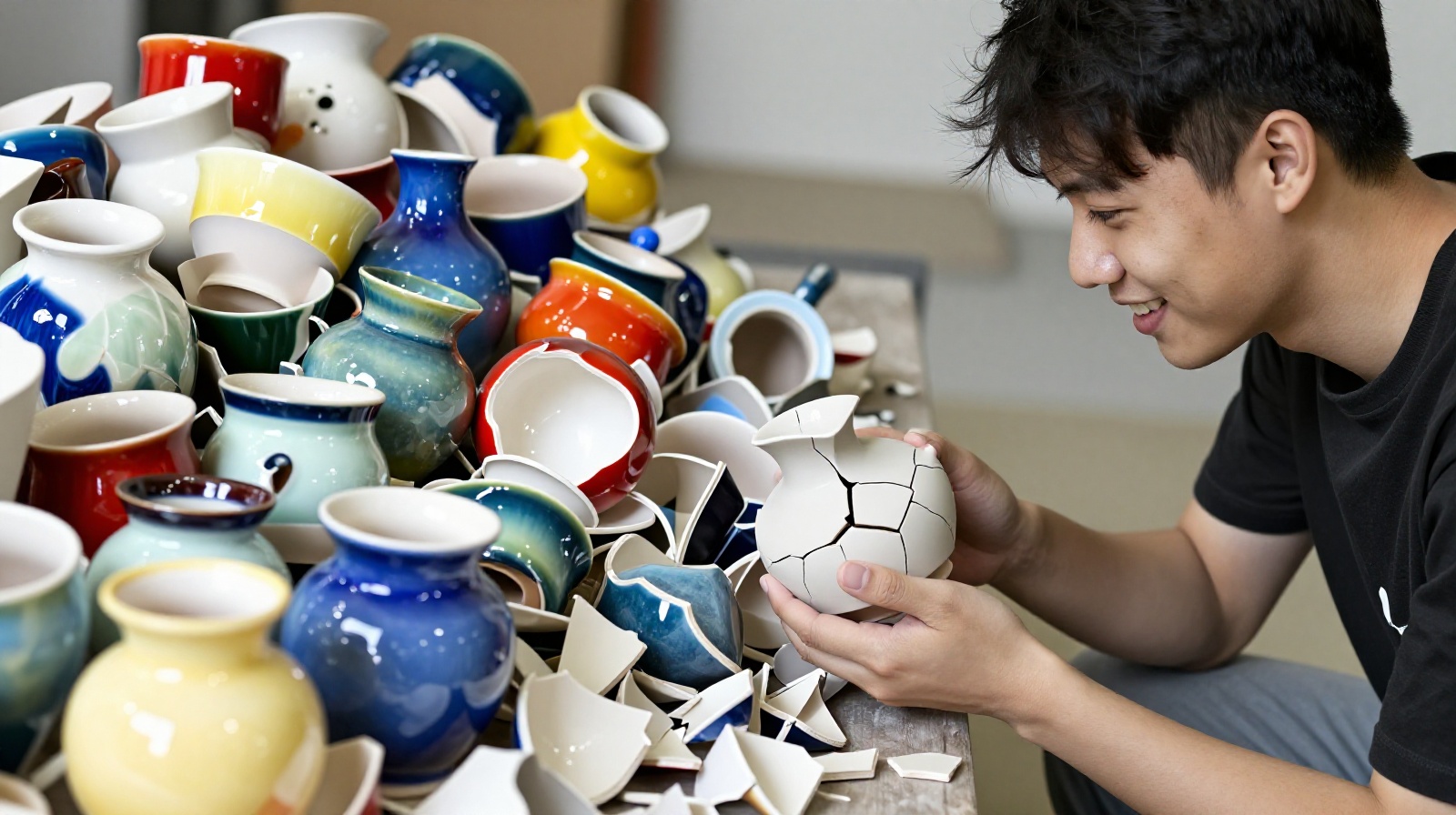
Then comes the most emotional moment: the unloading. Sometimes, the colors are exactly as predicted—a stunning deep blue with swirling white veins. Other times, the glaze runs off unpredictably, creating a ‘failure’ by modern standards but a masterpiece of chaos. Lin laughs when he sees a pot that cracked in half during firing. He doesn’t throw it away; he turns it into a sculpture, celebrating its imperfection.
This resilience is what defines the new Chinese craft movement. It is not about perfection, but about the unique story each object carries from the kiln to the world.
From Jingdezhen to the World
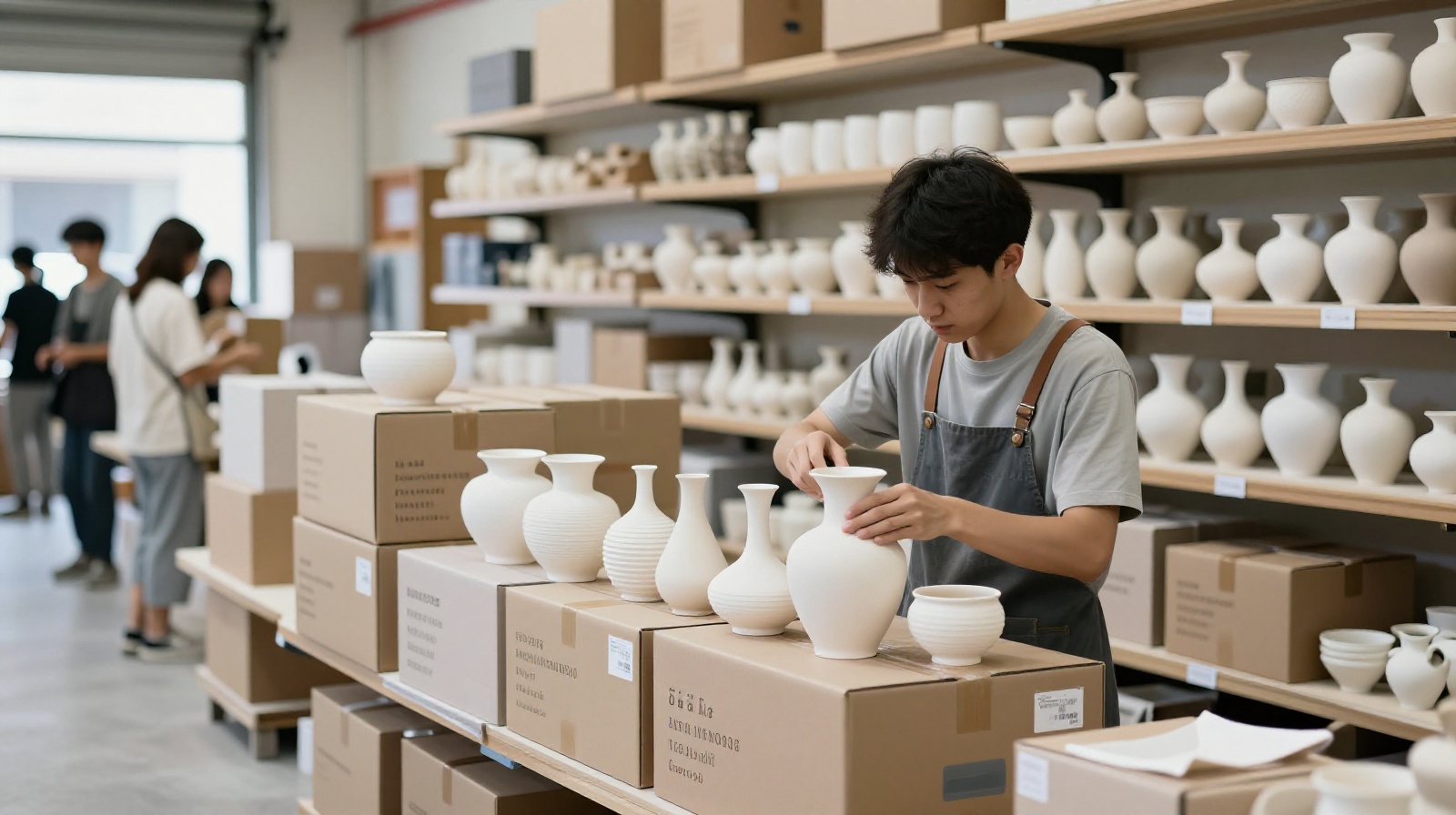
The impact of this revival is already visible globally. Unique Yao Bian vases and teapots are now finding homes in design studios in New York, Milan, and Tokyo. International buyers are drawn not just to the beauty, but to the story: a 1,000-year-old technique reborn through modern innovation.
These objects represent a new narrative for Chinese culture—one where heritage is not static or museum-bound, but dynamic and evolving. They show the world that China’s artisans are masters of both ancient wisdom and cutting-edge technology.
As Lin packs his latest creations for shipment to Europe, he smiles. The fire has spoken again, and this time, the world is listening.