

The Unexpected Arrival
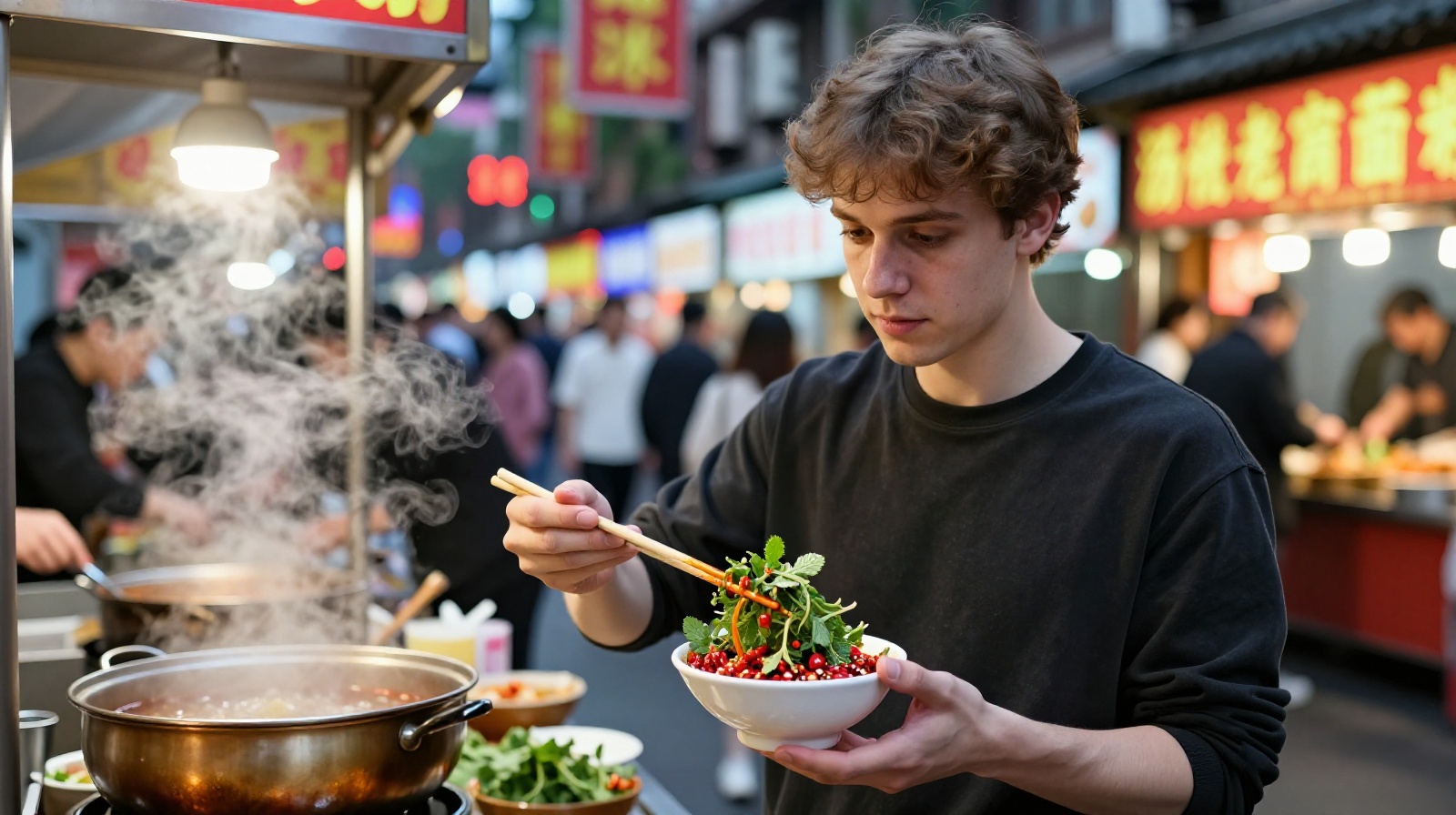
It was a humid Tuesday evening in Chengdu, the kind where the air feels heavy with spice and exhaust. Lukas, a 34-year-old graphic designer from Munich, stood outside a bustling street food stall near Kuanzhai Alley. He had spent two weeks in China, surviving on dumplings, mapo tofu, and the occasional Peking duck. Now, eager to move beyond the “safe” tourist menu, he was looking for something authentic.
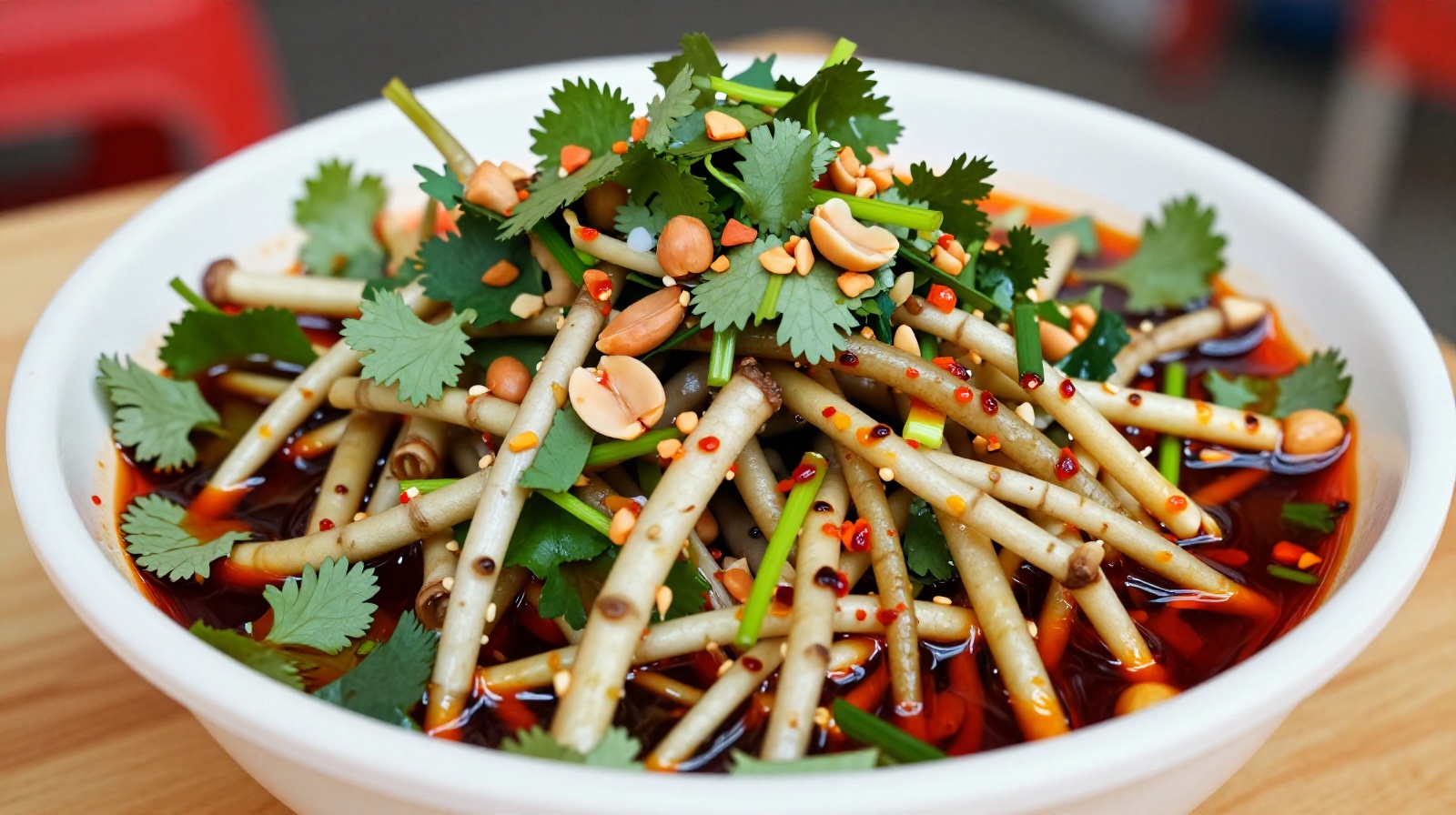
“What is this?” Lukas pointed at a small plastic bowl filled with pale, knobby roots mixed with chopped green onions and red chili oil. The vendor, a woman with a no-nonsense expression, shrugged. “Zhe’ergen,” she said in rapid Sichuanese dialect. “Good for you.”
Lukas looked at the vendor’s confident smile, then back at the bowl. In Germany, vegetables were crisp salads or roasted sides. This looked like something that had just been pulled from a muddy riverbed. He had no idea that this single bite would become the defining moment of his trip.
The Sensory Shock: What Is ‘Zhe’ergen’ Really?
To understand Lukas’s hesitation, you have to look at what Zhe’ergen actually is. Known in English as fish mint or Houttuynia cordata, it is a herb native to East and Southeast Asia. In Southwest China, particularly Sichuan, Chongqing, and Guizhou provinces, it is not just a garnish; it is a cultural staple.
The plant has heart-shaped leaves and a root system that smells intensely metallic, often compared by Westerners to soap, fresh earth, or even crayfish. If you have ever opened a can of sardines in a quiet room, imagine that smell, but sharper and more vegetal.
In the West, we are taught that food should please the nose first. But in Sichuan cuisine, complexity often trumps immediate comfort. Zhe’ergen is rarely eaten alone. It is usually chopped finely and tossed with vinegar, chili oil, cilantro, and peanuts. The heat of the chili masks some of the raw pungency, while the cold crunch provides a textural contrast to the spicy broth. For locals, it is refreshing; for an outsider, it can feel like an assault on the senses.
The Taste Test: From Hesitation to Acceptance
Lukas took a deep breath. He picked up his chopsticks, hesitated, and then threw a small cluster of roots into his mouth. The crunch was immediate—like biting into raw water chestnuts or celery, but wetter.
Then came the flavor. It hit him instantly: earthy, metallic, and strangely cleaning. “It tastes like… dirt after rain,” Lukas later told me, wiping his eyes slightly from the intensity. “But also like soap. Is it supposed to taste like soap?”
The vendor laughed. “No soap! Clean your lungs! Good for summer.” In traditional Chinese medicine, Zhe’ergen is believed to clear heat and detoxify the body—practical advice for a city known for its spicy, heavy diet.
I asked Lukas if he would order it again. He paused, thinking about the lingering aftertaste. “It’s not something I’d eat every day,” he admitted. “But I respect it. It’s like listening to experimental music. You don’t love it at first, but you appreciate the structure.”
Beyond the Plate: Food as a Cultural Bridge
Why do some foods divide us so sharply? In Germany, there are few culinary items that trigger such visceral reactions from outsiders. Maybe it’s the strong smell of aged cheese or the texture of fermented cabbage (Sauerkraut). But Zhe’ergen takes this to another level.
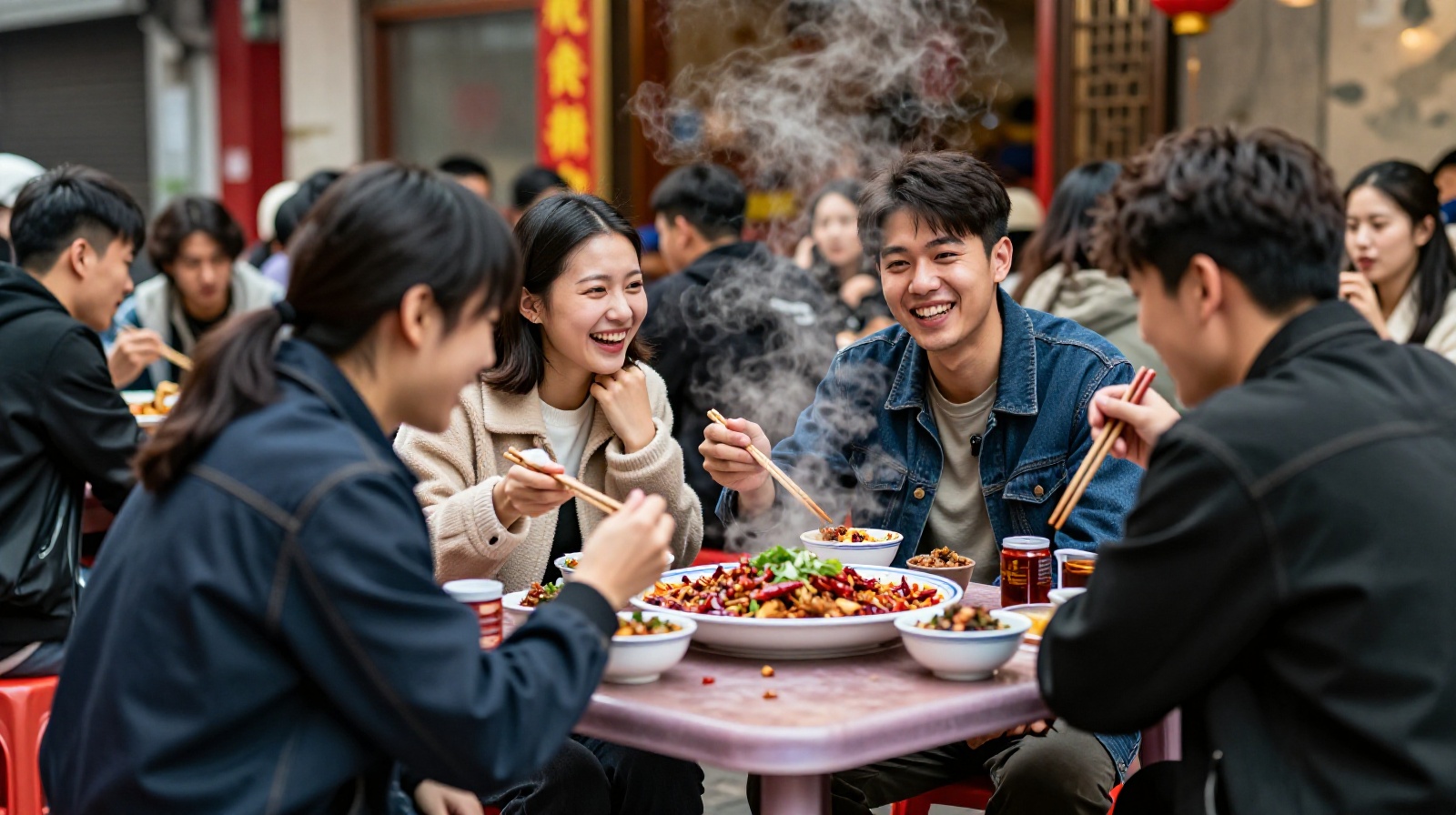
This dish is a perfect example of regional identity in China. Just as Bavarians might not understand why Southerners eat sweet wheat beer, Sichuan locals view Zhe’ergen with pride. It signals belonging. To order it means you are ready for the “real” Sichuan, not just the mild version served to international tourists.
For Lukas, this experience was a microcosm of traveling in China today. The country is vast and diverse. What works in Shanghai or Beijing might be alien in Chengdu or Kunming. Food preferences are deeply tied to geography and climate. Sichuan’s humid basin requires spicy, pungent foods to “dry out” the body. Germany’s cooler climate favors hearty, preserved foods.
Conclusion: Embracing the Unfamiliar
Lukas left the stall with a new perspective. He hadn’t fallen in love with Zhe’ergen overnight, but he had stopped seeing it as “weird.” He saw it as a local solution to a local environment—a way to stay cool and healthy in a humid city.
Travel is not just about seeing new places; it’s about expanding your sensory palette. When you try that strange root or that fermented bean curd, you are doing more than tasting food. You are engaging with the history, climate, and daily life of the people who eat it.
So, if you visit China next time, don’t just stick to Kung Pao chicken. Find a local stall. Point at something unfamiliar. Take the bite. You might not like it immediately, but that discomfort is often where the real cultural connection begins.