

More Than Just Dancing
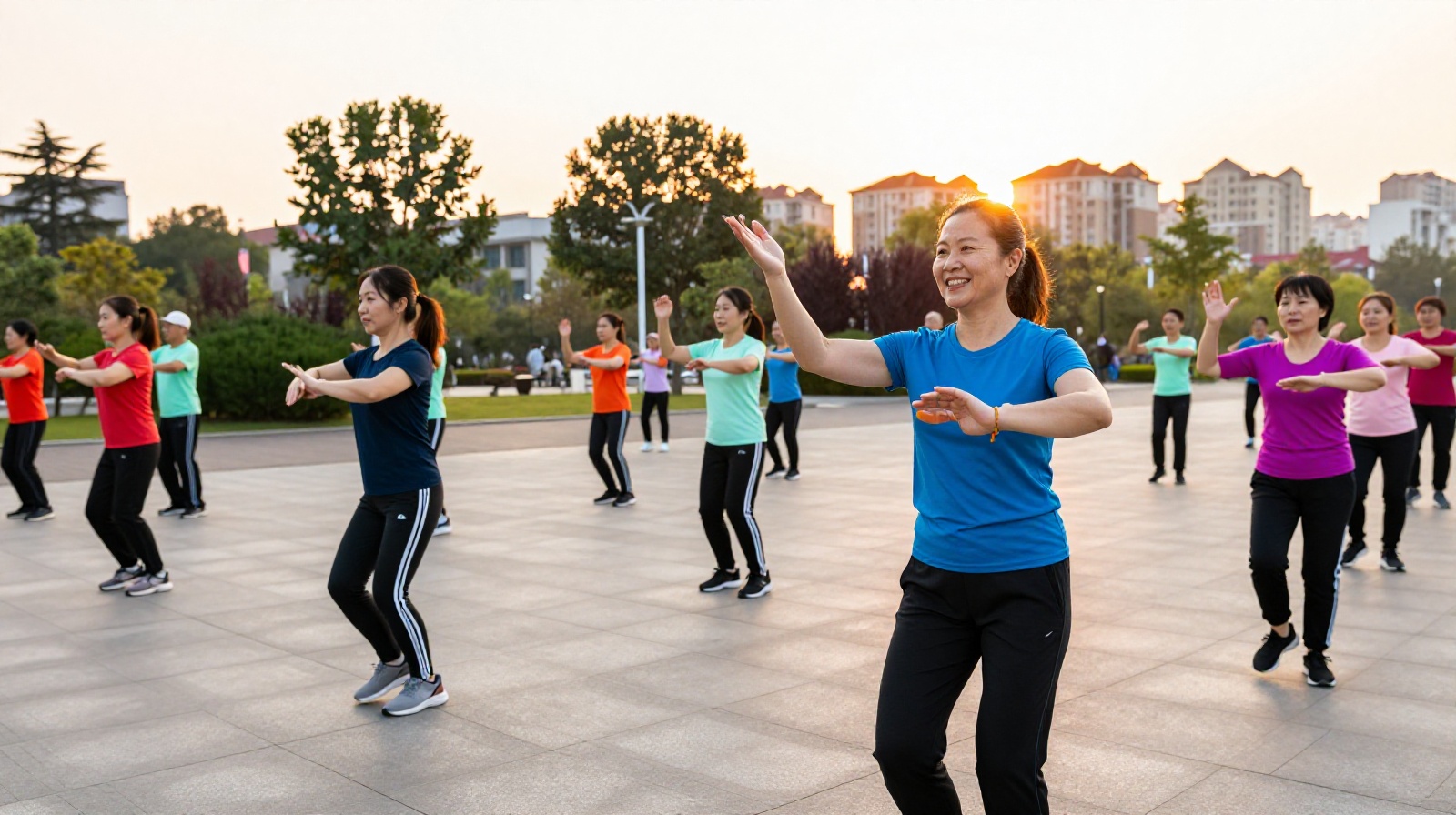
If you’ve walked through a Chinese city park or plaza after sunset, you’ve likely seen them: hundreds of people moving in unison to booming pop music. This is guangchangwu, or square dancing. To an outsider, it can look like chaotic choreography. But for millions of retirees and working adults across China, these open-air dance circles are the heartbeat of community life.
I remember my first attempt to join a group in Beijing. I stood at the edge, watching women aged 50 to 70 move with surprising precision. The music was loud—literally shaking the pavement—but their energy was infectious. I wasn’t sure if they’d welcome an awkward foreigner trying to mimic their moves. Turns out, they didn’t just welcome me; they corrected my posture with gentle smiles.
Timing Is Everything
The key to joining without feeling like a trespasser is timing. Square dancing doesn’t happen at random hours. It follows the rhythm of daily life in Chinese cities.
Best Time: Late afternoon, between 6:00 PM and 8:30 PM, depending on the season. In summer, it might start earlier to beat the heat; in winter, later when the sun goes down sooner.
The Golden Rule: Never join during the “warm-up” or “cool-down” phases if you’re a beginner. Wait for the main routine to be established. If you step into the circle while they are setting up speakers or stretching individually, you’ll stand out as an outsider. But once the formation is tight and the music is full-throttle, that’s your cue.
Where to Stand: The Art of Blending In
One of the biggest anxieties for newcomers is: “Which spot do I take?”
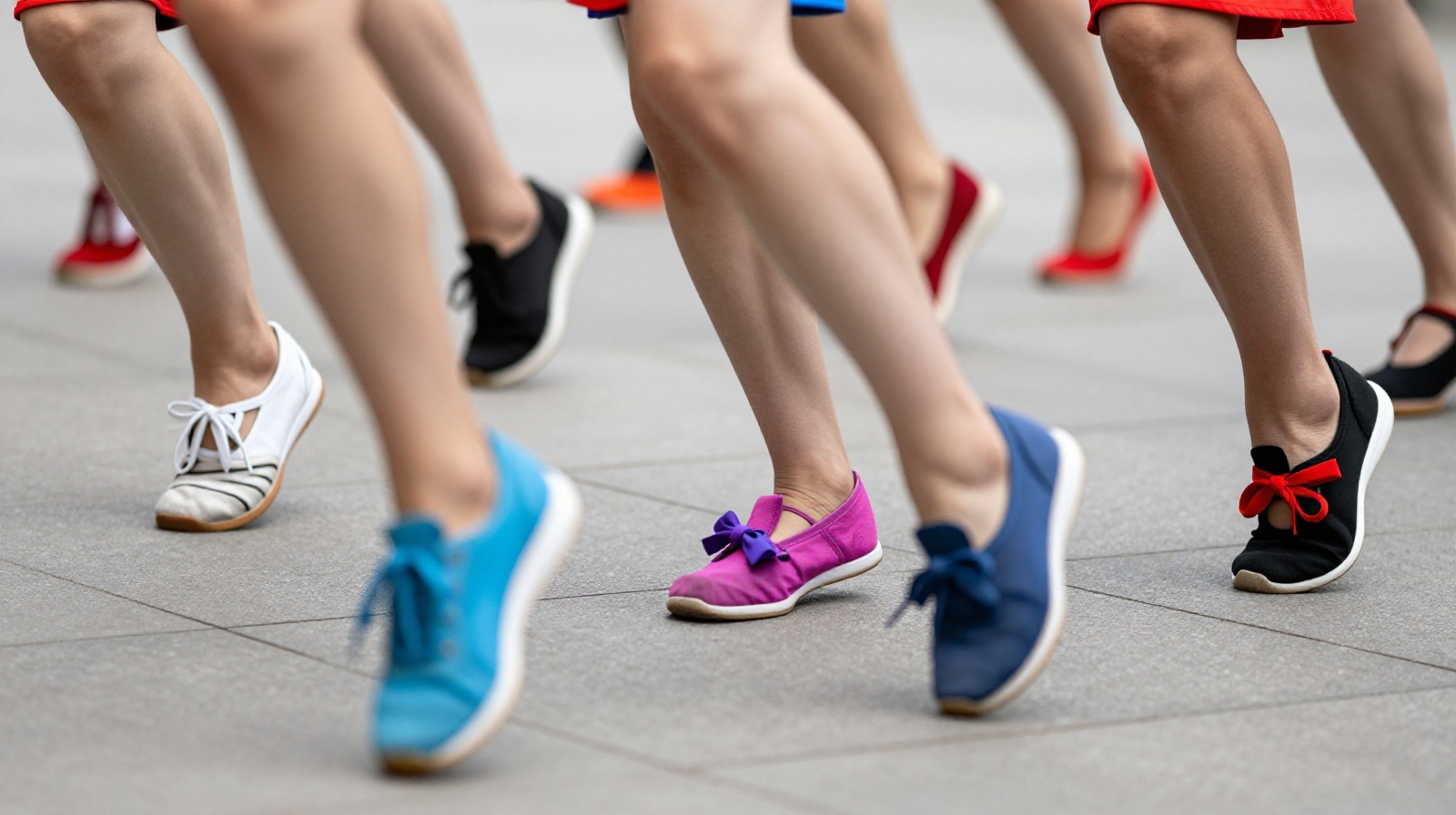
In Chinese square dancing, there’s an unspoken hierarchy. The front rows are reserved for the most experienced dancers—the “leaders” who know every step by heart and often help teach new routines. They might not always smile at you if you cut in front of them.
The Strategy: Find a spot in the second or third row, preferably at the back edge of the formation. This is where beginners go. It’s also known locally as “划水” (hua shui), which literally means “skimming the water.” In this context, it doesn’t mean slacking off; it means participating without pressure. You can follow the person in front of you, miss a step, and no one will notice or judge.
Decoding the Moves
You don’t need dance training. Most guangchangwu routines are designed for accessibility. The steps are simple: side steps, gentle sways, arm waves, and rhythmic clapping. Think of it as low-impact aerobics set to disco or traditional folk songs.
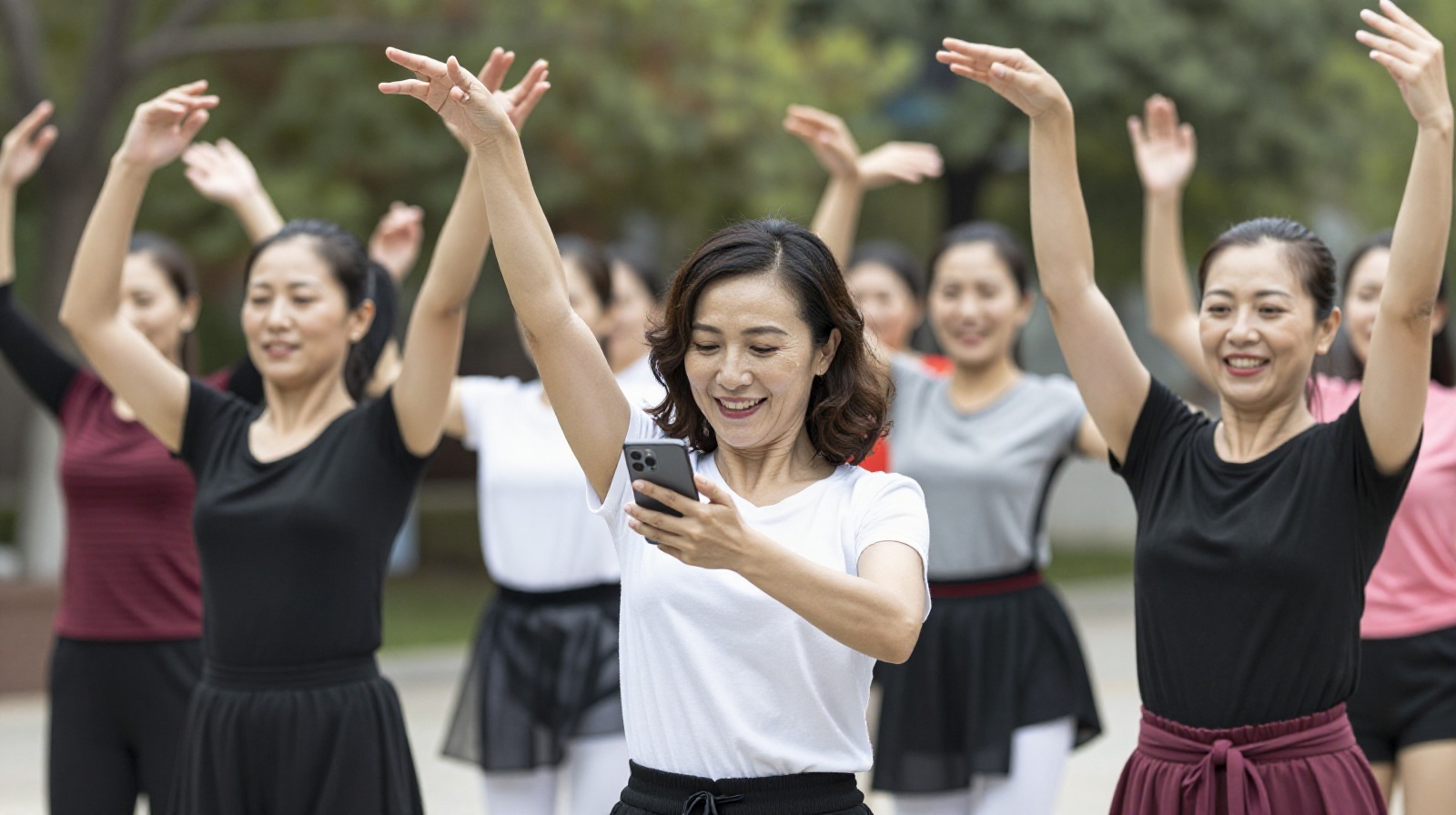
The music is a cultural time capsule. You’ll hear everything from 1980s Mandopop hits to modern electronic remixes of opera, and sometimes even Western classics like Macarena or Thriller. The lyrics often focus on love, nature, or happiness. If you don’t know the dance, just listen for the beat. A steady 4/4 time signature is your best friend.
Breaking the Ice: Social Etiquette
Square dancing in China is as much about socializing as it is about exercise. The women (and increasingly, men) use this time to catch up on gossip, share recipes, and maintain friendships.
To integrate smoothly:
- Smile First: A genuine smile goes a long way. If someone notices you struggling with a move, they will likely demonstrate it slowly for you.
- Simple Greetings: You don’t need fluent Chinese. A simple Ni hao (Hello) or Zhen piao liang (You look great/beautiful) when someone compliments your participation is enough to build rapport.
- Respect the Space: Avoid filming close-ups of people’s faces without permission. Many participants are conscious of their image. Keep your camera at a distance, or better yet, put it away and enjoy the moment with your eyes.
Why It Matters
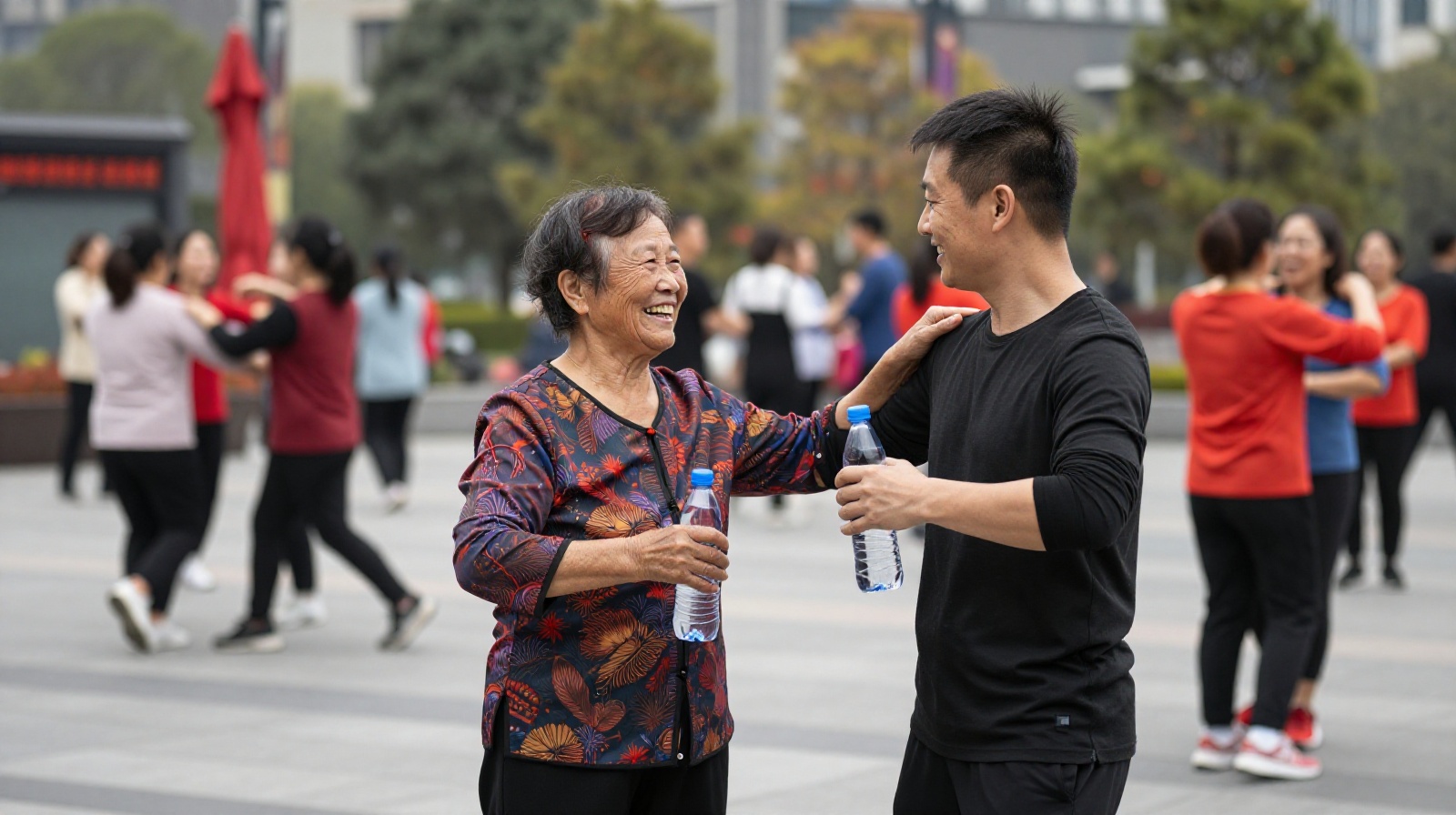
Joining a square dance group offers a unique window into Chinese society. In an era where urban life can feel fast-paced and isolating, these plazas serve as vital public living rooms. They are spaces where age gaps disappear—a 70-year-old grandmother might be dancing alongside her granddaughter.
For foreigners, it’s one of the few activities where language barriers dissolve. Movement is universal. When you finally get the rhythm right, and the group moves together in a wave of synchronized energy, you won’t feel like an outsider anymore. You’ll just be another dancer finding joy in the public square.