

The Sound of China’s Living Rooms and Business Dinners
If you walk into almost any apartment in a Chinese city between six and eleven at night, you will likely hear it first: the sharp, rhythmic clacking of ceramic tiles.
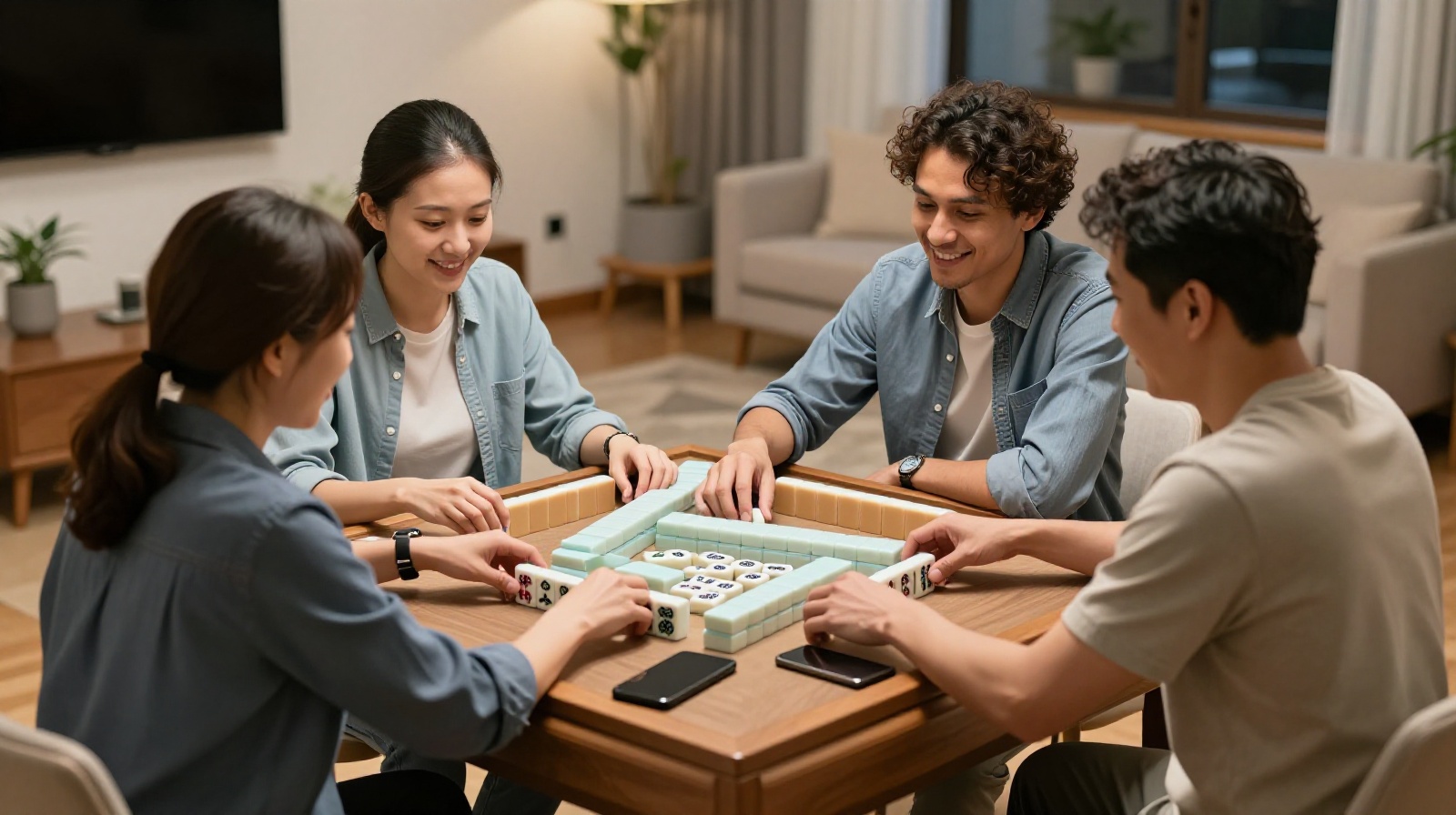
Mahjong is not just a pastime here. It functions as a social operating system. You will see grandparents passing strategies on sunlit balconies, corporate colleagues bonding after work in restaurant private rooms, and even new neighbors using a four-tile spread to break the ice. In China, sharing a meal is traditional, but sitting around a mahjong table is where real conversation happens. Phones stay face-down. The game moves at a pace that leaves room for catching up, debating local news, or quietly observing how decisions are made.
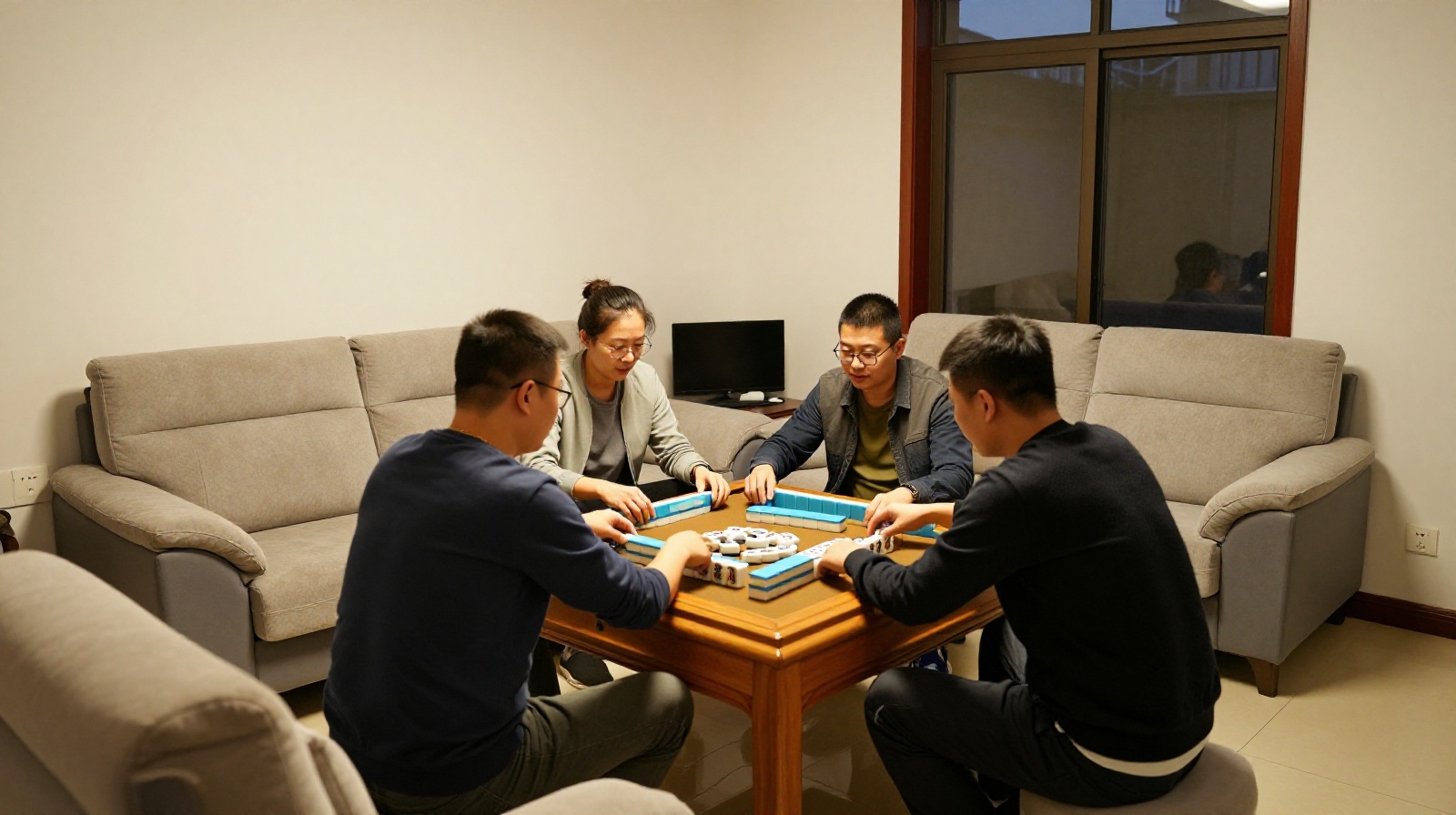
For visitors or expats, learning the basics does more than help you avoid awkward silence during a dinner party. It gives you a direct line into how ordinary people relax, negotiate, and build trust. The rules are not about memorizing complex probabilities. They are about pattern recognition, patience, and reading the room. When you understand the flow of tiles, you start to understand the rhythm of everyday social life.
Four Words, One Game: The Core Moves Explained
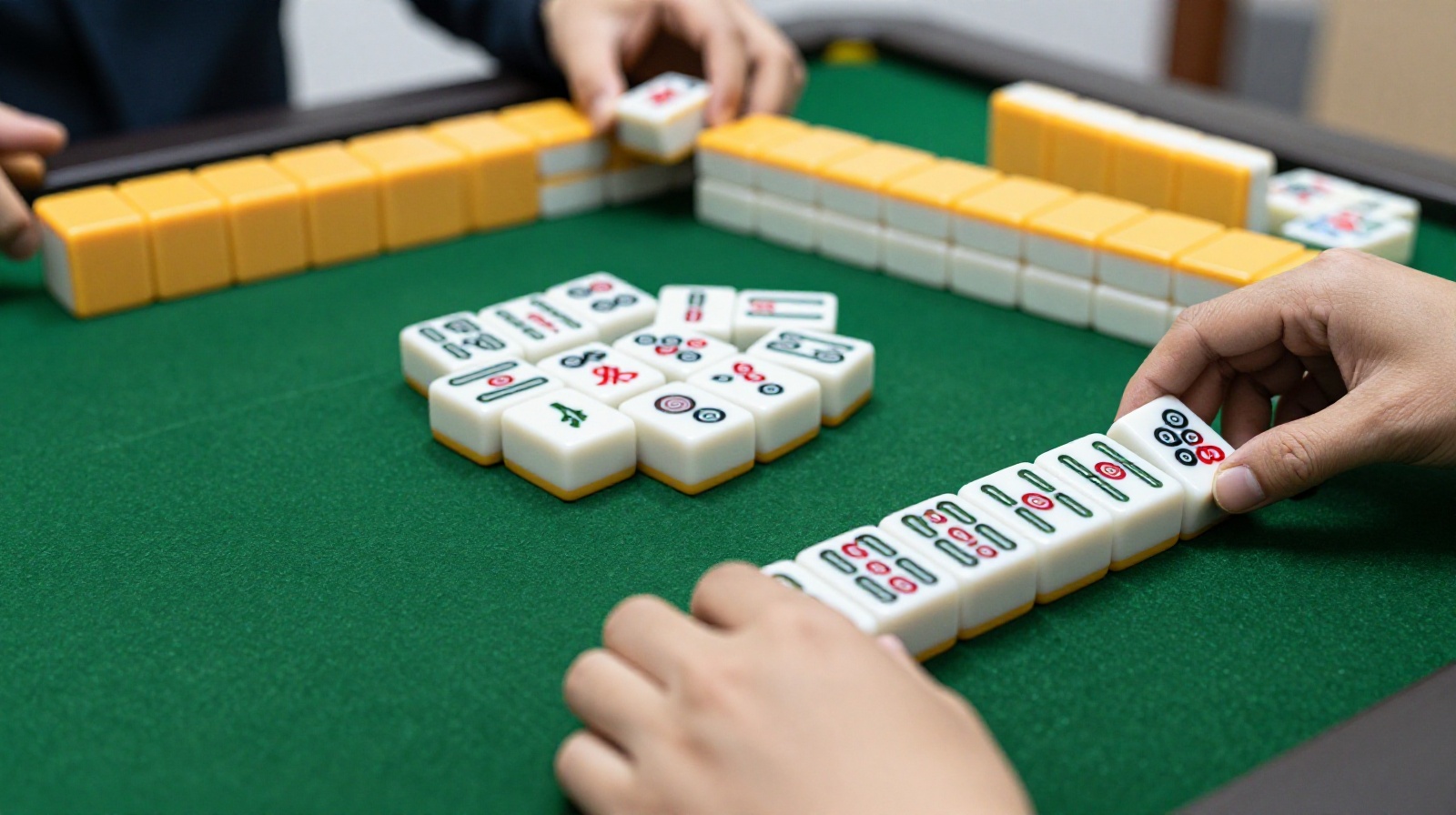
A standard game uses four players and 144 tiles, though many home games stick to 136 for shorter sessions. Each player starts with thirteen tiles. On your turn, you draw one tile and discard one. The goal is to build specific combinations before anyone else does. You will hear four Chinese words constantly, and they are the engine of every round.
- Chi (Eat): You can only call this if a player on your left discards a tile that completes a straight sequence in the same suit (for example, 4-5-6 Bamboo). You place it face-up next to your other tiles. Because you can only eat from the immediate left, table position matters more than you might expect.
- Peng (Pong): Any player can claim a discarded tile if you already hold two matching ones. It forms a triplet. Unlike eating, pinging works with tiles from anyone at the table and applies to all suits, including winds and dragons.
- Gang (Kong): This is when you collect four identical tiles. You call it out, flip them face-up, and draw a replacement tile from the back of the wall. A gang speeds up your hand but also signals your strategy to everyone else.
- Hu (Win): The round ends when you complete a valid hand. In most beginner versions, this means four sets (triplets or sequences) plus one matching pair. You announce “Hu” and reveal your tiles. Scoring later depends on bonus points, but for now, just focus on the pattern.
Why Start with the Basics?
China is too large for a single mahjong rulebook. Regional variants change everything. Sichuan mahjong removes the Chi move entirely and forces players to discard specific tiles after winning, making it faster and more defensive. Cantonese mahjong focuses heavily on point values and allows very quick rounds. Shanghai style leans toward complex scoring systems that take years to master.
If you are picking up a set for the first time, stick to the standard thirteen-tile structure with basic sequence and triplet rules. Do not worry about calculating points or tracking hidden bonuses yet. Treat it like learning the chord progression on a guitar before composing a song. Once your hands know how tiles flow together, you can explore regional rules later. Most local hosts will happily simplify the game for guests rather than watch someone struggle with point sheets.
Table Etiquette: What Not to Do (and How to Read the Room)
Mahjong is as much about manners as it is about strategy. The table has unspoken rules that keep games friendly, even when competition heats up.
Never take back a tile once you have placed it in your discard area. It is the first rule of mahjong etiquette and a quick way to lose trust. If you made a mistake, finish the turn and move on. Players will forgive a miscount but not a reversal. Pacing matters too. Hovering over your tiles for three minutes while others wait will break the rhythm. A good habit is to place your discard tile gently near the center of the table rather than tossing it across. It shows respect for the shared space.
Socially, mahjong is a low-pressure environment. If someone invites you to play but you do not know the rules, it is perfectly fine to say you want to watch first or start with one round using simplified scoring. Declining politely is better than forcing yourself into a game where you only feel anxious. Conversely, if you win several rounds in a row and your partners seem tired, offering to cover the cost of tea or snacks is a common way to balance the mood.
Your Quick-Start Reference Guide
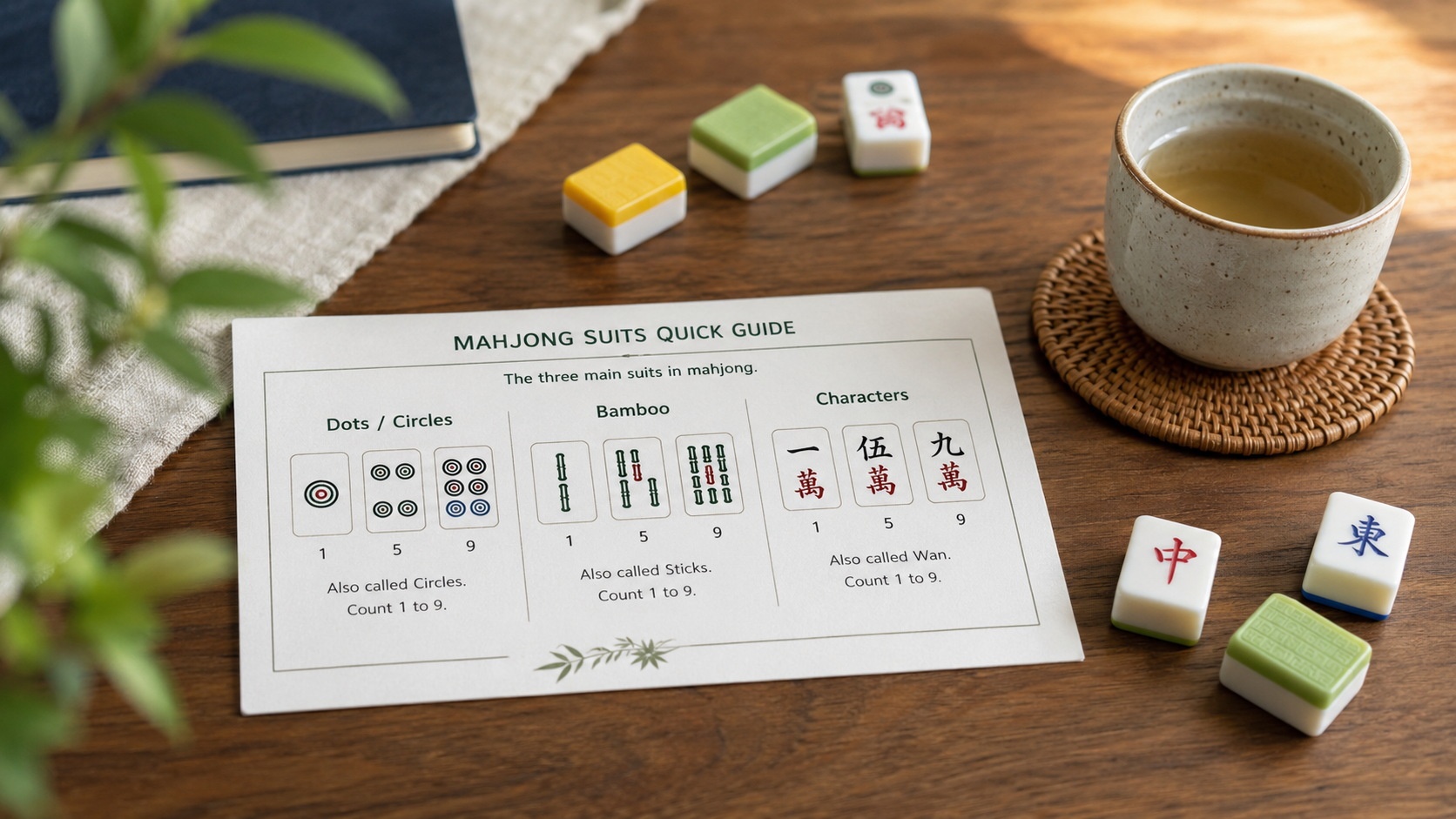
Before sitting down, spend ten minutes looking at the tile types. Chinese mahjong uses three numbered suits plus honor tiles.
- Wan (Characters): Numbered 1 to 9 in traditional Chinese numerals. Often look like calligraphy on a rectangular base.
- Tiao or Suo (Bamboo): Pictorial illustrations of bird sticks, bamboo stalks, or nets. The 2-Bamboo is usually drawn as two sparrows facing each other.
- Tong or Bing (Dots/Coins): Simple circles that resemble traditional copper coins.
- Winds: East, South, West, North. These act as directional anchors and often carry base points in scoring.
- Dragons: Red, Green, White. The white dragon is actually a blank square, which confuses newcomers until they see it in action.
Keep this breakdown on your phone or print a small reference card. When you watch a hand, focus only on how players group their tiles into sequences of three or triplets of the same number. Ignore complex point calculations until you can comfortably play two full rounds without looking up how to claim a tile.
More Than a Game, It Is a Conversation Starter
Mahjong will not make you fluent in Chinese overnight, but it will give you something better: shared context. Every round teaches you how locals joke, how they handle losses without frustration, and how they naturally shift from casual chat to serious advice. The clacking tiles are just the soundtrack. The real game is learning to sit across from a new person, exchange a few rounds, and leave with a name, a story, or an invitation for next time.
Pack your curiosity, watch the tile discards, and let the rhythm carry you. You do not need to win every hand. You just need to keep playing.