

Not Just a Snack, It’s a Social Contract
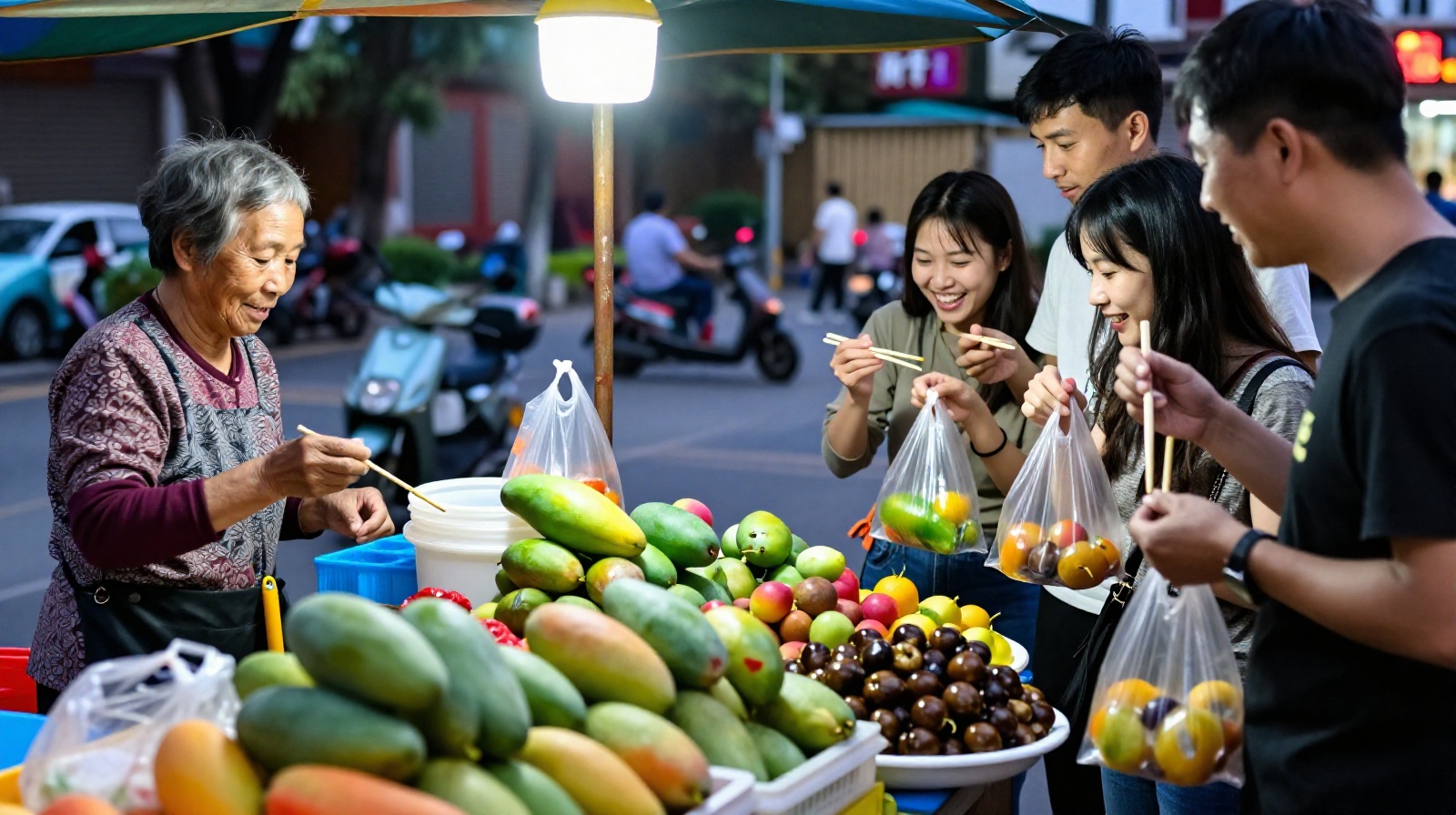
If you walk through Nanning after sunset, the air doesn’t smell of exhaust or rain. Instead, it carries the sharp, tangy scent of vinegar and chili powder mixed with fresh fruit juices. This is the signature of suan ye (pickled fruits), a street food so central to Guangxi life that locals don’t just eat it; they live by its rhythm.
I remember my first evening in Nanning. I was standing awkwardly on a sidewalk, holding a plastic bag of pickled mango. A middle-aged woman selling the fruit noticed me hesitating over the spicy powder packet. She didn’t ask if I wanted to buy more; she just handed me her own pair of chopsticks and laughed, “Try it! You’ll be my old friend in five minutes.” That was the moment the city opened up to me.
The Street Corner as a Living Room
In many Western cities, you might strike up a conversation with someone waiting for a bus or standing in line at a café. In Nanning, the queue is the living room, and the vendor’s stall is the coffee table. The suan ye cart isn’t just a food stand; it’s a neutral ground where strangers become neighbors.
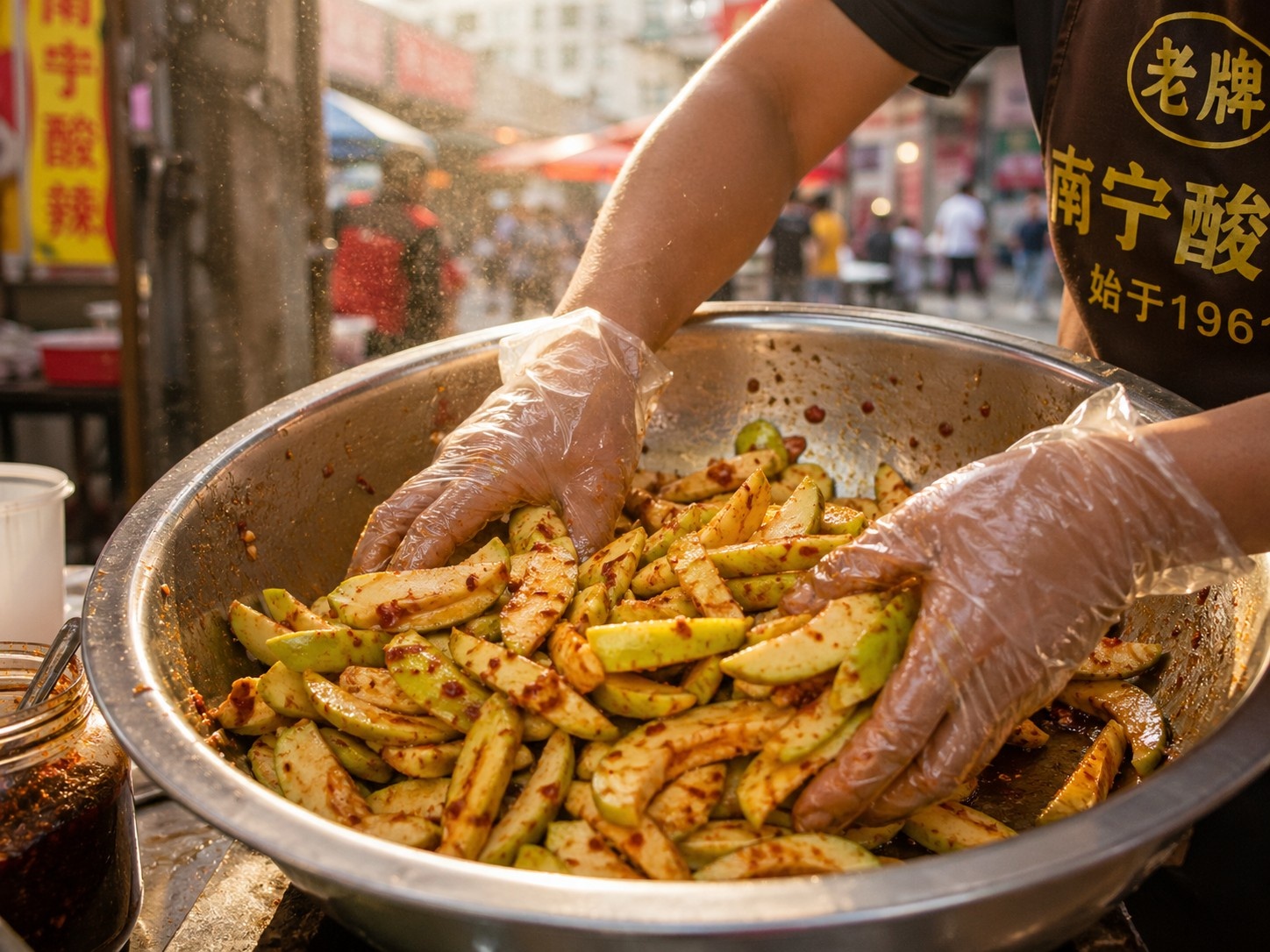
The process is simple but deeply ritualized. A vendor scoops chunks of jicama, green mangoes, water chestnuts, or even jackfruit into a bowl. They toss them with chili powder, salt, sugar, and a splash of plum vinegar. Then, they grab a pair of wooden chopsticks from their pocket and hand you the bag.
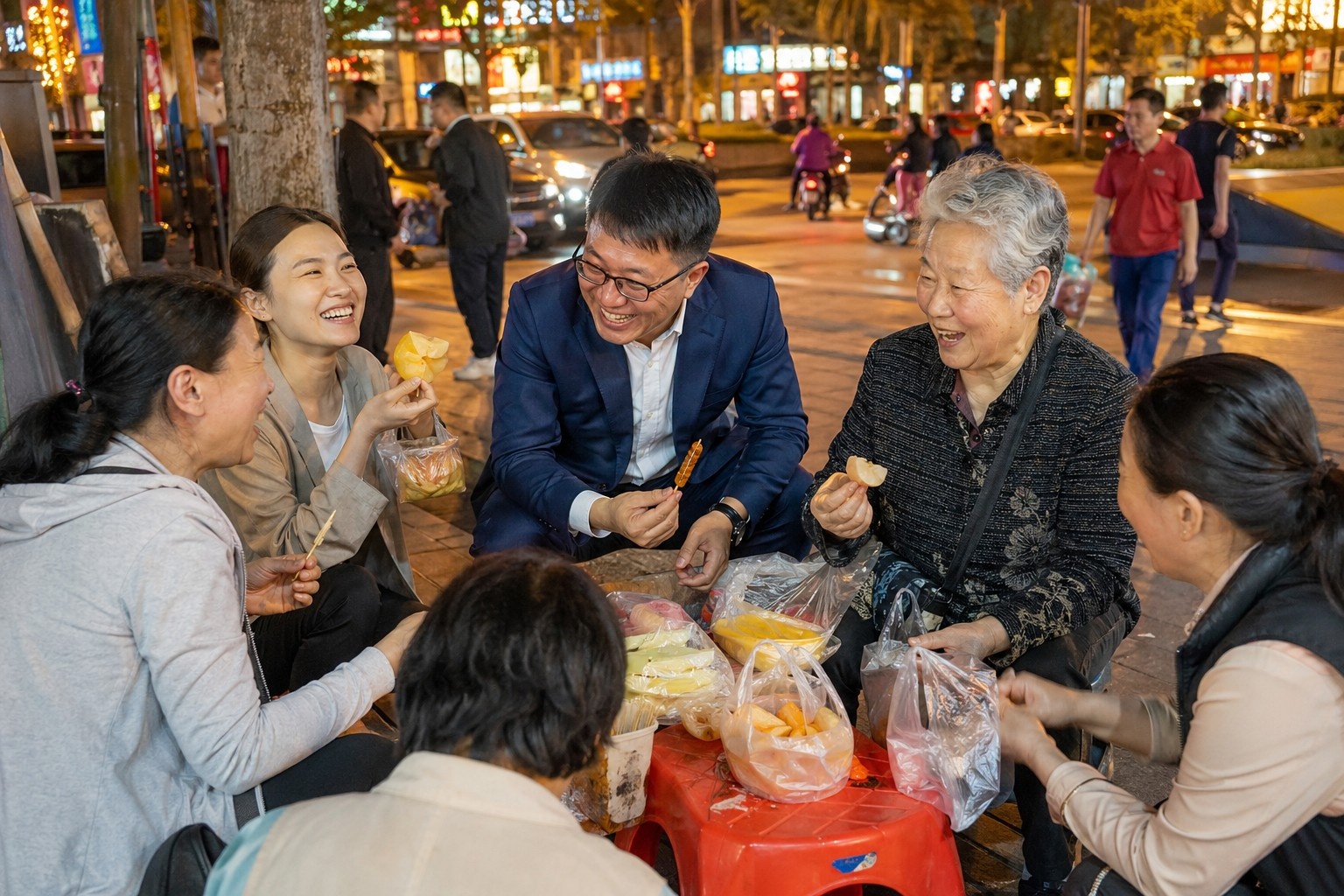
What happens next is the real magic. People don’t eat in silence while walking away. They stand there, leaning against the cart or sitting on small plastic stools, sharing the food with the vendor and each other. You hear laughter over a plate of pickled lotus roots. A businessman in a suit might be chatting about his day with a retired teacher next to him. The spicy heat from the chili forces you to slow down, sip water, and talk.
Bridging Generations Through Taste
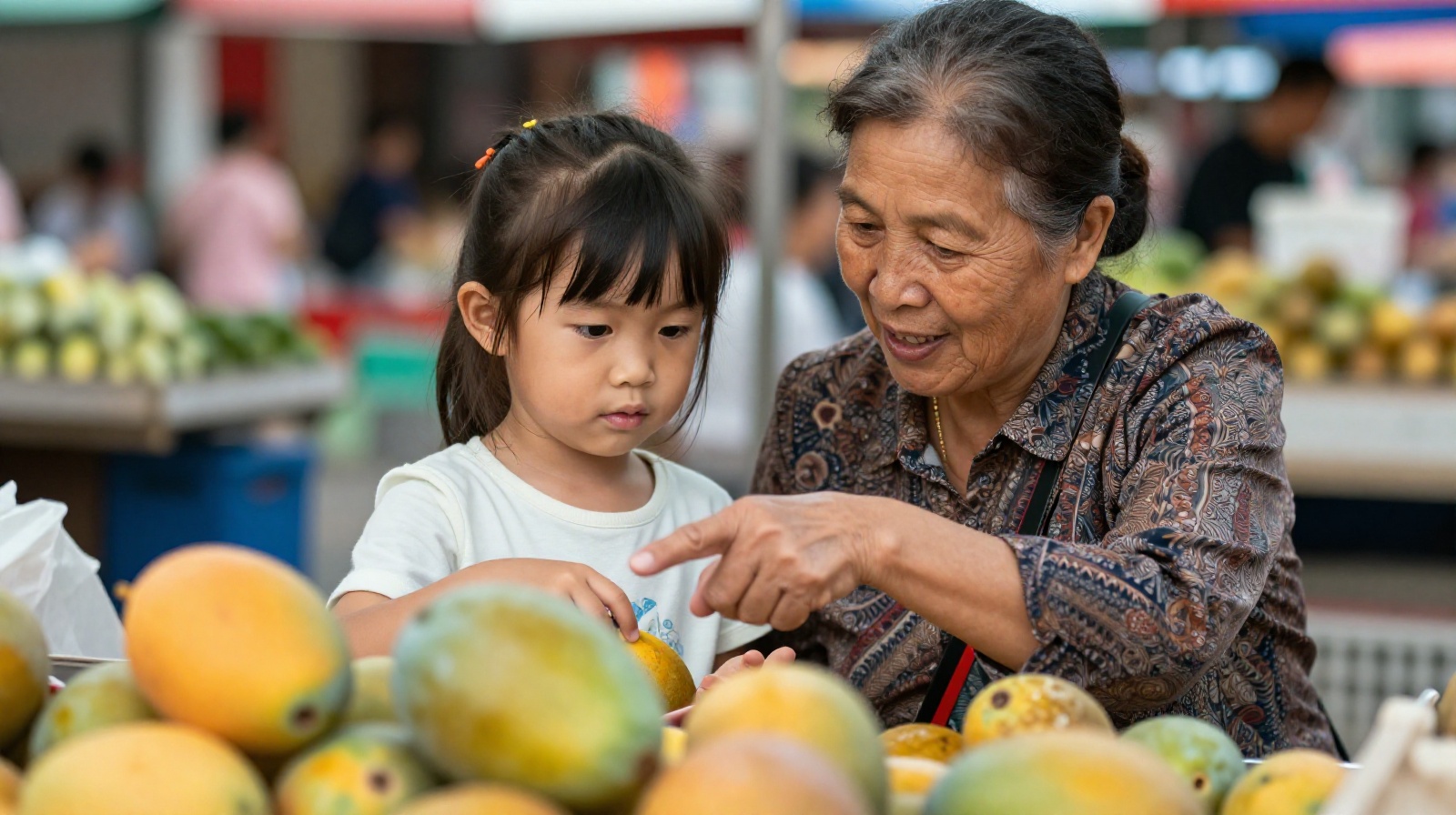
This social fabric isn’t limited to one age group. It spans the entire spectrum of Nanning life. I watched a grandmother teaching her granddaughter how to choose the perfect sour mango. The old woman pointed out which fruits would be crunchy and which would melt in your mouth. They shared stories between bites, their voices rising above the noise of passing motorbikes.
For young people, suan ye is a break from the digital world. In an era dominated by smartphones, this physical act of sharing food creates a tangible connection. It’s a way to say, “I trust you enough to share my meal,” without needing a social media follow.
The vendor knows everyone’s order. They remember that Uncle Li needs less chili and that the student next door prefers extra salt. This personalized service transforms a transaction into a relationship. In a city of millions, these small interactions create a sense of belonging that is rare in modern metropolises.
A Flavor That Defines Community
Why does this work? Perhaps because sourness and spiciness are bold flavors that demand attention. They cut through the noise of the city. Just as the acidity wakes up your palate, these street corners wake up the community.
Nanning’s suan ye culture is a reminder that technology and skyscrapers don’t define a civilization’s soul. The real heartbeat of the city lies in how its people connect over a shared bowl of pickled fruit. It’s a social contract written in vinegar and chili, binding strangers together as “old friends” with every bite.