


It’s Not What You Think
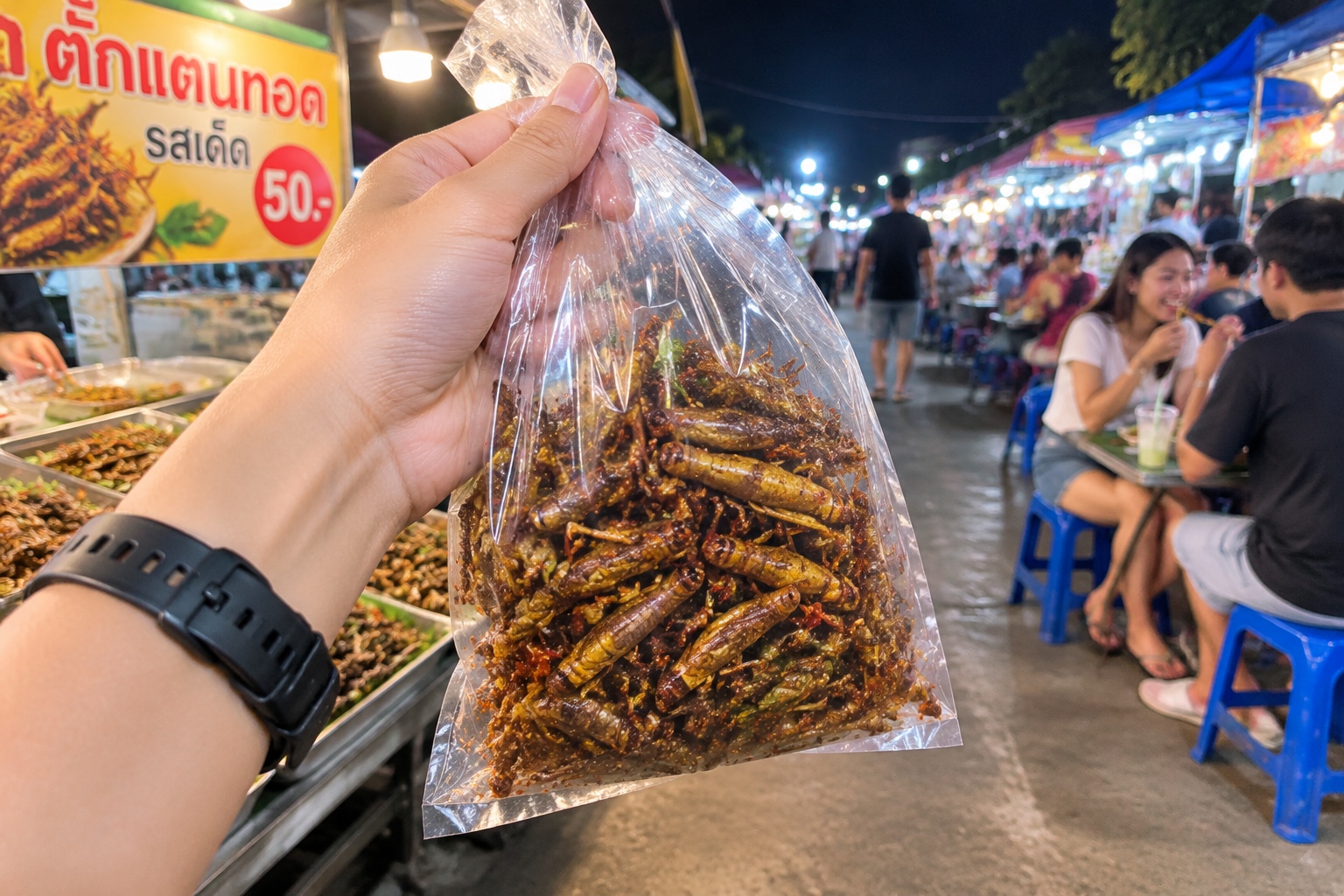
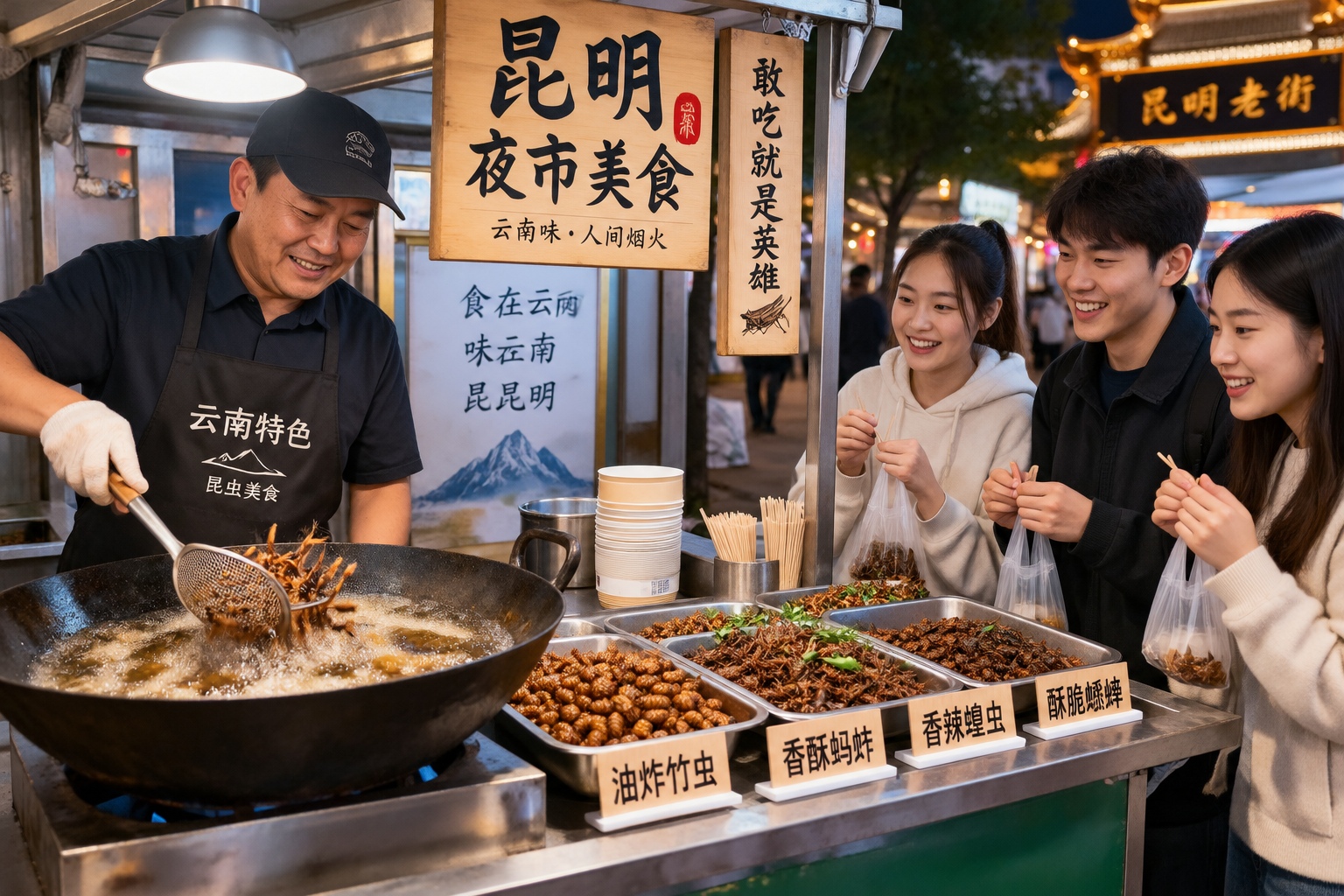
You might picture a grimy alley in some remote village, but the scene I’m describing is actually a bustling night market in Kunming or Dali. The smell isn’t rotting meat; it’s sizzling oil and roasted peanuts. Standing at a stall with a plastic bag full of golden-brown snacks, locals don’t look disgusted. They are laughing, crunching down, and chatting about their day.
In Yunnan, eating insects is not a survival tactic for the desperate poor, nor is it a daily staple like rice or noodles. It is a specific culinary tradition deeply rooted in local culture, especially among ethnic minorities. For many tourists from Europe or North America, this sounds terrifying. For locals, these fried treats are as normal and comforting as popcorn at the cinema.
More Than Just “Bugs”
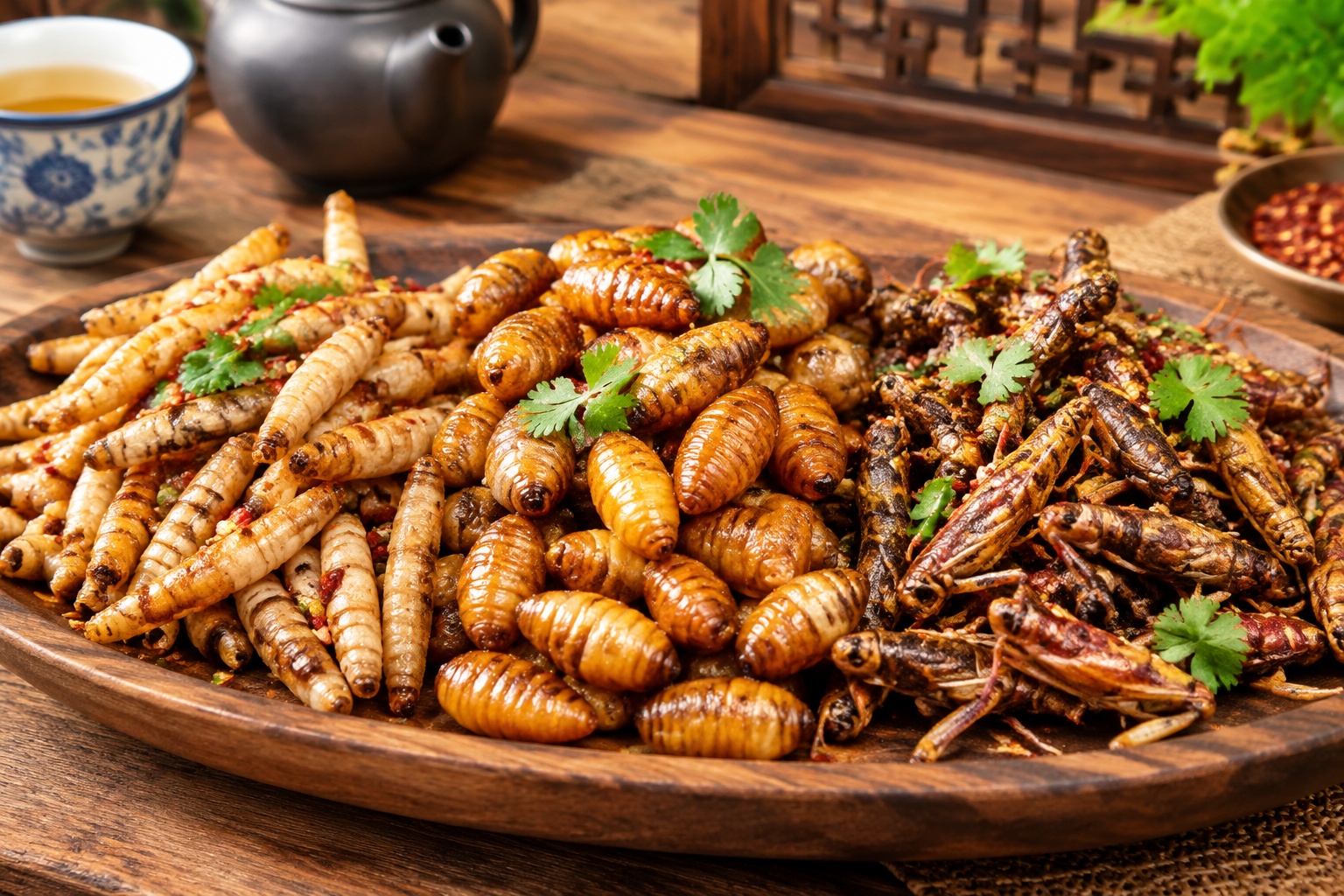
The menu is far more diverse than you might imagine. You won’t find random spiders or beetles on a restaurant plate unless it’s a specific specialty dish, which are usually carefully sourced. The most common snacks you’ll see at night markets include bamboo worms (竹虫), honeybee pupae (蜂蛹), and grasshoppers (蚂蚱).
Let’s talk about the taste first. Contrary to popular belief, they don’t taste like “dirt.” Bamboo worms are often described as soft and creamy inside a crispy shell, with a nutty flavor similar to fresh cheese or roasted sesame seeds. Honeybee pupae have a rich, slightly sweet, and buttery texture that melts in your mouth. Grasshoppers? They crunch like high-quality fried chicken skin, seasoned with chili powder, cumin, and salt.

A Smart Source of Protein
Why do people eat them? It’s not just about being adventurous. In many rural parts of Yunnan, these insects are a highly efficient source of protein. They grow quickly in the local climate and require far fewer resources than raising cattle or pigs.
Economically, this is a booming industry. Families who harvest bamboo worms or raise bees often have a steady income from selling to local markets. The trade supports rural livelihoods while keeping food costs low for urban residents. It’s a sustainable loop: the forest provides the insects, and the insects provide nutrition and cash.
From a nutritional standpoint, these snacks are packed with protein, healthy fats, and essential minerals. They are often healthier than the fried pork or beef skewers you might find elsewhere, as they contain less saturated fat.
The Psychology of the First Bite
I remember my first time trying grasshoppers. My stomach turned at the thought of eating something that had legs and antennae. The vendor laughed, handed me a bag, and said, “Just one bite.” I closed my eyes, popped one in, and bit down.
The crunch was satisfying. The flavor was savory and spicy, completely overriding any mental barrier I had built up about insects. Within minutes, the fear vanished, replaced by curiosity. By the end of the night market visit, I wasn’t just tolerating it; I was asking for seconds.
This psychological shift is common. Once you get past the initial “yuck” factor and realize that these are simply well-cooked, seasoned snacks, your brain stops categorizing them as “bugs” and starts seeing them as food. It’s a cultural barrier that dissolves with a single taste.
Hygiene: Cooking is Key
A critical point often missed by outsiders is safety. You will rarely, if ever, see raw insects being eaten in public spaces in Yunnan. The standard preparation method involves deep-frying at high temperatures or roasting over charcoal.
This cooking process eliminates any potential parasites or bacteria. The food is always served hot and fresh from the wok. If you are concerned about hygiene, rest assured that street vendors in China take pride in their food quality, especially when it comes to popular snacks like these. Unlike raw sashimi which requires specific sourcing, fried insects are cooked until they are golden and crispy, making them safe for almost everyone.
A Cultural Conversation Starter
Sharing a bag of fried grasshoppers is a great way to connect with locals. It breaks the ice instantly. When you sit down at a small table in a night market and share a meal that looks so different from what you know back home, it creates a moment of shared humanity.
In the West, there is a growing movement to make insect protein mainstream for environmental reasons. In Yunnan, this has been happening naturally for centuries. The next time you hear about “eating bugs,” don’t just think of horror movies. Think of Yunnan’s vibrant night markets, the smell of chili and cumin, and the surprising joy of trying something new.

Start the discussion at forum.chinacomes.com