
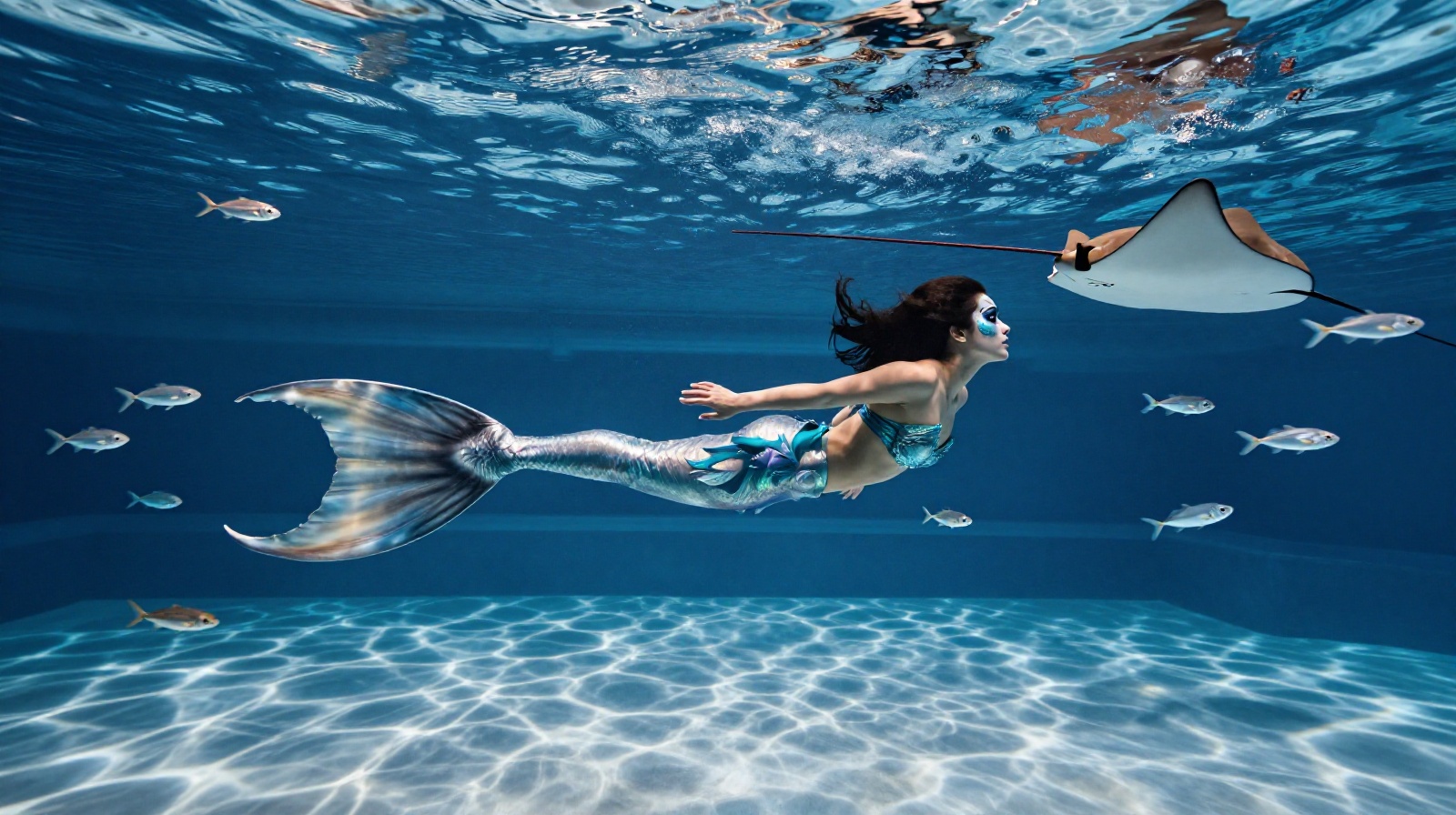

Chlorine, Silence, and the Absence of Waves
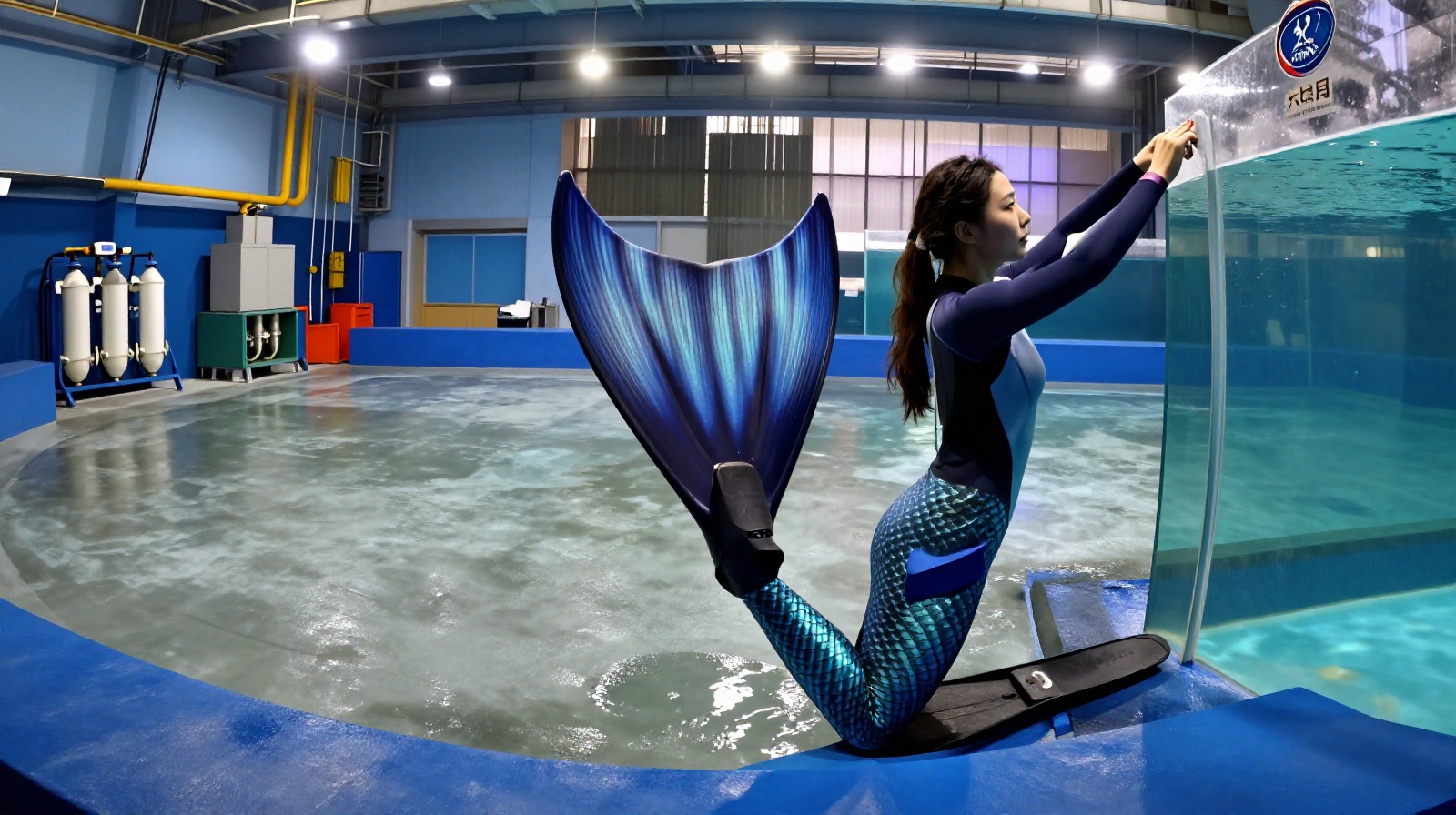
The air in the aquarium smells faintly of chlorine and wet concrete. It is 6:30 AM on a Tuesday, and the building is quiet. Outside, the city is waking up to dry dust and traffic noise—this place has no ocean breeze, only the hum of filtration pumps. I am standing by Tank 4 in Xi’an’s Oriental Art Aquarium, adjusting my tail before my shift begins.
Xi’an is a land-locked city famous for its terracotta warriors and ancient history. It does not have a coastline. Yet here, hundreds of miles from the sea, thousands of tourists pay to see sharks gliding past me as I pretend to be a mythical creature.
I am one of the few professional “mermaids” in China’s inland region. My job is not magic. It is 80% physical training and 20% performance art.
The Reality Behind the Tail
Before I ever dive, there are months of grueling preparation. I am a freediver first. To perform for six hours underwater without breathing equipment, I must train my lungs to hold breath for over three minutes safely.
In the locker room, the routine is familiar: apply waterproof makeup, tape down loose hair, and suit up in a heavy silicone tail that weighs nearly 15 kilograms (33 lbs). The movement is restricted. I cannot kick like a swimmer; I must learn to undulate my hips with precision.
“If you move too fast, the water ripples,” my coach told me. “The fish will panic.”
The challenge isn’t just physical; it’s psychological. You are alone in the deep blue, surrounded by glass walls that reflect your own face back at you. There is no sound but your own breathing and the occasional splash of a diver from above.
From Ancient History to Modern Fantasy
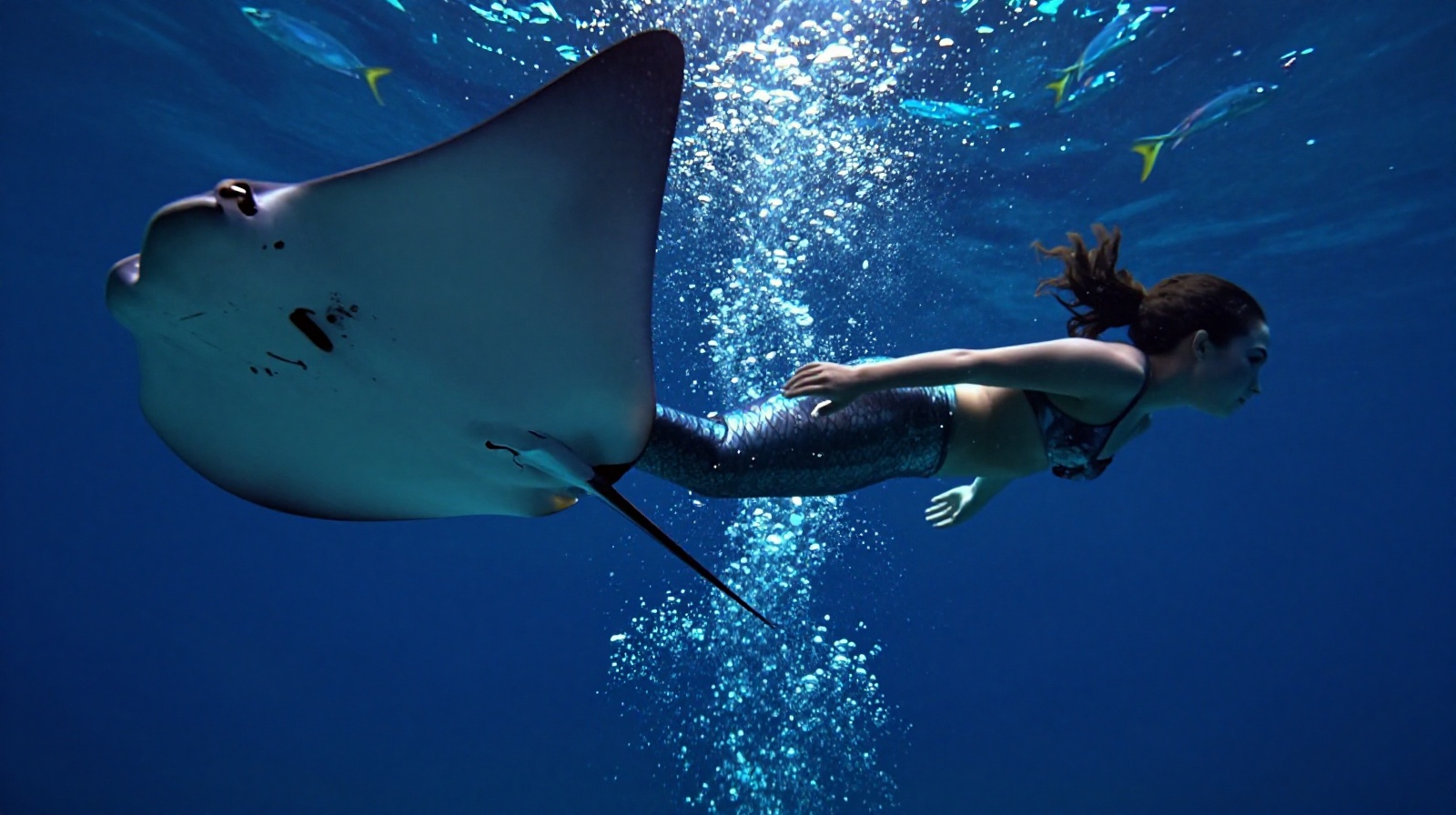
Visitors often arrive with mixed expectations. Many come to see the city’s history, not underwater theater. When they finally spot me gliding past a giant stingray or a school of silver fish, there is a visible shift in their eyes.
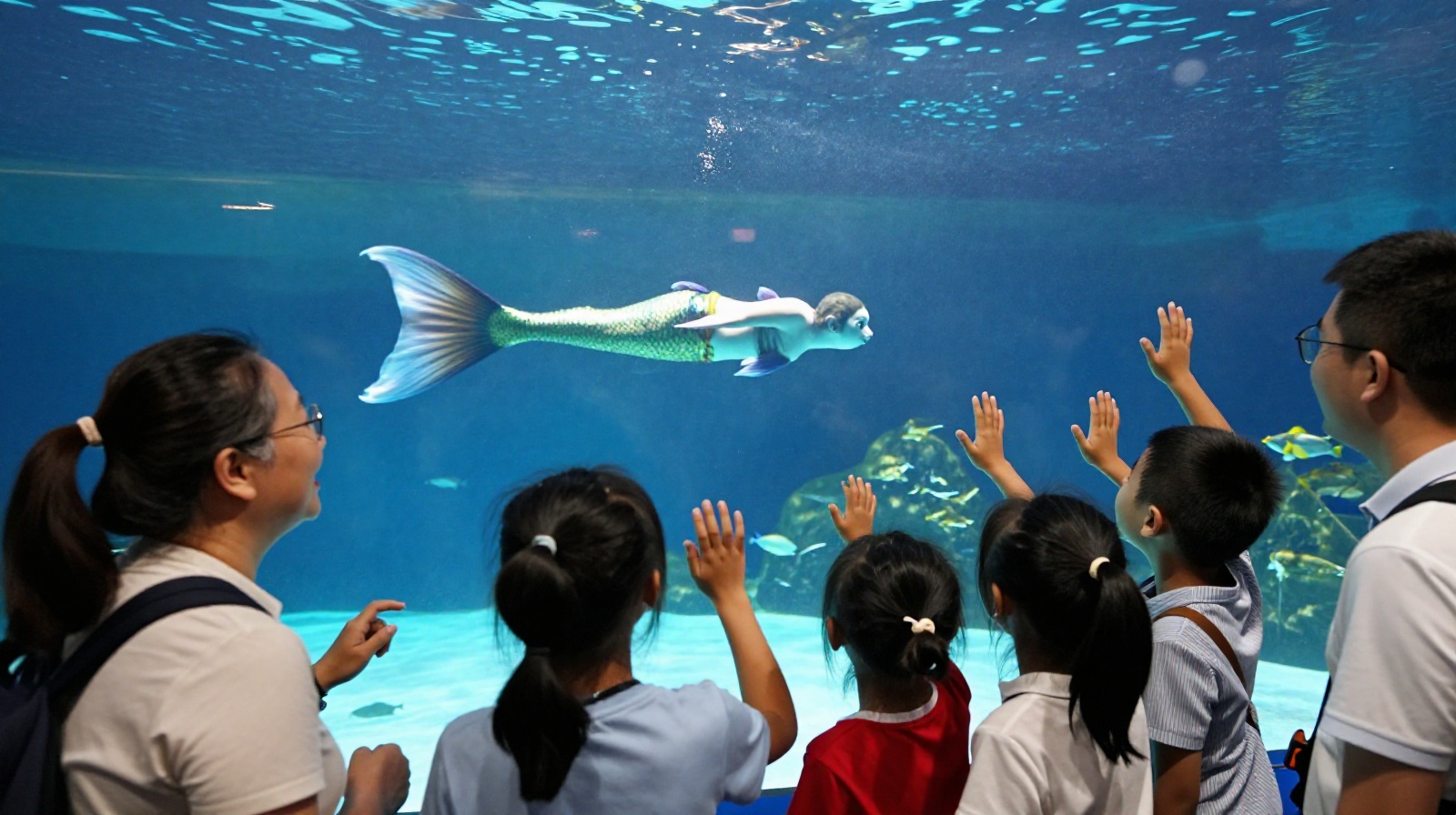
I have seen children press their hands against the glass, whispering questions about where mermaids live. I have seen tourists who usually stay on land for days suddenly forget to check their phones because they are mesmerized by the underwater dance.
This role bridges a gap. In a city without an ocean, the aquarium becomes a portal. It allows people to experience the mystery of the sea without traveling thousands of miles. For many, seeing a “mermaid” in Xi’an is not just about entertainment; it’s about reconnecting with nature in an unexpected way.
A Connection That Goes Deeper
People often ask if I get lonely or bored. The truth is, the job requires constant focus. Every breath count, every fin movement, and every interaction with the fish must be precise to ensure safety for both me and the animals.
But there are moments of pure connection. When a child laughs as I mimic a swimming motion, or when an elderly couple holds hands watching my performance, I feel a genuine warmth that transcends the artificial pool.
In a rapidly changing China, where technology drives every sector, it is rare to find a job rooted in such ancient human imagination. Yet here, in this inland city, the fantasy of the mermaid has become a real, breathing reality for me and thousands of visitors who come to see the magic happen.