

A Clock Ticking in the Kitchen
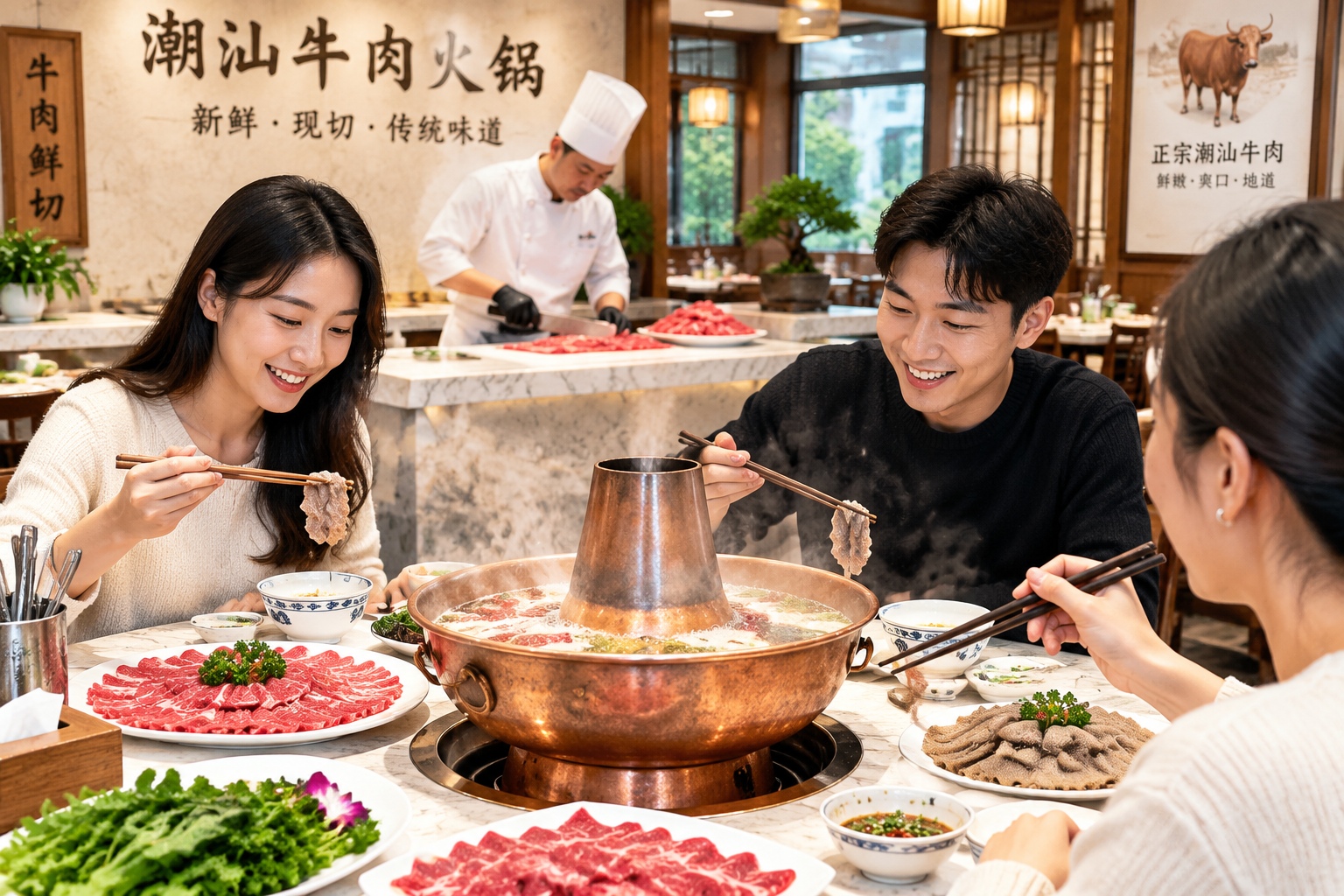
Step into a bustling Chaoshan beef hotpot restaurant in Jieyang, and you won’t find a freezer aisle. Instead, the air hums with the sound of cleavers striking marble slabs. A chef is slicing raw meat with practiced speed, while right beside him, a waiter holds up a timer or simply counts aloud: “Ten seconds for the flank… fifteen for the brisket.”
It sounds like a strict kitchen drill, but this precision defines the entire meal. In many Western dining experiences, beef is often frozen weeks ago to manage logistics. Here, the timeline starts at the slaughterhouse and ends in your broth pot within three hours. The meat isn’t just “fresh”; it’s alive with texture that disappears if you wait too long.
From Farm to Bowl: The Three-Hour Rule
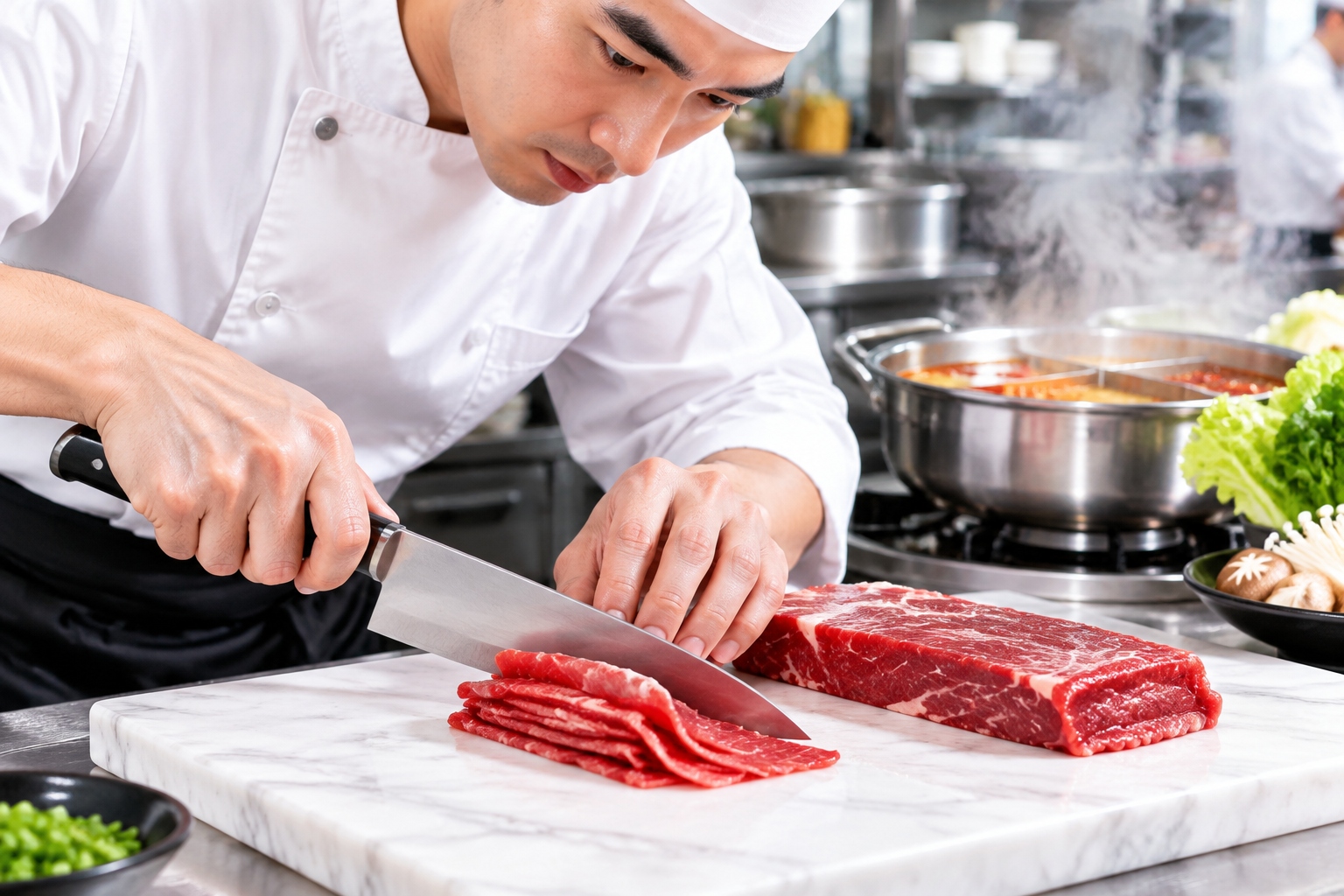
The secret behind this intensity is the supply chain, or rather, the lack of distance. In Chaoshan, cattle are often slaughtered early in the morning at local farms just outside the city. By mid-morning, the carcass is transported to the restaurant, butchered into primal cuts, and then sliced paper-thin for customers.
This “three-hour rule” isn’t a marketing slogan; it’s an operational necessity. Beef loses its tenderness as the rigor mortis passes and water evaporates from the muscle fibers. By keeping the gap between killing and eating under three hours, the meat retains what locals call “sweetness.” It’s not about flavor enhancers or sauces; it’s about the natural sugar content in the glycogen of the muscle.
The Seconds Guide: Anatomy of a Perfect Bite
Once you sit down, your menu becomes a physics lesson. The waiter hands you a small card with specific cooking times for different parts of the cow. This isn’t guesswork; it’s a scientific approach to texture.
- Diaolong (Flank): Tender and lean. Cooks in exactly 10-12 seconds. Too long, and it becomes tough like rubber.
- Chisheng (Brisket Point): Slightly chewier with a bit of fat. Needs 15-20 seconds.
- Wuhua Zhi (Triple Tendons): A delicacy found only in the hind legs. Dense and bouncy. It requires a precise 30-40 seconds of boiling to soften just enough without losing its crunch.
If you pull the meat out too early, it’s raw and unsafe. Pull it out a second late, and you’ve ruined the expensive cut. This creates a unique dining rhythm where everyone at the table is constantly watching their bowls, counting in their heads or relying on the server to shout, “Time!”
More Than Flavor: A Philosophy of Respect
To a visitor from a country where beef is aged for 28 days or frozen solid, this method might seem risky. Why bother with such fragility when you can serve a thick, flavorful steak that lasts weeks in the freezer?
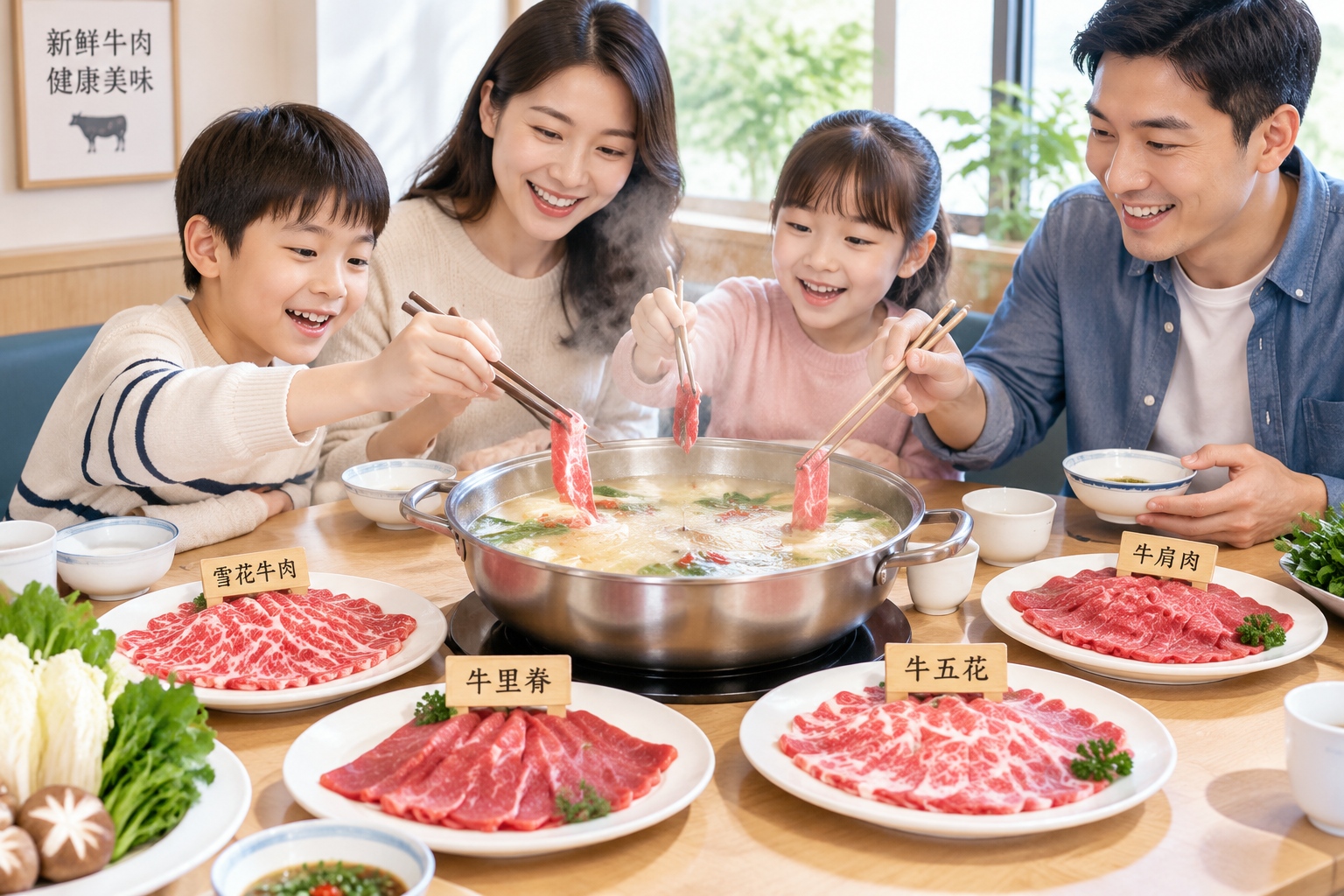
The answer lies in the local philosophy: respect the ingredient. In Chaoshan cuisine, heavy sauces and spices are secondary. The broth is usually clear, made from beef bones and daikon radish, designed solely to highlight the meat’s natural taste. If the beef isn’t perfect, there is nothing to hide it.
This contrasts sharply with the “frozen block” hotpot culture common elsewhere, where thick slices of pre-processed meat are boiled for minutes to ensure safety and tenderness regardless of origin. In Chaoshan, the freshness is the star, not the sidekick.

The Verdict: A Dining Experience Built on Time
As you finish your meal, surrounded by empty bowls and satisfied diners, you realize that this isn’t just about eating beef. It’s a testament to local efficiency and a deep understanding of food science.
In an era of long supply chains and industrial processing, Chaoshan hotpot offers a reminder that the best ingredients don’t need to travel far or hide in freezers. They just need time—specifically, seconds—to be perfect. For tourists and locals alike, it’s a delicious lesson in how geography, logistics, and culinary tradition come together on one steaming pot.
Start the discussion at forum.chinacomes.com