
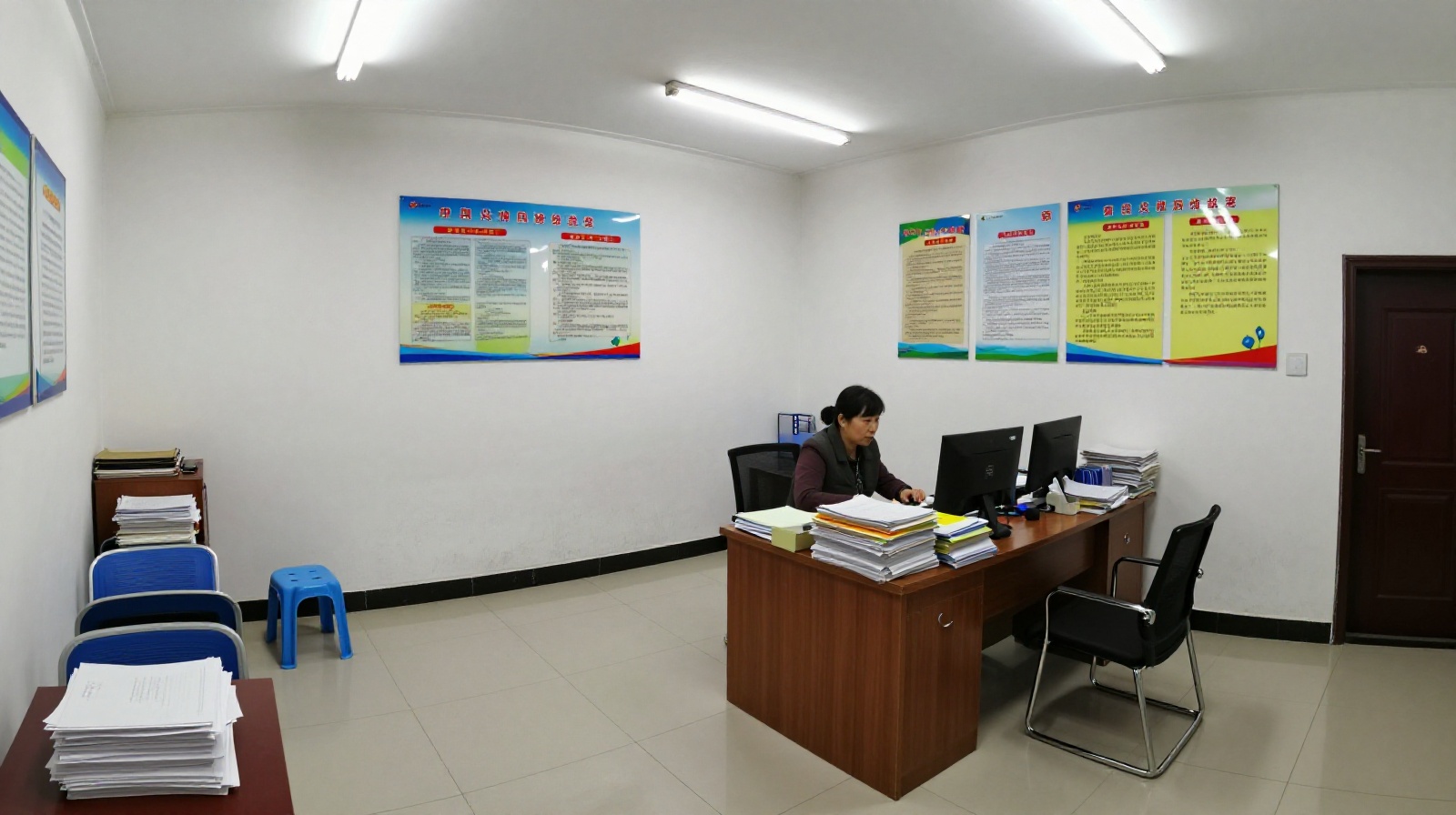

It Starts with a Knock on the Door
The clock strikes eight in the morning. In an aging residential compound in Beijing’s Haidian District, the air smells faintly of burnt garlic and damp concrete. Li Wei, 54, unlocks the heavy metal door of Room 101, her workplace: the Neighborhood Committee (Juweihui). There is no grand lobby, no marble floors. Just a small waiting area with three plastic chairs, a water dispenser that rattles when you press it, and a wall covered in colorful flyers.
“Welcome to the neighborhood,” Li says, wiping her hands on her apron. She isn’t a politician or a corporate executive; she’s a community worker, one of the roughly 30 million people who make up China’s grassroots administration. “Today is busy. We have three complaints about noise, two requests for elderly care visits, and I need to find someone who left their child in the elevator again.”
Bridging the Gap Between Policy and People
For Western observers, the concept of a government office embedded directly into a residential block can seem strange. But in China’s urban fabric, the Neighborhood Committee is the essential capillary vessel connecting the vast body of the state to individual households.

While it is not an official branch of the government (it is legally defined as a mass self-governance organization), its function is critical. When the central government announces a new policy—whether it’s a strict garbage sorting rule, a pandemic prevention measure, or a subsidy for low-income families—it stops here first. The Committee translates high-level mandates into local action.
“If we don’t knock on doors and explain things in plain language, people won’t understand,” says Zhang Min, a volunteer coordinator who has worked with Li Wei for five years. “Yesterday, I had to visit ten apartments to explain why the new elevator installation is delayed. Some residents were angry, thinking it was corruption. We just showed them the engineering reports and the safety concerns. They calmed down.”
The Art of Mediation: Tea, Not Gavel
Life in a dense Chinese neighborhood is rarely friction-free. With thousands of people living within walking distance, conflicts are inevitable. A neighbor plays loud music at 10 PM; another parks their car blocking the driveway.
In this office, there are no gavel-banging judges. Instead, Li Wei keeps a thermos of hot tea and a stack of tissues ready for mediation sessions.
“Last week, two neighbors fought over a shared balcony,” Li recalls. “One claimed the other was leaking water from their potted plants. They were shouting in the hallway. I invited them both inside, poured tea, and let them vent. Once they cooled down, we found a leaky pipe that neither noticed. We called a plumber on the spot.”
This informal conflict resolution model is efficient precisely because it relies on social pressure and community reputation rather than formal legal proceedings. It is fast, cheap, and keeps the peace in a system where courts are often overwhelmed.
From Handwriting to Digital Apps
The scene inside Room 101 has changed dramatically over the last decade. Ten years ago, Li Wei’s desk was buried under piles of paper forms. Today, she works on a tablet connected to a local government cloud system.

“We have a WeChat group for every building in this compound,” Li explains, showing me her phone screen. A red notification pops up: ‘Uncle Wang needs help carrying groceries.’ Within minutes, three volunteers from the community respond. One offers to help; another confirms their schedule.
This digital transformation hasn’t replaced human interaction; it has amplified it. The committee uses mini-programs to handle everything from parking registration to complaint reporting. Residents scan a QR code to report issues like broken streetlights or illegal dumping, and the system automatically assigns tasks to the relevant department. It’s a blend of high-tech infrastructure and old-fashioned community spirit.
The Hidden Challenges: Not Everything is Smooth
However, life in the Neighborhood Committee isn’t without its struggles. The staff often face a paradoxical situation: they are expected to serve everyone with a smile while also enforcing strict regulations that some residents hate.
“It’s exhausting,” admits Li Wei, taking a break during lunch. “Sometimes we have to enforce rules that people don’t agree with, like the ban on keeping pets in public areas or the strict recycling requirements. We get yelled at. We get threatened. But if we step back, who will fill the gap? The government can’t be everywhere.”
There is also a constant struggle for resources. Many committees operate on tight budgets and rely heavily on unpaid volunteers. Finding young people willing to stay in these roles long-term is difficult, as the pay is low and the workload is high.
The Real Pulse of Modern China
In an era dominated by headlines about AI, electric vehicles, and stock markets, the Neighborhood Committee remains the most reliable indicator of how ordinary Chinese people actually live. It is a place where technology serves to solve immediate human problems, not just for show.

As I leave Room 101, Li Wei is already back at her desk, answering another phone call about a missing elderly person. The door shuts behind me with a soft click. Outside, the city roars with traffic and construction, but inside these small rooms, a different kind of engine keeps running—one that powers the daily rhythm of millions of lives.