

Back to the Fields, Not Back to the Past
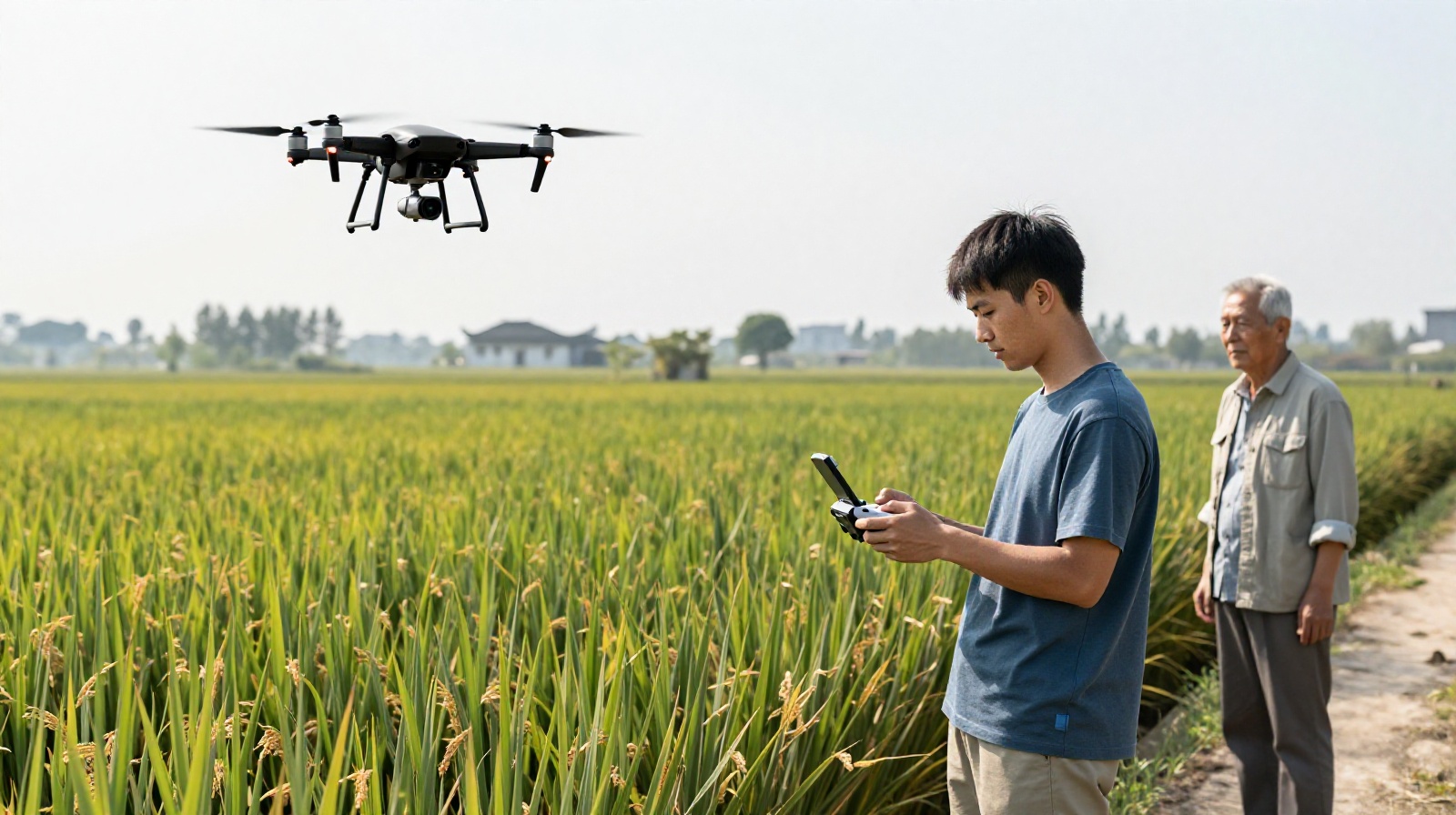
The first time I flew a drone over my grandfather’s rice paddy in Anhui province, he squinted against the sun and asked if it was a toy. He spent forty years bending his back to plant seeds by hand, then pulling weeds until sunset. Today, at 24, I stand on a concrete pad nearby, tapping a tablet screen. The drone hums overhead, releasing a precise mist of pesticide over exactly where it’s needed.
This isn’t science fiction. It is the daily reality for millions of Chinese farmers like us. While the world often pictures rural China as a place frozen in time—old wooden houses and backbreaking labor—the countryside is undergoing a quiet but rapid technological revolution. I am part of what locals call “New Farmers” (Xin Nong Min): young people who left the cities to return home, armed with smartphones, data analytics, and drones.
From Sweat to Data: The Drone Difference
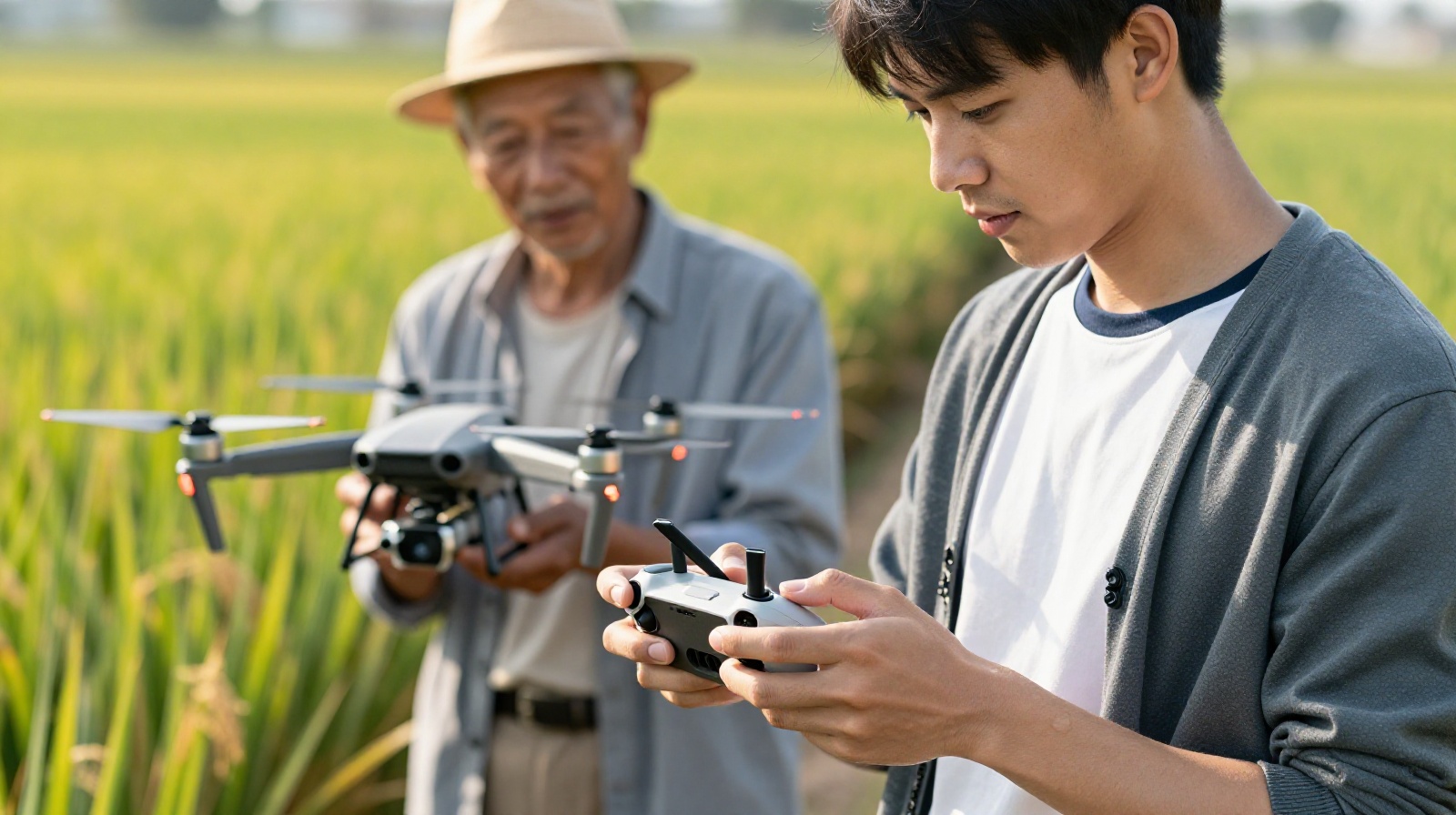
A young man in casual clothing operates a drone controller while an elderly farmer watches nearby in a lush green rice field.
The contrast between my grandfather’s generation and mine is stark, yet they share the same soil. My grandfather measured crop health by looking at leaf color and feeling the soil texture. He often over-applied chemicals because he couldn’t see exactly which plants were sick until it was too late. This wasted money and harmed the environment.
My approach starts with data. I use drones equipped with multispectral cameras to scan the fields. These cameras capture infrared light invisible to the human eye, revealing water stress or pest infestations weeks before they are visible to the naked eye. Once I identify the problem areas on my tablet, the drone automatically flies over only those spots.
The efficiency gains are staggering. A single operator can cover 50 to 100 mu (approximately 7.5 acres) in an hour using a drone—a task that would take ten laborers working with backpack sprayers three full days to complete. The pesticide usage drops by nearly 40% because we stop spraying healthy plants. For my grandfather, this meant less physical strain and lower costs. For the environment, it meant cleaner water in our local streams.
The Rise of the “New Farmer”
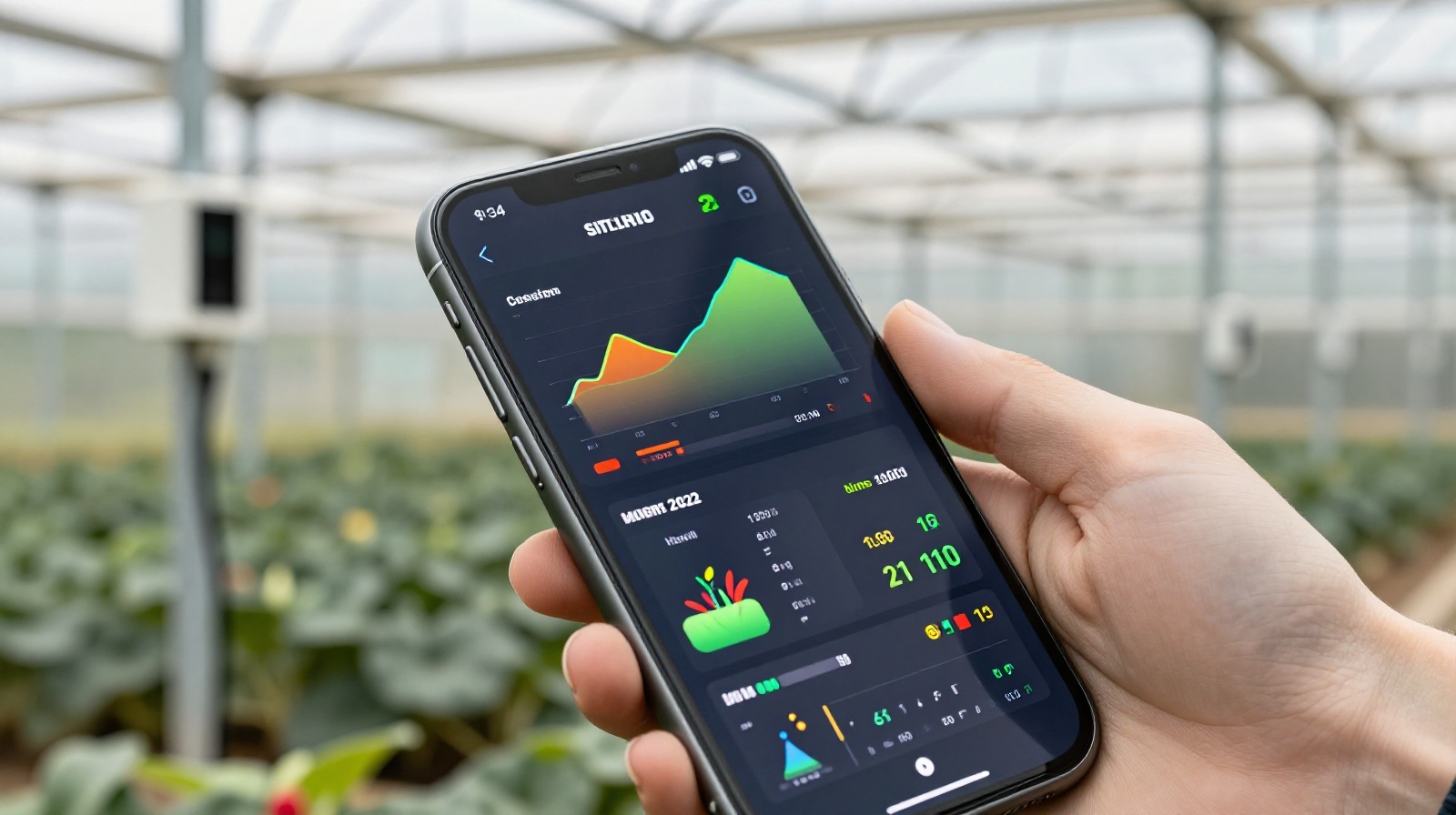
Close-up of a smartphone screen displaying agricultural data analytics, held by a young person standing in a modern greenhouse with high-tech sensors visible in the background.
I am not alone. Across China, thousands of young people are returning to their villages. According to recent government reports, millions of college graduates and migrant workers have started agribusinesses, driven by better infrastructure and digital connectivity. They are reshaping rural life not by rejecting tradition, but by upgrading it.
My village now has high-speed internet covering every corner, allowing me to receive real-time weather alerts and market prices on my phone. We use apps to order seeds and fertilizer that arrive within two days via the national logistics network. In the past, a trip to the nearest town for supplies could take half a day.
However, this transition isn’t always smooth. There are moments when older farmers struggle to trust machines over their years of intuition. I remember one season when my grandfather refused to let me spray his corn field until I showed him video footage of the drone’s coverage plan compared to his manual method. Once he saw that we could save 30% on costs while getting better results, his skepticism turned into curiosity. Now, he often asks me about the next software update for the sensors.
A Future Rooted in Technology
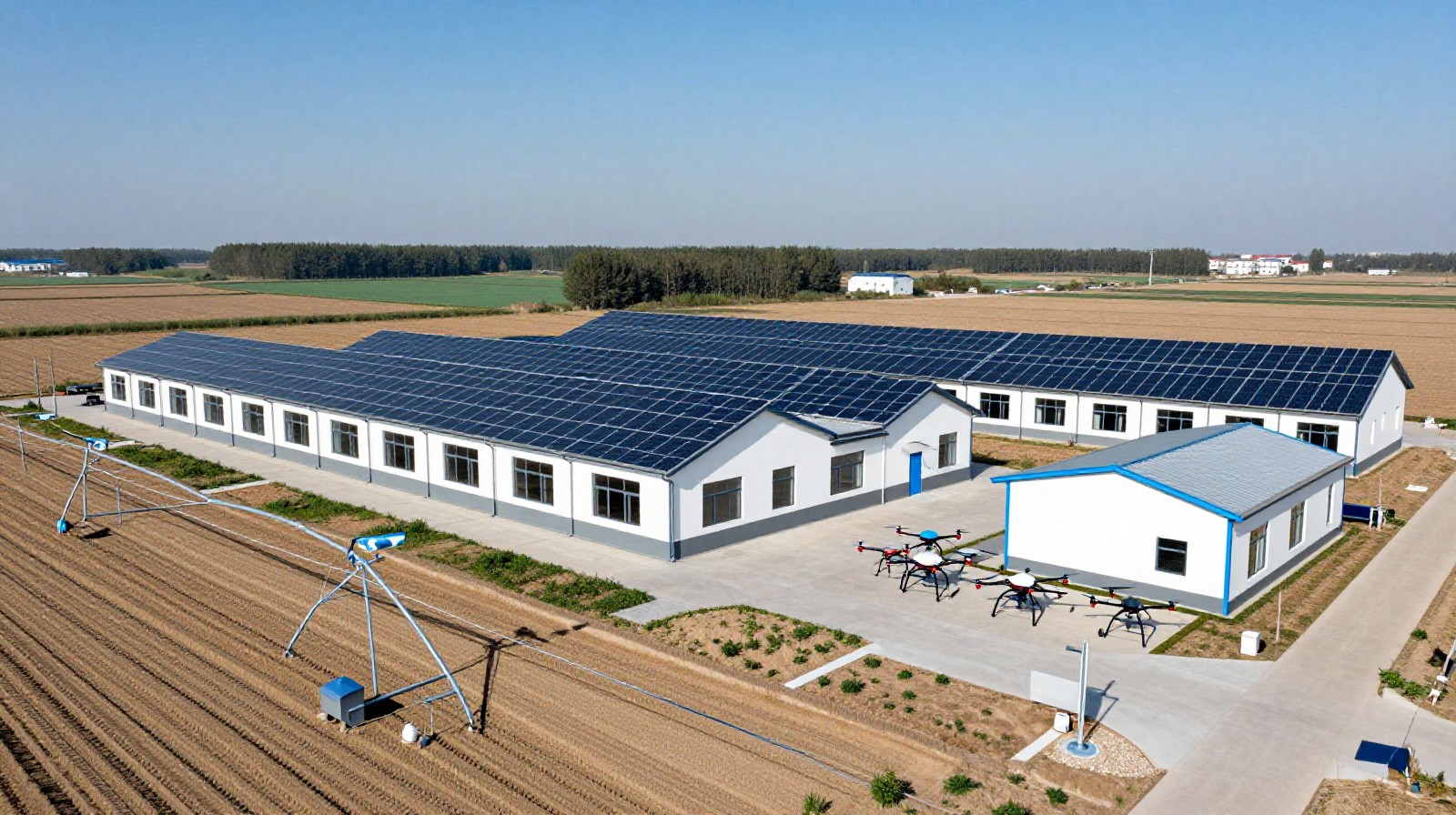
Wide landscape shot of a modern agricultural cooperative with solar panels, automated irrigation systems, and drones parked near a small rural community center.
The transformation of Chinese agriculture is about more than just efficiency; it is about survival. With fewer young people willing to do manual farm work, the country faces a labor shortage. Technology fills that gap. It allows farmers like my grandfather to stay on their land longer without being crushed by physical demands, and it gives younger generations a viable economic reason to return.
This shift also changes how we view food security. When I look at my family’s harvest records compared to ten years ago, the yield per acre has increased significantly despite fewer hands working the fields. This is the quiet power of innovation: making old practices sustainable in a modern world.
As I pack up my drone controller for the day, my grandfather walks over with two cups of hot tea. He looks at the empty sky where the machine just flew and then at me. “It’s strange,” he says. “I thought I was retiring to the past, but it feels like we’re building something new.” That is the story of rural China today: not a museum of old ways, but a laboratory for the future.