

Before the Tourists Arrive
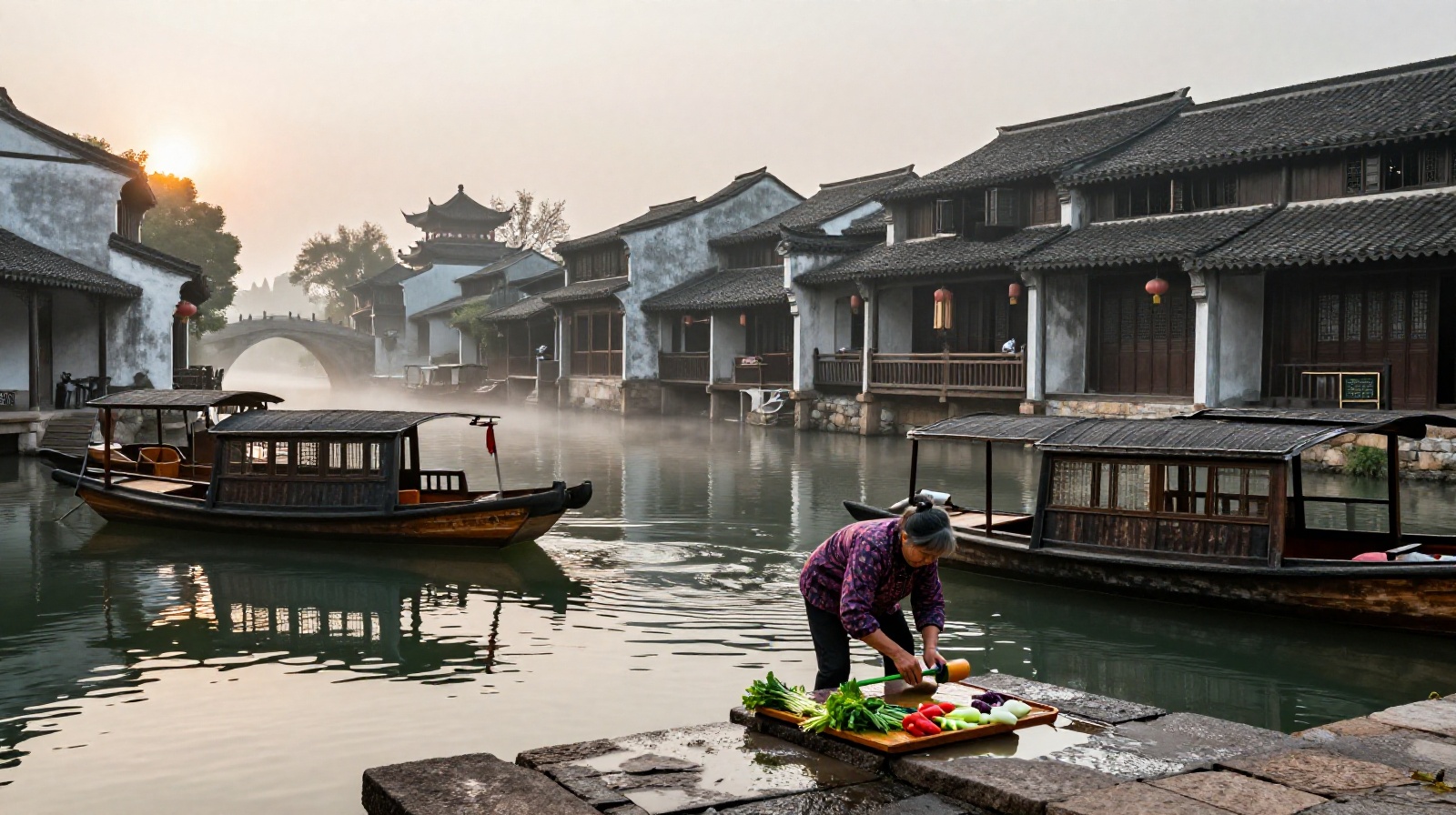
The air in Wuzhen, Zhejiang province, smells of wet stone and morning glutinous rice porridge. It is 6:30 AM on a Tuesday. The heavy iron gates of the main tourist entrance are still locked, but the life along the canals has already begun.
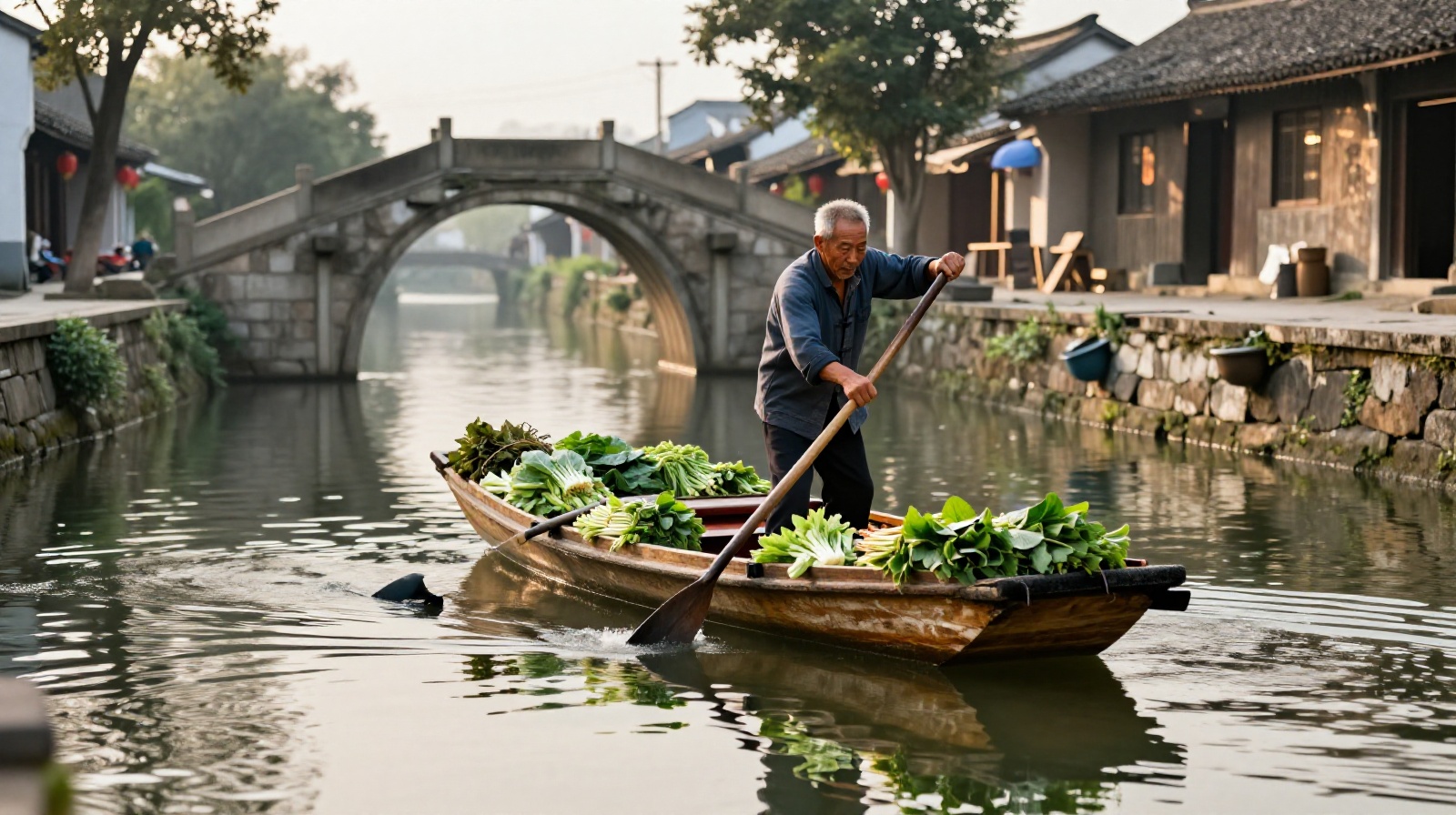
Wang Mei, 72, stands by her wooden doorway in the old district. She is not posing for cameras; she is scrubbing a large piece of green cabbage on a stone slab near the water’s edge. Her hands move with a rhythm practiced over decades. Nearby, an elderly man pushes a small rowboat loaded with fresh vegetables from his garden, negotiating quietly with a vendor who arrives by bicycle.
This is the reality that often gets lost in travel guides promising “ancient atmospheres.” For many Western visitors, China’s water towns are synonymous with crowded commercial streets selling identical souvenirs. They call them “fake ancient towns”—staged sets designed only for cameras. But if you walk away from the main thoroughfares before 8 AM, you find a different story.
The Myth of the Empty Village
It is true that some water towns have been stripped of their residents and turned into theme parks. In those places, the “locals” are actors hired to row boats or sell tea. However, in successful destinations like Wuzhen’s original district or Tongli, the population remains.
The key lies in how the town was renovated. Instead of relocating everyone to modern high-rises outside the historic zone, local governments and private developers chose a model called “living heritage.” They restored the crumbling wooden houses using traditional materials while upgrading the plumbing and electricity hidden inside walls. The goal was not to freeze the past but to make it livable for the present.
I spoke with Zhang Lin, a third-generation shop owner who runs a small textile stall near a bridge. His grandfather built this house in 1920. “The government helped us fix the roof and replace the rotting floorboards,” he explained. “In return, we pay a modest fee for maintenance and agree not to change the exterior look.”
For Zhang, tourism is a lifeline. The rent from his shop covers the cost of heating in winter and his grandson’s school fees. If the town were just a museum with no people, it would die. “A house without people is just a shell,” he says.

Where Tourism Meets Home
The balance is delicate. During peak holidays, the narrow stone bridges become congested with tour buses and selfie sticks. The noise of vendors selling lotus seeds can drown out the sound of children playing games on the pavement.
Yet, residents have adapted. Most shops in the residential alleys sell practical goods: dried fish, soy sauce, or handmade noodles, rather than mass-produced keychains. Locals still use the public toilets near the canal for morning hygiene and gather at small tea houses to discuss local news, not just tour itineraries.
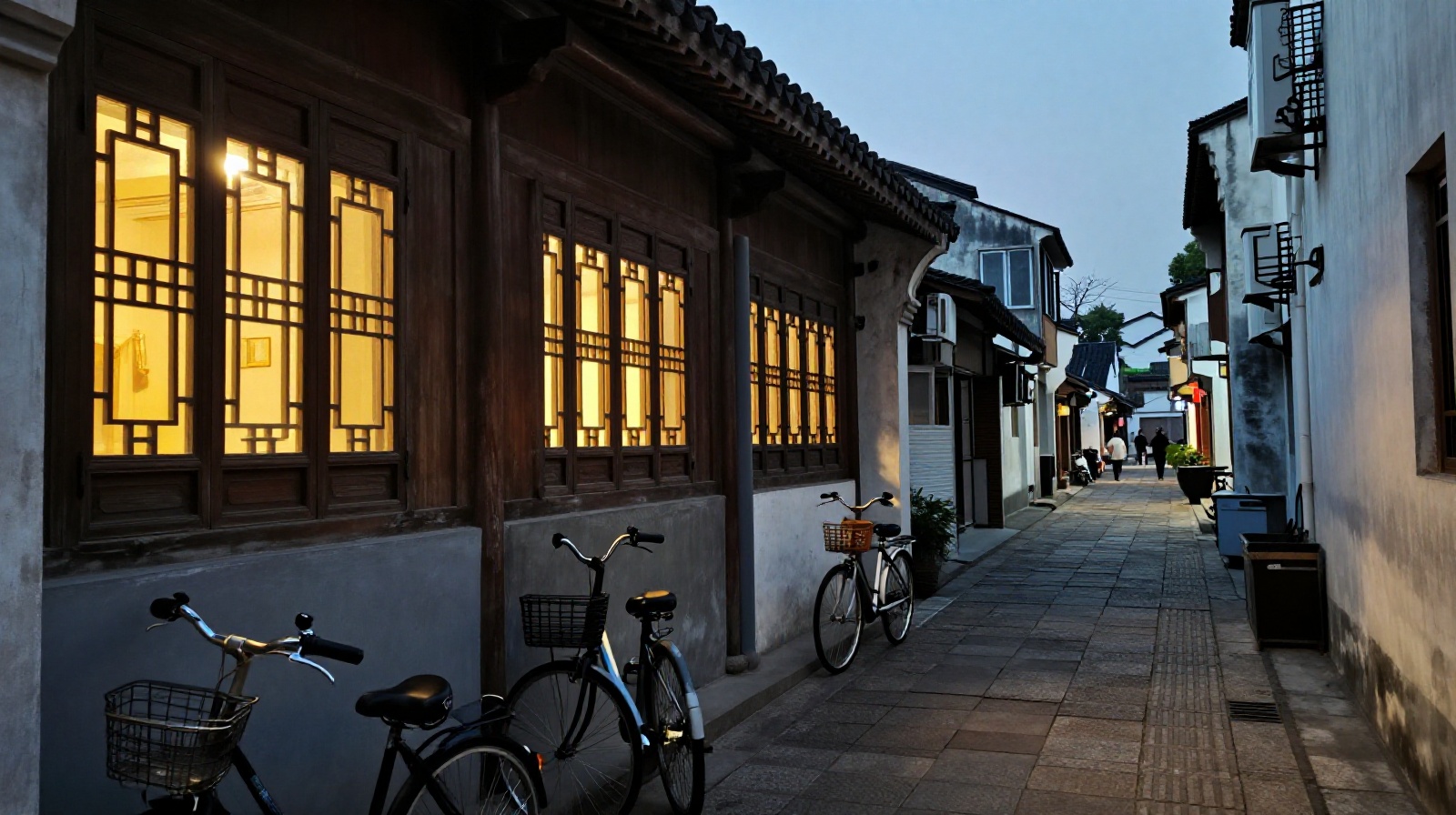
There is a clear distinction in behavior. When tourists are gone by evening, the lights on the canals dim, but a few windows remain lit with warm yellow bulbs. This is where families eat dinner together. The “night economy” exists alongside real domestic life, not replacing it.
A Community That Breathes
The success of these towns proves that heritage does not require a vacuum. It requires people. The authentic experience isn’t found in a perfectly preserved temple or a silent courtyard; it is in the sound of a grandmother calling her grandson for dinner, or the sight of laundry hanging between ancient eaves.
As China continues to urbanize, these water towns stand as test cases for how to modernize without erasing identity. They show that economic development and cultural preservation can coexist when the community is treated as the center, not an obstacle.
So, if you visit a Chinese water town, skip the main square at noon. Go early in the morning. Walk down the side alleys where the bicycles are parked. You will find that these places are not fake. They are alive, messy, and deeply human.