

The Smell That Defines a Region
It is early morning in Meishan, Sichuan. The air doesn’t smell like exhaust or fresh coffee; it carries a heavy, earthy aroma of fermenting soy and dried chilies. This scent is the opening note of almost every famous dish from this province.
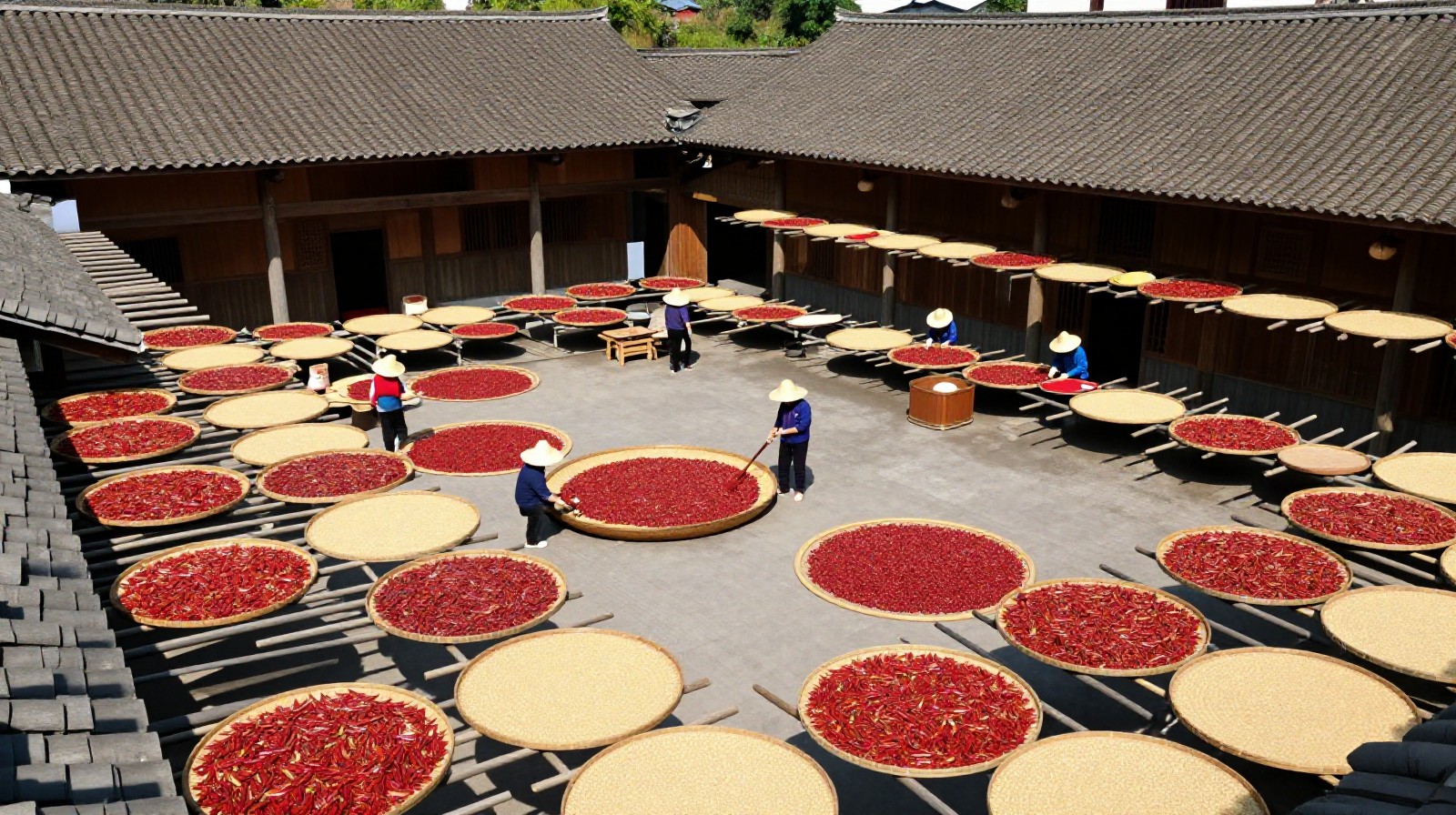
I am standing at the edge of a vast, sun-drenched courtyard belonging to a factory that has been operating for over 300 years. Here, in a landscape often overshadowed by modern tech hubs like Chengdu, time moves differently. The ground is covered in thousands of square bamboo trays, each filled with a vibrant mix of broad beans and red chilies.
The Art of Waiting
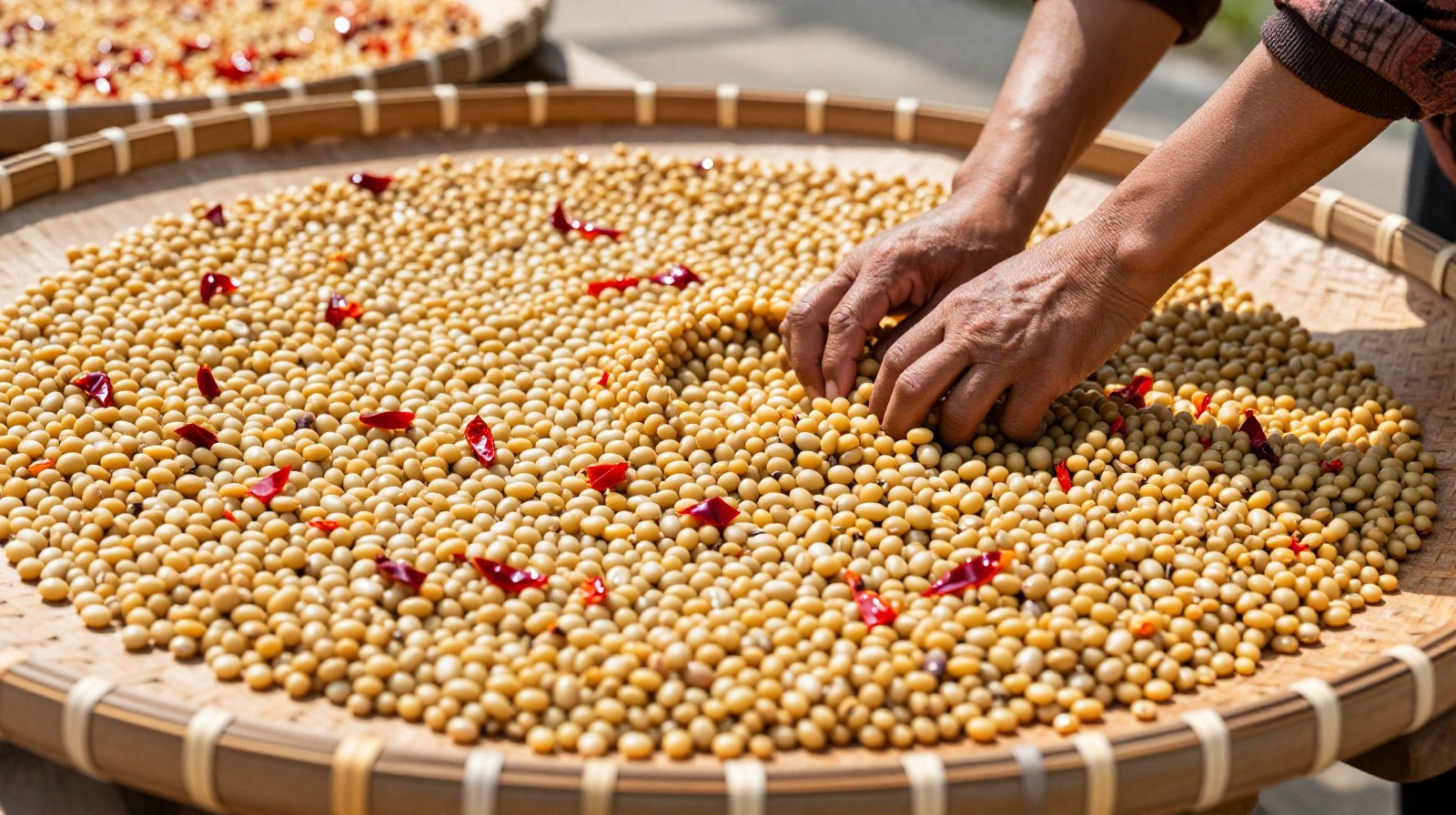
In the West, fermentation is often seen as a scientific process to be controlled or accelerated. Here, it is an act of patience. The mixture, known locally as dui jiao, must sit exposed to the sky for months.
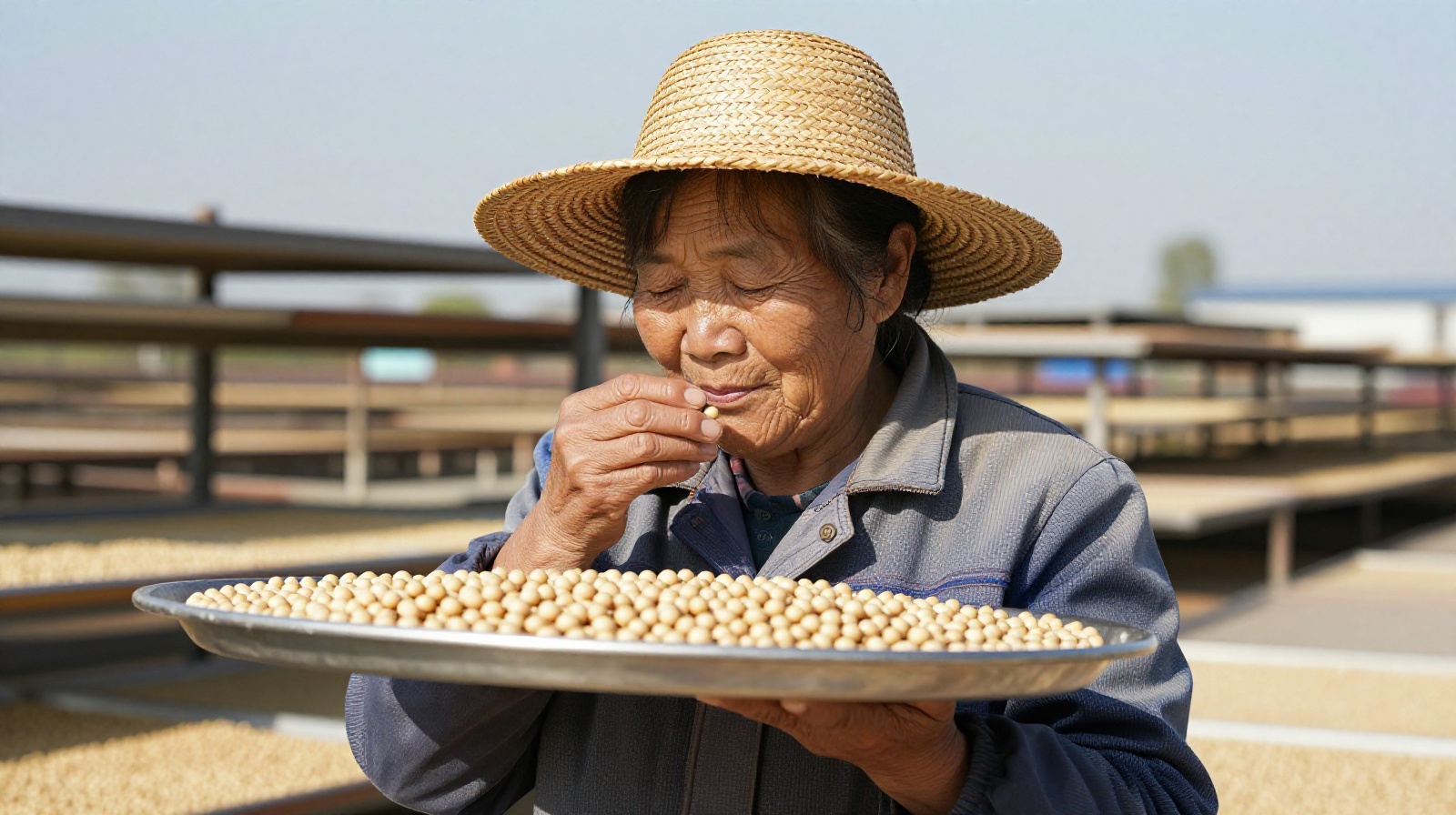
This is not industrial automation. There are no sensors here. Instead, the workers rely on senses honed over generations. I watch a woman in her sixties, wearing a simple straw hat, dip her hand into a tray of beans. She closes her eyes, inhales deeply, and nods. “The smell tells me it’s ready,” she says. Her fingers know the texture better than any machine could measure.
The process is deceptively simple. Broad beans are soaked in brine until they swell and split, releasing enzymes. Chilies are washed and cut. When mixed and salted, the blend is spread out under the direct sun of Sichuan’s summer. The heat drives out moisture while beneficial bacteria work their magic, breaking down proteins into amino acids that create the deep, savory umami taste.
A Living Heritage
Most factories today rely on temperature-controlled rooms to ensure consistency. This workshop, however, embraces the unpredictability of nature. Each year brings a different weather pattern, a different wind, and therefore, a slightly different flavor profile. The master makers call this the “soul” of the product.
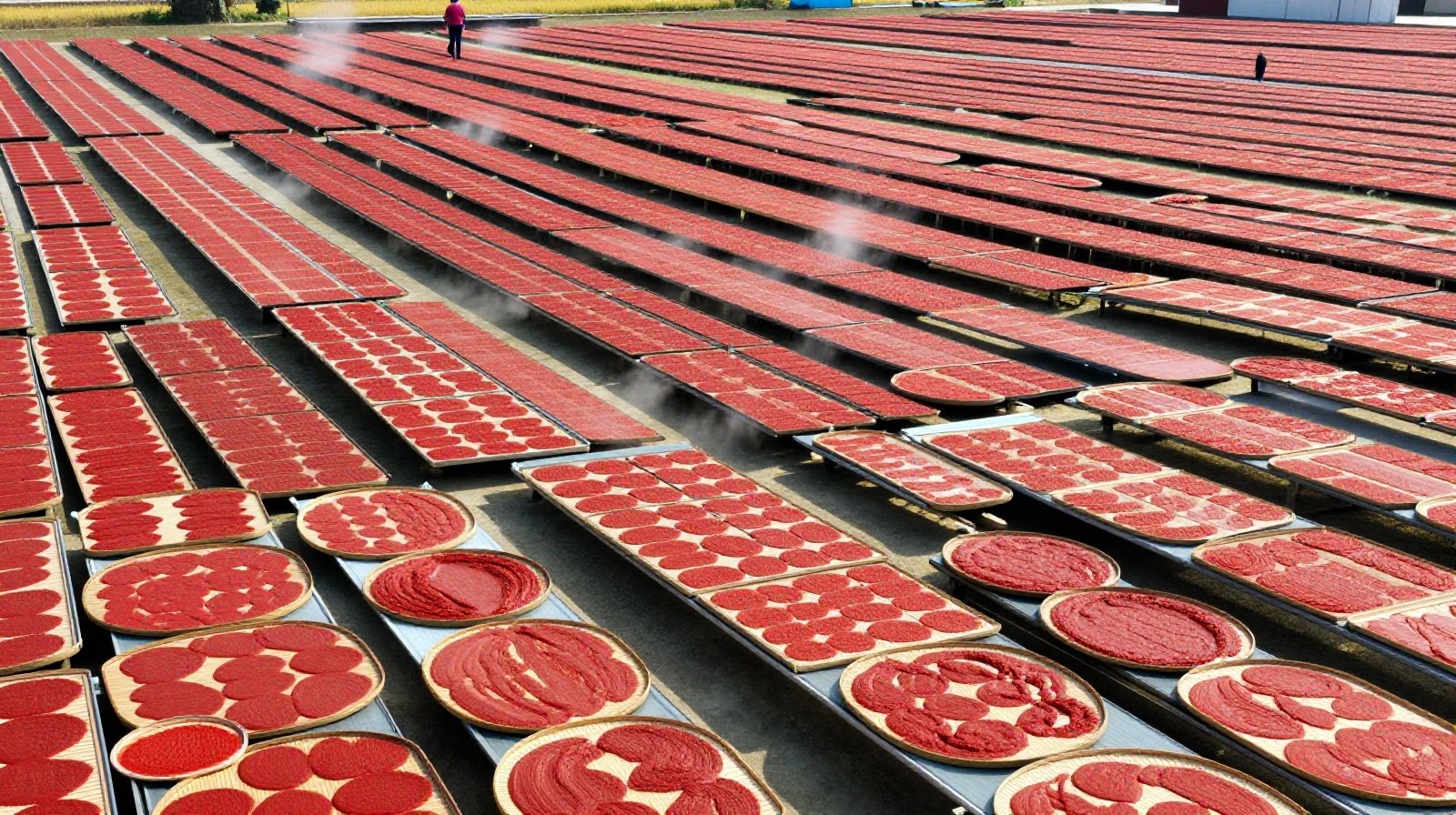
I spoke with Li, a third-generation worker who has managed the drying fields for twenty years. He explained that while modern factories can replicate the taste mechanically, they cannot capture the nuance of a particular season’s sun. “The chili paste from 1985 tastes different than the one from 2024,” he told me, gesturing to the rows of trays stretching toward the horizon. “That is because the weather changed.
More Than Just a Condiment
For an outsider, Doubanjiang might seem like just another spice jar on a supermarket shelf. But for locals, it is a cultural anchor. It is the reason why Mapo Tofu has its signature texture and why Kung Pao Chicken has its complex depth.
The factory is not just a production line; it is a community hub. You can see families walking through the aisles, smelling the air, passing down stories to their children about how this paste was made in ancient times. It connects the present to a past that few other industries have managed to preserve so vividly.
As I leave the workshop, the sun is high, and the heat radiating from the drying beans feels almost physical. This isn’t just food production; it is a testament to how ordinary people in China continue to honor tradition while living in a rapidly modernizing world. The smell lingers on my clothes, a tangible reminder of a craft that has survived centuries.