

The temperature drop from a T-shirt to a parka
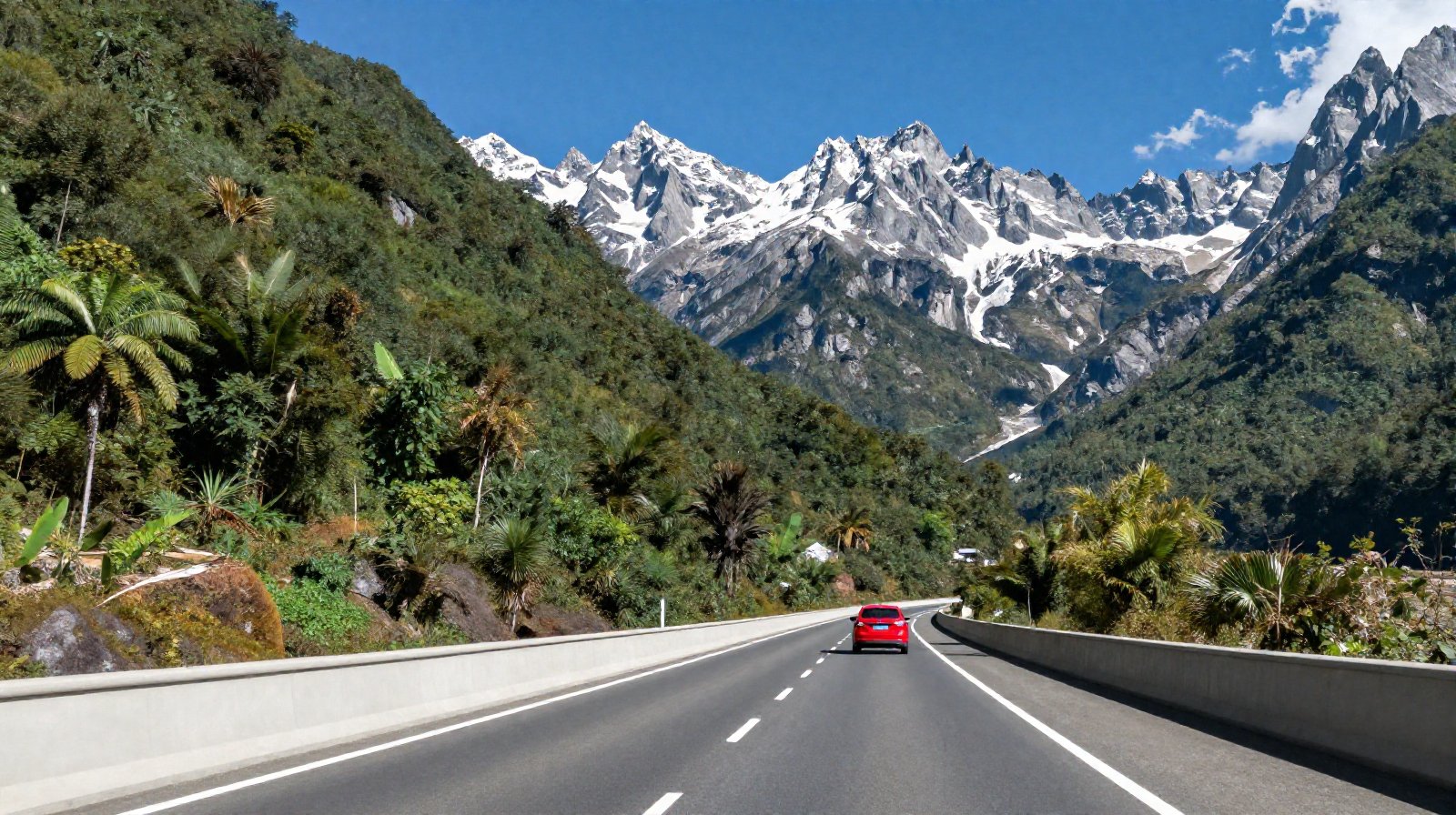
It starts at noon on the road out of Shangri-La. The air is thin, crisp, and smells of pine needles under the hot sun. You are driving a rented SUV with local license plates, heading west toward the Haba Snow Mountain pass. At 3,000 meters (9,800 feet), the temperature sits around 15°C (59°F). A few kilometers later, as you descend into the valley of the Jinsha River, the air changes instantly. The wind feels heavy and humid. The trees shift from sparse alpine scrub to a dense canopy of ferns and tropical vines.
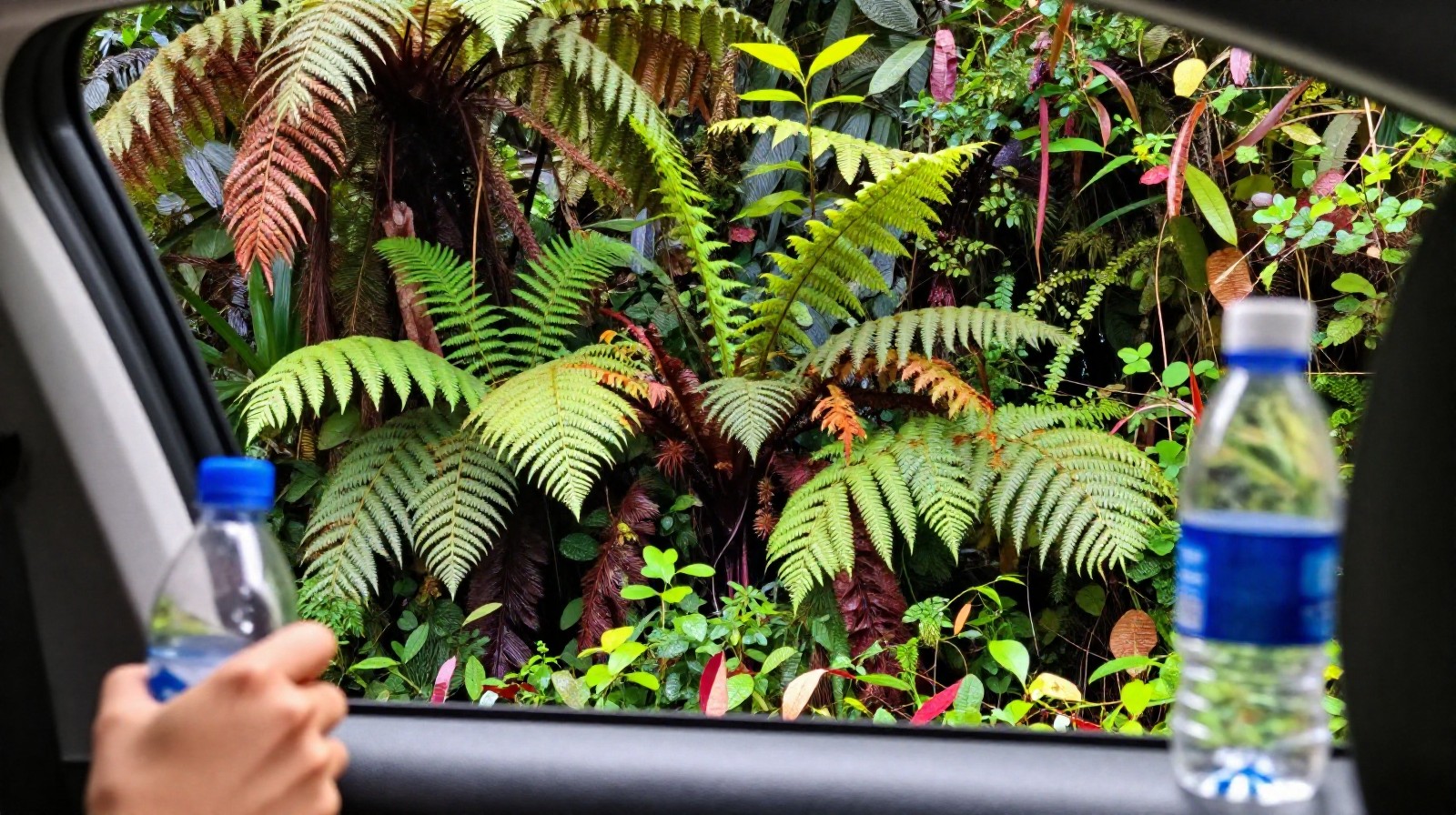
By the time you reach 1,000 meters (3,300 feet) near the riverbank, it is 28°C (82°F). You crack the window, and the smell of wet earth and rotting fruit hits you. Within two hours of driving down from the plateau, you have crossed three distinct climate zones: alpine tundra, temperate forest, and tropical rainforest. This isn’t a metaphor; it is a measurable reality on Yunnan’s highways.
How geography compresses time
The reason this journey feels like stepping into another world lies in the steep topography of the Hengduan Mountains. Unlike the gentle slopes found in many parts of Europe or North America, these mountains rise and fall abruptly over short distances. A single highway switchback can drop you 2,000 meters in elevation.
This rapid change creates a unique travel experience. In China’s southwest, infrastructure has caught up with the geography. Modern paved roads now snake through valleys that were once impassable for days. You are not just seeing nature; you are witnessing how road construction has redefined accessibility.
Consider the physics of it: for every 100 meters you descend, the temperature rises roughly 0.6°C. In a journey where you drop from 4,500 meters to 1,000 meters in just three hours, that is a 21°C difference. You might be wearing sunglasses and a light jacket at the summit, sipping hot tea to ward off the cold, only to pull over an hour later, sweating in shorts while buying ice-cold drinks from a roadside stall selling watermelons grown at the base of the mountain.
Real stories from the road
The highway isn’t just empty asphalt; it is a corridor of human activity. On this route, you will meet drivers who have made this trip for decades. One truck driver I spoke to at a gas station near Nixi said he knows exactly where the fog rolls in and which curve is most dangerous after rain. “The mountain changes every day,” he told me, adjusting his rearview mirror. “But the road stays.”
There are also moments of unpredictability. In late afternoon, a sudden shower can turn the upper pass into a slushy mix of snow and mud. I once watched a family stop their car on the shoulder to change tires after hitting a loose rock. They were laughing, sharing snacks with strangers who had stopped to help. The sense of community here is born from necessity; in these remote areas, strangers are your only lifeline.
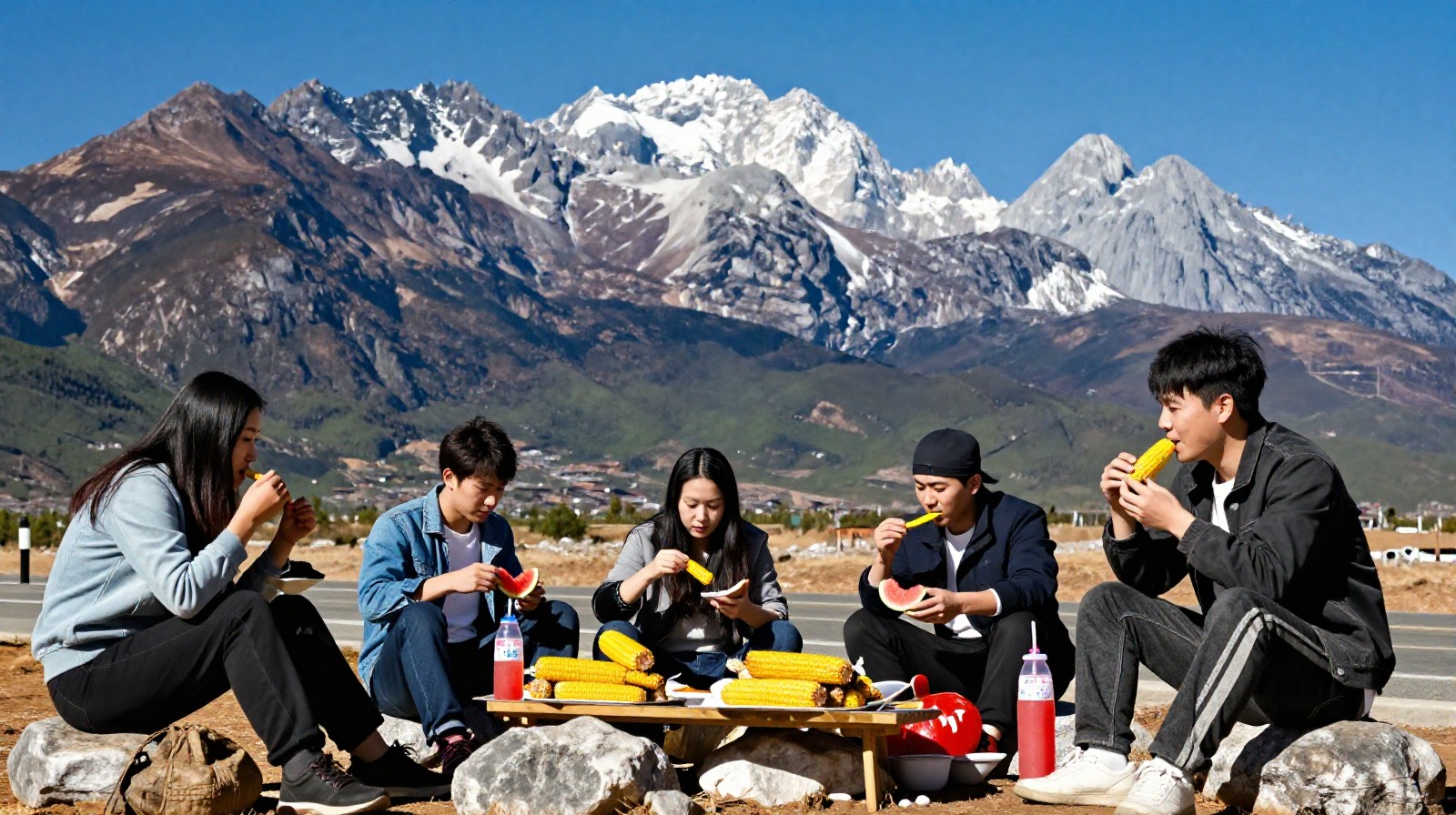
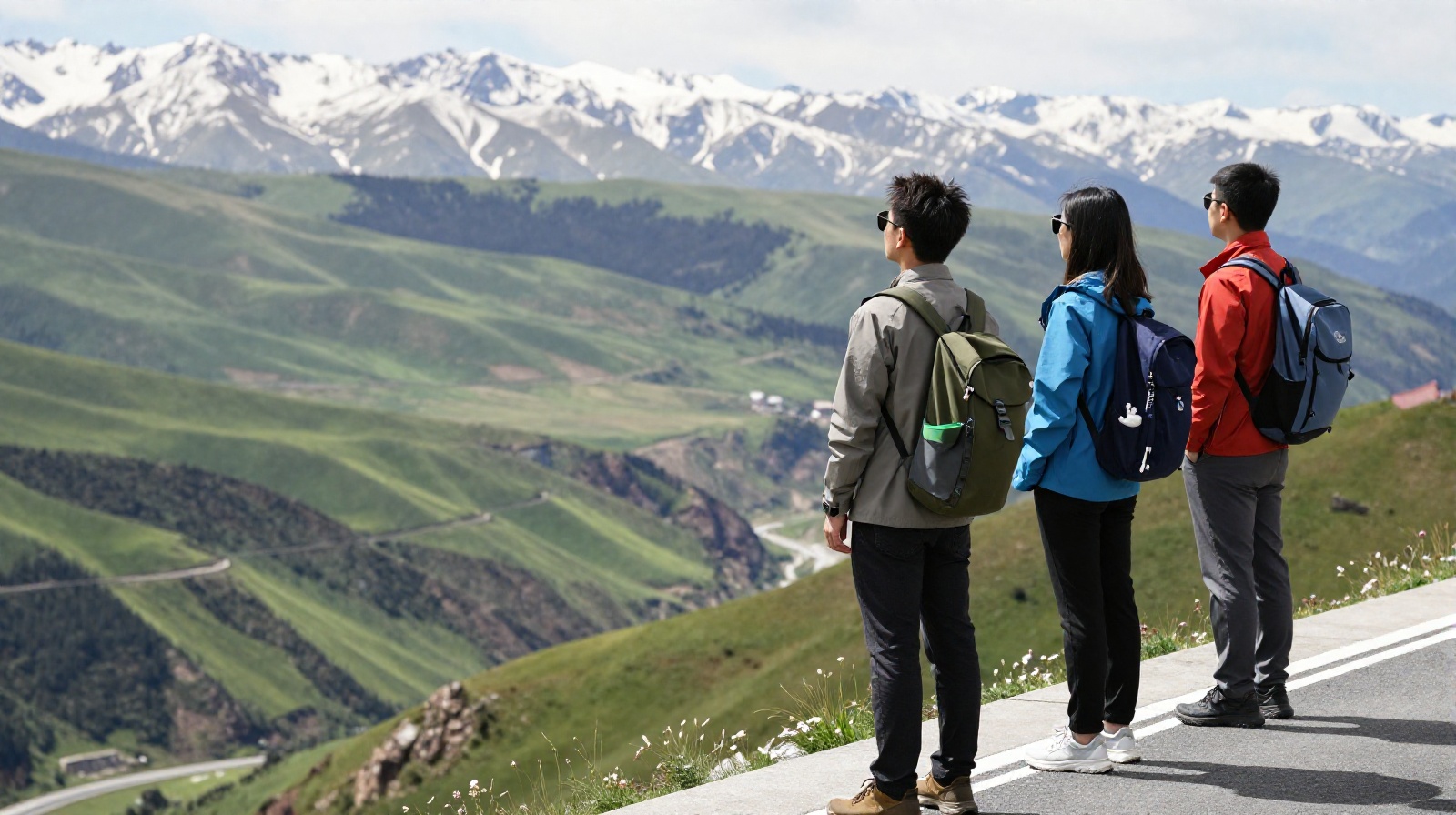
At a small roadside stall selling roasted corn and yak milk tea, I saw a group of young college students on a budget road trip. They were taking photos not just of the scenery, but of each other against the backdrop of the snow-capped peak above them. For them, this is not a luxury vacation; it is an accessible adventure made possible by China’s expanding highway network.
The psychological weight of extremes
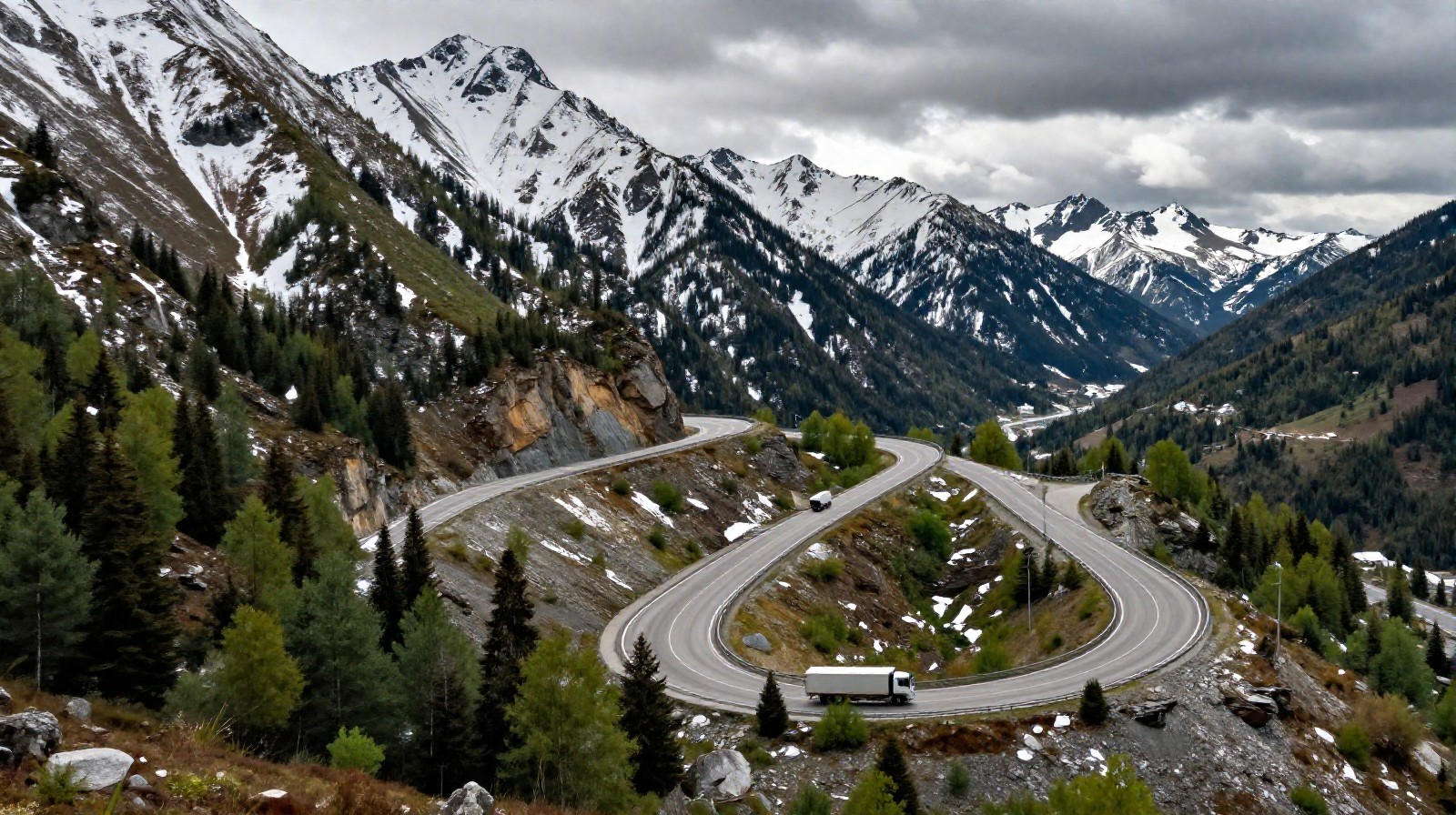
For many travelers, the challenge of Yunnan’s geography is both exhausting and exhilarating. Standing at the edge of the Haba pass, looking down into a lush green abyss while snow still clings to your boots, creates a cognitive dissonance that few other places on Earth offer.
This trip forces you to confront the scale of nature in a way that flat landscapes do not. It challenges the modern assumption that distance equals time. Here, distance is measured in climate zones. You cover 100 kilometers in what feels like an entire lifetime of seasonal change.
The road itself tells a story of progress. Where there were once treacherous dirt tracks requiring four-wheel drive and local guides, there are now wide, well-maintained highways with clear signage and emergency lanes. This infrastructure allows ordinary people to experience extremes that were previously reserved for professional mountaineers or explorers.
Why this matters today
This road trip is more than a scenic drive; it is a demonstration of how China’s development has altered the relationship between people and geography. The ability to traverse such vast elevational gradients in a single day reflects a society that values connectivity and accessibility.
For international readers, this journey offers a glimpse into a different kind of modernity—one where high-speed rail and highways coexist with ancient forests and glaciers. It shows that China is not just building cities; it is knitting together its diverse landscapes so that the average citizen can experience them firsthand.