

Walking Into the Silence of History
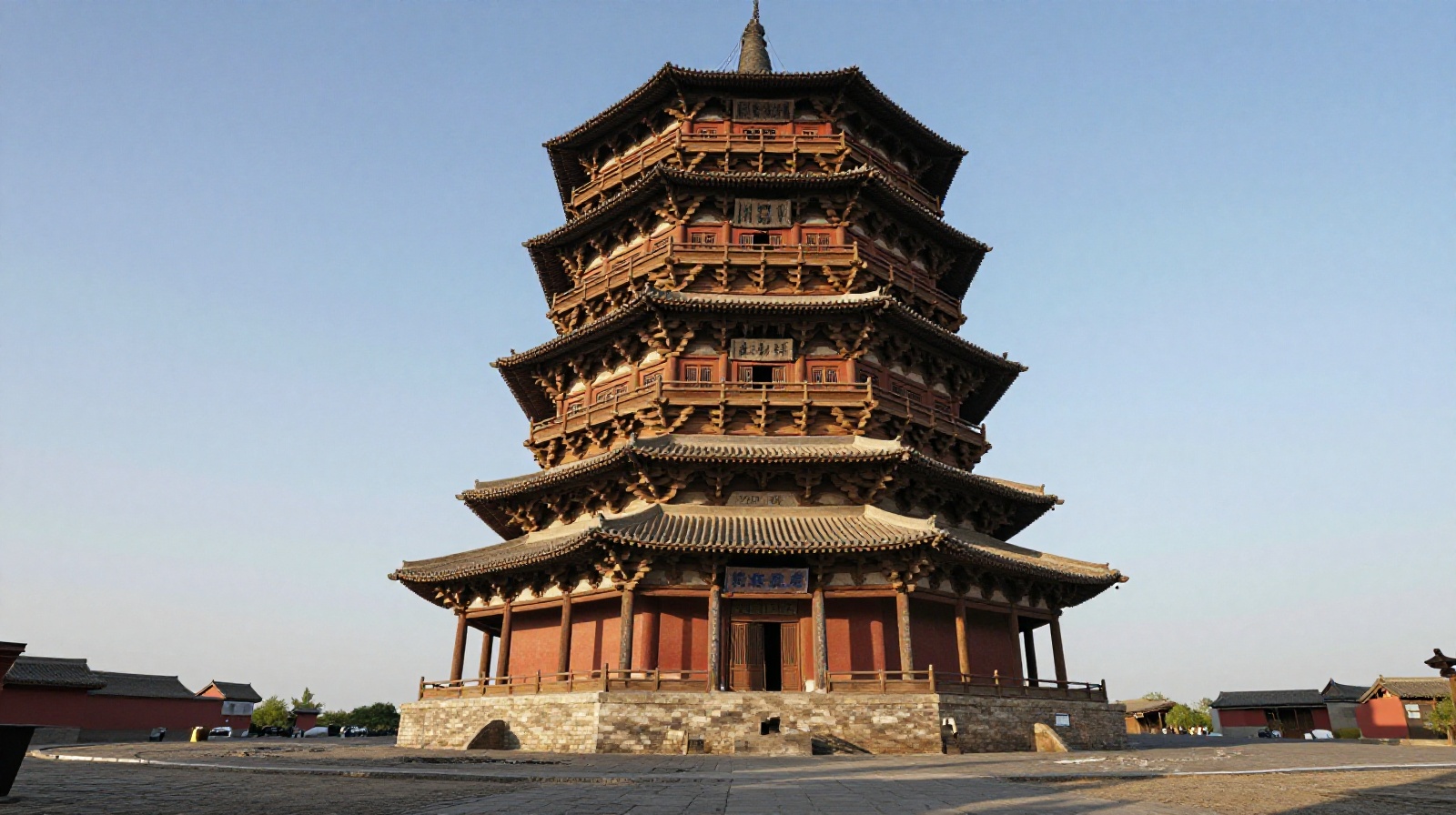
The air in Yingxian County, Shanxi province, carries a distinct scent of dry earth and old wood. When you step into the courtyard of the Xianfo Temple (Temple of the Fragrant Buddha), the noise of modern traffic fades instantly. In front of you stands the Pagoda of Fogong Temple, commonly known as the Yingxian Wooden Pagoda.
It is a massive structure, nine stories tall and 67 meters high—the tallest all-wooden pagoda in the world. Unlike the glass-and-steel skyscrapers dominating city skylines today, this tower feels heavy yet strangely light. Its timber frames are darkened by centuries of soot and rain, showing deep grain patterns. There is no clanging of construction hammers here, only the creaking of wood settling under its own weight.
The Puzzle That Defies Gravity
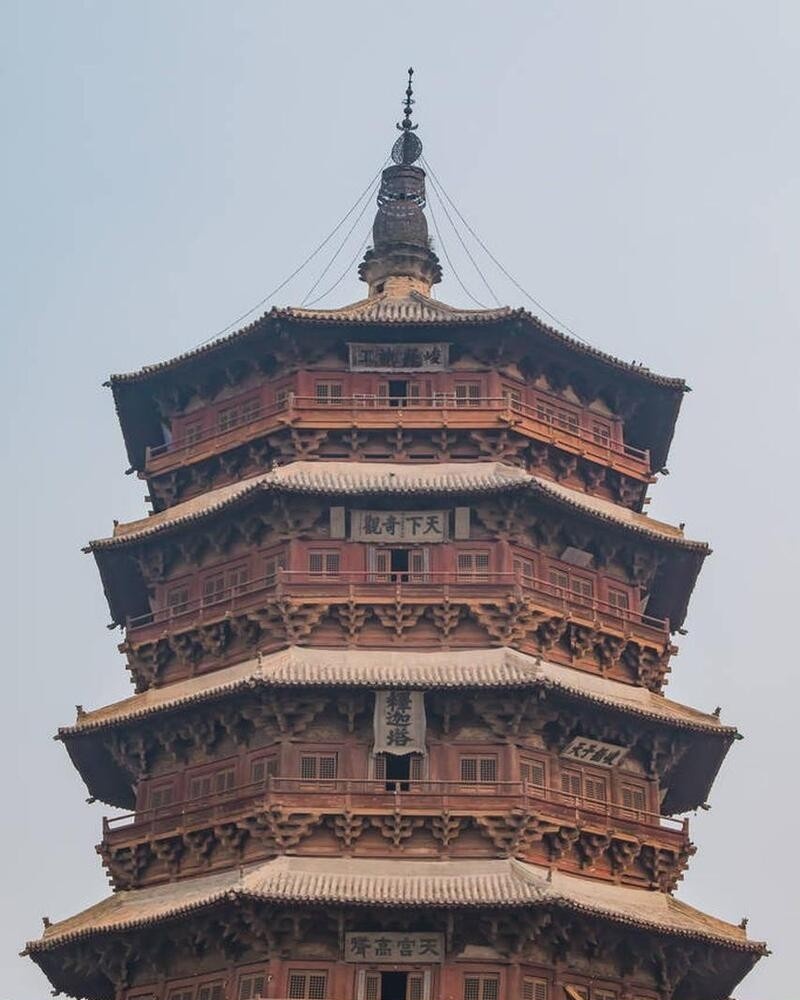
For architects around the world, the most striking feature is simple: there are zero nails. No steel rods, no bolts, not even a single iron screw holds this 4,000-ton tower together.
Instead, the builders relied on Dougong, a complex system of interlocking wooden brackets. Imagine a set of high-tech Lego blocks or a dense jigsaw puzzle where every piece is shaped to lock into another without glue. In the Yingxian Pagoda, these brackets transfer the massive weight of the roof down through the columns and into the foundation.
This technique was perfected during the Liao Dynasty in 1056. The artisans carved thousands of wooden pieces with such precision that they fit together snugly. If you were to pull out one bracket, the structure would likely collapse, yet no two parts are welded or fastened rigidly.
Flexibility Over Rigidity
Why design a building this way? The answer lies in the geography of northern China, a region prone to frequent and violent earthquakes. Traditional masonry buildings made of stone or brick tend to be brittle; when the ground shakes, they crack and crumble.
The Dougong system acts as a shock absorber. During an earthquake, the wooden joints allow the tower to sway slightly, dissipating seismic energy like a spring. The structure moves with the earth rather than fighting against it. This philosophy of flexibility over rigidity is a hallmark of traditional Chinese engineering.
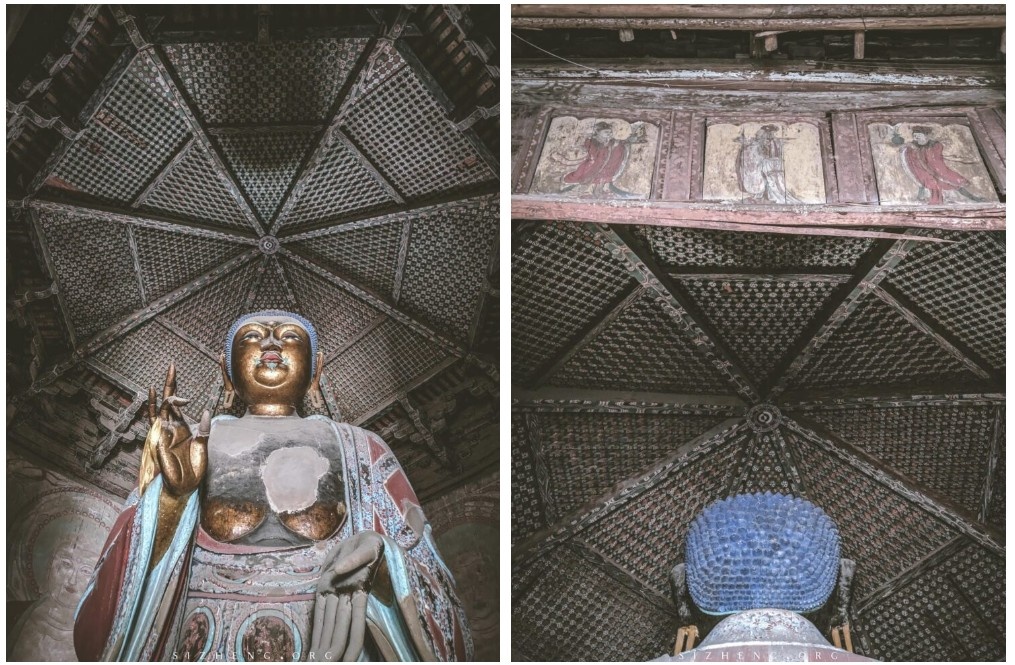
Historical records show the pagoda has survived dozens of major earthquakes, including a magnitude 6.8 quake in 1303 that destroyed much of the surrounding city. While neighboring stone structures fell, the wooden tower merely leaned and groaned, then settled back into place.
A Living Classroom for Modern Minds
Today, the Yingxian Wooden Pagoda is not just a relic; it is an active classroom. In recent years, engineering students from universities across China and abroad have flocked to the site. They do not come to copy the design with modern steel, but to understand the logic.
Restoration teams still use traditional tools—chisels, planes, and wooden mallets—to repair damaged sections. Master craftsmen, some over 60 years old, train apprentices in the art of carving these specific joinery patterns. They know that while modern computers can model stress points, they cannot replace the intuitive feel of wood required to maintain a structure this old.

Wisdom for Tomorrow’s Infrastructure
The survival of the Yingxian Wooden Pagoda offers more than historical curiosity. In an era where global infrastructure faces challenges from climate change and resource scarcity, its approach resonates deeply. It proves that sustainability is not always about high-tech materials; sometimes, it is about mastering the properties of natural resources.
China’s current construction boom often blends these ancient insights with modern technology. From earthquake-resistant bridges to sustainable urban planning, the principle remains: build systems that can adapt and move. The wooden pagoda stands as a silent testament to this enduring wisdom, reminding us that the most durable structures are often those that know how to bend.