

The Kitchen as a Battlefield
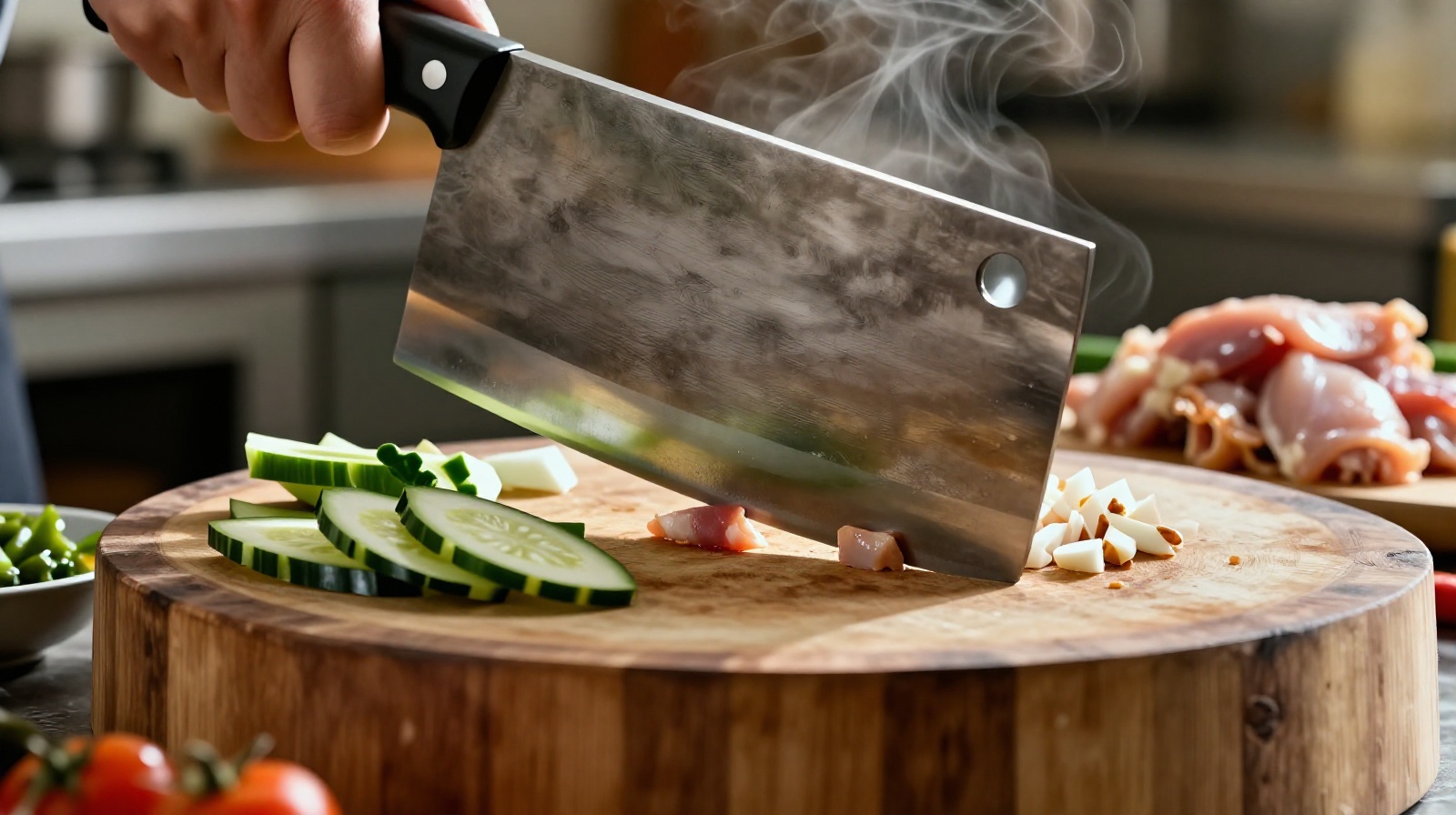
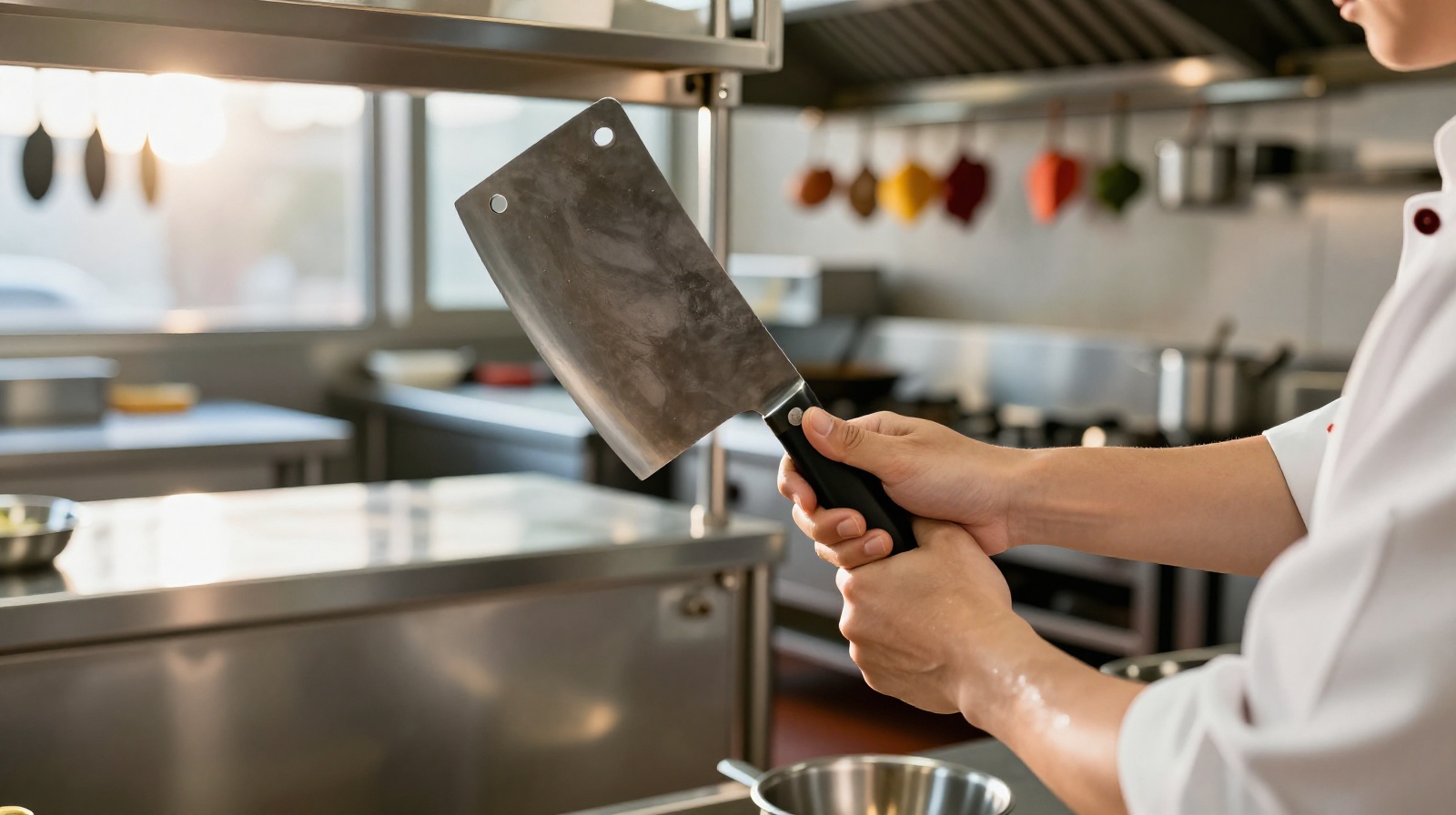
At 5:30 AM, the air in the prep room of a Shanghai restaurant is thick with steam and the sharp scent of ginger. Li Wei, a head chef with twenty years of experience, doesn’t reach for a three-piece set of German steel knives. Instead, he grabs a single blade hanging from a magnetic strip on the wall: a 600-gram cleaver.
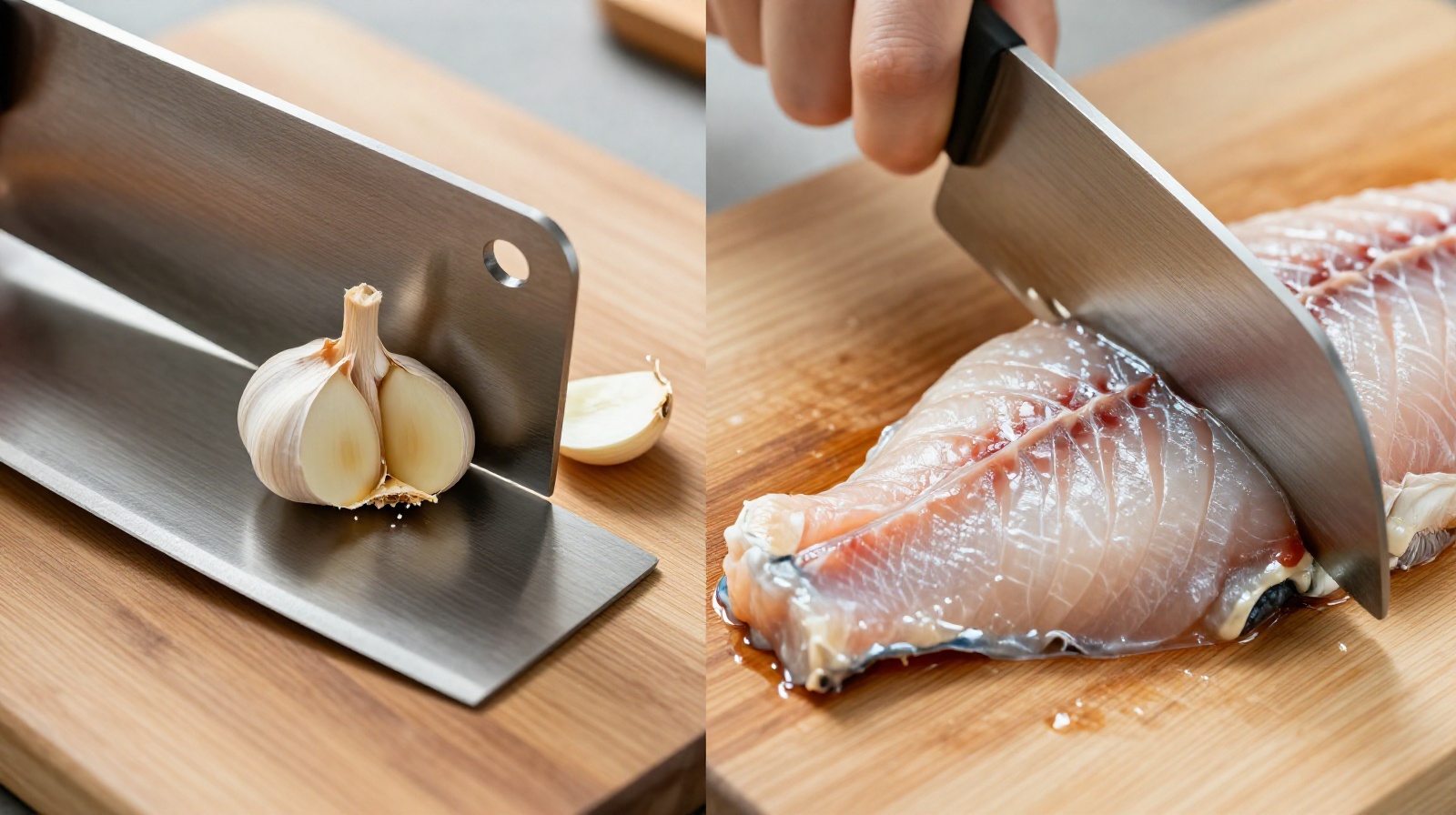
There are no paring knives, santokus, or bread knives here. Just one heavy, rectangular piece of carbon steel. To an outside observer, this looks like a compromise. To Li and millions of other Chinese cooks, it is the ultimate efficiency. The blade is wide enough to act as a cutting board for garlic, sharp enough to slice through raw fish skin without tearing, and heavy enough to cleave through chicken bones with a single downward strike.
Why One Blade Beats Ten
The fundamental difference between Chinese and Western cooking tools lies in the philosophy of movement. Western cuisine often relies on precision cutting techniques—dicing, julienning, brunoise—where specific knife shapes are optimized for specific cuts. The French knife set is a collection of specialists.
Chinese kitchen knives, particularly the cai dao, operate on a different logic: versatility through weight and geometry. The blade is not just a cutting edge; it is a multi-tool. A heavy cleaver allows the chef to use the flat side of the blade to smash garlic or ginger (releasing oils without bruising the flesh), scrape minced ingredients off the board, transfer chopped vegetables directly into a wok, and finally, chop through dense bones.
This versatility changes the tempo of cooking. In a high-volume restaurant kitchen, where speed is currency, switching between three different knives for one dish takes precious seconds. With one cleaver, Li can dice pork, slice beef, and smash chicken bones in under two minutes without ever putting the tool down or changing his grip.
The Ritual of the Daily Sharpening Stone
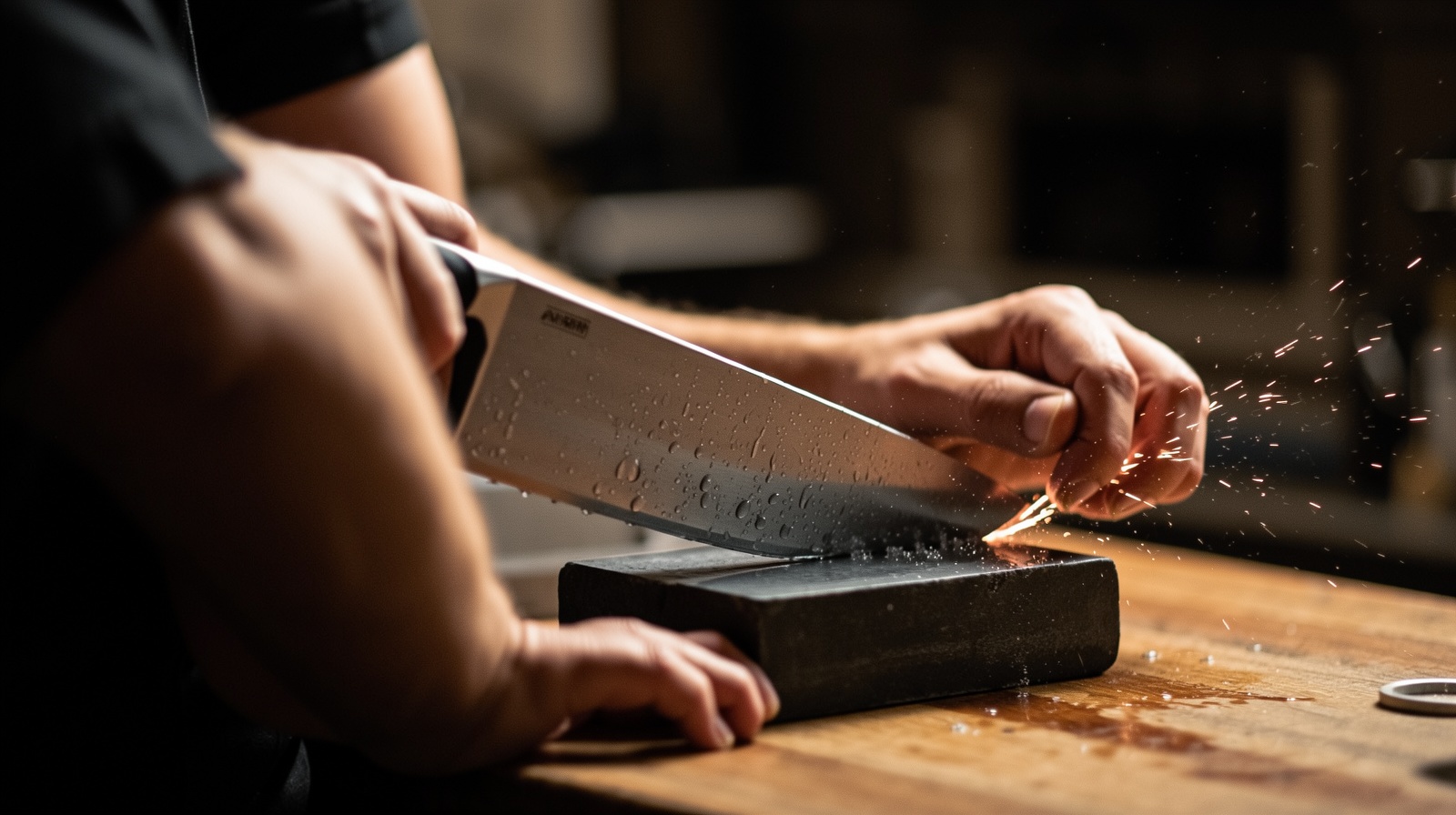
A Chinese chef’s cleaver is only as good as its edge. Unlike Western knives that might be honed once a week and sharpened monthly, a busy restaurant chef sharpens their blade every single day. This is not an occasional maintenance task; it is a ritual akin to a morning prayer.
In the back of Li’s kitchen, a flat stone sits on a wet towel. With rhythmic, practiced strokes, he draws the blade across the stone at a precise angle. The sound is a consistent shhh-shhh, a low hum that signals readiness to the entire team. This process removes microscopic burrs and creates an edge sharp enough to slice through tomato skin without applying pressure.
This relationship with the tool is described locally as “the person raises the knife, or the knife raises the person.” A neglected blade dulls quickly on hard bones, while a well-maintained one feels like an extension of the chef’s hand. The weight and balance are not static; they evolve as the steel thins slightly over decades of use.
Deconstructing a Chicken in Minutes
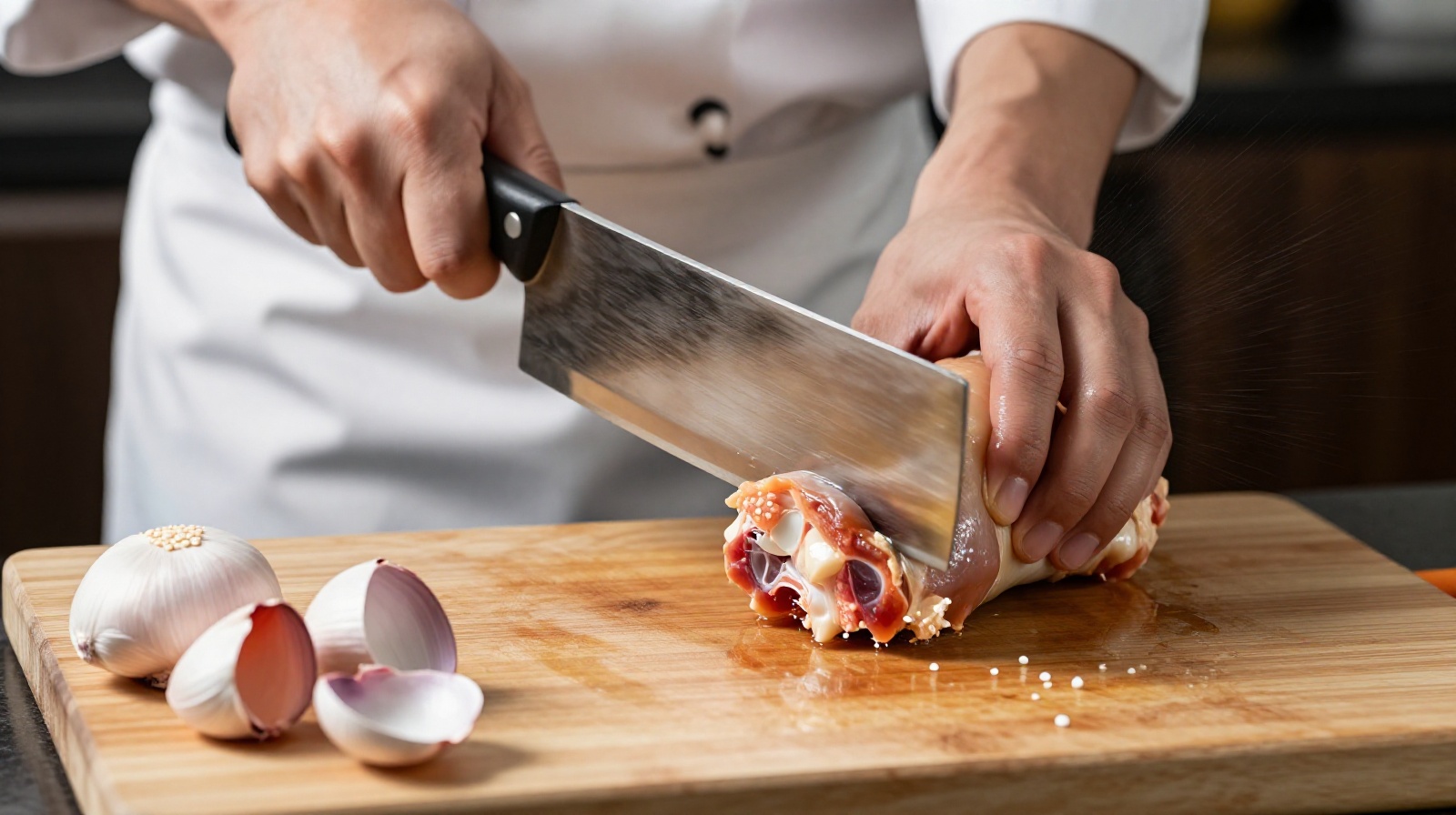
The true power of the cleaver is best seen when Li breaks down a whole chicken. He doesn’t rely on scissors or a specialized poultry knife. With a firm grip, he places the blade at the joint where the wing meets the body and delivers a sharp, downward thud. The bone snaps cleanly.
He repeats this for the drumsticks, using the heel of the blade to strike the thick joints. Then, he flips the chicken breast over. Instead of carving, he uses the flat side of the cleaver to smash the meat slightly tenderizing it before slicing it into uniform strips. The entire process, from whole bird to portioned pieces for a stir-fry, takes less than five minutes.
This speed is made possible by the tool’s design. The wide blade provides leverage; the heavy weight does the work of the swing. In Chinese cuisine, where ingredients are often cut small and cooked quickly over high heat (wok hei), the ability to prep large quantities rapidly is essential. A single cleaver allows a chef to maintain this rhythm without interruption.
A Symbol of Practical Wisdom
For Westerners, the lack of specialized knives might seem like a limitation. But in the context of Chinese culinary culture, it represents a deep-seated pragmatism. The cai dao is not just a tool; it is a symbol of the “less is more” philosophy that permeates many aspects of Chinese life.
It reflects a world where space is often limited, time is precious, and resources are optimized for maximum output. The single cleaver cuts through the complexity of modern cooking demands with a simplicity that has remained unchanged for centuries. In the clatter of a busy kitchen, the sound of that one blade hitting the cutting board remains the most reliable rhythm of all.