

The ‘Umami Gap’: When Tomatoes Aren’t Enough
Imagine a dinner party in London or New York. The host serves roasted tomatoes with basil, or perhaps a rich mushroom risotto. Guests nod in approval. It tastes deep, savory, satisfying. This is what Western palates recognize as umami, the fifth taste.
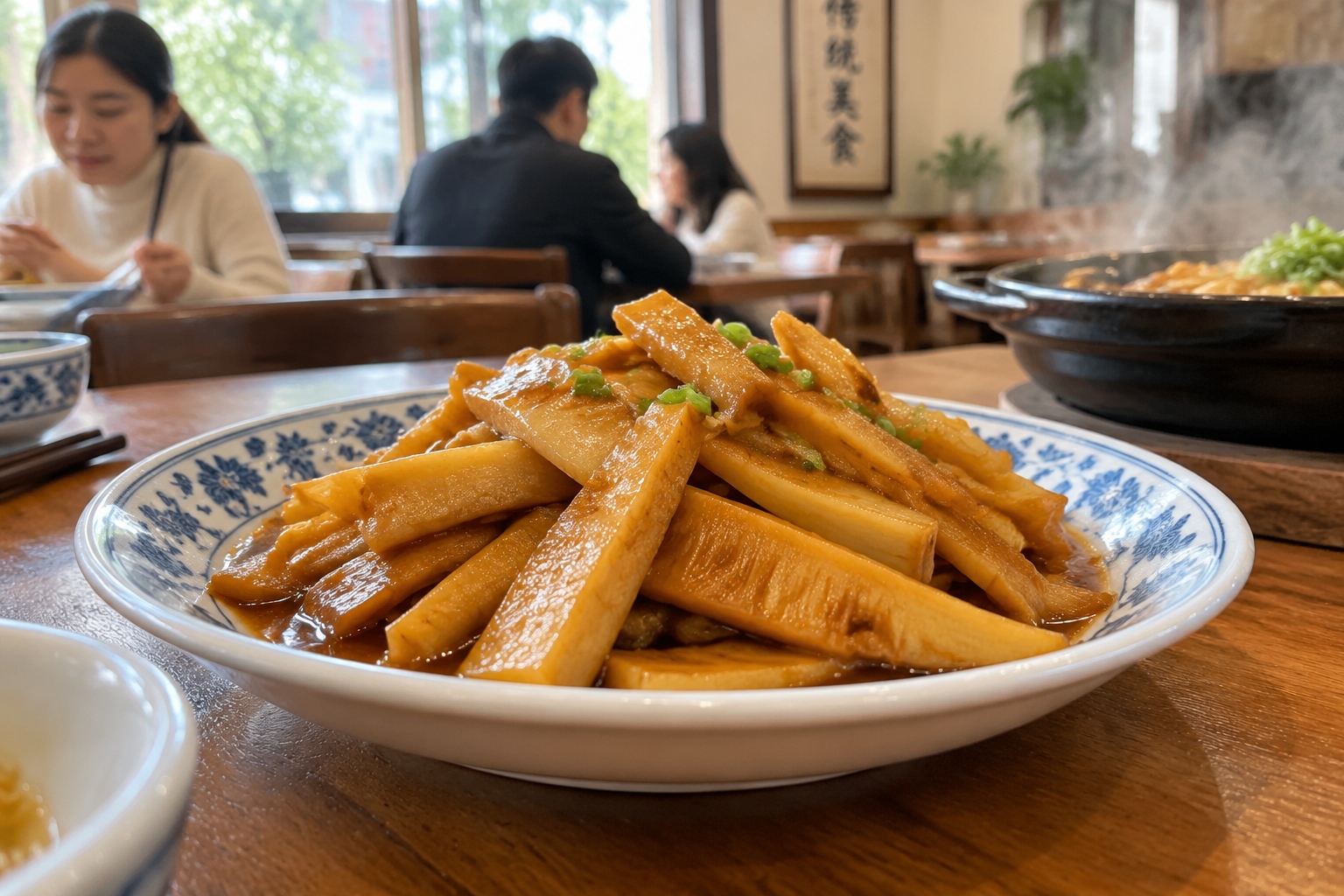
Now, imagine serving that same group a plate of lightly stir-fried bamboo shoots, seasoned only with soy sauce and a touch of sugar. To many Westerners, it might seem underwhelming. It lacks the heavy grease of meat or the acidic punch of vinegar. Where is the “flavor”? Why does it taste so… clean?
This reaction highlights a fundamental cultural gap in culinary perception. In the West, umami is often treated as an additive flavor—a boost to enhance existing dishes. In China, there is a concept that defies direct translation: xian (鲜). While English speakers might loosely translate it as “fresh,” this misses the depth of what it means in Chinese cuisine. Xian is not just about ingredients being recently picked; it is a complex sensory experience combining natural sweetness, savory depth, and specific textures.
Beyond MSG: A Culinary Philosophy
For decades, Western media has simplified umami to monosodium glutamate (MSG). This reductionist view ignores the sophisticated logic behind Chinese cooking. In China, “xian” is a culinary philosophy rooted in respect for ingredients and timing.
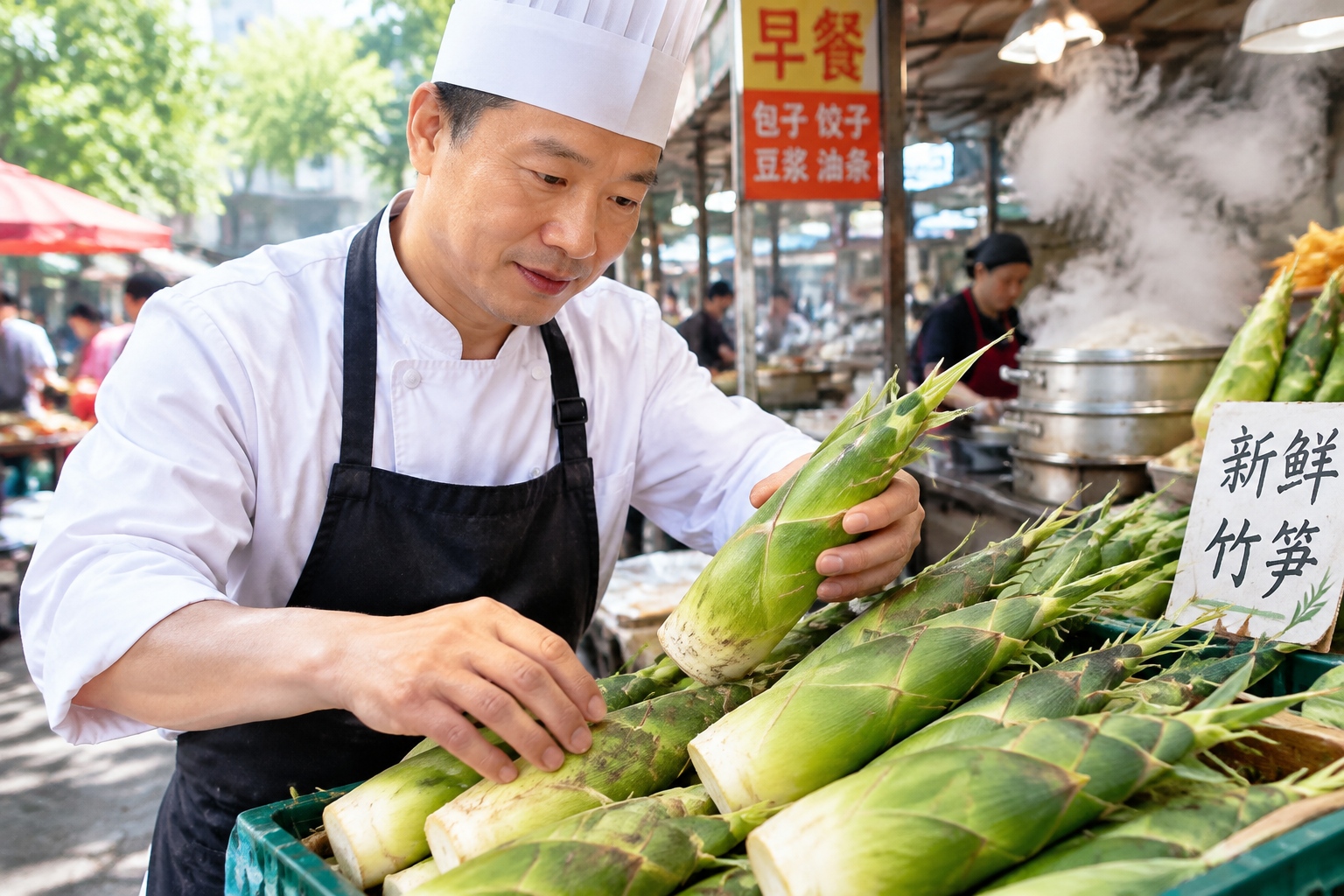
Consider how vegetables are treated differently across cultures. In Italy, you might eat raw arugula with sharp cheese, or cook spinach until it wilts into a stew. The goal is often to contrast textures or highlight the vegetable’s inherent bitterness or sweetness through heavy seasoning. In China, especially in the Jiangnan region (south of the Yangtze River), vegetables are treated with delicate precision. The goal is not to mask the ingredient but to reveal its truest self.
This approach requires a different kind of skill. It demands knowing exactly when a vegetable has reached its peak—when the fibers are tender but still crisp, and when its natural sugars have concentrated without turning mushy. This sensitivity to the “moment” is what makes xian so difficult for outsiders to grasp initially.
Case Study: Braised Bamboo Shoots (Youmen Chunsun)
To truly understand xian, you don’t need a complex recipe. You need spring, and you need bamboo shoots. Specifically, Youmen Chunsun (油焖春笋), or braised spring bamboo shoots, is the perfect ambassador for this concept.
Bamboo shoots are notoriously difficult to cook perfectly. If boiled too long, they become woody and tasteless. If not cooked enough, they retain a bitter, astringent edge that can upset the stomach. The chef must navigate a narrow window of perfection.
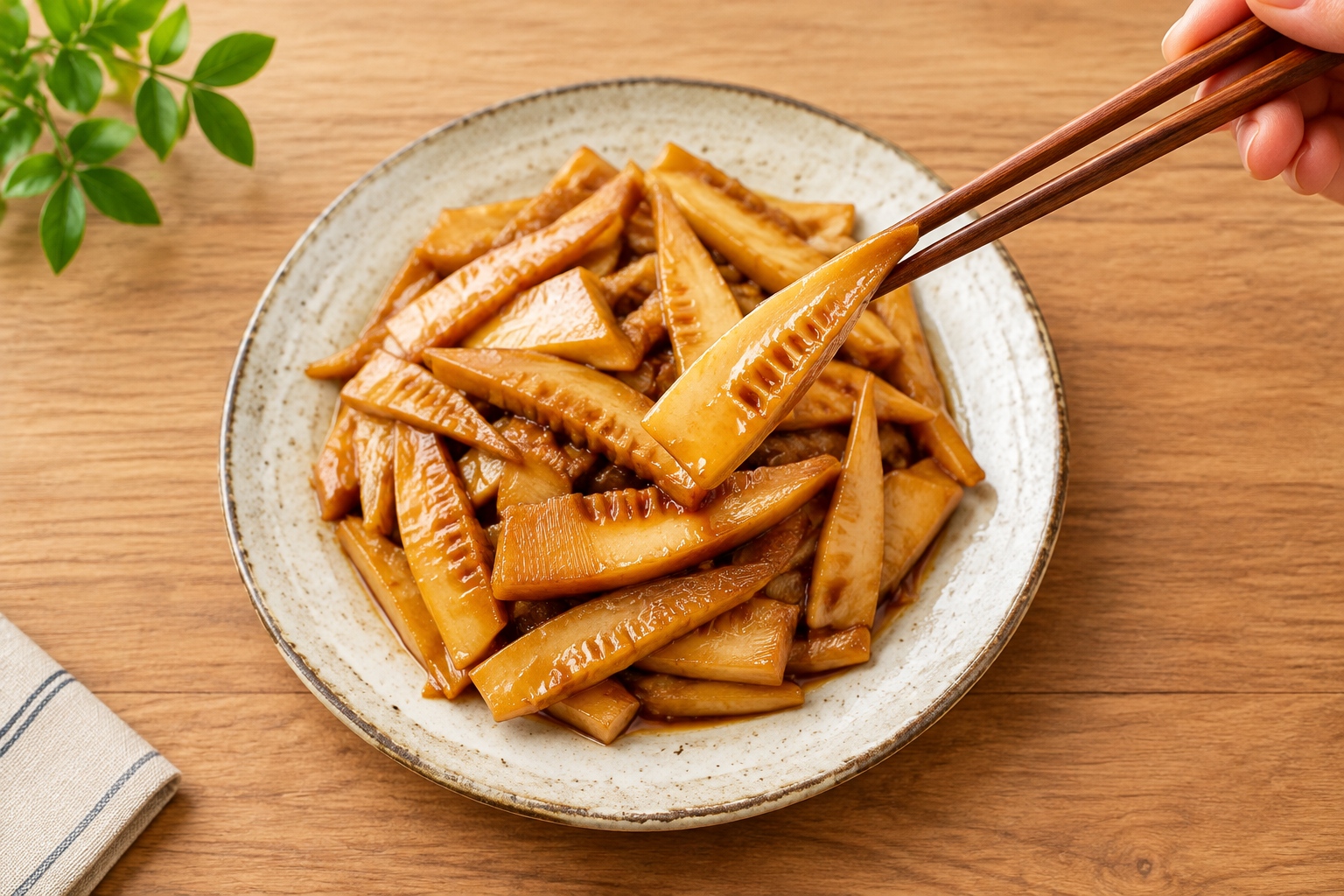
In Youmen Chunsun, young bamboo shoots from late March are sliced and braised in a mixture of soy sauce, sugar, and sesame oil. There is no meat. No heavy stock. Just water, seasonings, and the shoot itself. As it simmers, the shoots absorb the savory-sweet sauce, turning a deep amber color. The texture becomes silky yet retains a satisfying crunch. The flavor is not explosive; it is layered. You taste the earthiness of the soil, the slight sweetness of the spring rain, and the clean finish of the shoot.
When a Western diner encounters this dish, they often ask: “What is in this?” When told there is only bamboo, soy sauce, and sugar, the surprise comes from realizing that the flavor comes from transformation, not addition. The cooking process extracts the innate xian from the vegetable, concentrating it until it sings.
The Science of Soil and Season: Why Timing Matters
The concept of xian is inextricably linked to seasonality. In China, there is a saying: “Eat spring shoots, summer greens, autumn fruits, winter roots.” Each season dictates what the land offers at its peak.

Bamboo shoots are only available for a few weeks in early spring. During this time, the shoots grow rapidly, pulling nutrients from the soil. If you wait even three days too long, the shoot thickens and becomes fibrous. This urgency creates a market culture where freshness is not just a preference but a necessity.
This reliance on precise timing challenges the modern globalized food system, which prioritizes shelf life and transportability over peak flavor. In Western supermarkets, you can buy broccoli year-round. In China, eating spring bamboo shoots in October is considered impossible—or at least, deeply unsatisfying. The “xian” exists only when the ingredient meets the season.
Modern Connections: Preserving Tradition in Urban Life
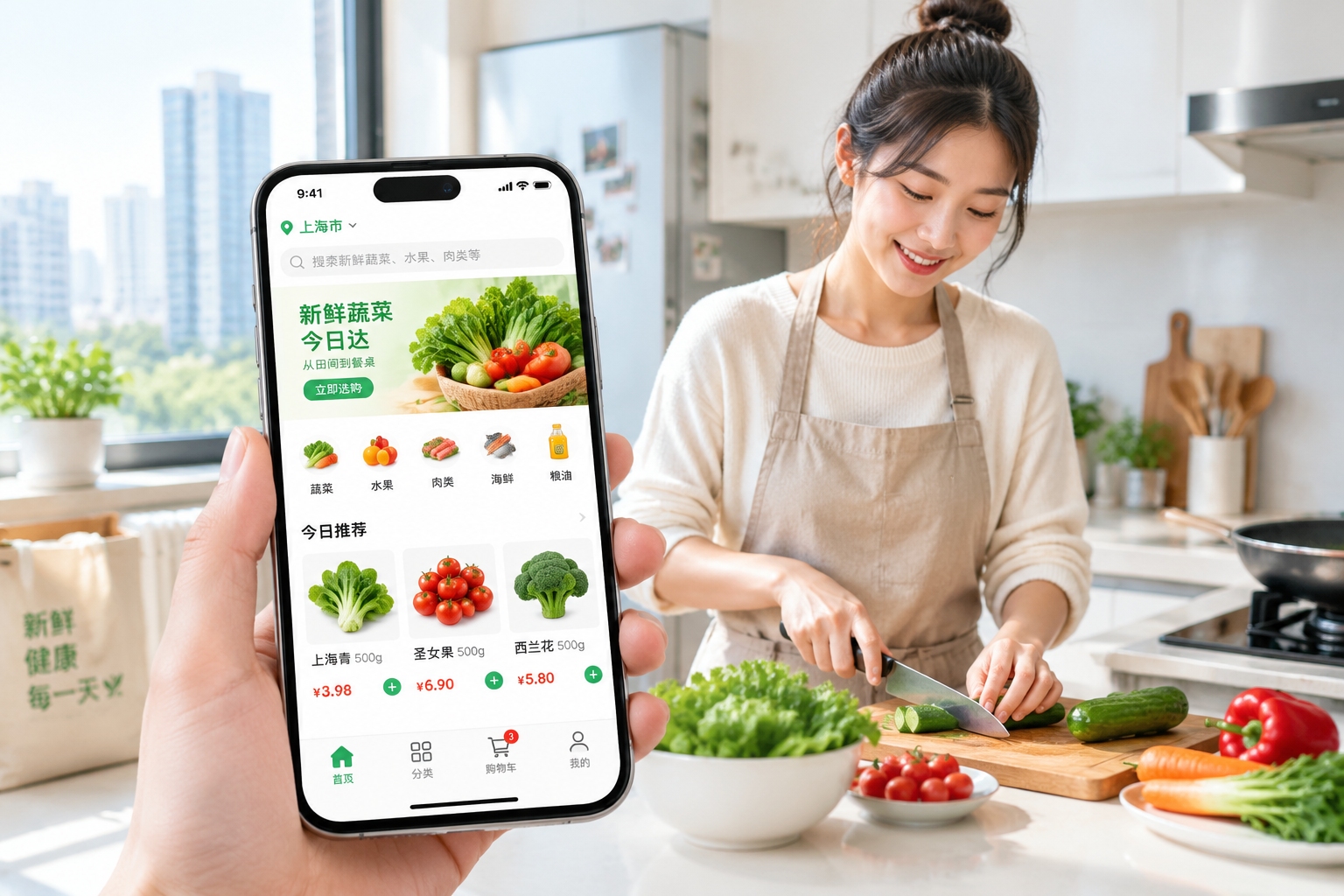
Today, as urbanization accelerates, maintaining these standards of freshness becomes a challenge. In Shanghai or Hangzhou, young professionals might order fresh bamboo shoots via a delivery app at midnight, expecting them to arrive within an hour, still crisp and clean.
This convenience is a double-edged sword. While logistics have improved dramatically, ensuring year-round availability of some ingredients, the cultural emphasis on seasonal eating remains strong in home cooking. Grandmothers still walk to local wet markets at dawn to pick out the thinnest shoots from the season.
For Westerners interested in Chinese cuisine, understanding xian means looking beyond the sauce bottle. It means appreciating that a simple vegetable dish can carry as much complexity as a rich stew, if not more. The next time you try braised bamboo shoots or a similar seasonal vegetable, pause before reaching for the salt. Ask yourself: What is this ingredient trying to tell me about its season and its soil? That silence, that clean taste—that is xian.
Start the discussion at forum.chinacomes.com