

The Warmth Beyond Daylight
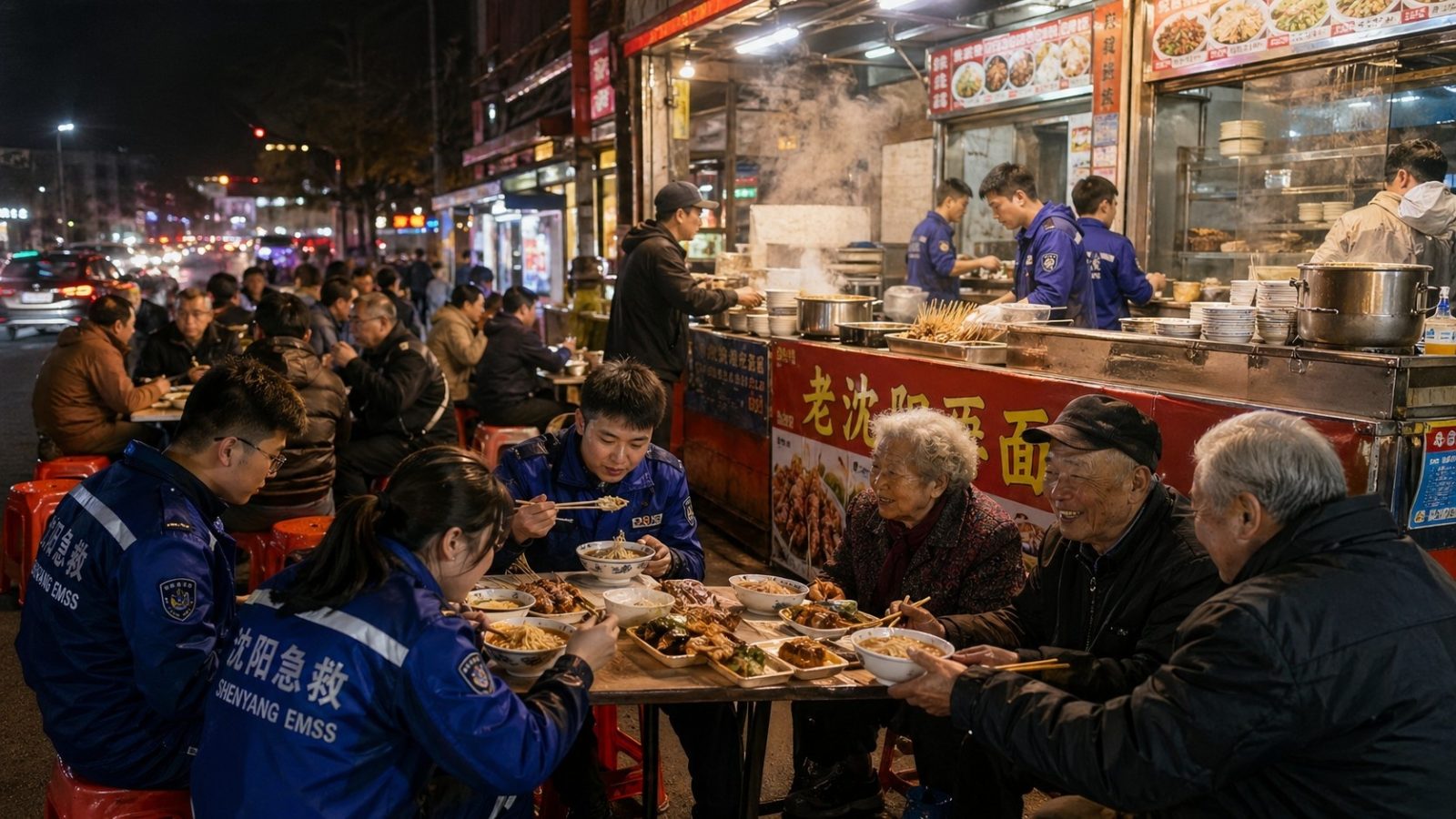
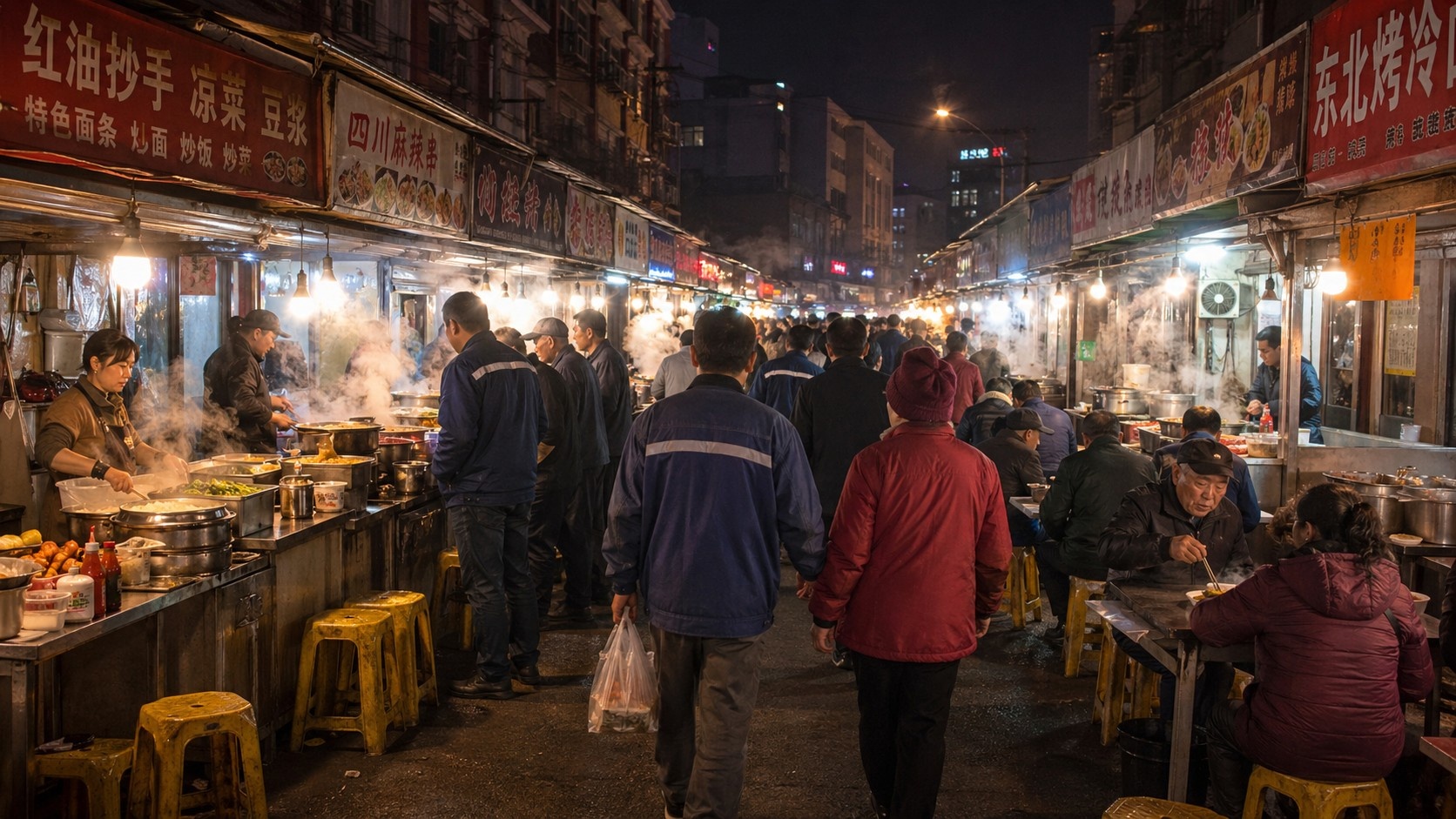
It is 10:30 PM in a bustling street of Shenyang, Liaoning’s capital. The air smells sharply of charcoal smoke, roasted sesame seeds, and spicy oil. A group of steelworkers in blue uniforms sits at low plastic tables, steam rising from their bowls of noodles. Across the aisle, a cluster of retirees in tracksuits laughs loudly over plates of cold noodles while listening to an old folk song playing from a nearby speaker.
This is not the “sleepy” China often portrayed in Western media. This is Liaoning’s night economy—a vibrant ecosystem where commerce and community intersect. Here, the night market is not just about selling goods; it is a social glue holding together a region known for its heavy industry and rapid demographic shifts.
Street Food: A Universal Language
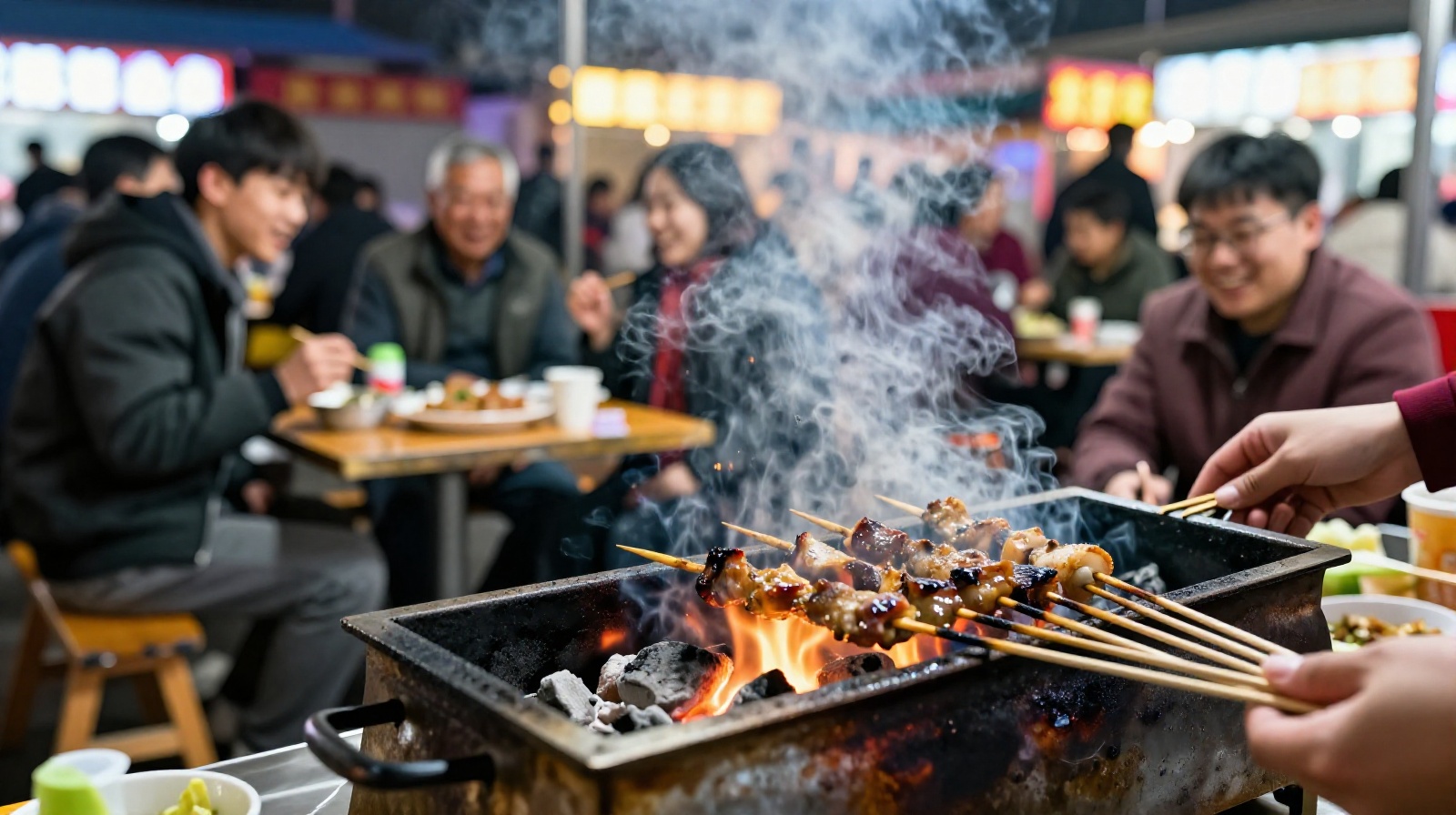
In Northeast China, street food is more than sustenance; it is a neutral ground. At these late-night stalls, titles dissolve. A retired factory manager might share a table with a delivery driver or a university student.
The menu is specific to the region’s climate and history. You will find skewers (chuan’r) grilled over open flames until the fat sizzles, bowls of cold noodles seasoned with vinegar and chili oil to cut through the humidity, and roasted chestnuts warming hands on freezing nights. These are not gourmet experiences sold in glass cases; they are functional, affordable meals that fuel the city’s pulse.
“I come here because it’s cheap and everyone knows me,” says Li Ming, 24, a software tester who works long hours at a tech park nearby. “After paying my bills, this is where I can afford to eat with friends without feeling poor.”
Generational Convergence: Shift Work Meets Leisure
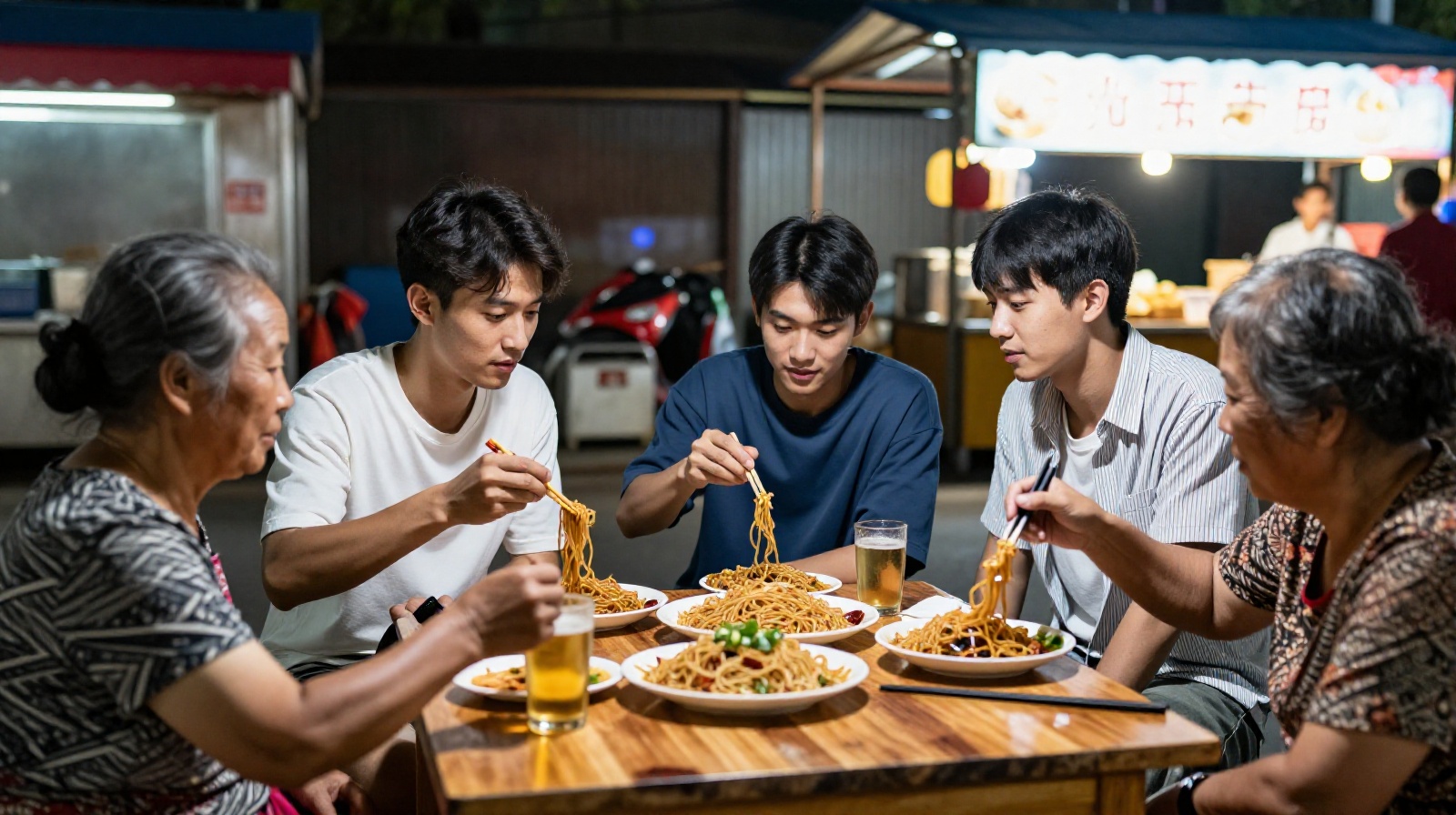
The demographic landscape of Liaoning tells a unique story. The region has one of China’s oldest populations and a strong tradition of industrial shift work. This creates a natural overlap in the late-night hours.
For young people, especially those born in the 90s, these night markets offer stress relief after long shifts or overtime at factories. They are spaces to decompress where the cost of entry is low—a cup of beer and a plate of skewers costs less than a coffee in many Western cities.
For retirees, the evening routine is different but equally vital. With children often working far away or living separately, these markets provide a crucial antidote to isolation. Many walk here after evening exercises, seeking conversation and warmth. The intergenerational dynamic is subtle: young workers might help an elderly person carry a heavy tray of drinks; retirees might offer advice on local traffic to a confused delivery driver.
The Infrastructure of Nightlife
This ecosystem doesn’t happen by accident. It is supported by visible infrastructure that makes the night feel safe and accessible for everyone.
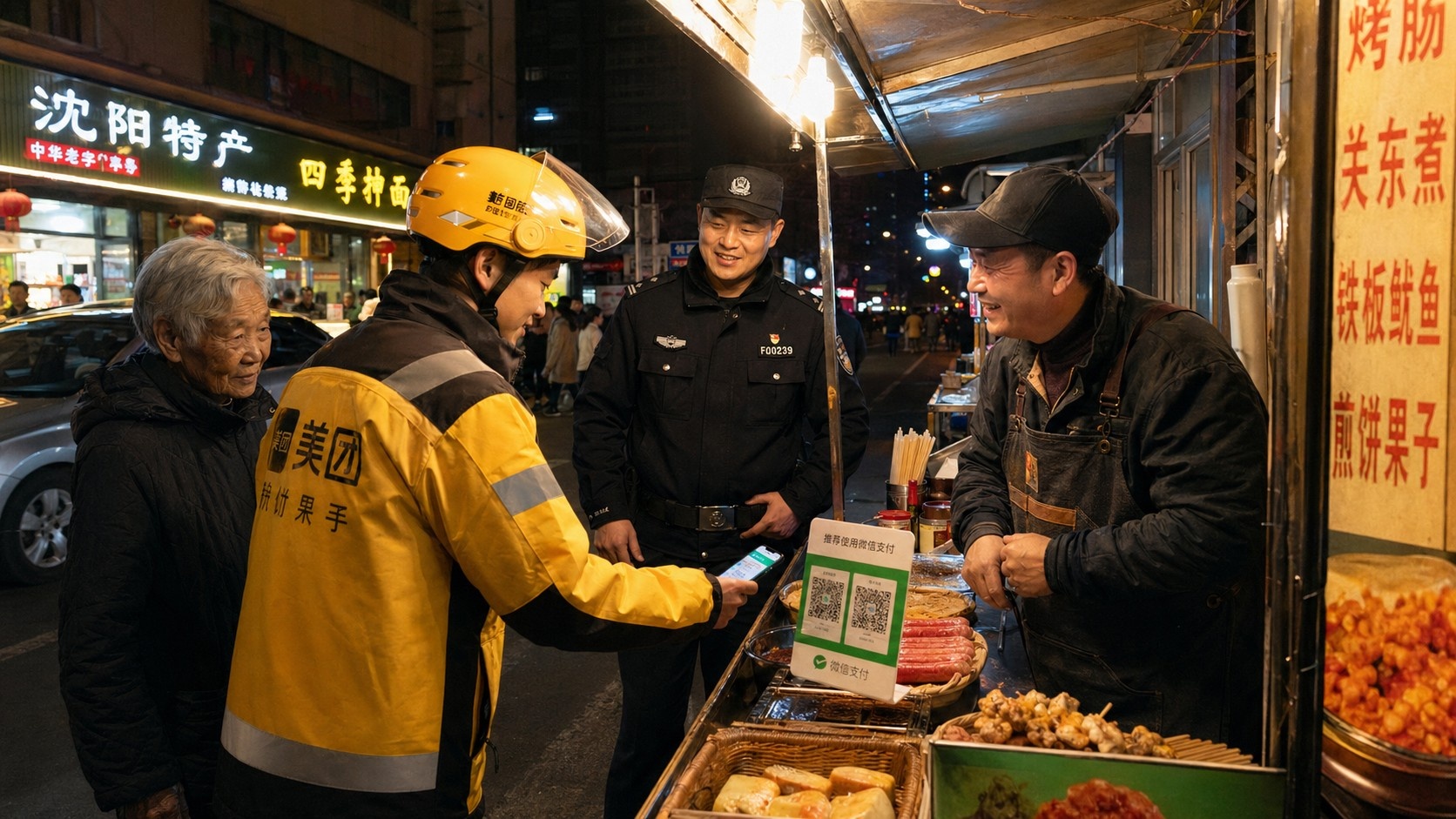
Street lighting in these districts is bright, casting a warm glow on the pavement. Police patrols are frequent, often seen chatting casually with stall owners rather than just enforcing rules. 24-hour convenience stores line the streets, offering hot meals and charging stations, bridging the gap between traditional markets and modern needs.
Technology plays a pivotal role in this harmony. While cash is still used by some seniors, mobile payments via WeChat Pay or Alipay are ubiquitous. A young person might scan a QR code to pay for their meal, while an elderly neighbor pays with a smartphone held out by the vendor’s hand—a seamless blend of old habits and new tools that keeps the transaction flowing smoothly.
A Microcosm of Modern China
Watching these interactions in Liaoning offers a clear window into modern Chinese society. It is a place where economic resilience meets social trust. The night economy here is not just about GDP; it is about the psychological safety net that allows people from different generations to exist in the same space, sharing food and stories.
In a country often defined by its rapid urbanization and technological leaps, Liaoning’s streets remind us that at the heart of development are human rituals. Whether you are a young worker escaping fatigue or a retiree seeking connection, the warm light of a late-night stall is a constant reminder: you are not alone.