

The Blue Uniform and the Rain
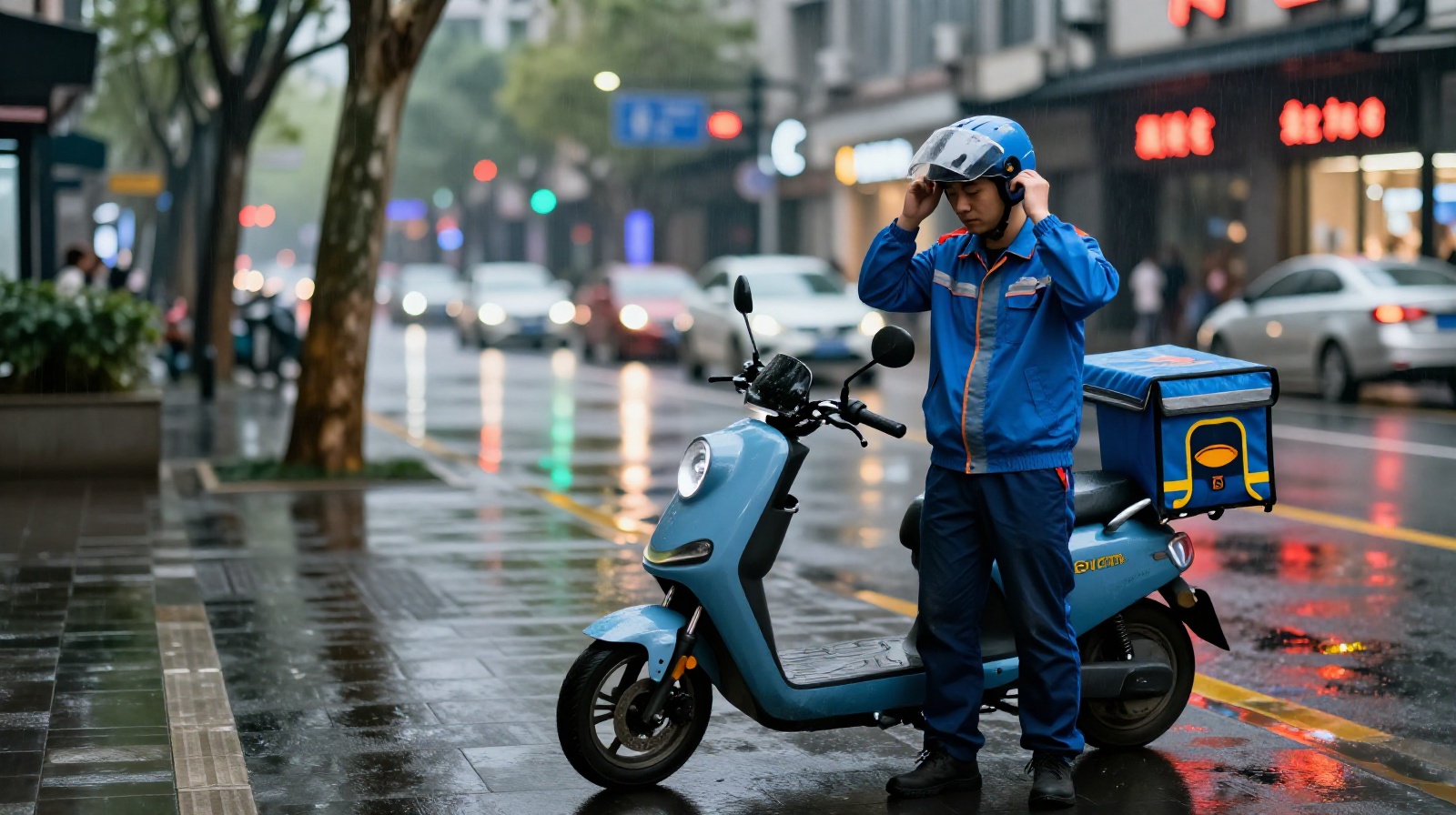
The rain in Shanghai doesn’t fall; it hovers. It’s a fine, persistent mist that clings to your eyelashes and turns the neon lights of Lujiazui into blurred watercolors. I was sitting by the window of my office on the 14th floor, watching the traffic below turn into a river of red taillights. My phone buzzed. Delivery arrived.
I took the elevator down. The lobby was chaos. Dozens of riders in bright blue and yellow jackets were huddled under the awning, shaking off water, checking their phones with frantic taps. This is the heartbeat of modern Chinese urban life: a logistical army that moves mountains of food from kitchens to doorsteps in minutes.
He handed me the bag. His helmet was still on, dripping wet. “Careful, it’s hot,” he said, his voice slightly muffled by the visor. He didn’t rush off immediately. Unlike most riders who bolt the second they confirm delivery, he stood there for a second, adjusting his grip on the handlebar of his electric scooter.
I noticed his sneakers. They weren’t the standard-issue plastic overshoes worn by 90% of riders to protect against rain and mud. His were canvas shoes, worn thin at the toes, but clean. There was a small sticker on the side of his helmet—a faded image of Li Bai, the Tang Dynasty poet.
The Hidden Author
Curiosity got the better of me. As I opened my chopsticks, I asked, “Is that Li Bai? You read poetry?”
He paused, surprised by the question. In China, the stereotype of a delivery rider is often reduced to someone who just wants to make quick money and go home. But he smiled, a genuine, relaxed expression that didn’t fit the urgency of his job.
“My grandfather taught me,” he said, tucking his helmet under his arm. “I started writing poems when I was young. Not just reading them.”
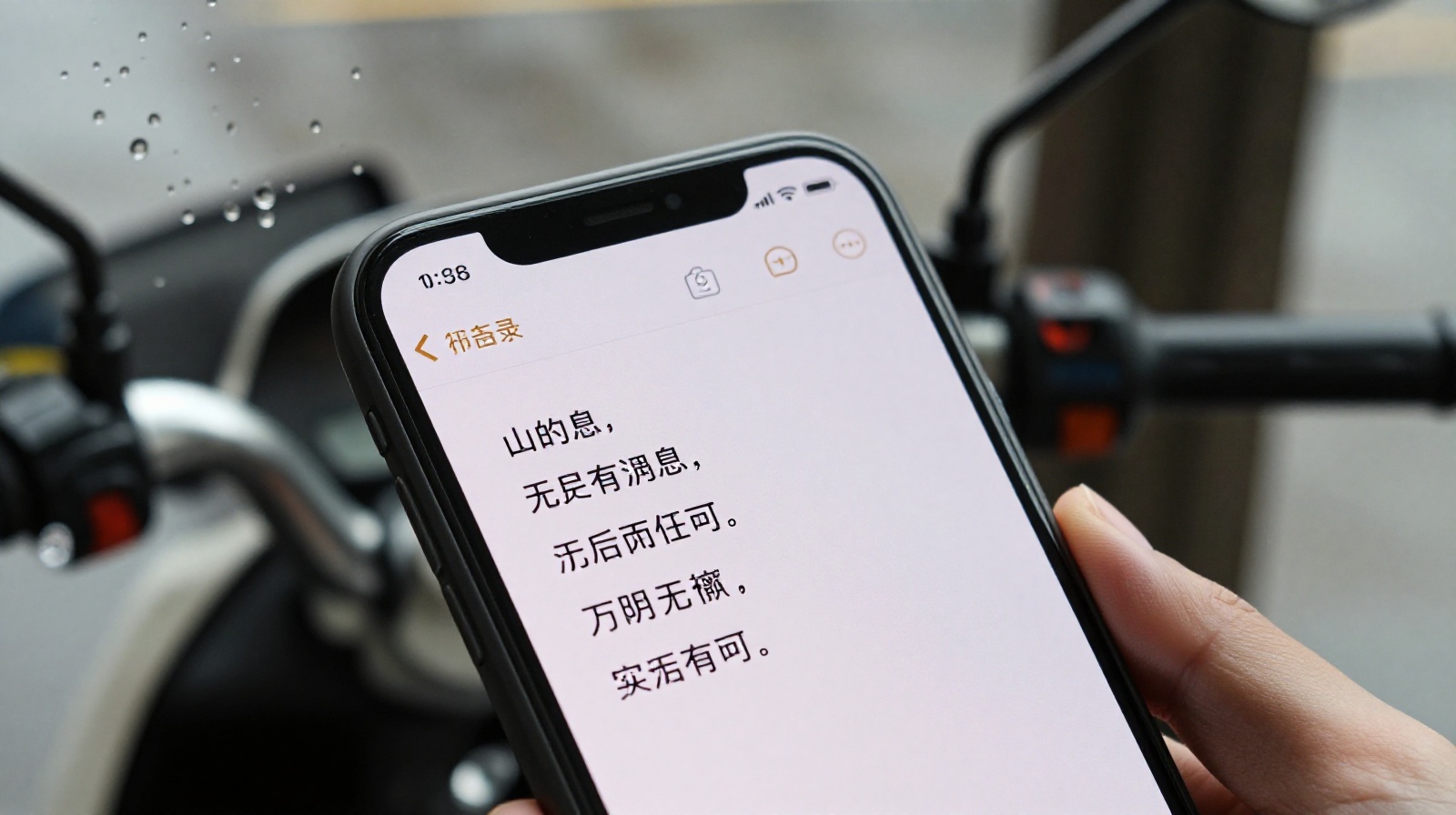
I nearly dropped my chopsticks. He pulled out his phone, not to check for the next order, but to open a note-taking app. The screen showed a poem titled “Rain on the Highway.” It wasn’t perfect, but it had rhythm. It described the way the rain sounded on the metal roof of his scooter, like “a thousand tiny drums beating time for no one.”
He told me he had published a collection of poems last year through an indie press in Chengdu. The print run was small—maybe 500 copies—but they sold out within two months. “People don’t expect it,” he admitted, looking at the busy street again. “They see the uniform and think I’m just a machine. But poetry is how I stay human.”
The Paradox of Speed and Stillness
This story isn’t unique to him. Across China, there’s a growing community of “poet riders.” They are part of a demographic often overlooked: the migrant workers who have moved from rural villages to cities like Beijing, Shanghai, and Shenzhen.
On the surface, delivery work is the opposite of poetry. It is governed by algorithms that count seconds. If you’re two minutes late, your rating drops. If your rating drops, you lose access to better orders. The job demands hyper-efficiency, a suppression of thought, and a focus on physical navigation through chaotic traffic.
Yet, for these riders, poetry offers a way to reclaim agency. While their bodies are controlled by the app, their minds can wander. Writing allows them to process the alienation of city life—the loneliness of eating boxed lunches alone in stairwells, the awe of seeing skyscrapers they will never enter, the frustration of being invisible.
I asked him how he finds time to write. “I listen,” he said. “When I’m waiting at a red light, or stuck in an elevator, that’s when the words come. The city is full of stories if you stop trying to outrun them.”
A Conversation Beyond the Transaction
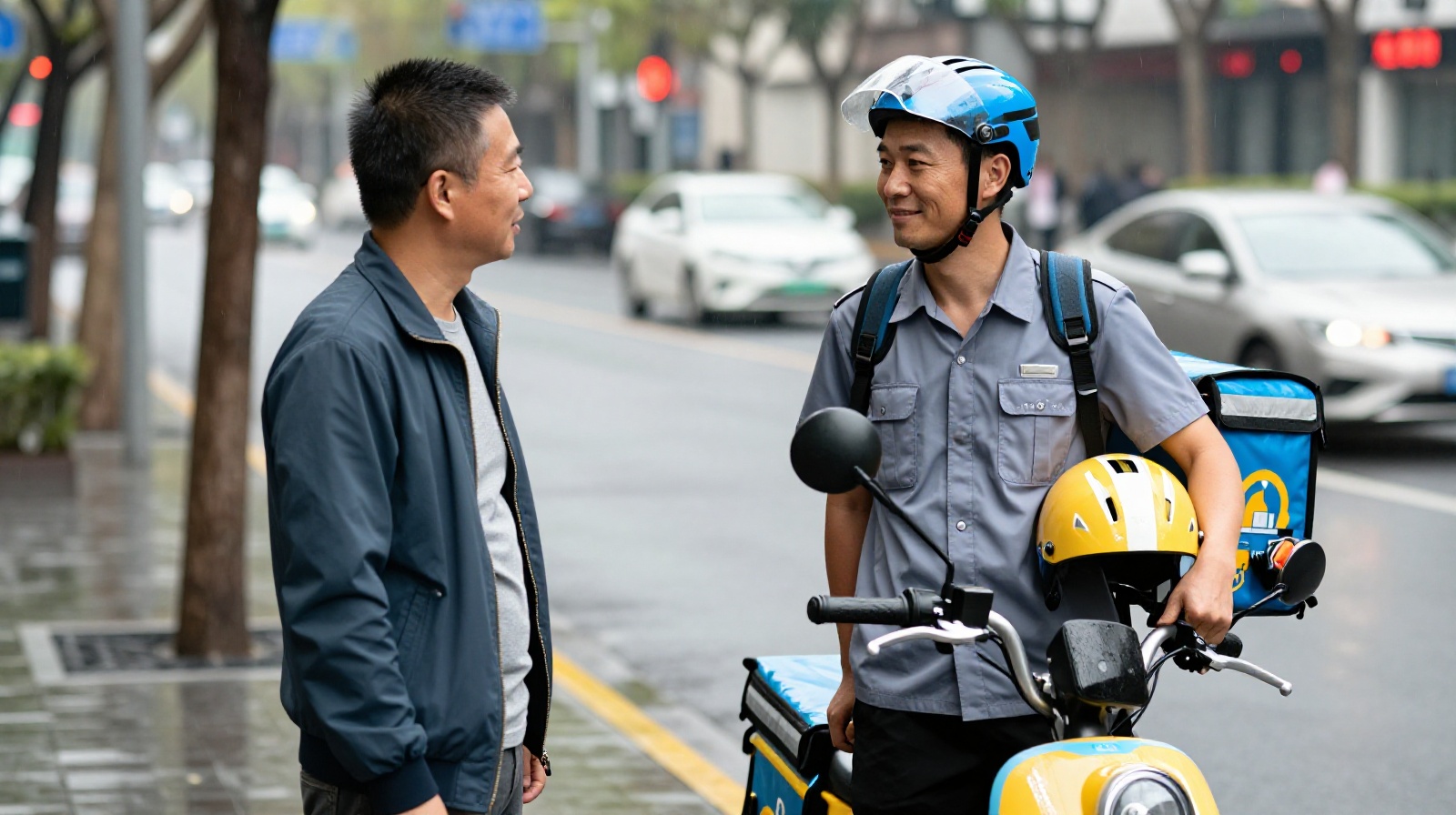
We talked for ten minutes. He didn’t ask me for a tip or a five-star rating. We discussed the difference between classical Chinese poetry and modern free verse, and how Li Bai’s romanticism feels different when you’re riding through a traffic jam at 5 PM.
He mentioned that his favorite line to write is: “The wind does not ask permission to blow.” It was a quiet rebellion against the rigid schedules of his life. In a society where everyone is rushing toward a future defined by housing prices and career ladders, he chose to pause and observe the present.
The Human Behind the Algorithm
When he finally left, merging back into the stream of blue jackets, he looked like any other rider. But I saw him differently. He wasn’t just a function in an app; he was an artist navigating a high-pressure environment.
This interaction challenges the way we often view China’s gig economy. It’s easy to see these workers as cogs in a massive machine, driven by data and desperation. But they are also individuals with complex inner lives, dreams, and creative outlets.
For me, that lunch tasted different than usual. Maybe it was because I ate it slowly, or maybe it was because I realized that behind every blue helmet, there’s a world of thought waiting to be heard. In China’s rapid modernization, we often focus on the skyline, the high-speed trains, and the smartphones. But sometimes, the most authentic glimpse into Chinese society comes from a quiet conversation with a poet in the rain.