
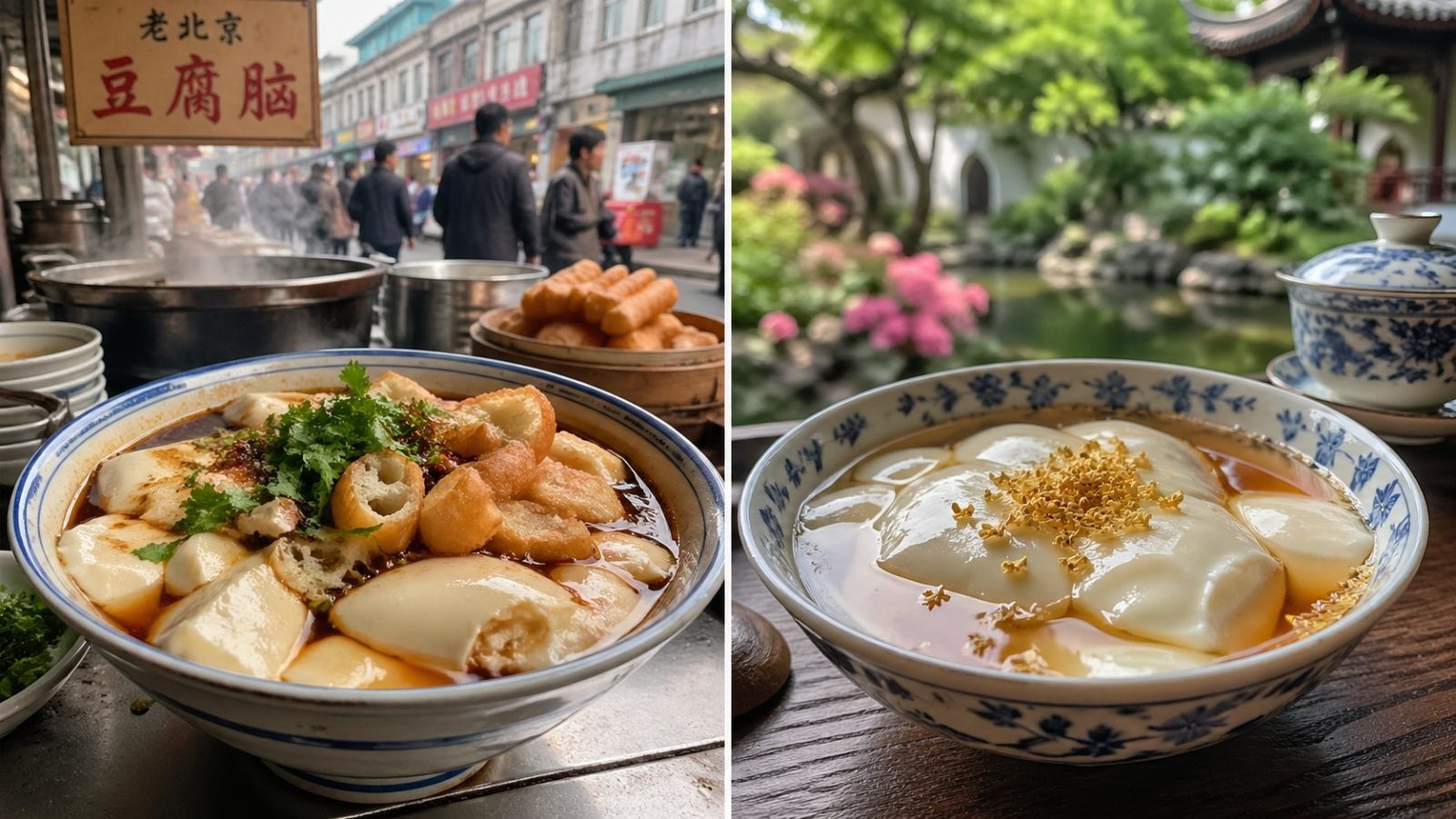

Introduction: A Morning Ritual That Divides the Nation
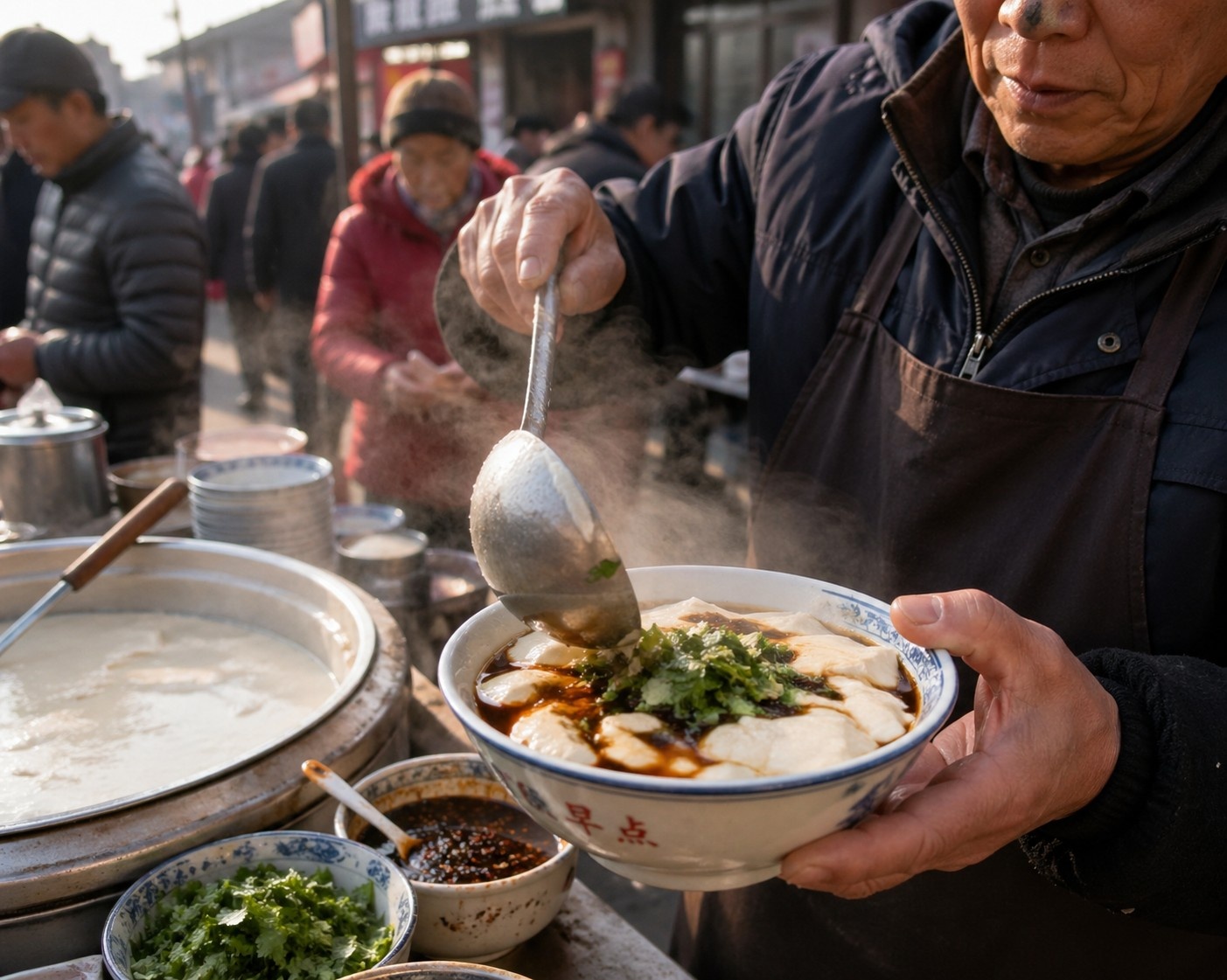
It’s 7:00 AM in Beijing. The air is crisp, and a street vendor is ladling steaming white soybean curd into bowls. He pauses, looking at you with a knowing smile. “Salty or sweet?” he asks. In Northern China, the answer is obvious. You get soy sauce, crispy fried dough strips (youtiao), and a handful of fresh cilantro. It’s savory, warm, and deeply comforting.
Now, imagine this same moment in Suzhou, 800 miles south. The vendor hands you a bowl of the exact same silken tofu. But instead of soy sauce, he pours a rich, dark brown sugar syrup over it. Maybe some red bean paste or osmanthus flowers for good measure. Sweet? Yes. Comforting? Absolutely.
For an outsider, this isn’t just a breakfast choice; it’s a cultural test. If you order the wrong one in your hometown region, you might get a polite smile, but locals will notice. In China, the “North-South Divide” isn’t about politics or climate alone—it’s written on our plates.
The North: Savory Comfort in a Bowl
Head to Xi’an, Shanghai (where northern influences dominate breakfast), or any city north of the Yangtze River, and you’ll find that tofu pudding is treated like a hearty meal. The climate here is colder for much of the year, historically requiring high-calorie, warming foods.
The “salty” version is essentially a savory soup base. Think golden soy sauce, minced pickled vegetables (like radish or beans), dried shrimp, and chili oil if you dare. It’s designed to wake you up. The texture is often slightly firmer than the southern version, holding up well against heavy toppings.
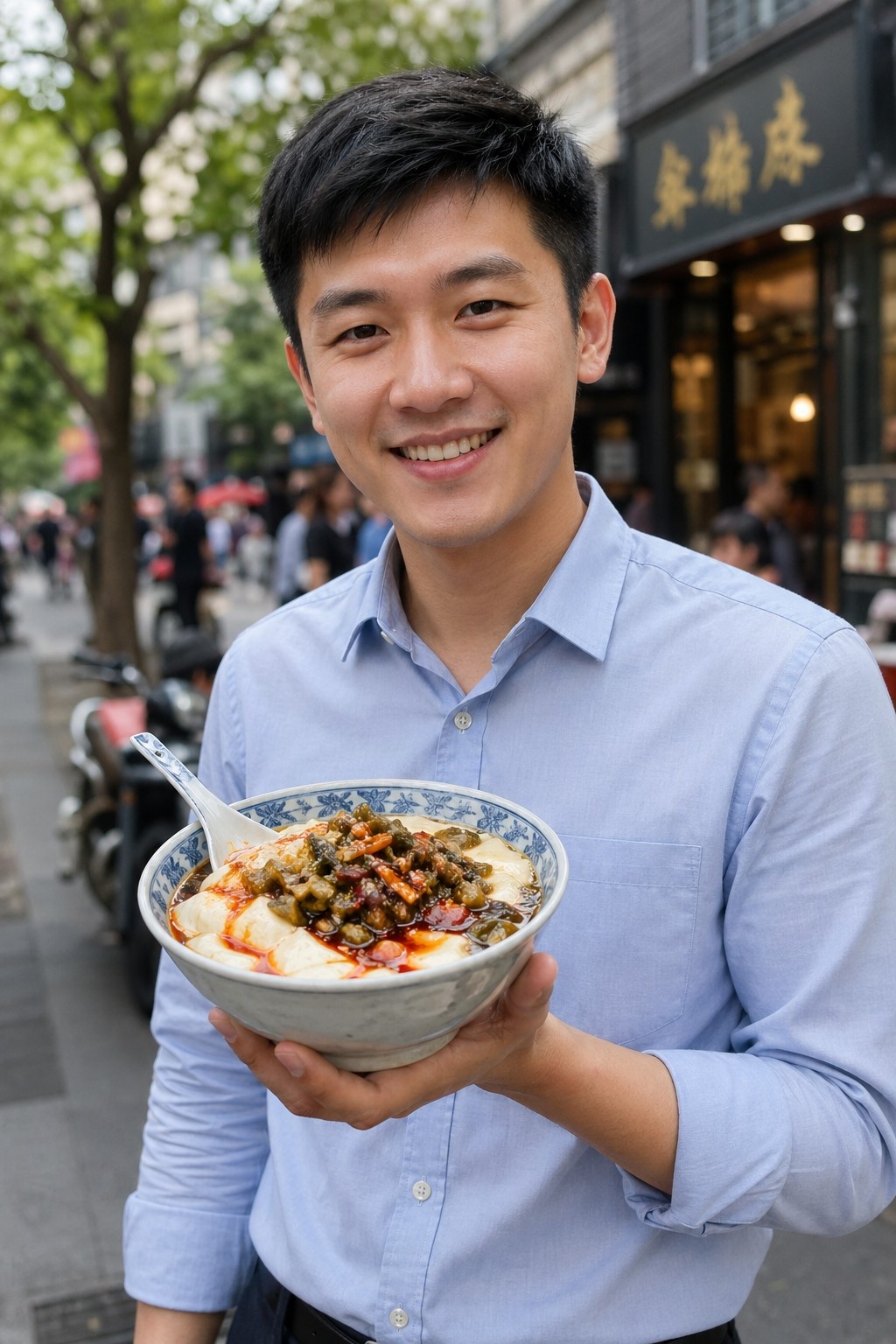
“It’s about fuel,” says Li Wei, a 34-year-old logistics manager in Shijiazhuang. “We need something to keep us warm before heading into cold offices or construction sites. The salt and spices are the energy.” For millions of northerners, this bowl is non-negotiable. It tastes like home because it tastes like survival.
The South: Sweet Simplicity with a Twist
Travel south to Hangzhou, Nanjing, or Guangzhou, and the rules flip. Here, tofu pudding (often called douhua) is a dessert or a light snack rather than a main meal. The region’s warmer climate and abundance of sugar cane and rice have shaped a cuisine that favors natural sweetness.
In Jiangnan, the area south of the Yangtze, the classic preparation involves pouring warm brown sugar syrup directly over the soft tofu. Some versions use sweet fermented bean paste or even osmanthus honey. It’s light, refreshing, and melts in your mouth.
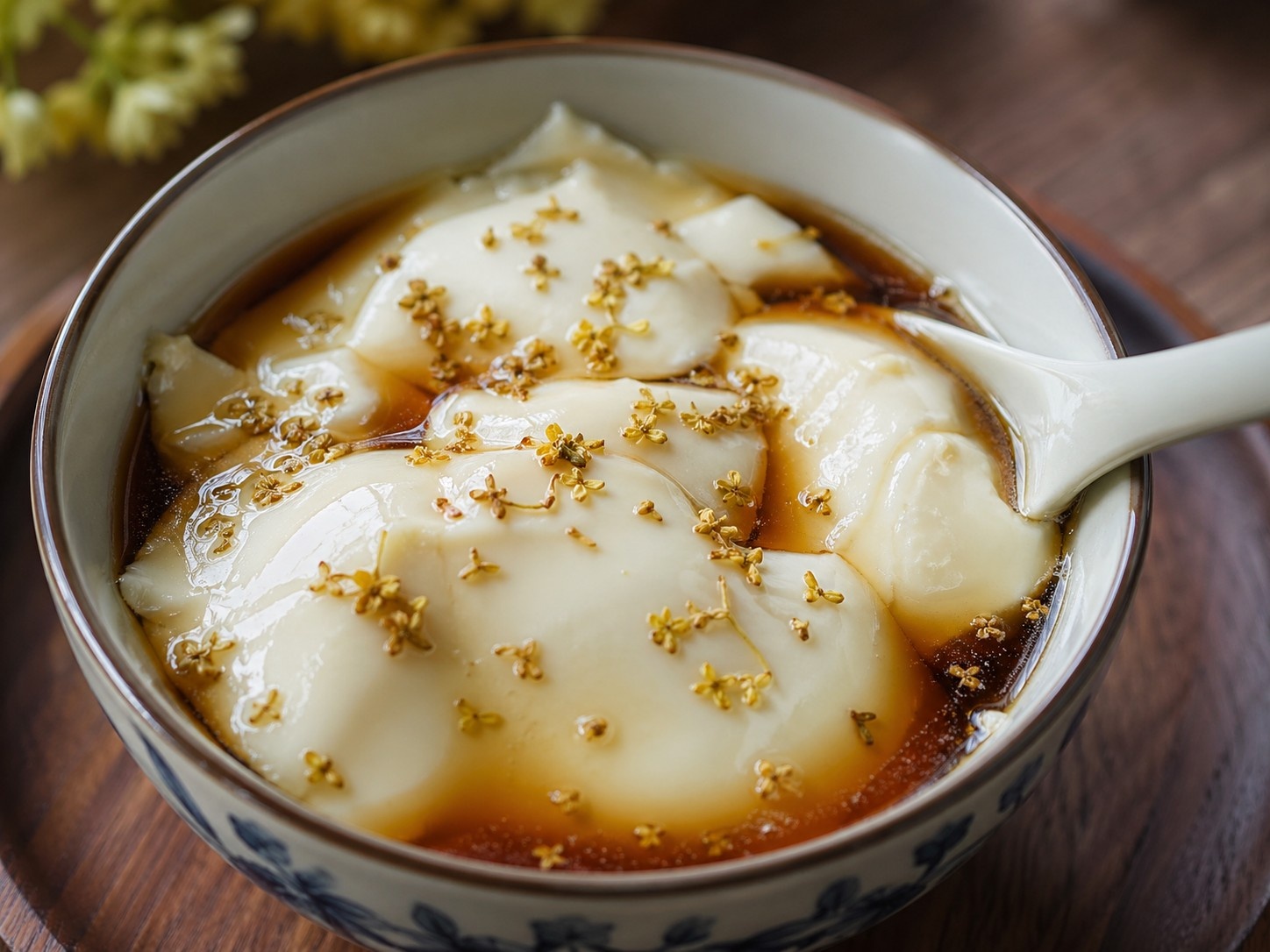
“In the South, we don’t want to feel heavy,” explains Chen Li, a graphic designer from Hangzhou. “It’s about balance. After lunch, we might have this as a treat. It’s sweet, but not cloying.” The texture here is crucial—it must be wobbly, almost like jelly, distinct from the firmer northern curds.
More Than a Debate: A Window into Modern China
So, who wins? Neither. In fact, this debate highlights how dynamic modern Chinese identity really is. As people migrate for work and study, food borders are blurring rapidly.
In Beijing’s high-rise offices today, you’ll find a 30-year-old marketing executive from Guangzhou ordering salty tofu pudding because she loves the texture of the fried dough strips. Meanwhile, a local northerner in Shanghai might crave sweet tofu on a lazy Sunday morning. The lines are crossing.
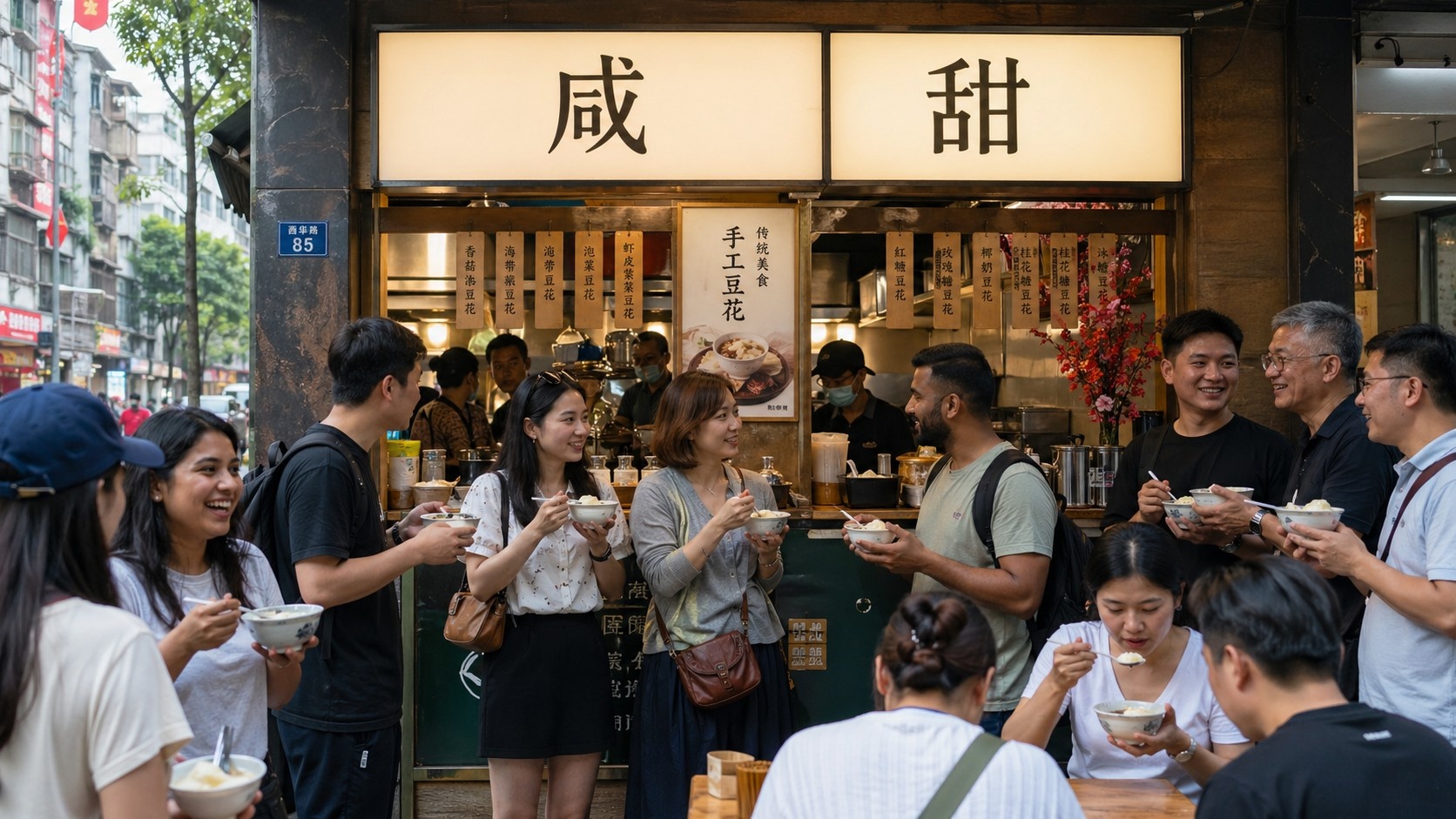
Street vendors in big cities have adapted. Many now offer both options side-by-side, or even create fusion dishes like “spicy sweet soybean curd” to please tourists who can’t decide. This flexibility is a microcosm of China itself: deeply rooted in local tradition but incredibly adaptable on a national scale.
Conclusion: Eating Together, Living Differently
The next time you visit China, don’t just ask for “tofu pudding.” Ask for the version that matches your mood. Try the salty bowl to understand the resilience of the north; try the sweet one to taste the gentle rhythm of the south.
This isn’t a conflict to be solved. It’s a conversation. And like many things in China, it’s best enjoyed together at the same table, with different bowls on the side.