

The Evening Ritual: A Clash of Rhythms
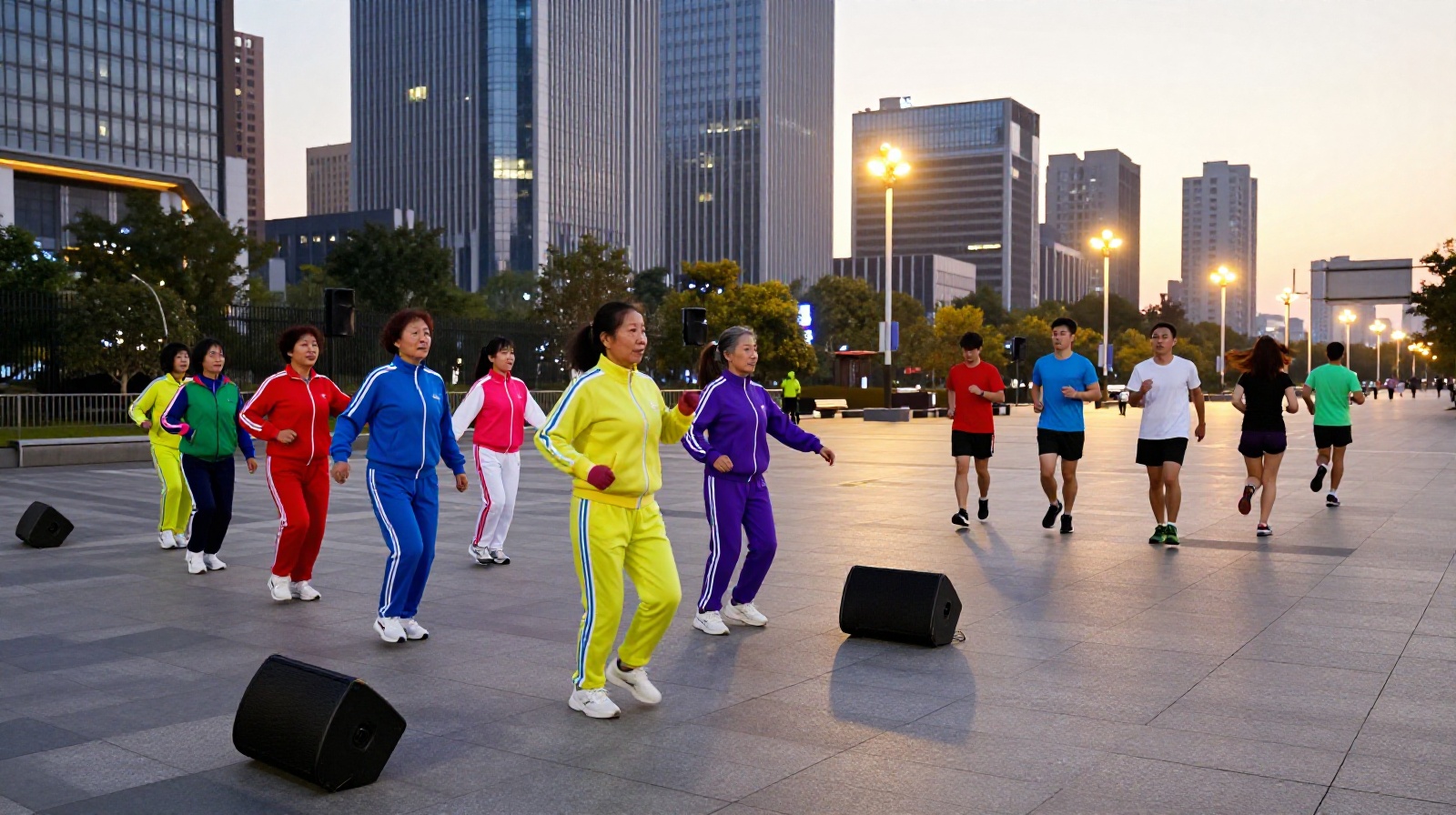
At 7:30 PM, the concrete plaza in Beijing’s Chaoyang District transforms. The air is thick with the smell of nearby street food stalls—cumin and chili oil drifting from skewers being flipped over charcoal grills. On one side, a circle of fifty women in matching turquoise tracksuits moves in unison, their speakers blasting a high-tempo folk-pop remix. On the other side, a stream of solitary figures in neon reflective vests weaves through the space, eyes fixed on wrist-mounted GPS watches.
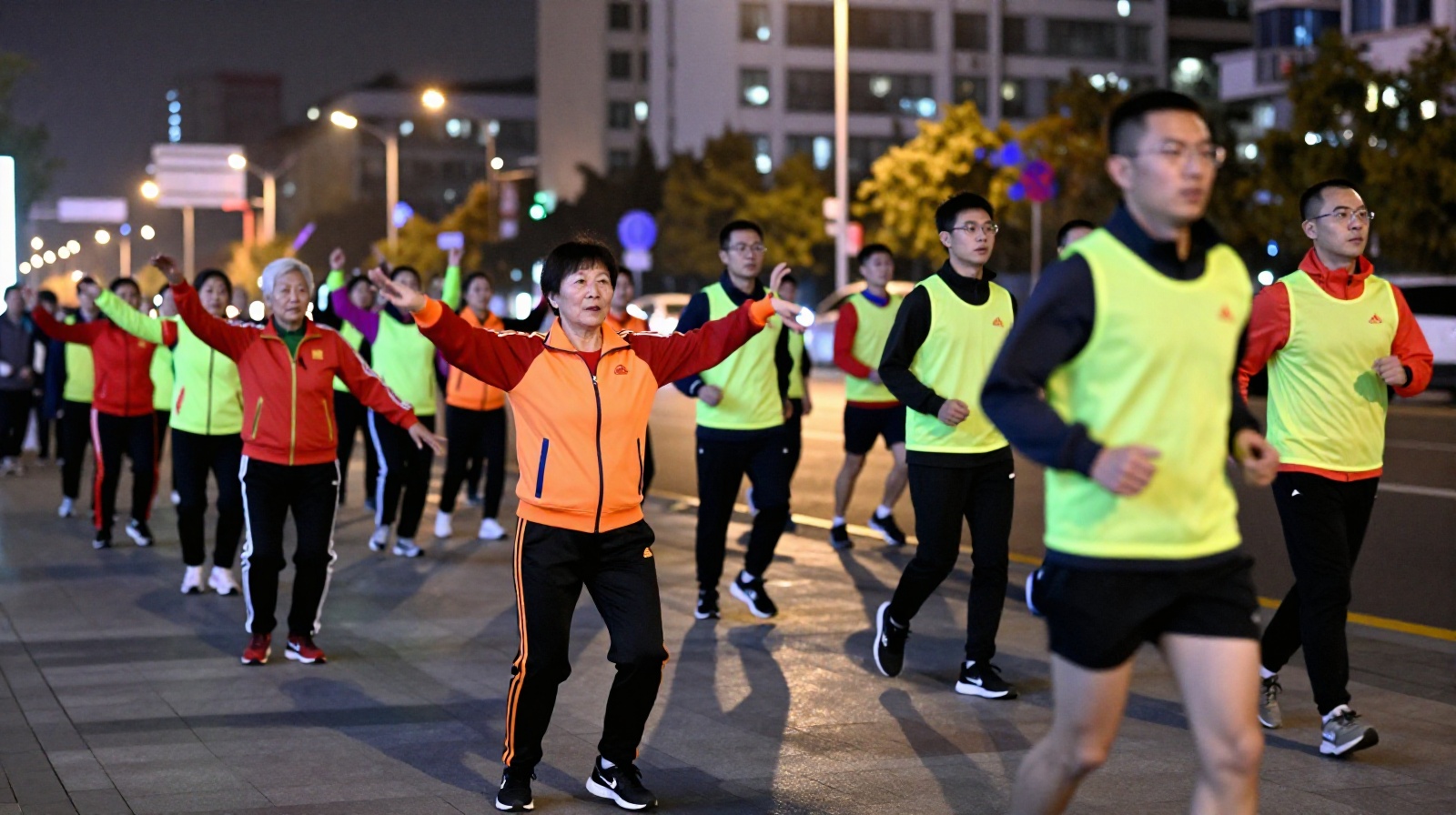
For a visitor from New York or London, this scene might look like chaos. But for locals, it is simply Tuesday evening. This juxtaposition captures a defining feature of contemporary Chinese urban life: the intense competition for public space between two generations with vastly different lifestyles. It is not merely a dispute over noise; it is a negotiation of how modern society balances individual wellness with communal connection.
The Rhythm of Fitness: The Solitary Pursuit
Li Wei, 29, a software engineer from Hangzhou, treats his evening run as a decompression chamber. After twelve hours of coding and Zoom meetings, he needs silence to reset. He wears an Apple Watch Ultra and listens to Lo-Fi hip-hop through noise-canceling headphones. His pace is precise: 5 minutes per kilometer. For Li Wei and millions like him, fitness is individualized, data-driven, and deeply personal.
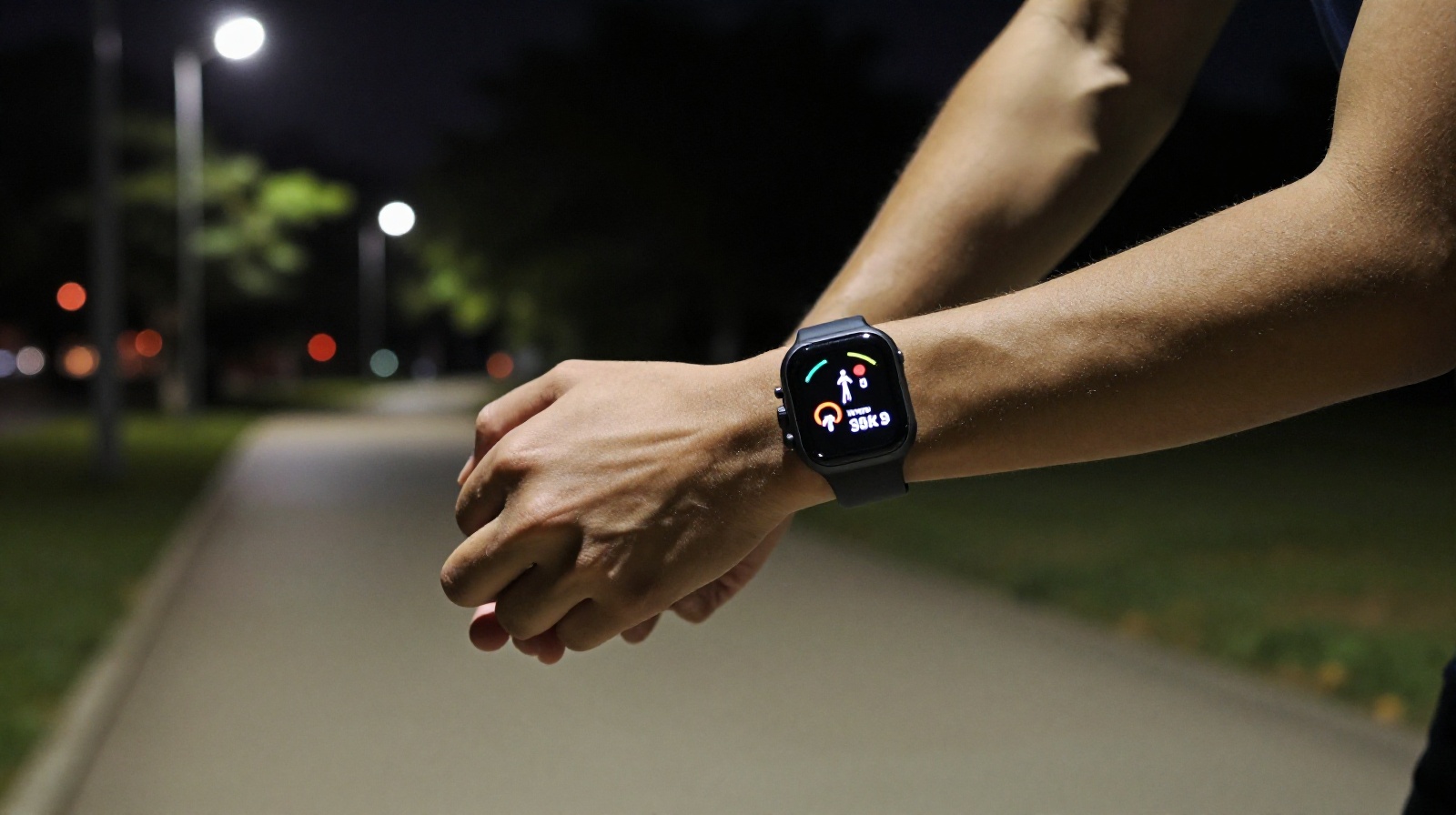
This shift reflects a broader trend among China’s urban youth. As life pressures mount—long working hours known as “996” culture, high housing costs, and intense educational competition for children—the body becomes the last arena of control. Running apps like Keep have over 100 million users. The goal is not socialization; it is self-optimization. These runners occupy public parks and riverbanks, seeking clean air and open paths, often viewing static gatherings as obstacles to their flow.
The Power of Collective Joy: More Than Just Dance
Meanwhile, Auntie Zhang, 64, has been leading her dance troupe for fifteen years. For her generation, square dancing (Guangchang Wu) is not just exercise; it is a vital social infrastructure. Many of these retirees are “empty nesters,” their children having moved to other cities for work. The plaza is where they reconnect with friends, share news, and feel a sense of belonging.
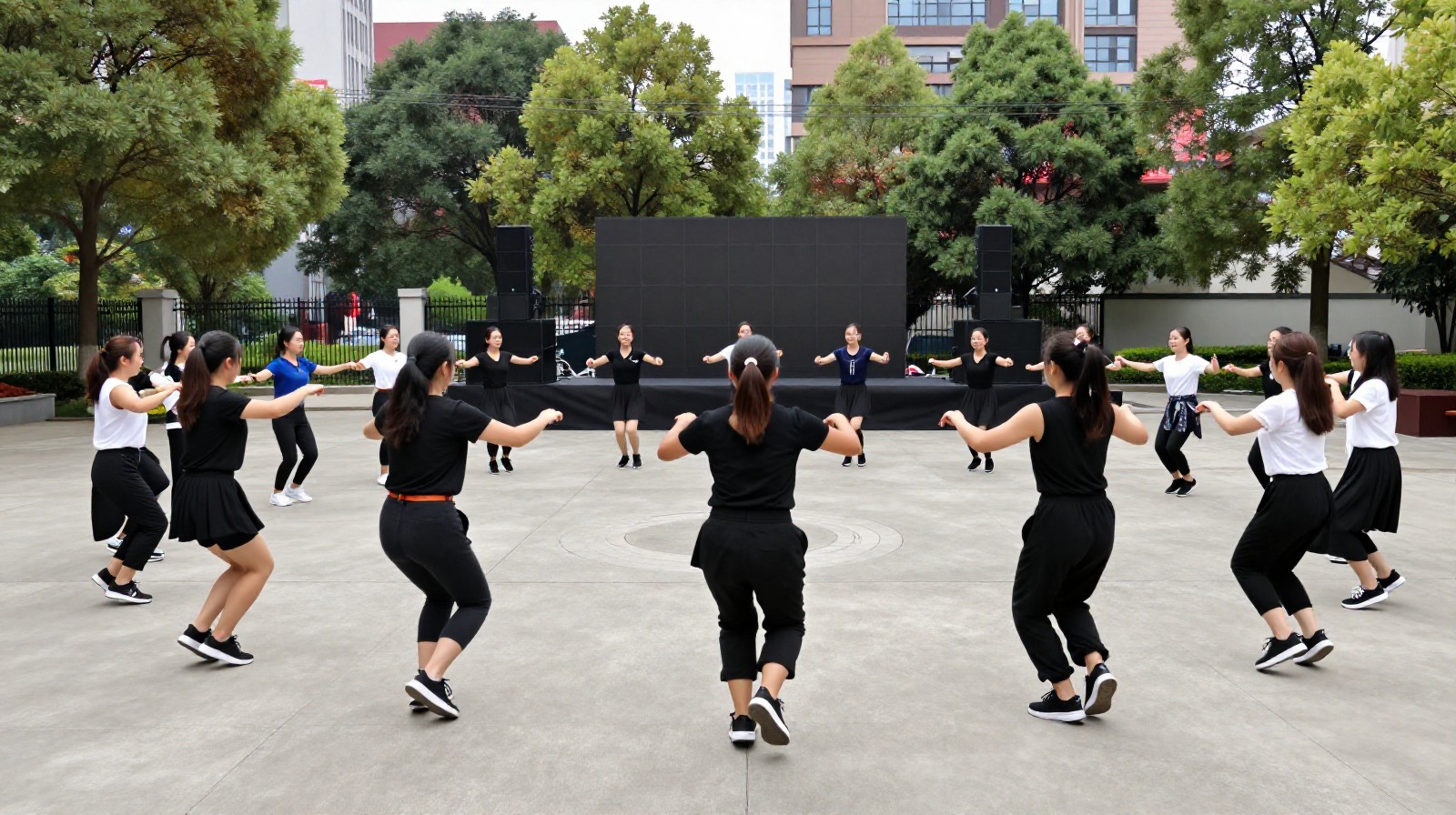
The music is loud by design. In open spaces without walls to contain the sound, volume ensures that everyone in the circle can hear the beat clearly. It is a collective rhythm that requires synchronization. Critics often label it as noise pollution, but for participants, it is a form of public joy. The dance steps are simple, repetitive, and inclusive, allowing people of all fitness levels to participate. It is one of the few remaining public rituals in Chinese cities where age barriers dissolve.
Negotiating Space: From Conflict to Coexistence
The tension between these two groups is real. Complaints about noise are common on local social media platforms like Xiaohongshu. Some residents have even thrown water bottles or used decibel meter apps to confront dancers. However, cities are adapting.
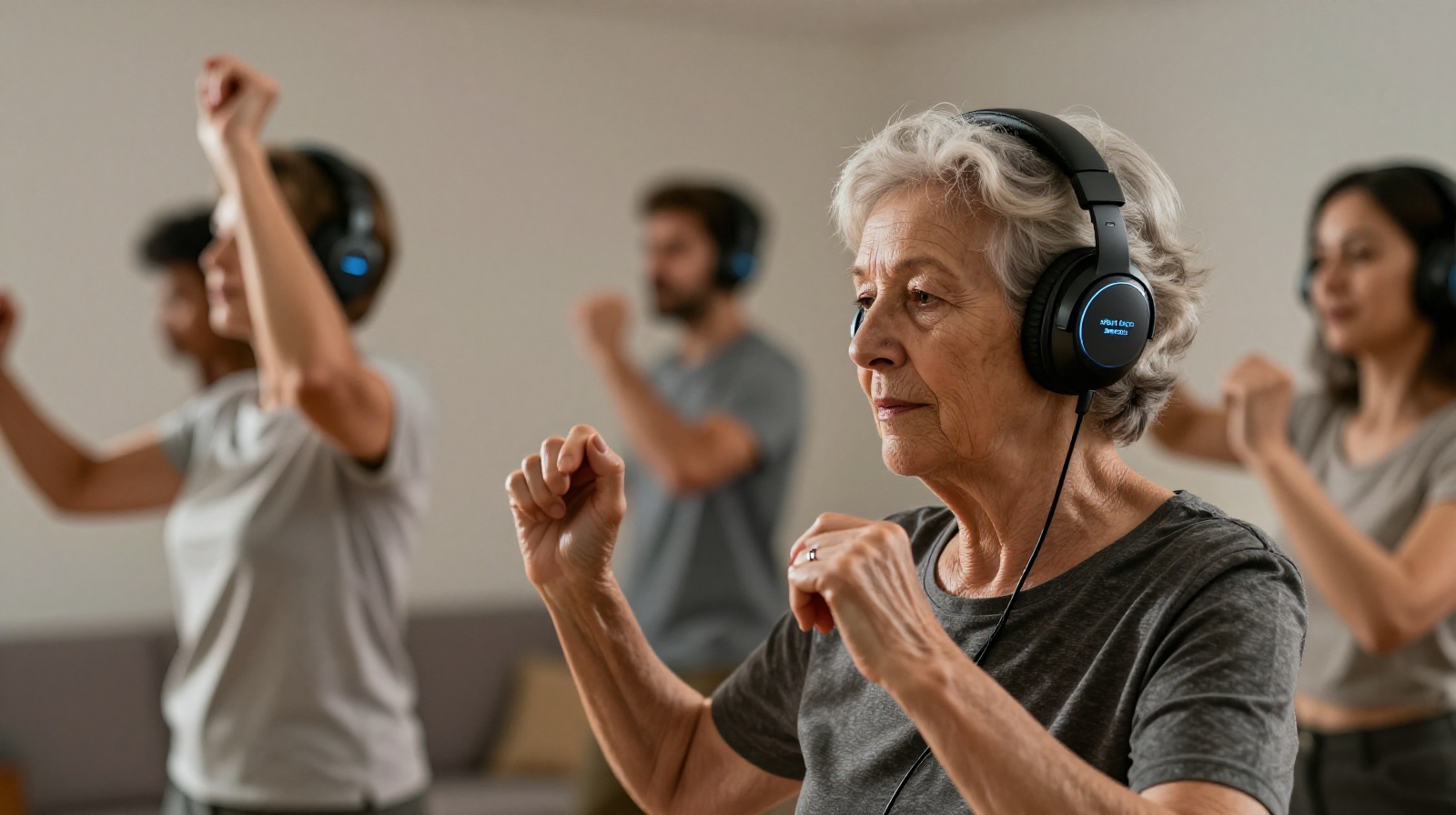
In many communities, informal etiquette has emerged. Runners learn to glance up from their phones and step aside when the dance circle expands. Dancers, aware of their neighbors’ complaints, have started using “silent disco” headsets—wireless Bluetooth headphones that transmit the music only to the dancers, creating a silent but energetic performance visible only in movement. Some parks have installed directional speakers or designated time slots, dividing the plaza by clock rather than geography.
Beyond the Dance Steps: The Texture of Modern China
The interaction between night runners and square dancers reveals more than just a generational gap; it shows how Chinese cities are maturing. Rapid urbanization in the past three decades created abundant physical space but often lacked social frameworks for different groups to interact peacefully.
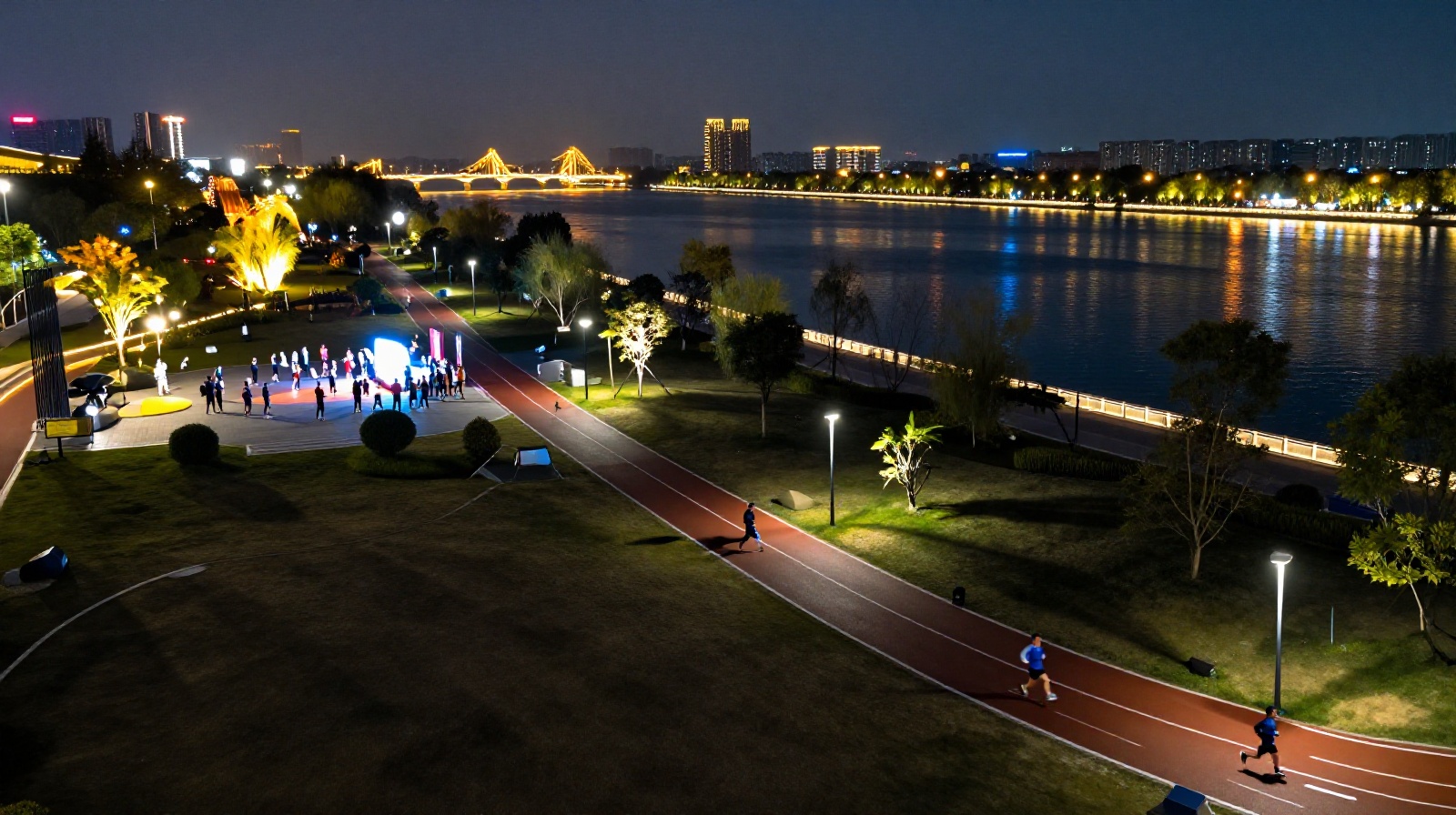
Today, we see a hybrid model emerging. The city is not being taken over by one group; it is being shared. The young seek efficiency and solitude in motion; the older generation seeks community and rhythm in stillness. Both are valid responses to the pressures of modern life. As China continues to urbanize, these public spaces will remain the testing ground for social harmony. The question is not who wins the plaza, but how we can all find our own beat within it.