

The Shock of the Newcomer
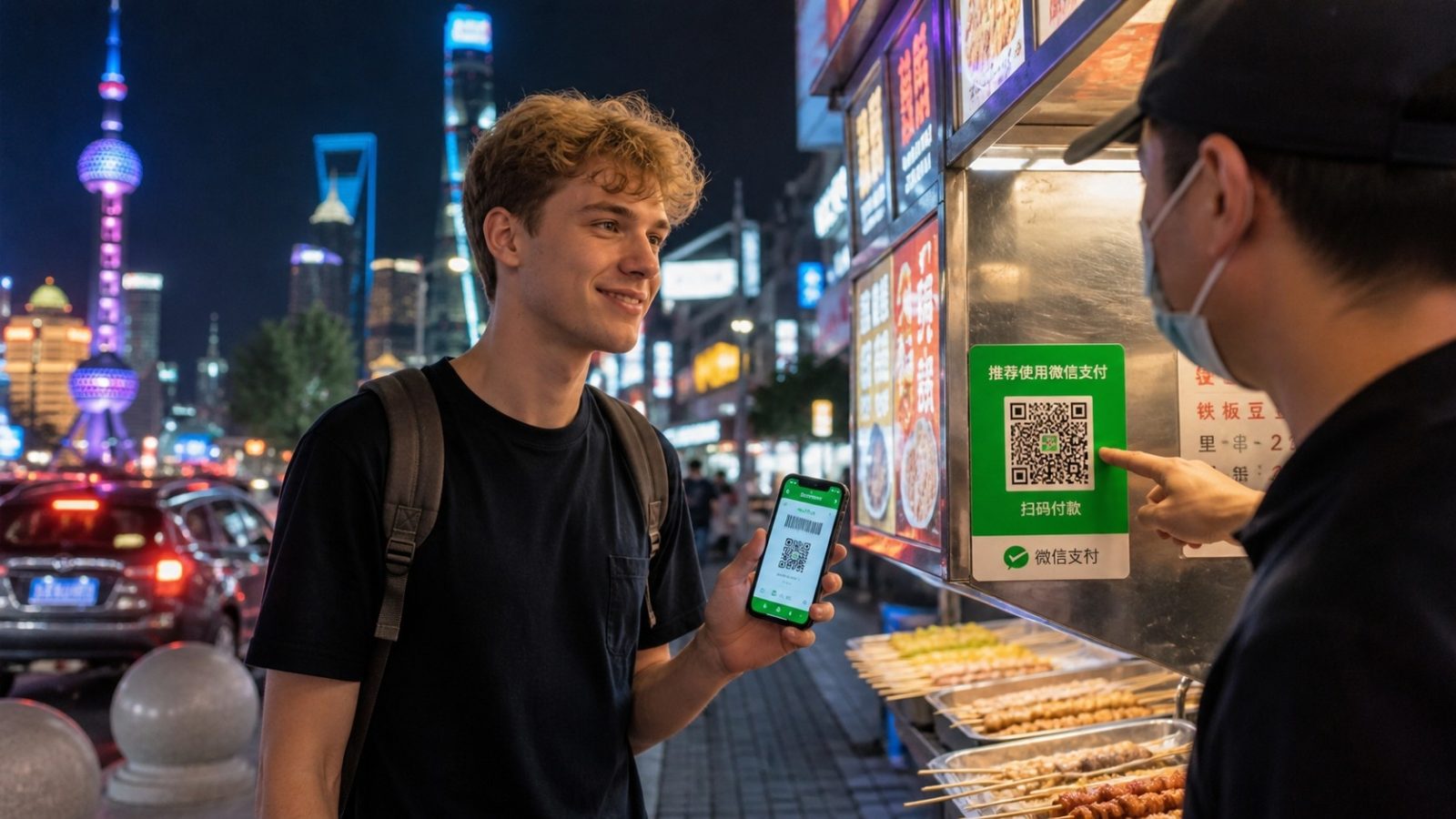
It was a humid Tuesday evening in Chengdu. I stood before a sizzling street stall, the air thick with the scent of cumin and chili oil. The vendor, an elderly woman with weathered hands, pointed to her phone screen: “Scan here.” I patted my pockets, searching for cash, only to find empty lint and a few coins that wouldn’t even buy a bottle of water. In that moment, the myth shattered: in urban China, having physical money isn’t illegal, but it is effectively useless.
For many visitors from Europe or North America, this experience is jarring. We are accustomed to tapping a card or handing over bills. Here, your smartphone is not just a device; it is your wallet, your transit pass, and your ID. Understanding this ecosystem is the first step to navigating daily life in China without frustration.
Understanding the Mobile Payment Ecosystem
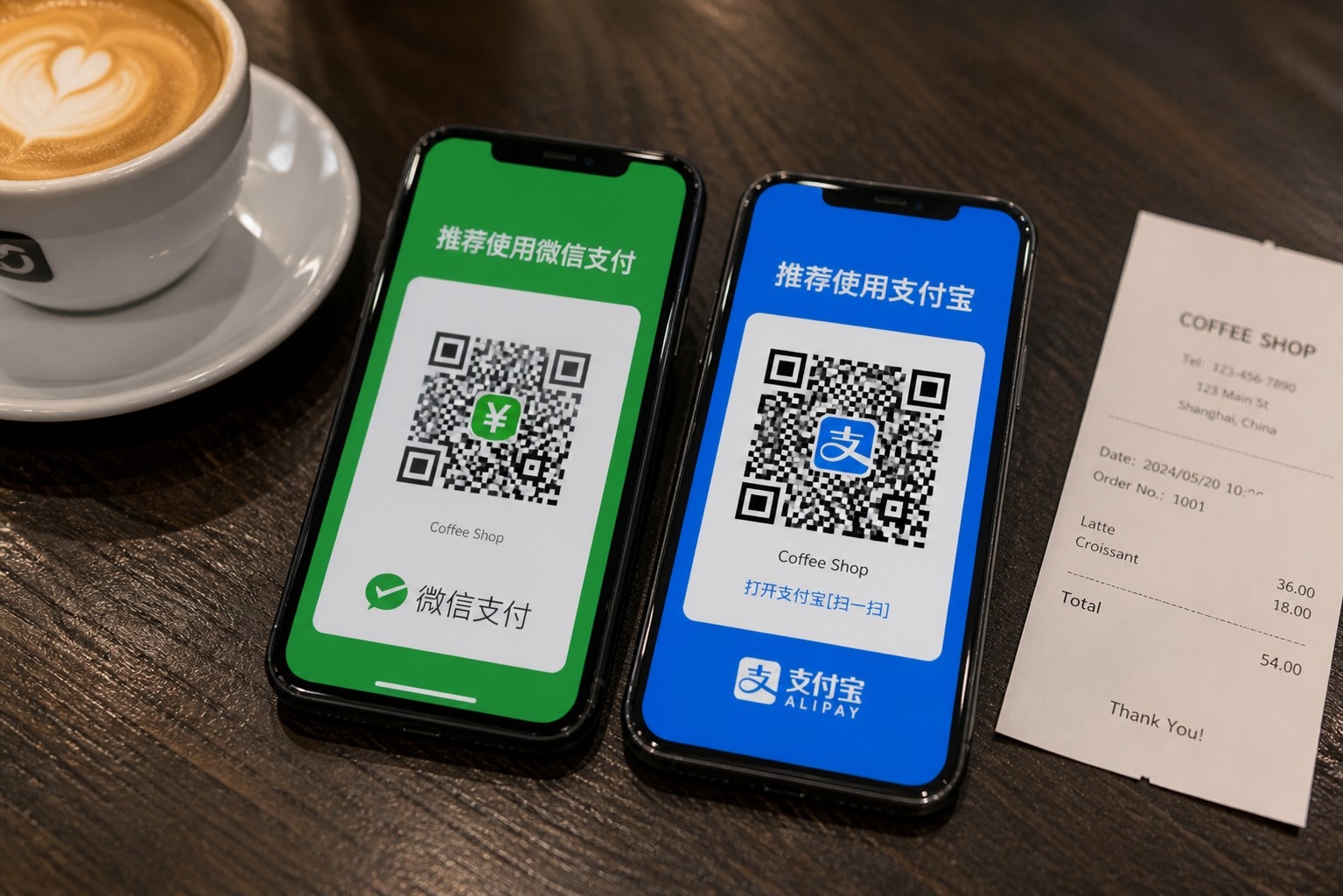
To survive in China’s cashless landscape, you need to know the two giants: WeChat Pay and Alipay. Think of them not as traditional banks, but as super-apps that act as digital wallets.
WeChat (Weixin) is primarily a messaging app, like WhatsApp, but it has a built-in payment feature used for everything from splitting dinner bills to paying utility bills. Alipay, created by Alibaba, started as an escrow service for online shopping and evolved into a comprehensive financial platform. While they are competitors, their payment interfaces look almost identical: a QR code scanner.
How It Works
When you pay, two things can happen:
- You show your code: The merchant scans the barcode/QR code displayed on your phone screen. This is common in supermarkets and pharmacies.
- You scan their code: You use your app to scan a static QR code printed on paper or plastic. This is standard at street stalls, taxis, and small shops.
The speed is staggering. A transaction that takes 30 seconds with a card reader in the West happens in under two seconds here. There are no signatures, no PIN pads, and often no receipts unless you specifically ask for one digitally.
Why Foreigners Struggle
The barrier isn’t technology; it’s identity. Traditionally, these apps required a Chinese bank account linked to a Chinese national ID card. This locked out tourists and short-term expats. However, the rules have changed significantly in recent years to accommodate international visitors.
Practical Solutions for Travelers
You do not need a Chinese bank account or a local phone number to use mobile payments anymore. Here is how to set up your digital wallet before you even board the plane.
Step 1: Download and Verify
Download Alipay (recommended for tourists due to better English support) or WeChat Pay. Open the app and verify your identity using your passport. This process involves taking a photo of your passport’s data page and a short selfie video for facial recognition. It usually takes only a few minutes.
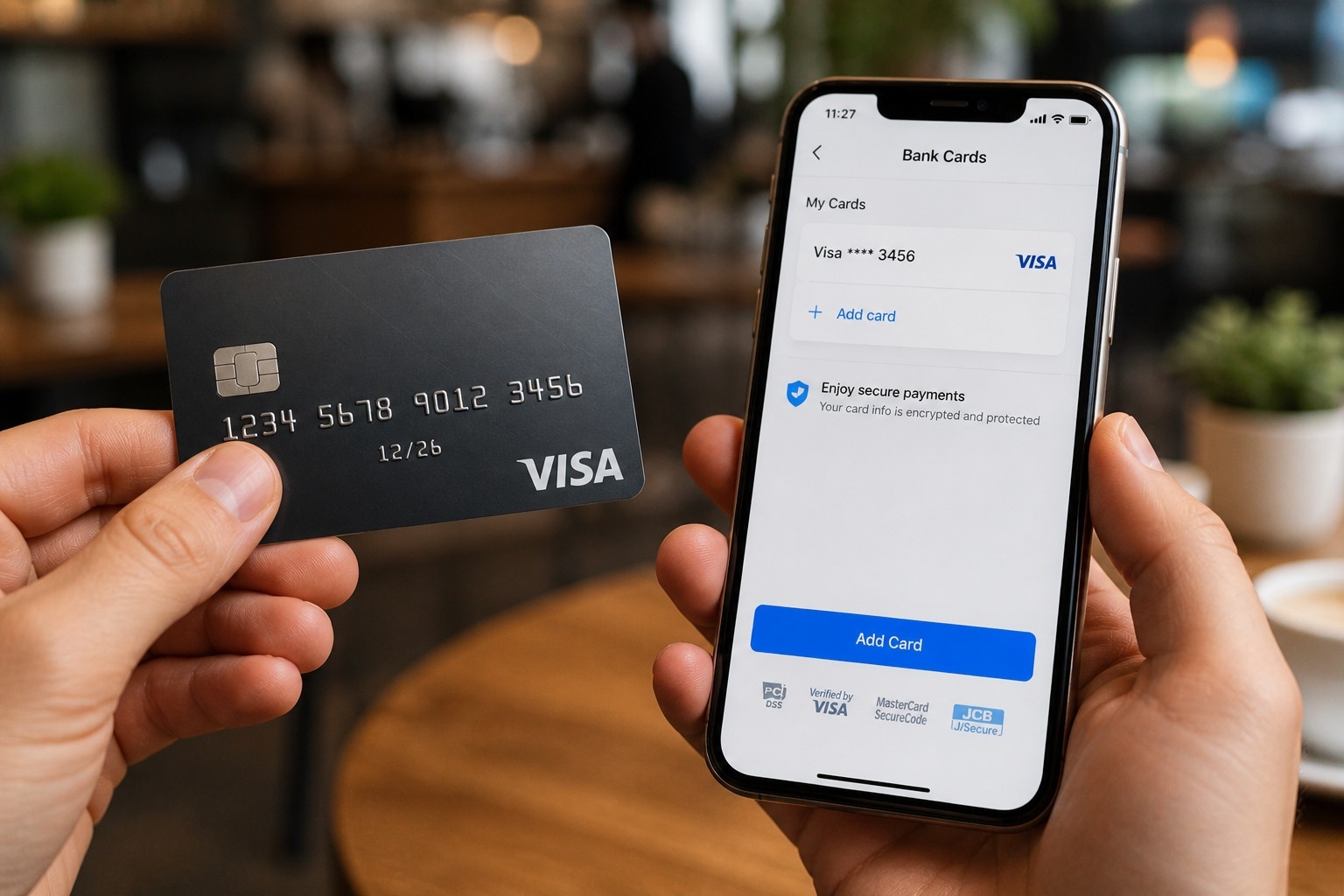
Step 2: Link an International Card
Both platforms now allow you to link Visa, Mastercard, American Express, and JCB cards issued outside mainland China. Go to the “Wallet” section, click “Bank Cards,” and add your international credit or debit card. Note: There is typically a 3% service fee for transactions over 200 CNY (about $28 USD) on Alipay. WeChat Pay also applies similar fees for larger amounts.
Step 3: Test It
Before you leave the airport, test your setup with a small purchase, like a bottle of water or a snack at the duty-free shop. Ensure the transaction goes through smoothly so you aren’t stuck trying to troubleshoot connectivity issues while hungry.

When Cash Still Matters
Despite the dominance of digital payments, cash (Renminbi notes and coins) still has a place in China. It is not obsolete; it is just niche.
Rural Areas and Smaller Towns
In Tier 1 cities like Shanghai, Beijing, and Shenzhen, you can go weeks without touching paper money. But if you travel to rural villages or smaller county towns, internet connectivity can be spotty, and older vendors may not have QR codes set up. In these cases, having some cash is essential.
The Elderly Population
China has a rapidly aging population. Many seniors prefer cash because they are less comfortable with smartphones or fear making irreversible mistakes in digital transactions. If you visit local wet markets or family-run eateries away from tourist hubs, you might find vendors who only accept cash.
Emergency Backup
Technology fails. Phones run out of battery, networks go down, and apps glitch. Carrying a small amount of cash—perhaps 200-500 CNY—is a smart insurance policy against these technical hiccups.
Navigating Daily Life Scenarios
Once your payment app is set up, here is how it integrates into your daily routine.
Ride-Hailing and Taxis
In major cities, few people hail taxis on the street anymore. Most use ride-hailing apps like Didi Chuxing (China’s Uber). You can link your Alipay or WeChat to Didi, and payment is automatic when you get out of the car. If you do take a traditional taxi, ask the driver if they accept mobile payment before getting in.
Public Transport
Metro systems in China are seamless with mobile payments. You don’t need to buy a physical transit card. Open your Alipay or WeChat app, select “Transport,” and generate a QR code for the subway or bus. Scan it at the gate to enter. For bike-sharing services like HelloBike or Meituan Bike, you simply scan the code on the bike’s lock to unlock it.
Dining Out
Even in mid-range restaurants, you rarely see menus on tables. You scan a QR code to order food digitally from your phone. When you are done eating, you pay directly through the same app. This reduces wait times and allows the restaurant to manage inventory more efficiently.

Embracing Convenience with Caution
The shift to a cashless society in China was driven by convenience, hygiene, and efficiency. It eliminated the need for change, reduced counterfeit money risks, and created a digital record of every transaction. For locals, this has become second nature.
For foreigners, it requires an initial adjustment period. Set up your apps before you arrive. Keep your phone charged. But don’t panic if you encounter a cash-only situation. Carry a small backup of physical currency, stay polite with vendors who may not have digital infrastructure, and enjoy the speed of a society where your phone truly is your wallet.