
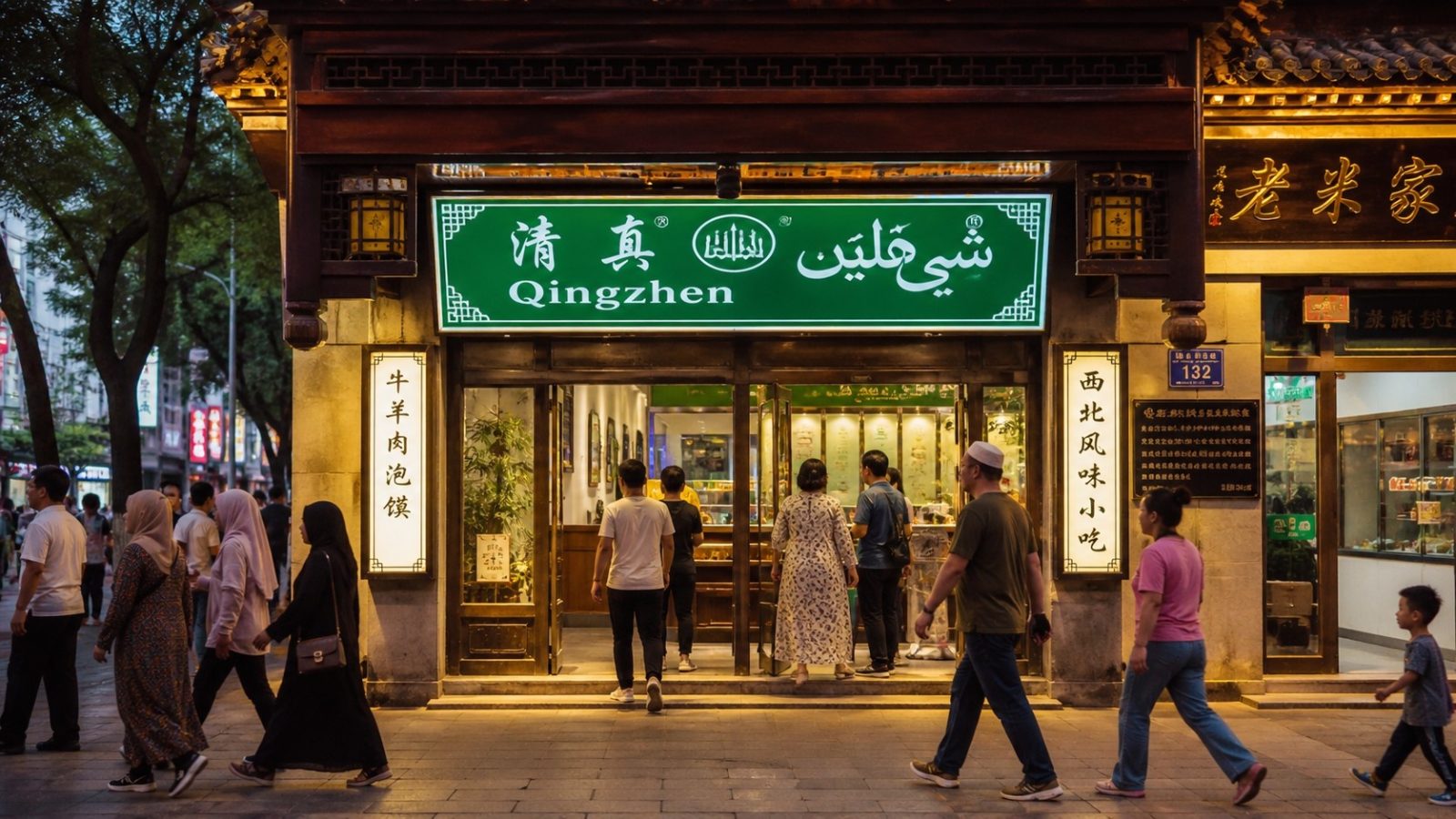

The Green Sign That Opens Doors
Walking through a bustling street in Xi’an or Chengdu, the smell of cumin and roasted lamb might hit you before you see the restaurant. But how do you know if it’s safe for you to eat there? In China, the answer is usually simple: look up.
You will see green signs with white Chinese characters Qingzhen (清真). This is the universal signal for halal food. Unlike in some Western countries where certification might be hidden on a wall or listed on a website, in China, it is prominently displayed above the entrance, often accompanied by Arabic script and sometimes a blue decorative border.
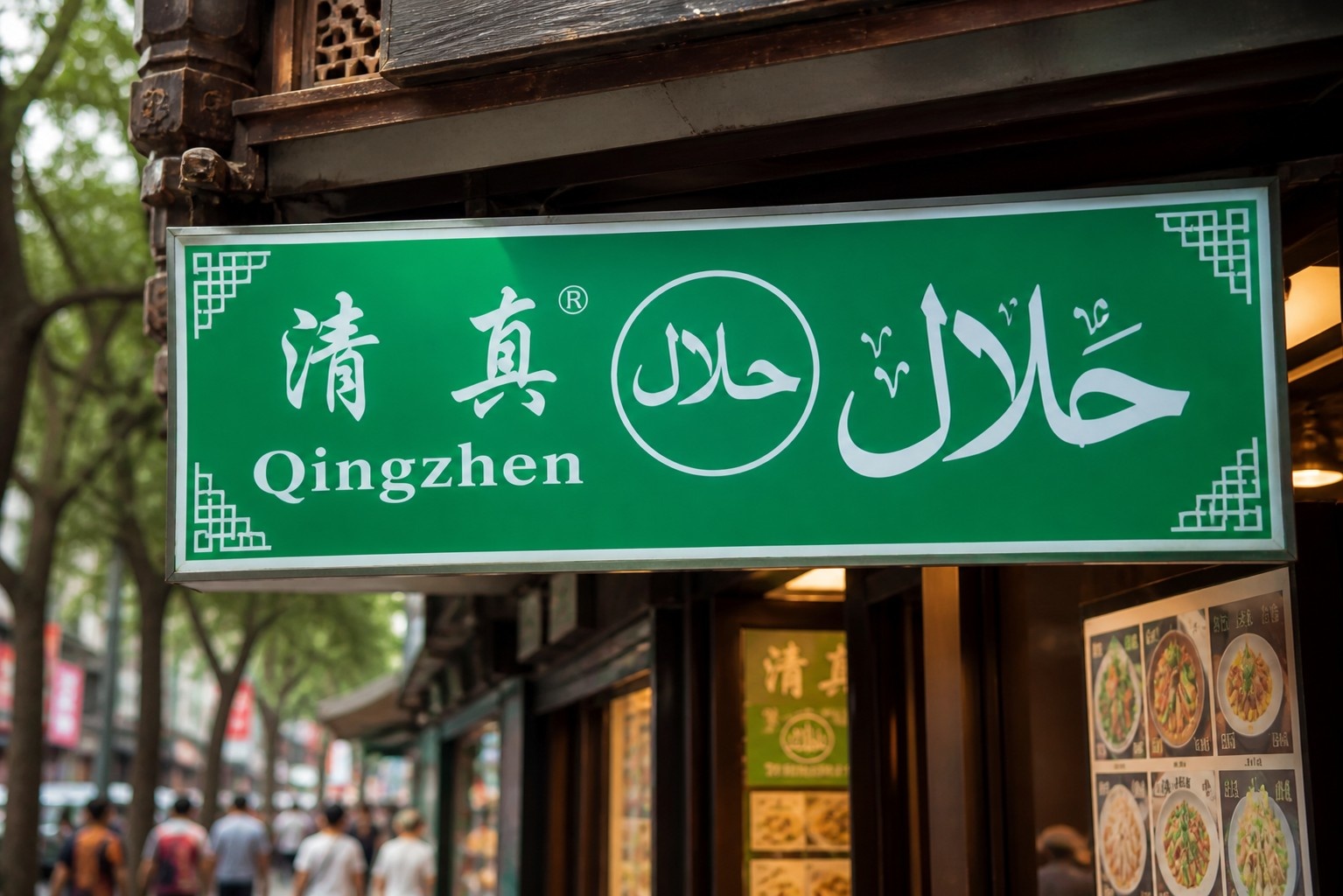
Why Trust the Green Sign?
For many Muslim travelers, the first question is whether the Qingzhen label is reliable. In China, it generally is. The term literally means “pure and true.” It signifies that the kitchen follows Islamic dietary laws: no pork, no alcohol in cooking, and meat slaughtered according to religious rites.
However, trust in this system goes beyond just religion. For decades, Qingzhen restaurants have built a reputation for hygiene. In Chinese culture, there is a common saying among non-Muslims: “Halal means clean.” Many Han Chinese customers frequent these establishments not because they are Muslim, but because they associate the strict dietary rules with higher food safety standards. This dual trust makes Qingzhen restaurants some of the most reliable places to eat in major cities.
Regional Differences: From Northwest to the South
If you are looking for halal food, your experience will change depending on where you are. China’s muslim population is diverse, primarily concentrated in the northwest provinces like Xinjiang and Gansu, as well as in Ningxia.
The Northwest Style: Lamb and Wheat
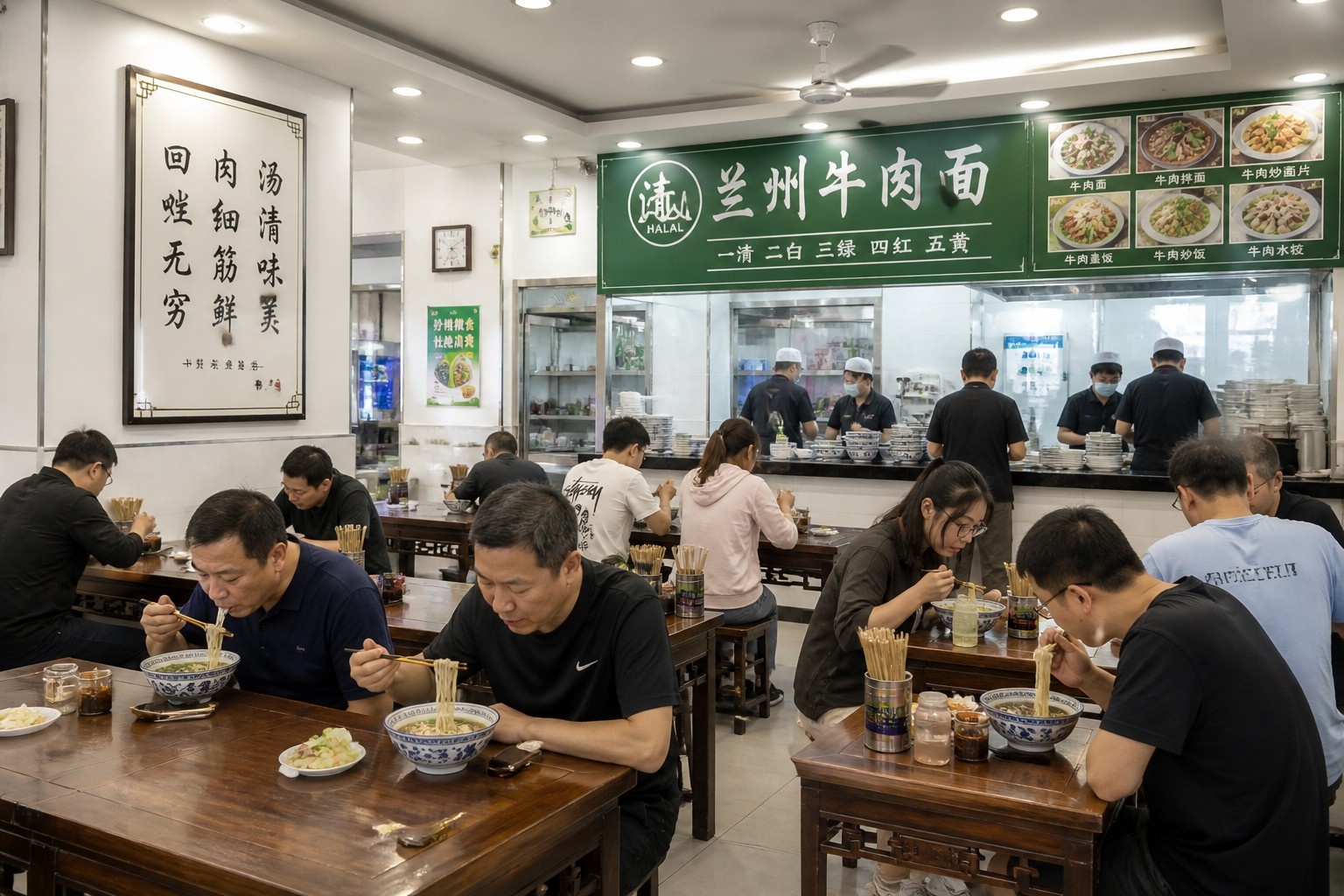
In cities like Xi’an or Lanzhou, halal food is deeply rooted in the local culture. Here, you will find distinct regional cuisines:
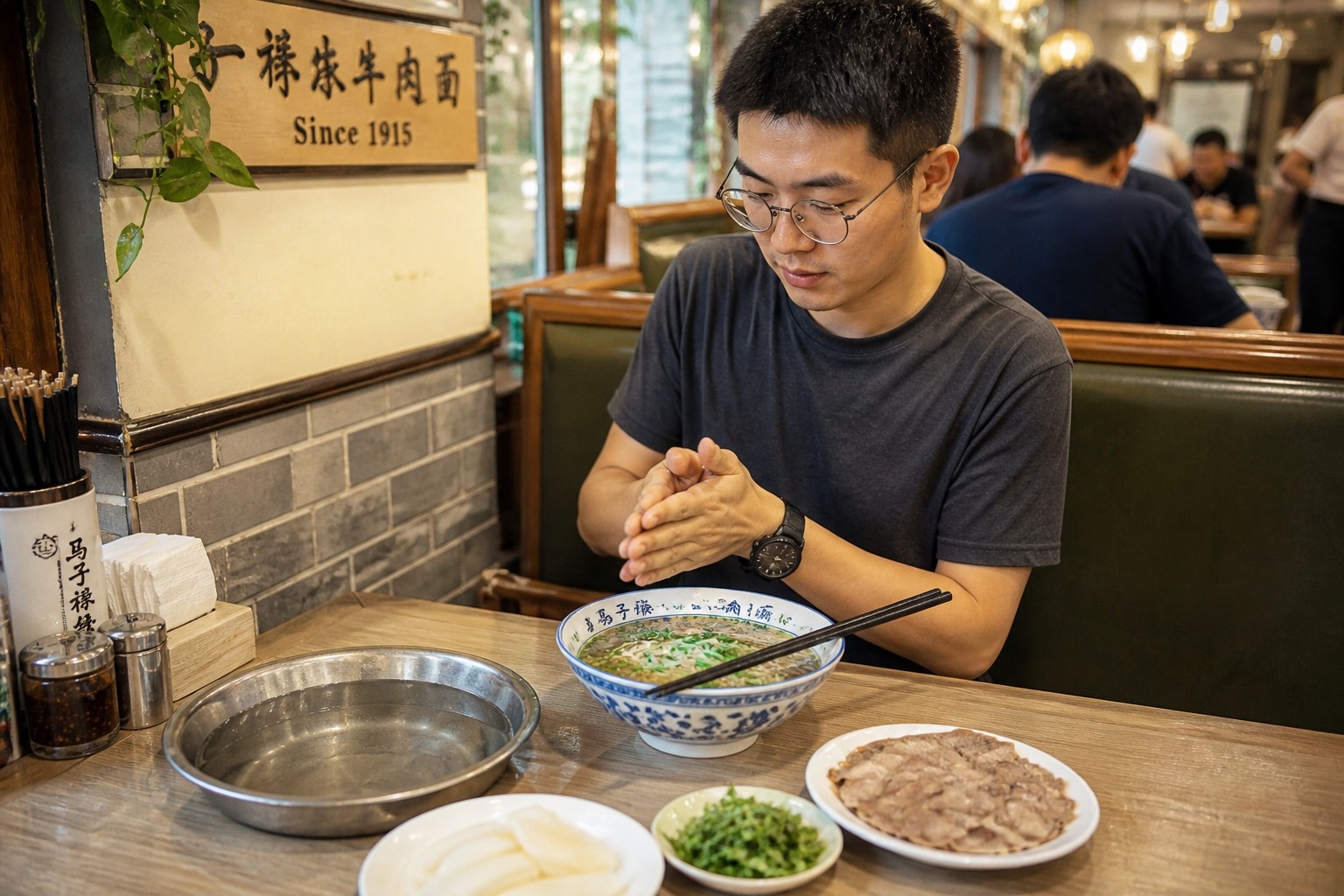
- Lanzhou Beef Noodles: The most famous Chinese fast food. Clear broth, hand-pulled noodles, radish, chili oil, and cilantro. It’s quick, affordable, and ubiquitous.
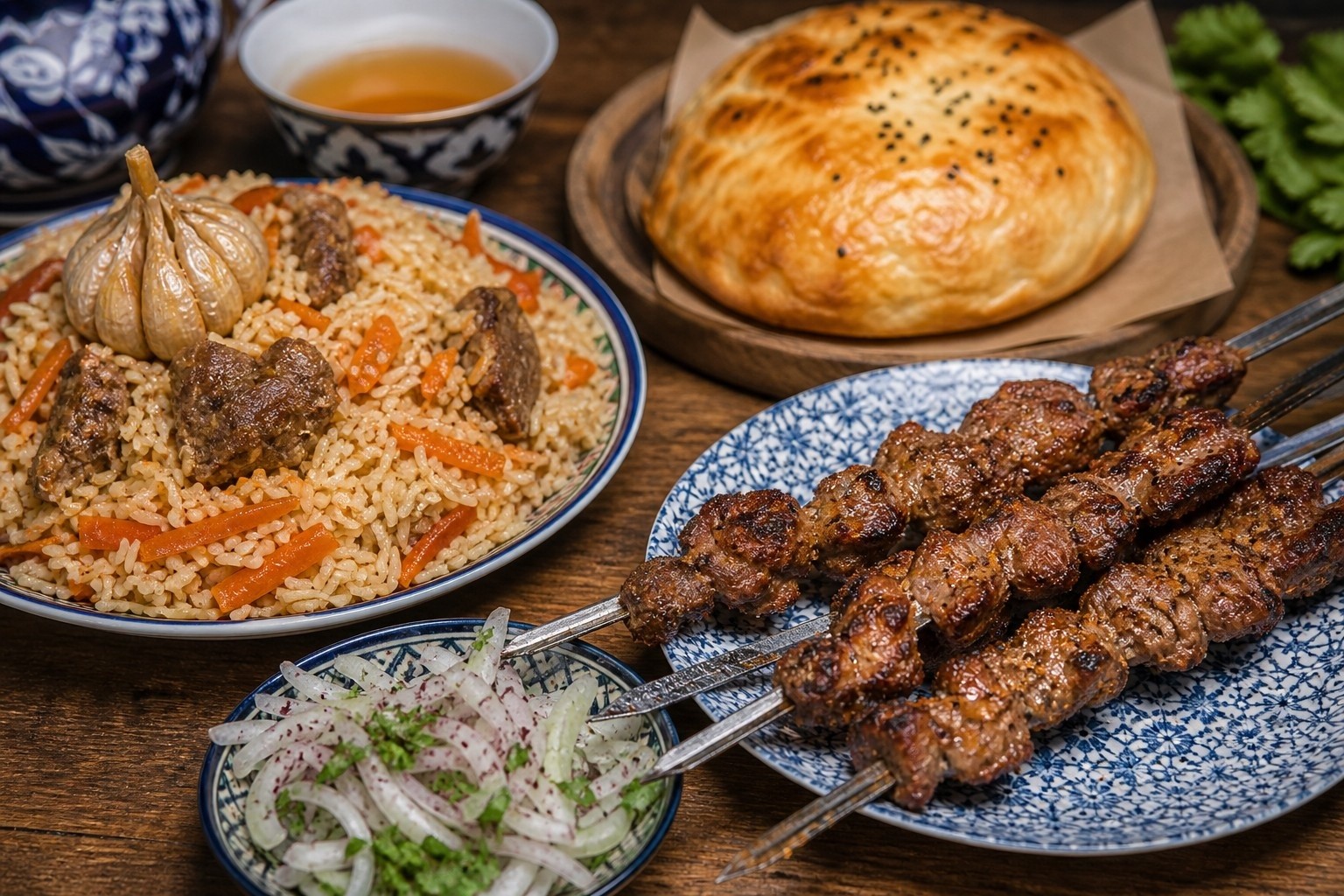
- Xinjiang Cuisine: If you are in a major city like Beijing or Shanghai, you will see many Xinjiang restaurants. They serve Bira (roasted meat skewers), Polo (pilaf with carrots and lamb), and Samsa (savory baked buns). These dishes are richer and heavier than the noodle soups of the north.
The South: A Different Palette
In southern cities like Guangzhou or Hangzhou, halal food is less dominant but still present. The cuisine here tends to be lighter, focusing on seafood and vegetables, often prepared with subtle spices rather than the heavy cumin and chili used in the north. You might find Hui Muslim restaurants that specialize in delicate dumplings or steamed fish, adapted to local southern tastes.
What to Order: A Beginner’s Guide
If you are new to Chinese halal food, start with these crowd-pleasers. They are widely available and generally mild enough for most palates.
- Lanzhou Beef Noodles: Perfect for breakfast or lunch. Ask for “medium spicy” if you want a kick, but the bone broth is rich and savory on its own.
- Cumin Lamb Stir-fry: A staple in Xinjiang cuisine. The lamb is tender, and the cumin adds an aromatic warmth that pairs well with flatbread or rice.
- Mutton Soup with Flatbread: Common in Xi’an. The soup is milky white and comforting, served with a crispy, round flatbread called Shaobing.
Avoid ordering dishes that might contain hidden non-halal ingredients unless confirmed, such as certain braised dishes that might use pork stock in non-qingzhen establishments (though this is rare in certified Qingzhen spots). Also, be cautious with “mixed” restaurants that serve both halal and non-halal items; strictly Qingzhen places will not serve alcohol or pork.
Etiquette and Practical Tips
To ensure a smooth dining experience, keep these cultural norms in mind:
- No Outside Food: It is considered disrespectful to bring non-halal food (especially pork or alcohol) into a Qingzhen restaurant. Even if you are eating inside, do not open packages of ham sausages or beer.
- Alcohol Policy: Strictly Qingzhen restaurants do not serve alcohol. If you wish to drink, ask for non-alcoholic alternatives like sour plum juice (Suanmeitang) or local yogurt drinks.
- Tipping: Tipping is not customary in China, including at halal restaurants. The service is usually efficient and functional rather than attentive in the Western sense.
- Finger Washing: In traditional Xinjiang-style eateries, you might eat with your hands. Look for a basin of water provided by the table to wash your fingers before and after the meal. This is part of the ritual, not just hygiene.
Conclusion: Food as a Bridge
Finding halal food in China is easier than many travelers expect. The Qingzhen sign is more than a dietary label; it is a symbol of quality and tradition that spans ethnic boundaries. Whether you are pulling noodles in Lanzhou or eating pilaf in Beijing, the green sign offers a familiar comfort in an unfamiliar land.