
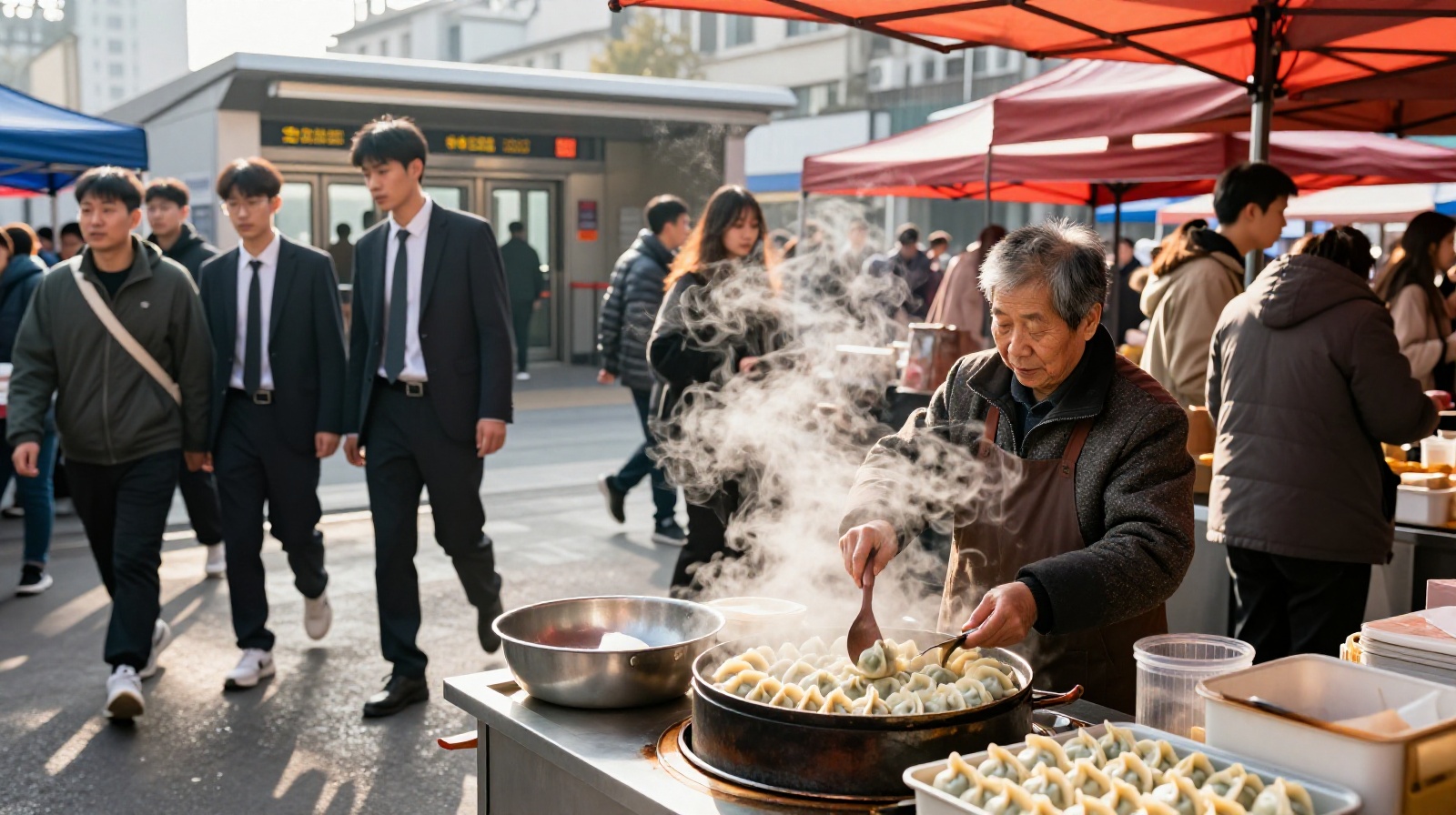

The Myth of the Slow Life
When people imagine Jiangsu, they often picture ancient canals, slow tea ceremonies, and a lifestyle that refuses to rush. It’s a romantic image, but it’s only half the story.
Jiangsu is one of China’s wealthiest provinces, an economic engine that pulses with the same intensity as Shanghai or Shenzhen. The difference isn’t in the speed; it’s in the texture. Here, tradition and hyper-modernity don’t just coexist; they interlock like gears in a watch.
To understand what daily life is really like in Jiangsu today, you have to follow the rhythm of its food. It starts before dawn and ends late at night, bridging the gap between heritage and hustle.
Morning: The Art of Speed in Suzhou
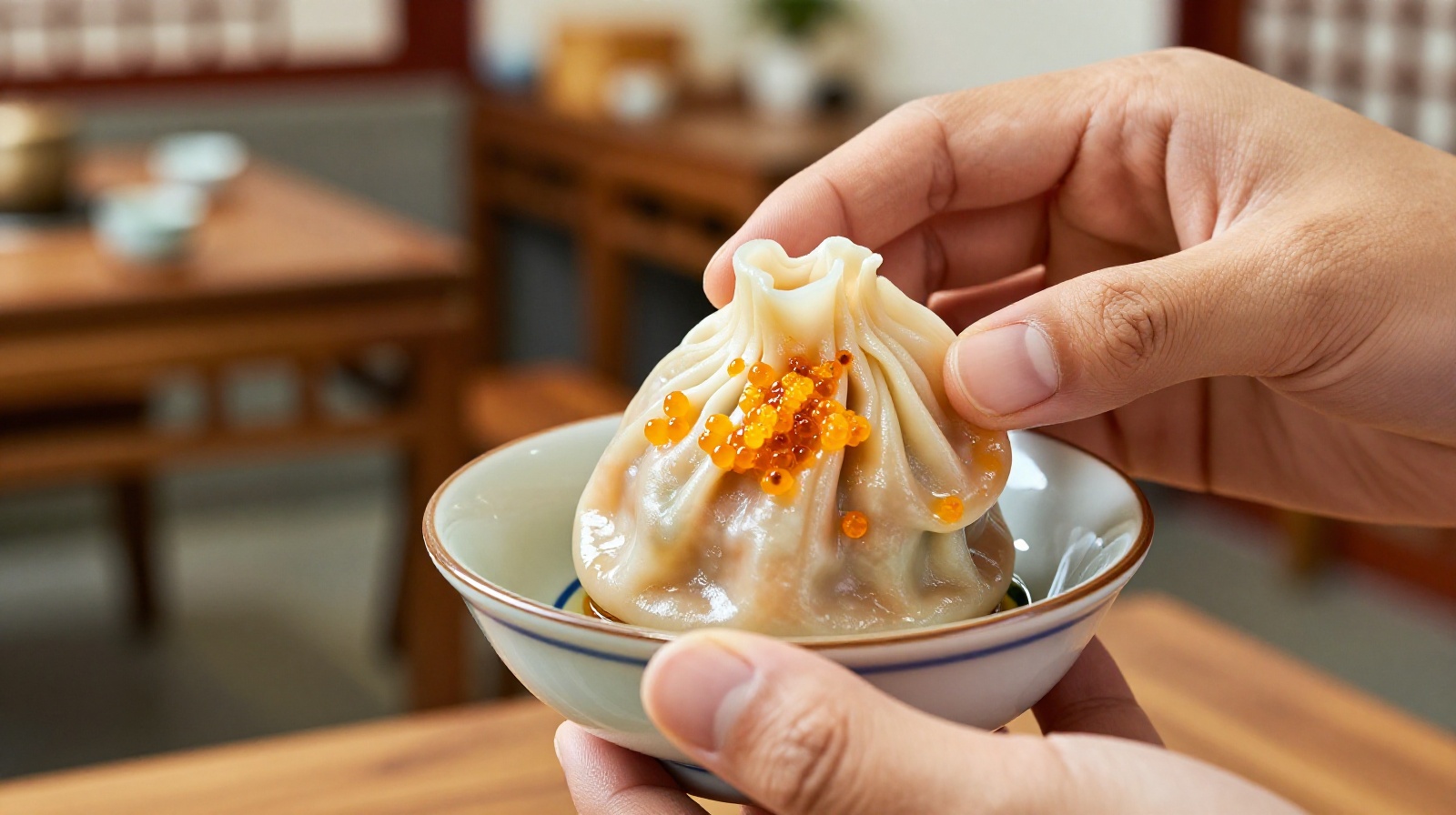
In Suzhou, a city famous for its classical gardens, the morning begins with a specific culinary challenge: crab roe soup dumplings (xiēhuáng xiāolóngbāo). These aren’t just breakfast; they’re a test of etiquette and speed.
The technique is precise. You bite a small hole in the delicate skin, sip the hot, savory broth, and then eat the rest with vinegar and ginger. Doing this quickly—before the soup spills—is part of the ritual. But for young professionals, there’s no time to dawdle.
I watched a group of office workers at a popular spot near Guanqian Street. They ate with focused efficiency, checking emails on smartphones between bites. Ten minutes later, they were sprinting toward the subway station, backpacks slung over shoulders, seamlessly transitioning from ancient culinary tradition to the digital commute.
This duality defines Jiangsu’s morning. The city retains its soul through food and architecture, but the pace of life is dictated by KPIs, startup deadlines, and global supply chains.
Midday: Inside the ‘Jiangsu Model’
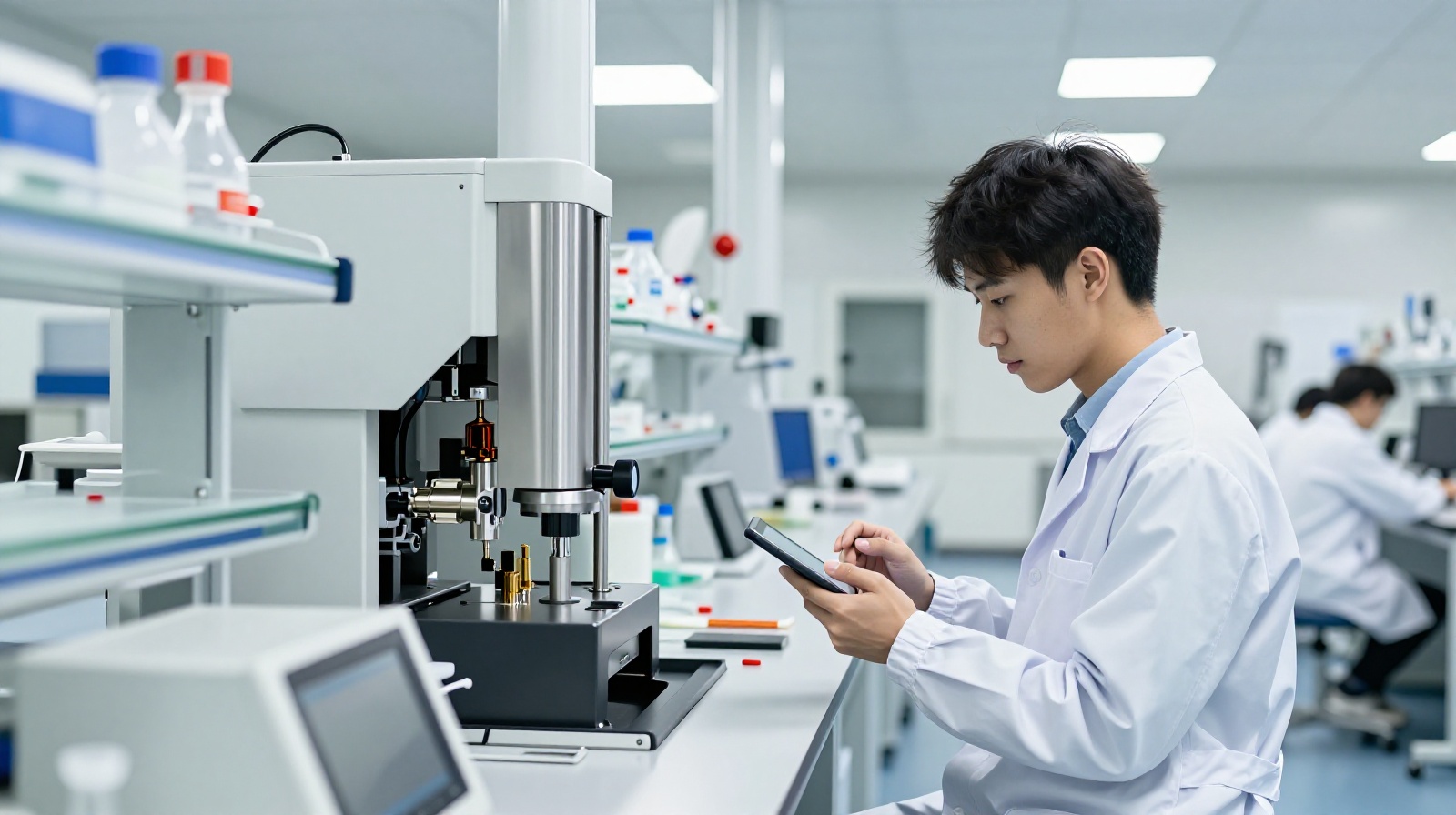
If Suzhou represents the cultural heart, places like the Suzhou Industrial Park (SIP) represent its brain. SIP is one of China’s most successful joint ventures with Singapore, hosting thousands of multinational companies.
Walking through the park at noon, the atmosphere is nothing like a typical industrial zone. It looks more like a university campus or a tech hub in Silicon Valley. Glass buildings reflect the sky, and young engineers in casual clothes walk between cafes and labs.
“The supply chain here is incredible,” says Lin, a 28-year-old semiconductor engineer I met near a biotech firm. “If I need a specific component for my prototype, I can often find it within a 50-kilometer radius. In other places, shipping takes days. Here, it’s a courier ride.”
This is the ‘Jiangsu Model’ in action. Local governments here are known for being pragmatic and supportive of small and medium-sized enterprises (SMEs). They don’t just build factories; they build ecosystems. For workers like Lin, this means high pay, but also intense pressure. The expectation is excellence, and the competition is fierce.
Afternoon: Public Spaces as Social Glue
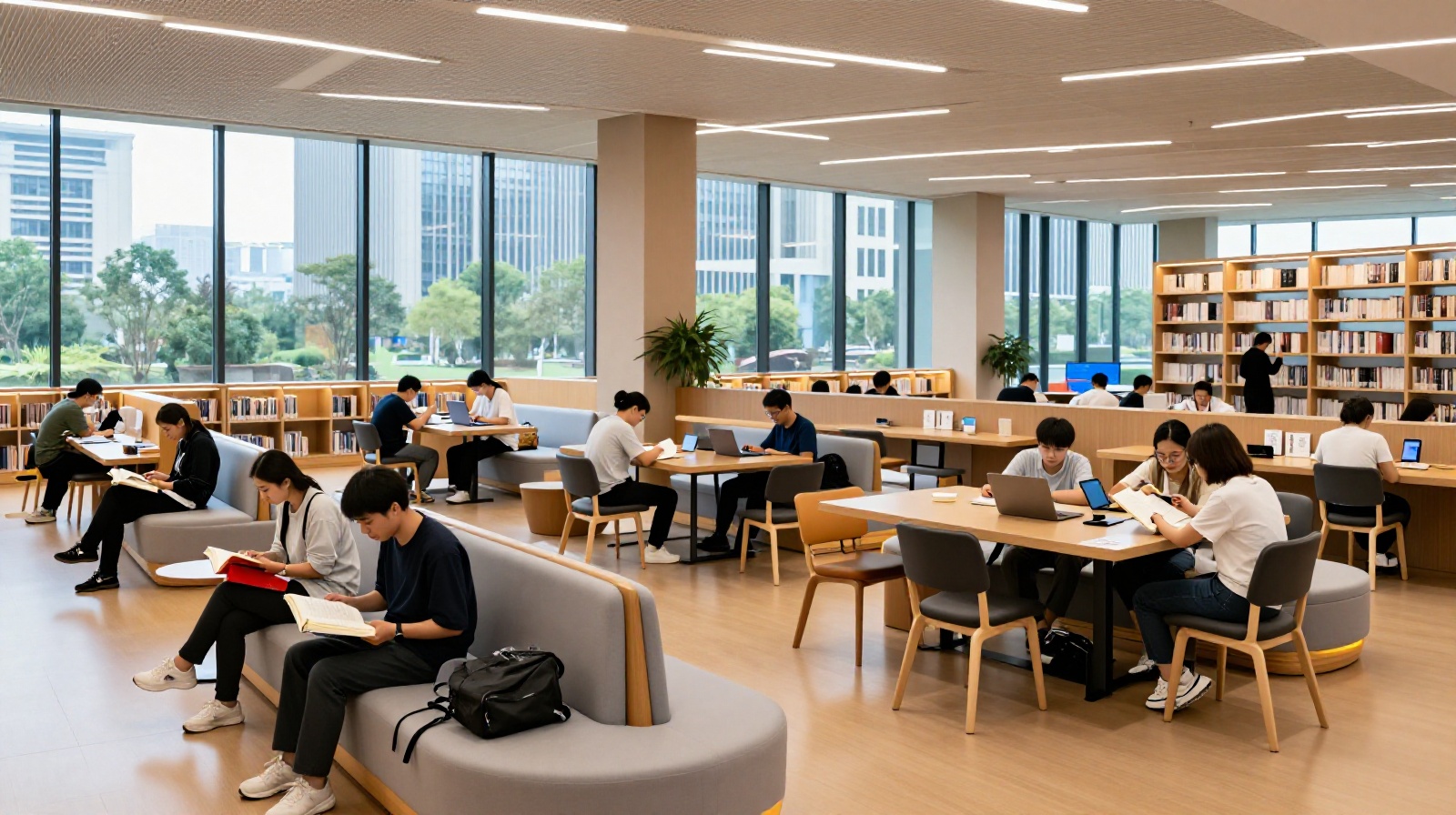
As the afternoon heat rises, the energy shifts to public spaces. In many Chinese cities, libraries have evolved into multi-purpose community centers. I visited a modern library in Wuxi, a tier-2 city south of Suzhou.
The space was quiet but full. Students sat at long wooden tables with laptops open. Elderly residents read newspapers in sunlit corners. Digital nomads from other provinces worked on tablets at high counters, enjoying the free Wi-Fi and air conditioning.
This is a subtle but important shift in Chinese urban governance. The government invests heavily in public infrastructure to improve quality of life. It’s not just about economic growth; it’s about social stability and cultural enrichment.
Here, you see the ‘silver-haired’ generation enjoying modern amenities, using digital payments to buy tickets for community events, or simply reading e-books on tablets provided by the library. The gap between rural and urban life is narrowing, not because everyone is moving to big cities, but because services in places like Jiangsu are reaching a high standard.
Evening: Duck Blood Noodles and the Night Economy
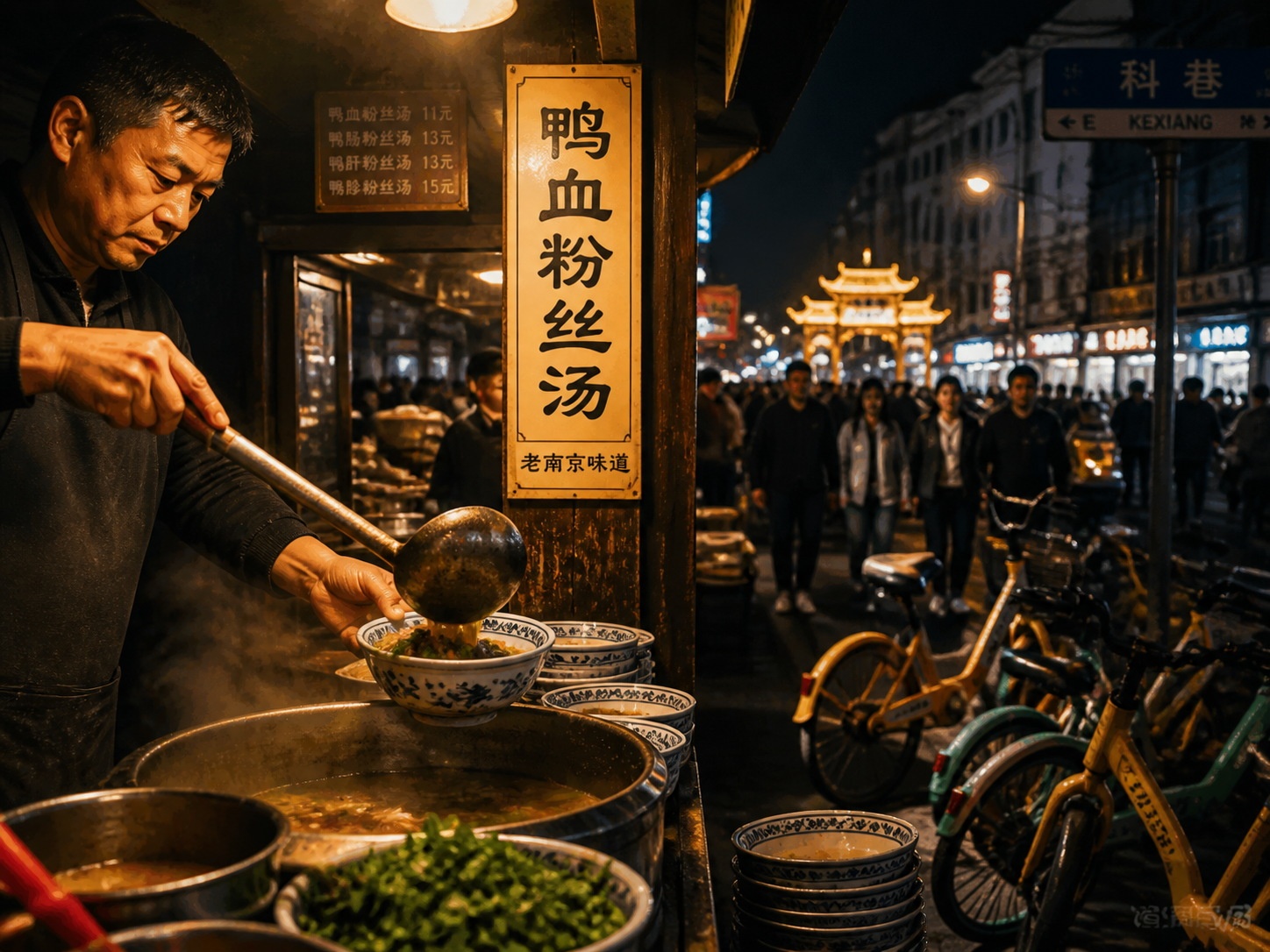
The sun sets over Nanjing, about two hours north of Suzhou by high-speed train. The mood shifts again. After a long day in labs or offices, workers crave comfort food. In Jiangsu, that means duck blood vermicelli soup (yàxuě fěnci tāng).
This is the ultimate street food. It’s warm, spicy, and filling. Vendors work with practiced speed, ladling broth into bowls filled with glass noodles, duck blood cubes, and intestines. It’s served in small plastic stools on the sidewalk, a sight that feels both gritty and welcoming.
The ‘night economy’ in Jiangsu is vibrant and safe. Streets are well-lit, and security cameras are ubiquitous, but it doesn’t feel oppressive; it feels reassuring. People walk freely, some with dogs, others with children.
Mobile payments have replaced cash entirely. You order via a QR code on the table, pay instantly, and eat. There’s no fumbling for coins. This digital integration is so seamless that it often goes unnoticed, yet it underpins the entire evening experience.
The Real Jiangsu
A day in Jiangsu shatters the binary view of China as either a traditional relic or a futuristic factory. It is both. The province offers a nuanced example of balanced growth.
For the foreign observer, the takeaway isn’t just about GDP or tech exports. It’s about how ordinary people navigate this complexity. They sip soup with one hand and type reports with the other. They respect their heritage while building the future.
Jiangsu proves that modernization doesn’t require erasing history. It can deepen it, layer by layer, meal by meal.