

The Reality of Hailing a Ride in China
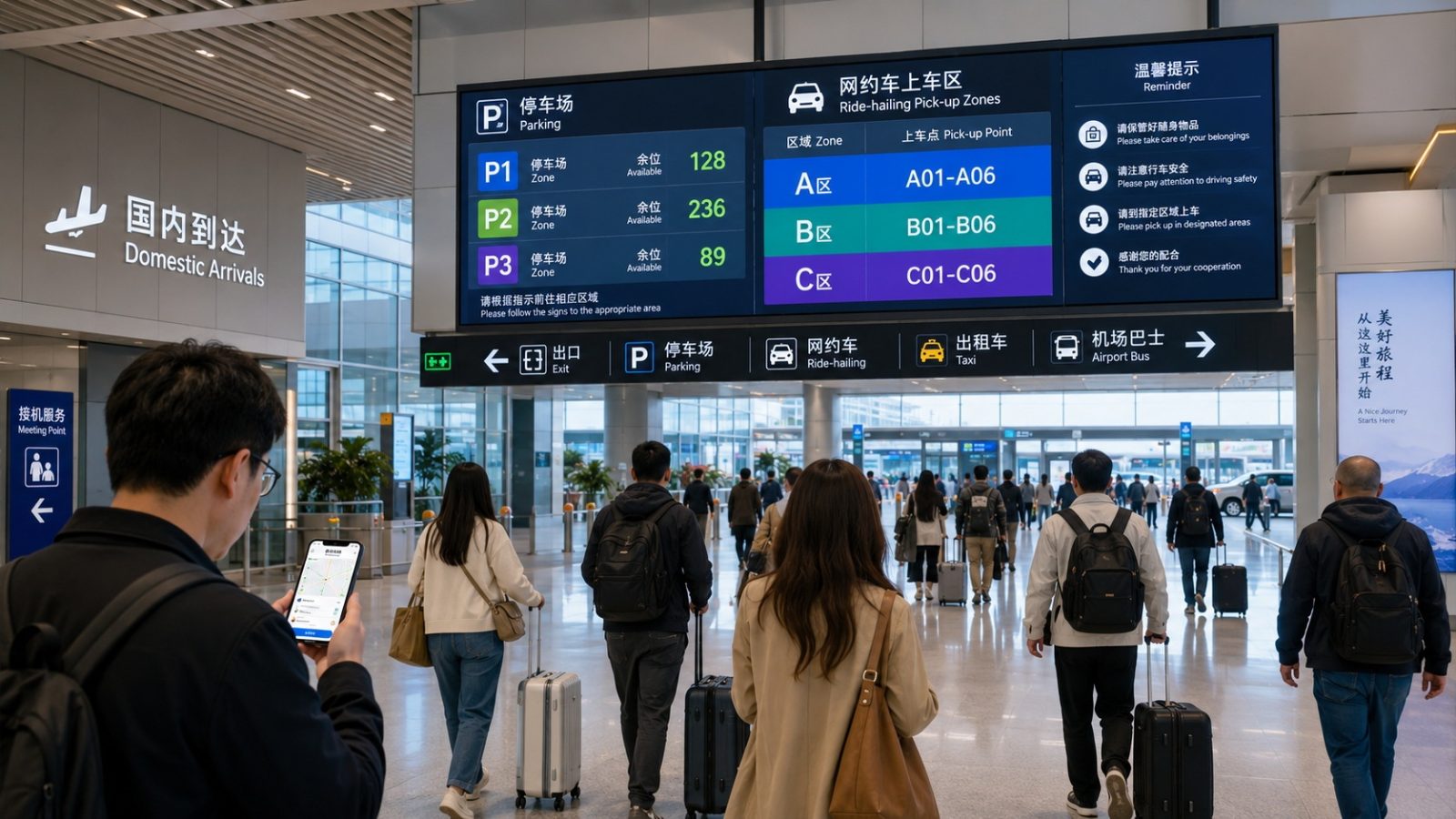
Li Na arrived at Beijing Daxing International Airport after a long flight from London. She was tired, hungry, and eager to get back to her hotel. In many Western countries, the protocol is simple: follow signs for “Taxi” or “Rideshare,” find a designated queue, and wait your turn. But as Li walked toward the arrivals hall, she noticed something different.
There were no chaotic lines of taxis begging for passengers. Instead, large overhead screens displayed real-time information about parking zones, gate numbers, and specific codes for e-hailing services like Didi Chuxing. Confused but curious, Li decided to use her phone app instead of looking for a physical taxi stand.
This scene is common across China’s major airports and high-speed rail stations today. The infrastructure has evolved to accommodate the digital-first nature of Chinese transportation. If you are visiting or living in China, understanding how e-hailing pick-up points work at these hubs is essential for a smooth arrival or departure.
Why You Can’t Just Wait on the Curb
One of the biggest misconceptions for newcomers is that they can simply stand outside the terminal and flag down a ride-hailing car. In most major Chinese transport hubs, this is strictly prohibited.
Airports and high-speed rail stations in China are designed with immense efficiency in mind. They handle millions of passengers daily, and traffic congestion around the curb is a constant threat to safety and flow. To manage this, authorities enforce strict “no-stopping” zones at the main arrivals curbs. Police and automated cameras monitor these areas, issuing fines or impounding vehicles that stop illegally.
This might seem harsh to visitors used to flexible street-hailing, but it serves a clear purpose: keeping the flow of buses, official taxis, and private cars moving smoothly. For you, it means you must move away from the curb and head toward a designated pick-up zone, usually located in nearby parking garages or specific outdoor lots.
Step-by-Step: How to Find Your Pick-Up Zone
Navigating these zones is straightforward once you know what to look for. The system relies on a combination of mobile app guidance and physical signage.
1. Check the App First
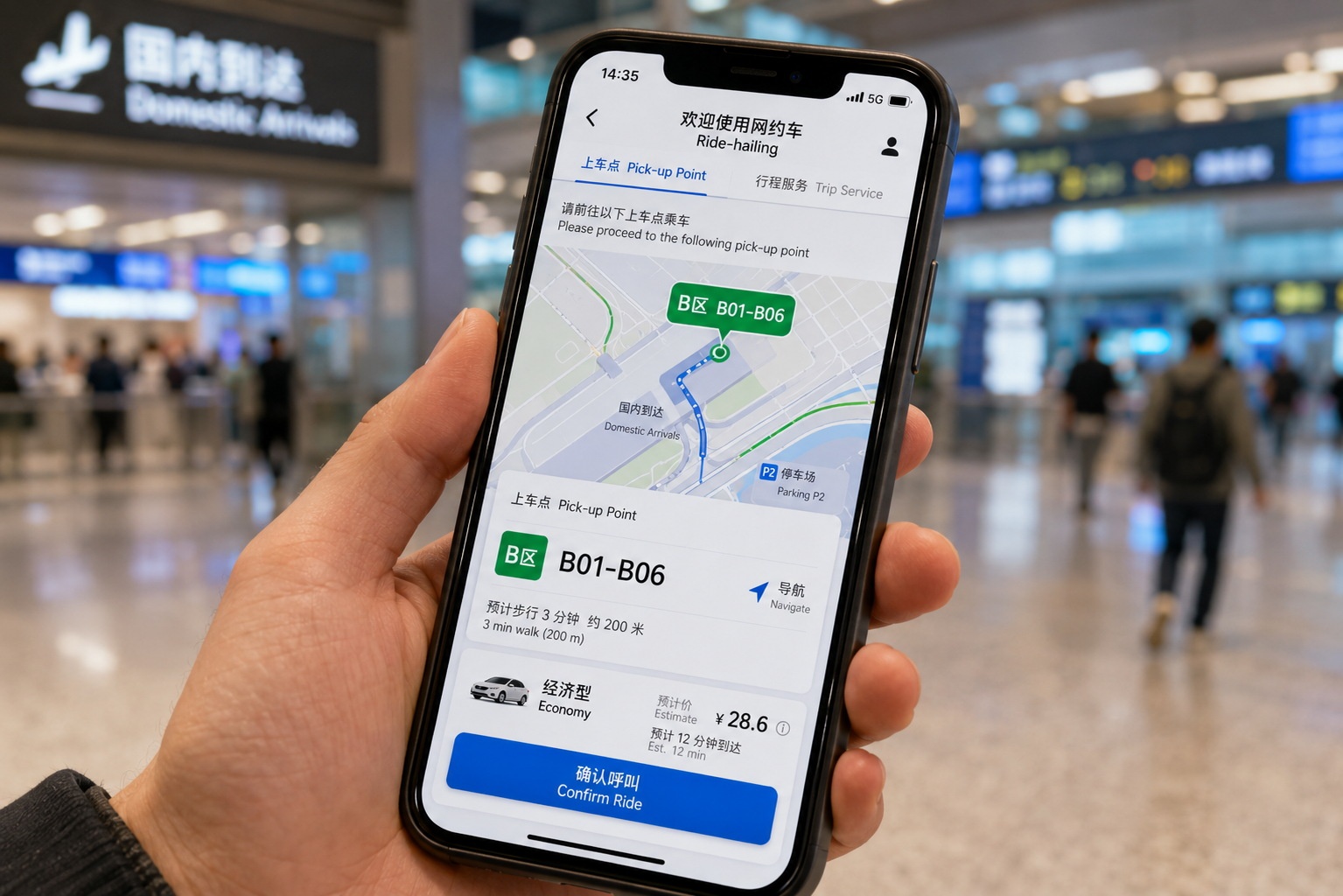
Before you even leave the airport arrival hall, open your ride-hailing app (such as Didi Chuxing, which is integrated into Alipay or WeChat). The app will automatically detect your location at the airport and prompt you to select a specific pick-up zone. These zones are often labeled with codes, such as “P1,” “T3-B2,” or “Zone C.” This code is crucial because it tells both you and the driver exactly where to meet.
2. Follow the Green Signage
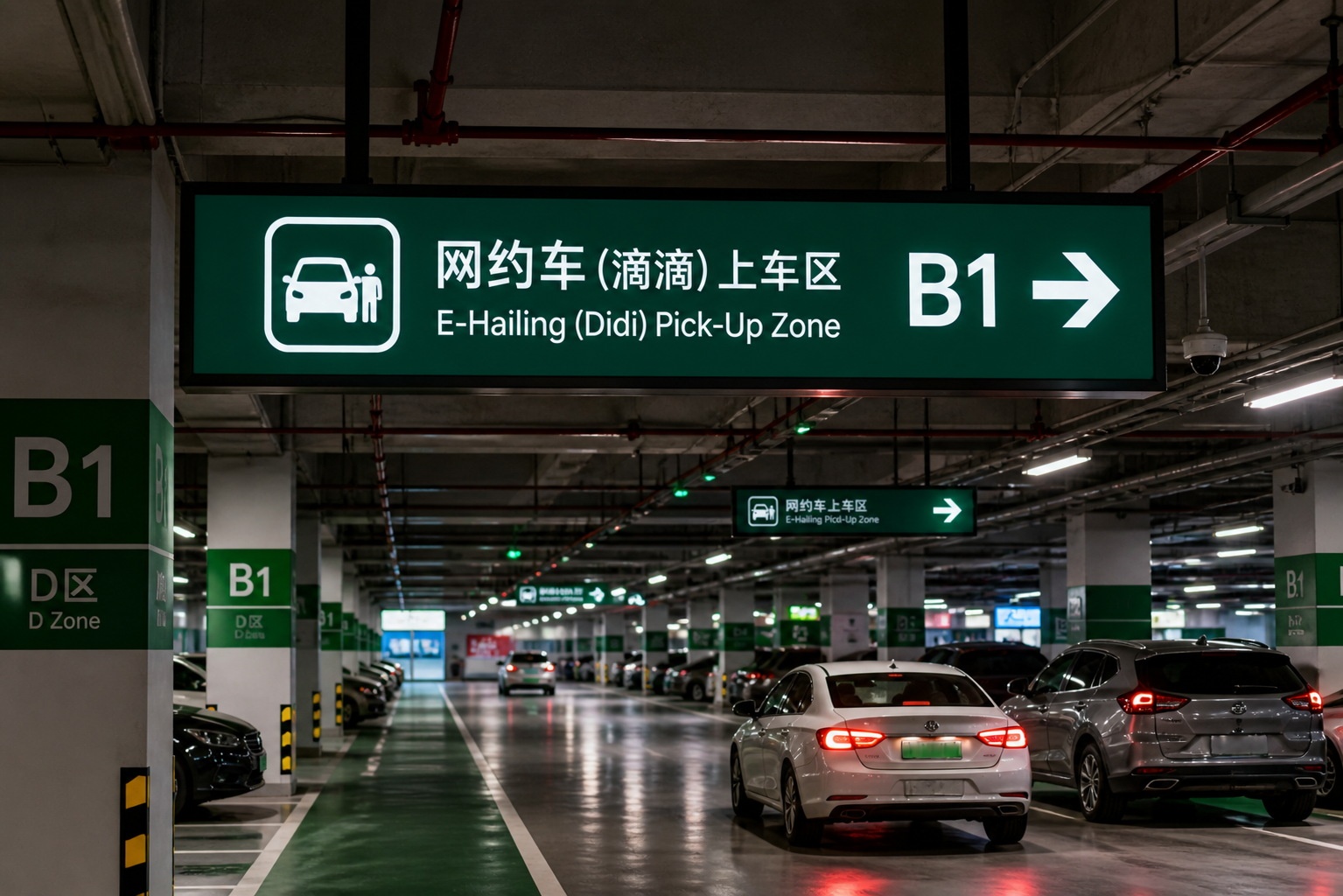
Inside the terminal, look for green overhead signs. In China, green often indicates parking or e-hailing zones, distinct from the blue signs used for regular taxis or public transport. Follow these signs toward the nearest parking structure.
3. Descend to the Designated Floor
Airports like Shanghai Hongqiao or Beijing Capital have massive multi-level parking garages. Each level is designated for specific zones. For example, Level B1 might be for Zone A, while Level B2 is for Zone C. As you enter the garage, look for vertical signs indicating which floor corresponds to your app’s selected zone.
4. Locate Your Specific Spot
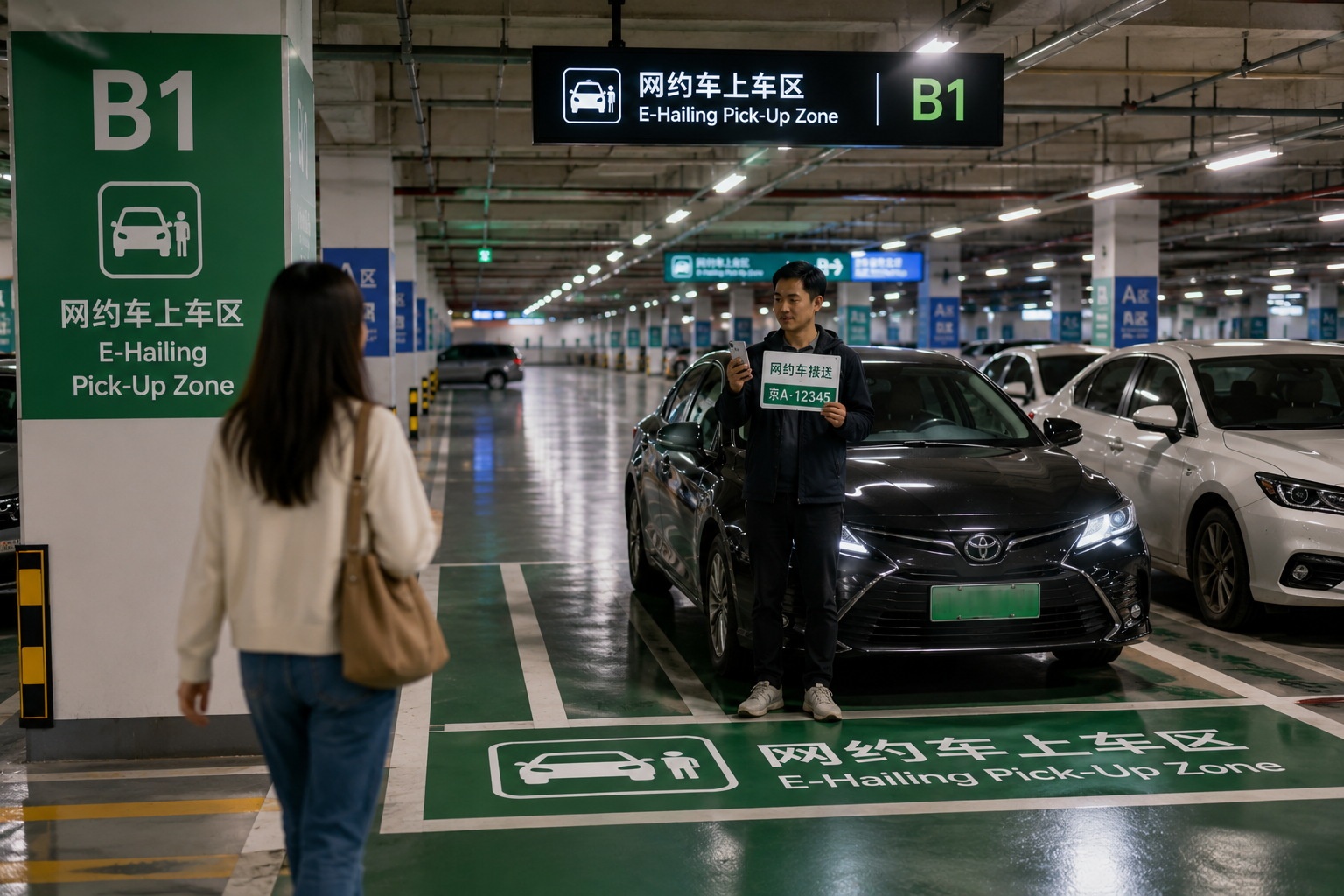
Once on the correct floor, look for large digital boards or directional arrows pointing to your specific zone code (e.g., “P1-A4”). These spots are usually marked with painted lines and overhead lights. When you arrive at the spot, the app will provide a live map showing the driver’s location.
Tips for Meeting Your Driver
Even with clear signs, large parking garages can be disorienting. Here are a few practical tips to ensure a quick pickup:
- Use Live Location Sharing: The app usually allows you to share your real-time location with the driver. This helps them navigate the maze-like garage faster.
- Look for the Driver’s License Plate: Once the driver is close, check their license plate in the app and scan the parking lot for that specific car. Drivers are also required to display a small sign or have a unique sticker indicating they are e-hailing vehicles.
- Stay Calm if There’s a Mismatch: If the driver says they are at Zone A but you are in Zone B, check your app again. It is common for drivers to misread signs in bright sunlight or confusing layouts. Use the in-app chat or call feature to clarify.
Why This System Works
The dedicated pick-up zone system might seem complicated at first, but it is highly effective. By separating e-hailing traffic from official taxis and private drop-offs, these hubs reduce congestion significantly. For passengers, it means less waiting time in the sun or rain, as drivers know exactly where to go.
For travelers from countries where ride-hailing is still emerging or regulated differently, this experience highlights how integrated digital services are with physical infrastructure in China. It is not just about an app; it is about a city that has reorganized its space to support digital convenience.
Conclusion
Navigating a Chinese airport for ride-hailing does not require special skills, just a little preparation. Download the app, check your zone code, and follow the green signs. Within minutes, you will be on your way to your destination, joining millions of others who rely on this efficient system every day.