

The Cumin Smell at 2 AM
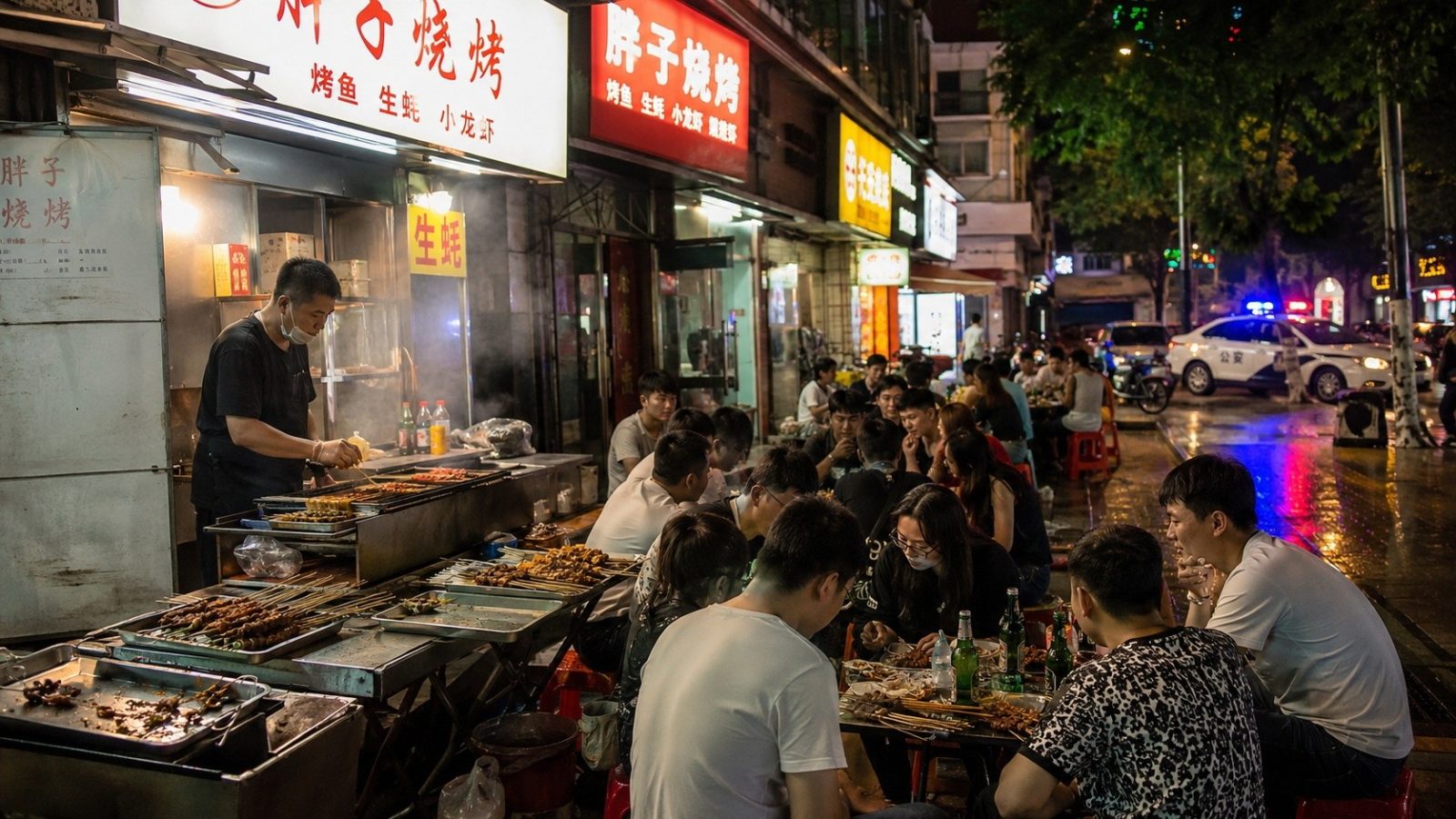
It is 1:45 a.m. when I slide onto a plastic stool outside a street corner in Guangzhou. The air smells of burning charcoal, cumin, and crushed chili. A vendor flips skewers over an open flame, the sizzle cutting through the humid night. Across the table, two delivery riders are counting their daily earnings on a cracked phone screen. Three blocks away, the low hum of a patrol car passes by. No one looks up. I take a sip of beer. The city breathes.
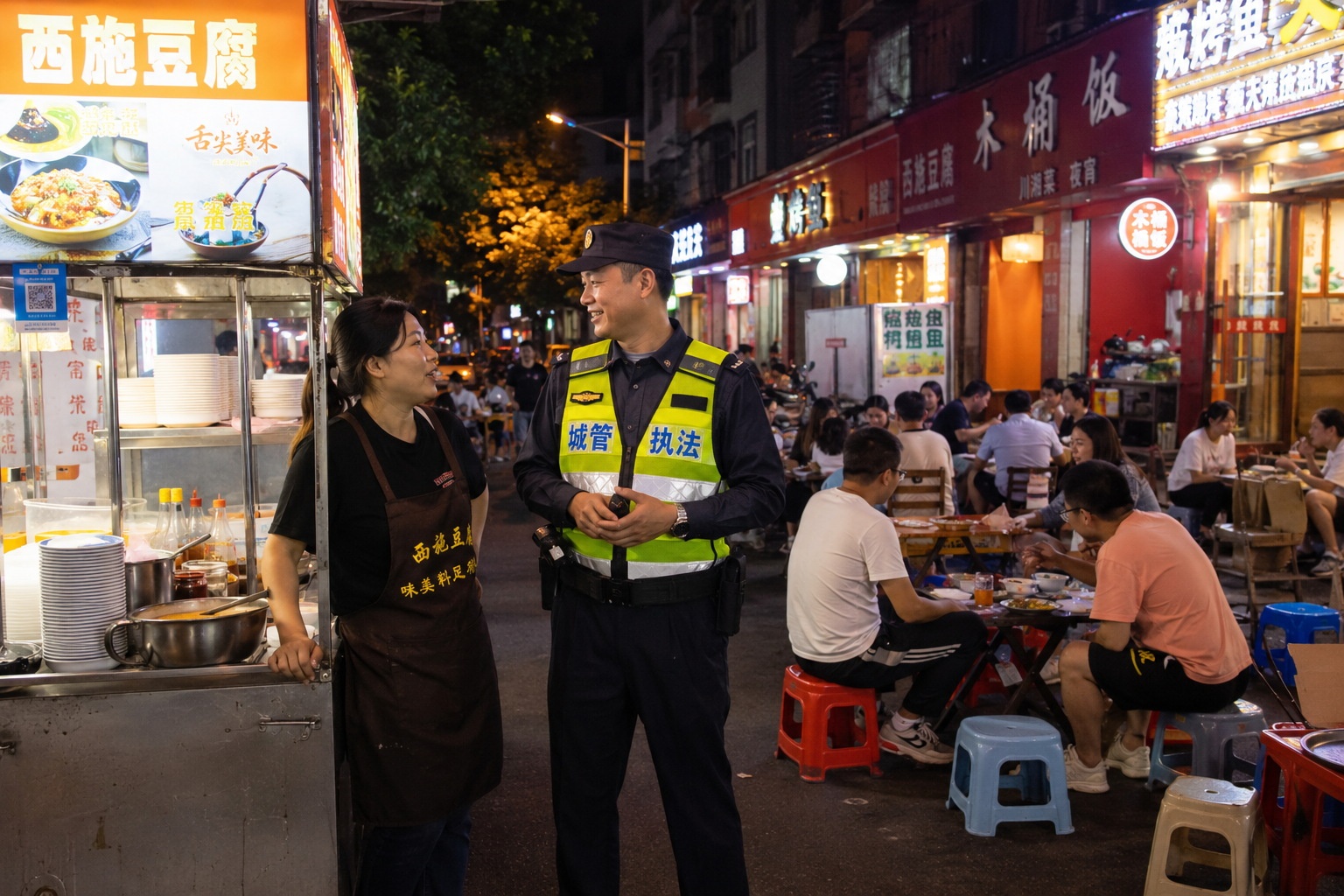
Most foreigners picture Chinese cities as empty after dark, or worse, unpredictable. The reality is quieter, and far more ordinary. In China, violent crime at night is statistically rare, but that number only tells half the story. Safety here is woven into daily infrastructure. Streetlights stay on until dawn. Neighborhood committees monitor local vendors. Police patrols are visible, not intimidating; they stop to chat with stall owners about rent or weather. This isn’t surveillance as control. It’s community rhythm.
Why the Night Feels Safe
Safety in Chinese urban life is not an abstract policy. It is a lived habit. When you can eat lamb skewers at 2 a.m. without checking your phone for safety apps, something has worked. The presence of security cameras and uniformed officers on foot or in patrol vehicles creates a baseline of predictability. You do not feel watched; you feel anchored.
For solo female travelers or young professionals working late, this predictability matters. I have walked home from night classes at 3 a.m. across multiple Chinese cities, passing convenience stores, 24-hour laundromats, and repair shops that keep streets alive. None of it feels staged. It is just Tuesday. In many Western cities, late-night streets often swing between quiet desolation and high-risk zones. Here, the middle ground is crowded. Street food, small businesses, and community workers share the same sidewalk without friction.
The Night Economy in Practice
The government calls it the night economy, but ordinary people just call it dinner. After years of pandemic restrictions lifted, street markets have returned to their old layouts with remarkable speed. Young professionals finish overtime at 9 p.m., then walk two blocks to a barbecue stand. University students grab skewers before late-night study sessions. The stall owner, Lao Chen, has run his cart for eight years. He knows the regulars’ orders by heart.
“City sleeps later now,” he says, wiping grease off a metal tray. “People need a place to sit after work.” Digital payments have changed how night markets operate. You no longer need exact change. A quick QR code scan takes two seconds. Delivery apps bring customers who cannot make it in person, while also creating second shifts for riders who treat the night as a window of higher demand. The system is informal on the surface, but it runs on predictable rules.
More Than Safety, It’s Normalcy
Walking home at 3 a.m., I pass a convenience store where a young couple buys instant noodles and canned coffee. A security guard stretches near the subway entrance. Delivery bikes line up along the curb. The streetlights cast a steady yellow glow over wet pavement. None of it feels like a performance. It is simply how urban life has adapted.
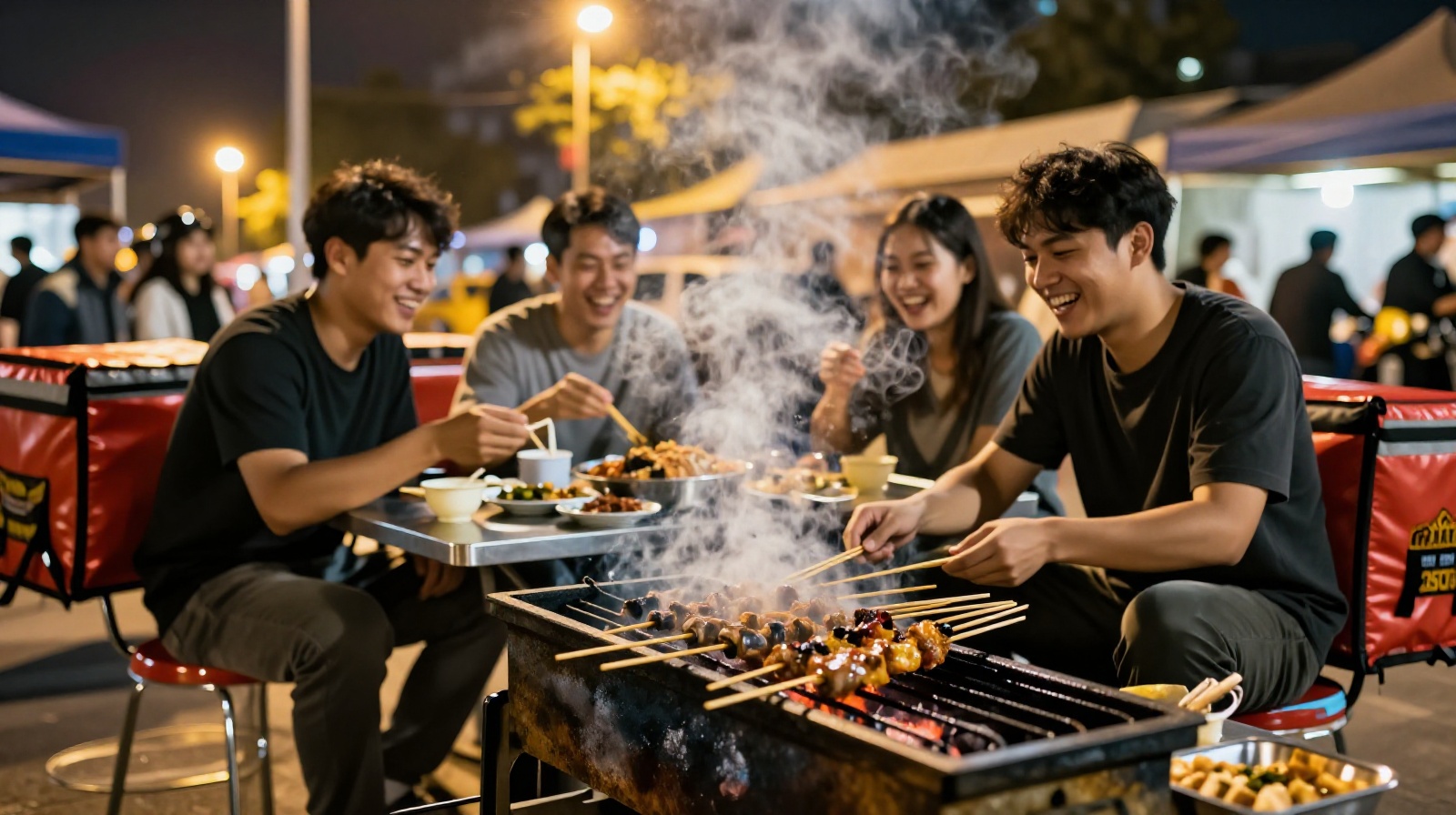
Gen Z workers, often criticized for burnout culture, use night markets as decompression spaces. The plastic stools are low, the chairs are shared, and the food is cheap. You do not need reservations or dress codes. You sit next to a construction worker, a nurse on shift change, and a college student reviewing flashcards. The hierarchy dissolves over grilled tofu and cold beer. This is where urban pressure releases.
The Real Pulse of Urban China
If you want to understand modern China, do not look at skyscrapers or stock tickers. Go to a street stall past midnight. Watch how people relax. See how vendors, riders, students, and officers share the same sidewalk without friction. The night market is not just about food. It is proof that urban life here has found a stable rhythm.
You can trust the streetlights. You can trust the sizzle of the grill. And you can trust that tomorrow, the city will be open for business. That is the quiet reality behind China’s late-night safety: not perfection, but practical normalcy. And in a world that often feels fragmented, normalcy is exactly what people are looking for.