

Your Wallet Won’t Shrink Here: The Trust Economy of China’s Night Markets
You do not need a reservation. You just follow the smoke.
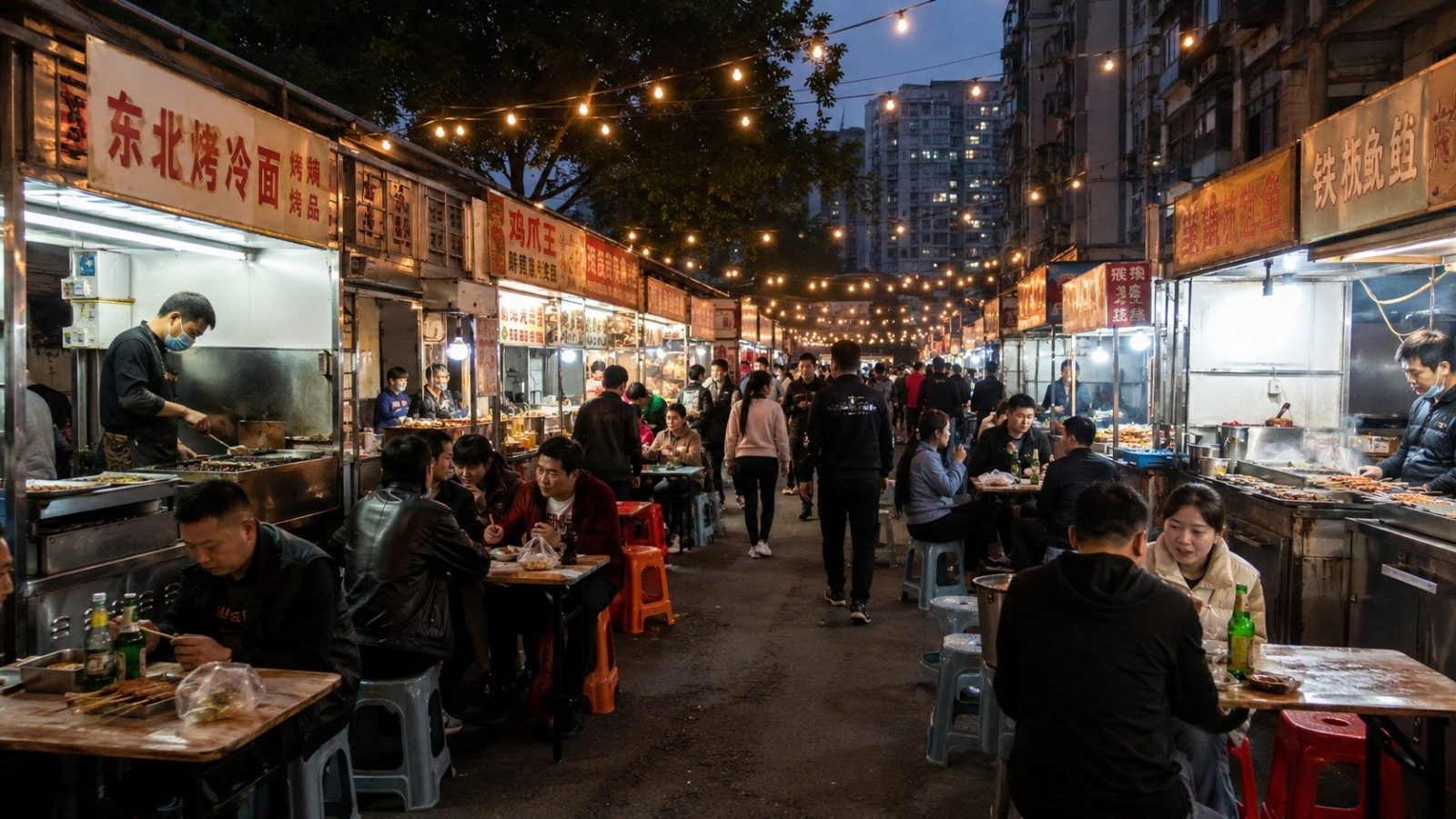
At 10:30 p.m., the asphalt near Exit B of Huangpu East Road in Guangzhou transforms into a corridor of sizzling woks and folding tables. Liu Wei, who runs a stir-fry stall with two assistants, flips charcoal-grilled chicken wings for the third batch tonight. The turnover rate hits six rounds per table. Each customer spends about twenty-five yuan—roughly three and a half dollars. There is no laminated menu on the wall. Regulars call out orders before they even sit down. This scene directly contradicts the headline narrative of “consumption downgrade” that has dominated Western financial reports lately. People are not eating less; they are eating differently. They have simply shifted their spending from luxury handbags and overseas vacations to reliable, hot meals delivered straight from a wok on the sidewalk.
More Than Just a Late-Night Bite
In many Western cities, street food operates in highly regulated zones or gentrified festivals where prices routinely exceed fifteen dollars per item. The model relies on high margins and strict zoning permits. China’s night markets follow a completely different rhythm. They grow organically from the intersection of residential density and municipal tolerance. Local authorities have gradually formalized these areas into designated “night economy” corridors, complete with waste collection trucks that arrive at 1:00 a.m. and noise curfews that end by 2:30 a.m. The result is not chaos. It is structured informality.
The Ledger Behind the QR Code
Step behind the stainless steel counter and you will notice something that traditional credit models struggle to replicate: informal trust.
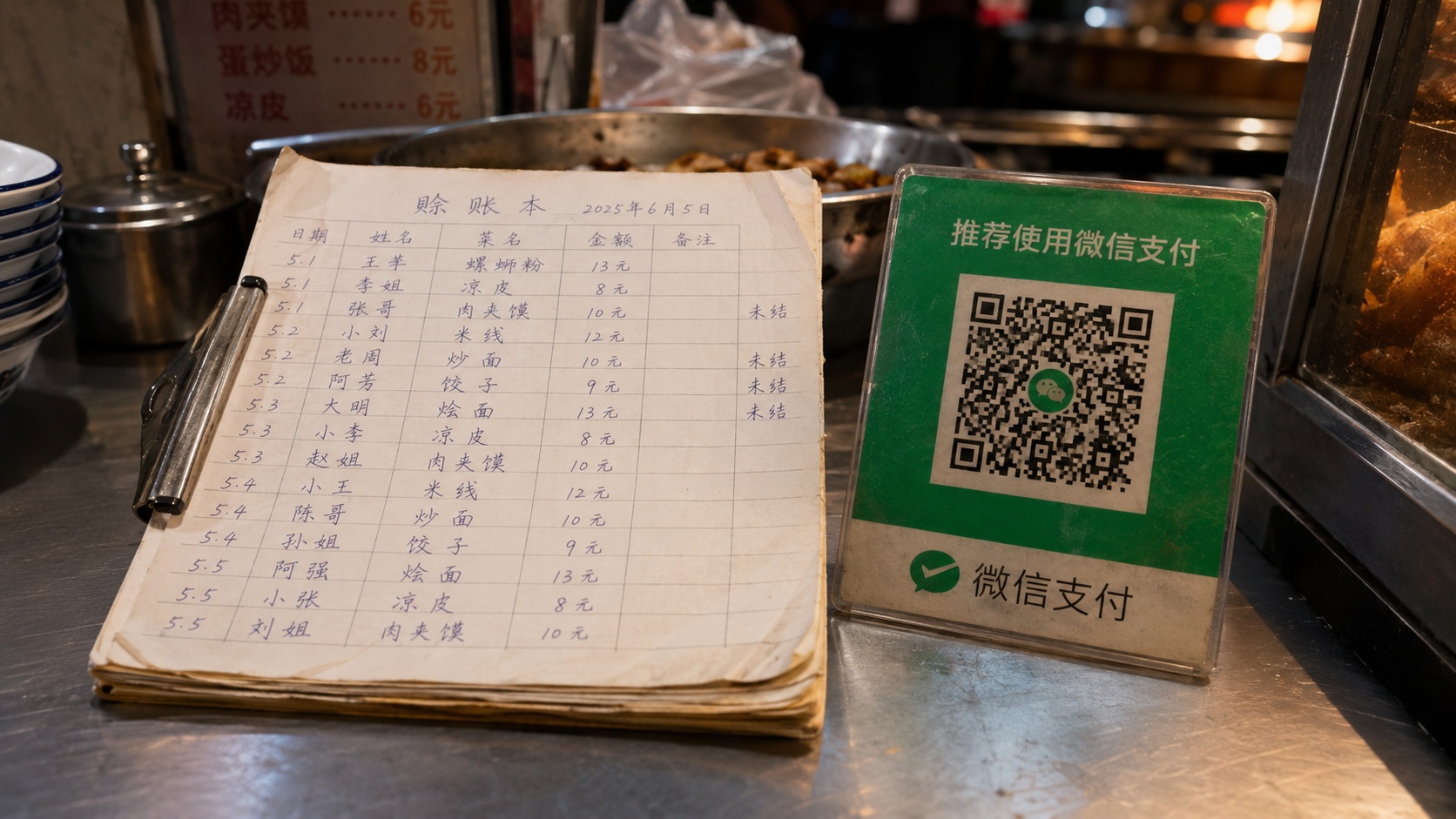
Liu Wei keeps a handwritten ledger for three dozen regulars. Students, night-shift nurses, and delivery riders occasionally run short of cash on payday. They borrow ten or twenty yuan for dinner, promising to settle it tomorrow. The default rate is close to zero. In Western markets, this would trigger an algorithmic risk flag. Here, it works because the community is dense and reputation travels fast. If you skip a payment without explanation, word spreads through neighborhood chat groups long before any bank notices.
This “acquaintance credit” replaces cold financial screening with social accountability. It lowers transaction costs for both sides while keeping cash flow moving during tight months. Many vendors also issue physical meal tickets to elderly neighbors who prefer tangible records over app notifications. The system functions without contracts because the cost of breaking trust outweighs the temporary relief of free food. In high-mobility societies, where people frequently change jobs or neighborhoods, this localized reputation network acts as a stabilizing anchor.
One Smartphone, One Stall
The ledger sits next to a printed QR code for WeChat Pay and Alipay, but the technology does more than process transactions. A single smartphone now anchors the entire operation.
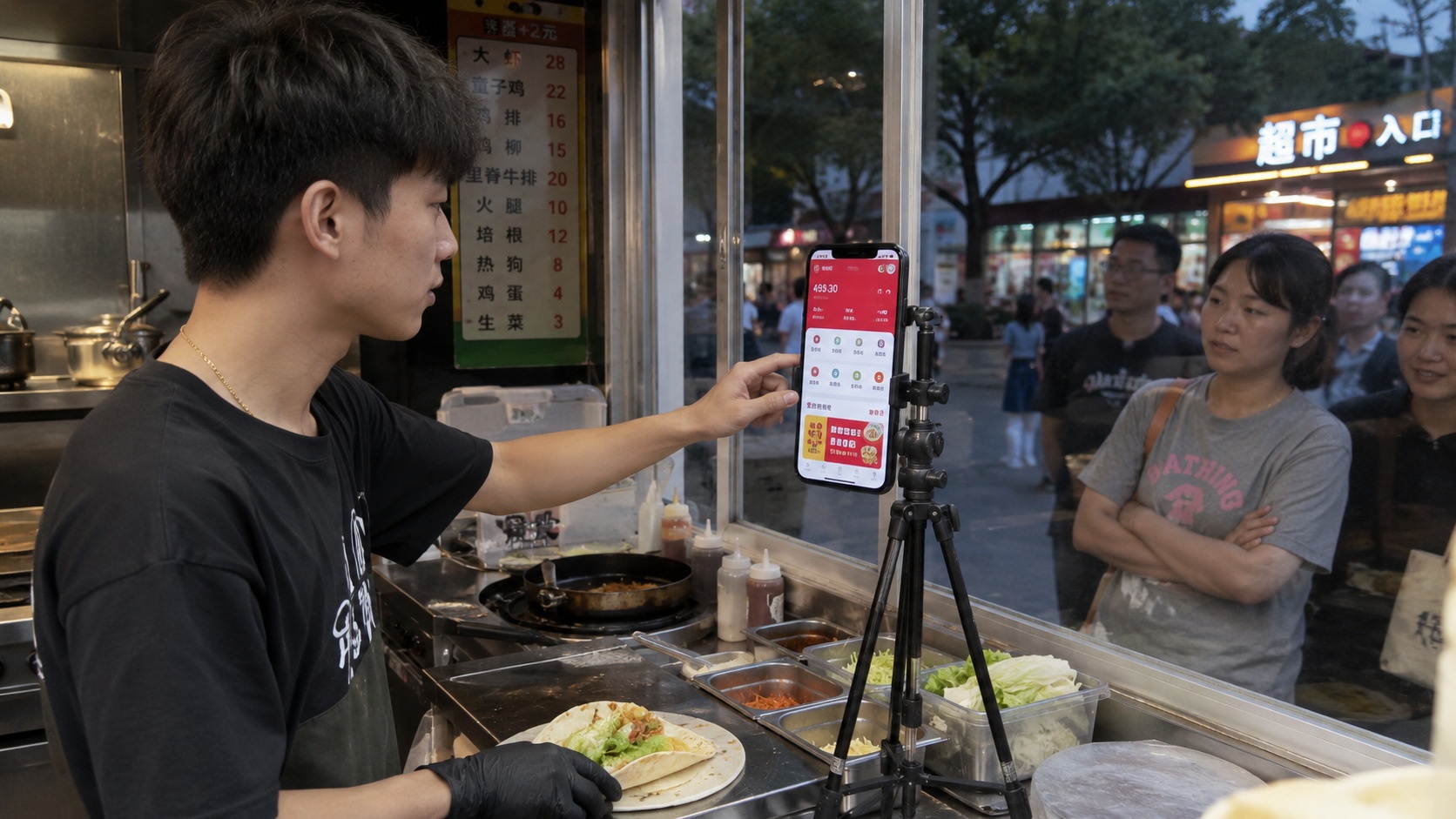
Liu Wei checks his live sales dashboard on Meituan every hour. He adjusts portion sizes based on real-time foot traffic. When it rains, he posts twenty percent off group-buy vouchers on Douyin to pull in nearby apartment residents. The barrier to entry is surprisingly low. A basic stall kit costs around five hundred yuan. Food safety standards have been standardized through municipal “open kitchen” inspections, meaning customers can see the prep area without stepping inside.
Micro-entrepreneurs no longer need a brick-and-mortar lease or a marketing budget. They just need a reliable supplier, a working phone, and the flexibility to pivot pricing by the day. Mobile payment adoption in China did not happen because of government mandates alone; it succeeded because small vendors realized they could cut out cash handling entirely. For customers, scanning a code takes less than two seconds. For sellers, it eliminates counterfeit bills and accounting errors. The technology disappeared into daily life precisely because it solved immediate friction points.
The City’s Living Room After Dark
Night markets in China are not merely transaction zones; they function as organic community living rooms.
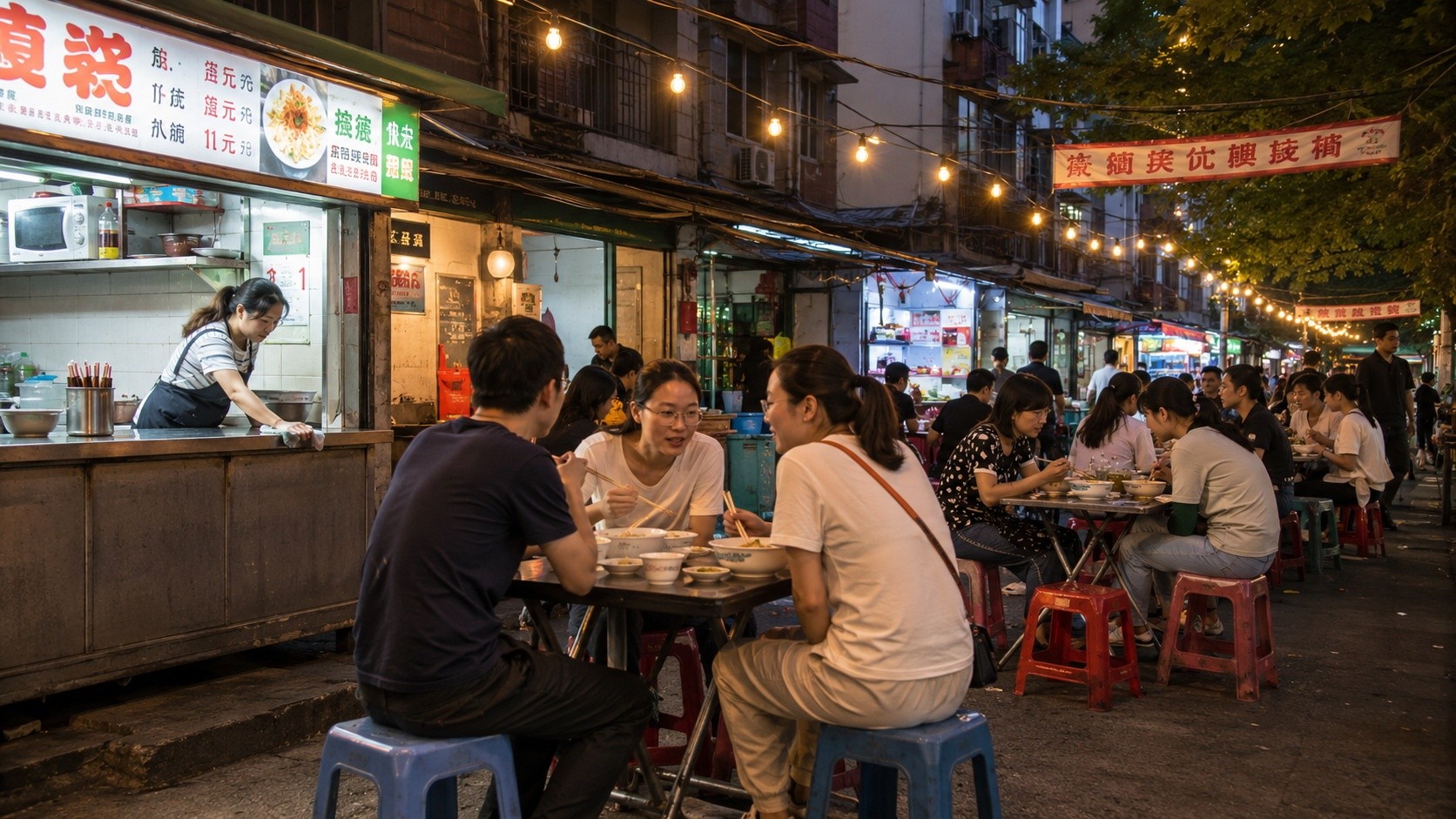
In cities where high-rise apartments often lack shared courtyards or affordable cafés, these sidewalks fill the social void. Young professionals unwind here after overtime, sharing skewers and complaining about KPIs without paying premium rent for a lounge. Families with toddlers navigate between stalls, letting kids chase each other safely under string lights. The atmosphere feels less like a regulated food court and more like an extension of someone’s front yard.
This spatial flexibility stems from urban planning that integrates residential density with commercial ground floors. Rather than zoning street food out of city centers, municipalities have treated sidewalks as shared infrastructure. During peak hours, traffic police temporarily close adjacent lanes to vehicles, turning them into pedestrian walkways. The result is a hybrid space where commerce, leisure, and neighborly interaction overlap without formal programming.
Survival in Slow Motion
The real story behind China’s current consumer landscape is not contraction; it is calibration.
Ordinary people are trading down on conspicuous spending while maintaining—or even upgrading—their daily comfort levels. Vendors mirror this shift by offering smaller plates, combo meals, and transparent pricing displayed on digital screens above the grill. When supply chain costs rise, they adjust recipes rather than raise prices dramatically. Customers respond by visiting more frequently but buying less per trip.
This reciprocal adaptation creates a buffer against economic volatility. It is not a sign of distress. It is grassroots capitalism learning to breathe through short-term cycles without breaking structure. Street food operators survive by matching the pace of local wages and rent pressures. If inflation pushes ingredient costs up, they reduce portion sizes slightly or swap premium cuts for tougher but equally flavorful alternatives. Diners accept the trade-off because quality control remains visible. You can see the oil temperature, the fresh herbs being chopped, and the vendor wiping hands between orders.
Trust Is the Real Currency
I once watched a regular customer finish his fifth bowl of beef noodles and wipe his plate clean with a side of scallion pancake. He left exactly twenty-five yuan on the table, no change requested. The vendor nodded, already wiping down the next station.
There was no grand speech about economic recovery or policy shifts. Just a quiet exchange that repeats millions of times across Chinese cities every night. In places like these, trust is not a romantic ideal. It is practical infrastructure. It keeps prices fair, tables turning, and strangers comfortable sharing the same sidewalk. Your wallet does not have to shrink here. The stomach just learns what it really needs.