

The Convenience Store at 10 PM
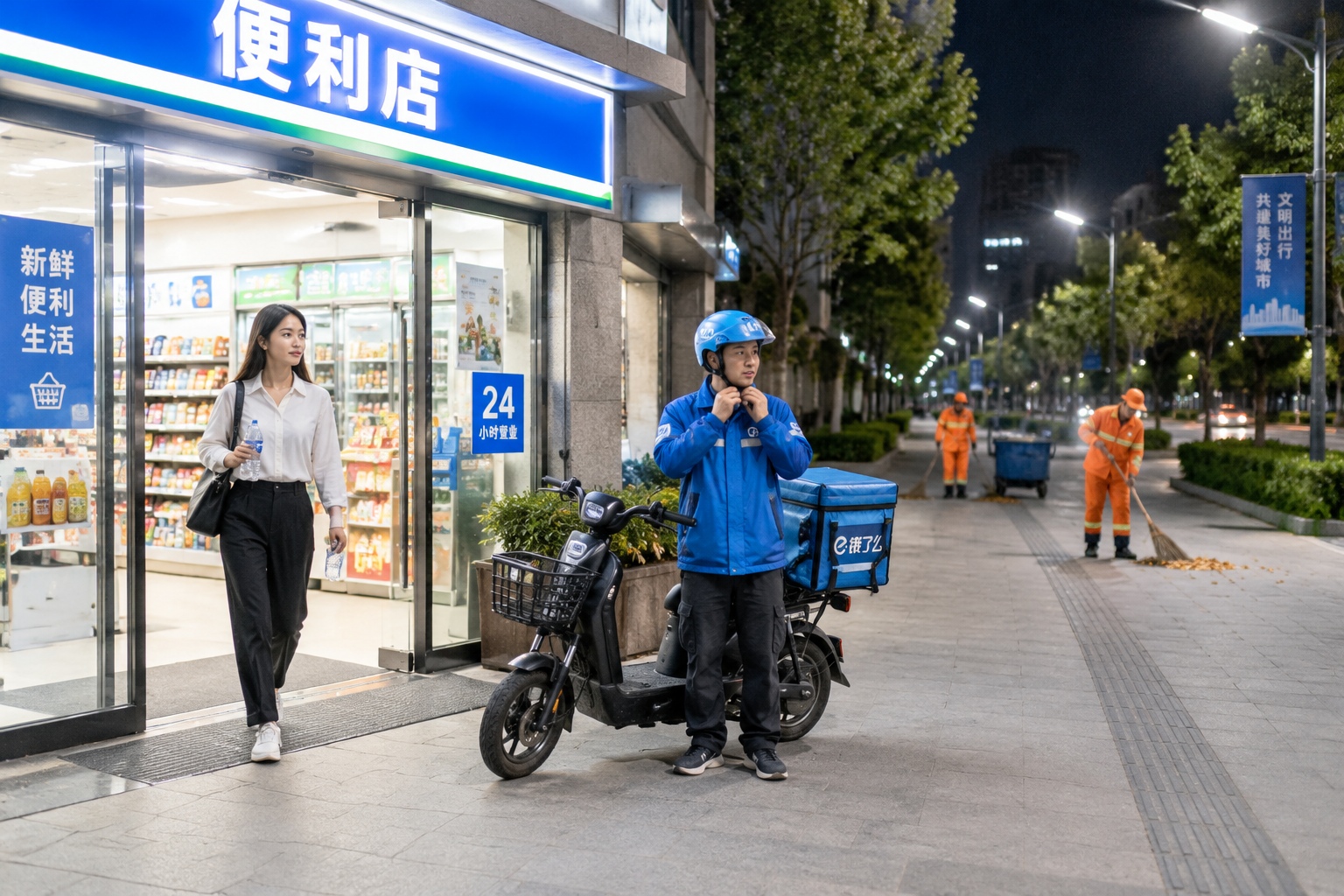
At exactly 10:00 PM, the automatic doors of a neighborhood convenience store slide open. Lin, a 28-year-old data analyst, steps out with a bottle of mineral water. Her shift ended an hour ago, and her phone still buzzes with Slack notifications. Outside, a delivery rider checks his app under the streetlight, adjusting the thermal bag on his e-bike. Two blocks away, sanitation workers sweep fallen leaves into neat piles, their orange vests reflecting the overhead lamps. This isn’t a staged scene for a travel documentary. It’s a typical Tuesday in a mid-sized Chinese city.
What stands out isn’t the pace, but the predictability. People are heading home after work. Vendors are packing up or staying open by choice. The streets are clean, well-lit, and occupied by thousands of others making the same trip. For locals, this is just the rhythm of evening. For overseas readers accustomed to debating urban safety in headlines, it might seem unremarkable. But that unremarkability is exactly what makes it worth examining.
Who Keeps the City Moving After Dark
If you track the flow of people after 8 PM across Chinese cities, a clear pattern emerges. You’ll find factory operators swapping shifts at industrial parks, nurses finishing chart reviews in hospital corridors, truck drivers resting at highway service plazas, and convenience store clerks restocking shelves. These are not outliers. They form the backbone of a 24-hour service network that employs millions.
The night economy here isn’t driven by scarcity or survival. It’s built on choice and infrastructure. Local governments have gradually relaxed zoning restrictions for night markets, allowing vendors to operate without constant permit renewals. Delivery platforms expanded their night-shift subsidies to reduce fatigue-related accidents. Public transit extends service hours in residential corridors, while bike lanes and pedestrian crossings remain active until midnight. The result is a layered urban ecosystem where work, rest, and small pleasures coexist without friction.
Safety as Everyday Infrastructure
How do ordinary people experience safety on late-night streets? It’s rarely discussed as a policy achievement. Instead, it feels like built-in context. Over the past decade, thousands of cities replaced aging sodium-vapor lamps with high-efficiency LED fixtures, boosting street illumination by 40 to 60 percent in most districts. Security cameras are common, but they function more like neighborhood eyes than surveillance towers.
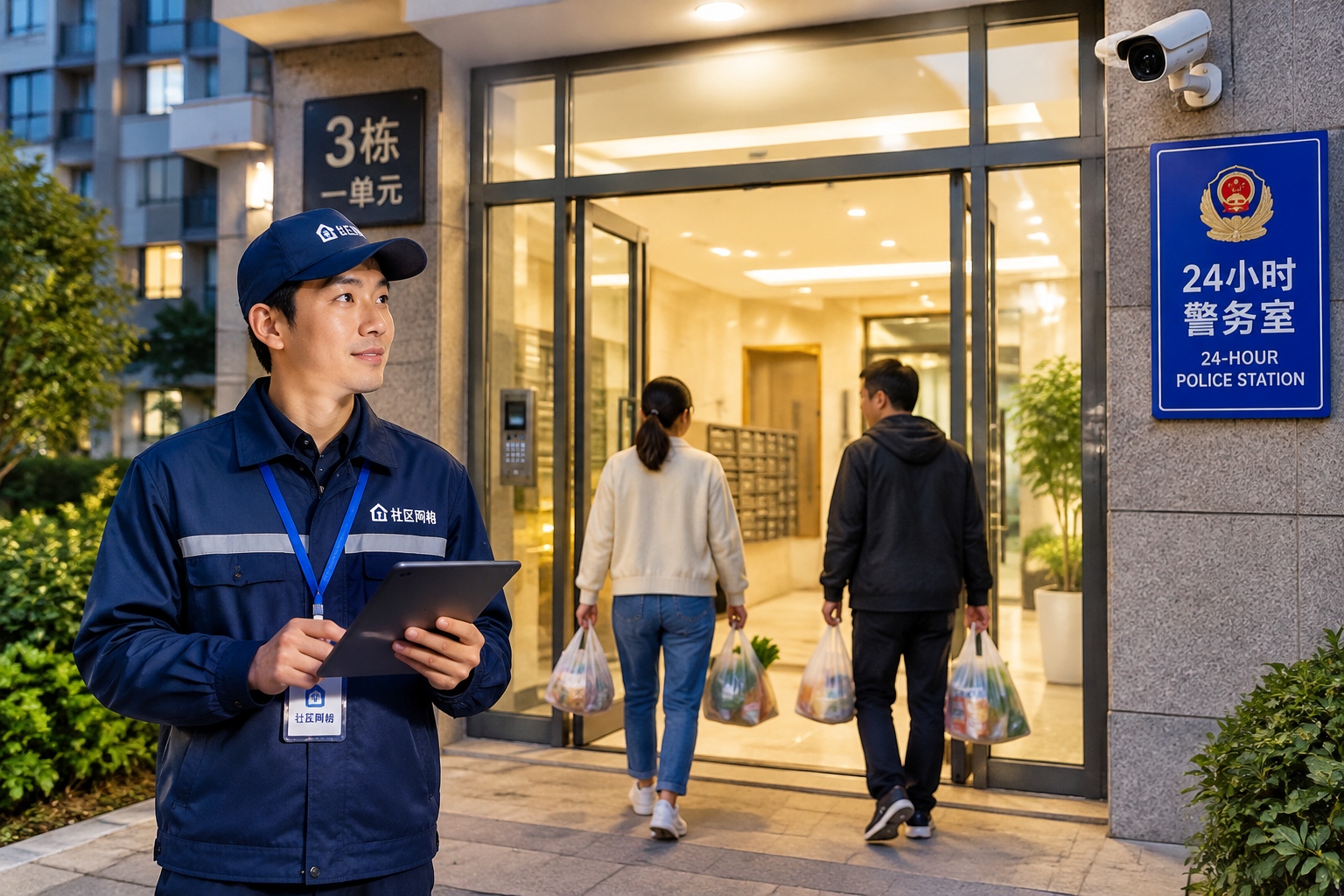
In commercial and residential hubs, 24-hour police stations appear within a 10-minute walk of most apartment blocks. Officers handle everything from lost wallets to noise complaints, often speaking multiple dialects to serve migrant workers. Community grid workers, typically local residents themselves, manage micro-zones of 300 to 500 households. They check in during heavy rain, coordinate elderly care visits, and relay neighborhood feedback to municipal departments. Official statistics place China’s violent crime rate among the lowest globally, but the real metric is behavioral: children walk alone to subway stations at 10 PM, couples jog past food stalls without hesitation, and street vendors stay open until 2 AM without police intervention.
Safety Embedded in Your Phone
You don’t notice safety until it’s absent. In modern Chinese cities, protection is quietly woven into the apps people already use. Navigation platforms analyze route lighting, traffic camera coverage, and pedestrian foot traffic, then subtly suggest safer alternatives when you choose a shortcut through a dark alley. Payment apps like WeChat and Alipay include emergency buttons that instantly share live GPS coordinates with trusted contacts or local authorities. Digital wallets have also reduced cash-carrying, which historically increased the risk of opportunistic theft.
This isn’t about high-tech control. It’s about frictionless utility. A delivery rider uses his phone to report a broken streetlight. A student taps an SOS icon when her ride arrives late. A shop owner logs a maintenance request through a municipal mini-program. The technology doesn’t announce itself. It simply removes uncertainty.

Late-night eateries and community spaces reflect a slower, more grounded urban rhythm.
The Slow-Paced Night Economy
After the night shift ends, the city doesn’t shut down. It shifts gears. At 11:30 PM, a family shares skewers at a neighborhood stall, laughing over spilled rice wine. A university student sits in a 24-hour bookstore near campus, highlighting passages for a morning seminar. Street basketball courts stay lit for weekend pick-up games, the sound of bouncing balls echoing past quiet apartment windows.

These spaces aren’t designed for maximum revenue. They’re built for accessibility. Many late-night diners operate on thin margins but stay open because locals depend on them. Municipalities fund night sports facilities to reduce idle time among youth and encourage healthy routines. The cultural mood isn’t frantic. It’s grounded. People work hard, but they also carve out room for rest, community, and small daily rituals.
No Filters Needed
The most striking feature of China’s nights isn’t the scale of development or the speed of technological adoption. It’s the baseline of normalcy. Safety isn’t celebrated as a headline; it’s treated as a given. That certainty lets a nurse walk home after a double shift, a student take the last subway train, and a sanitation worker sweep rain-slicked streets without fear.
For overseas readers used to urban safety being a constant debate in news cycles, this quiet predictability might seem ordinary. But ordinariness is precisely what makes daily life livable. You don’t need a filter to show what happens after dark. You just need to step outside, watch the streetlights stay on, and notice that thousands of people are making the same journey home.
Start the discussion at forum.chinacomes.com