

When the Street Wakes Up
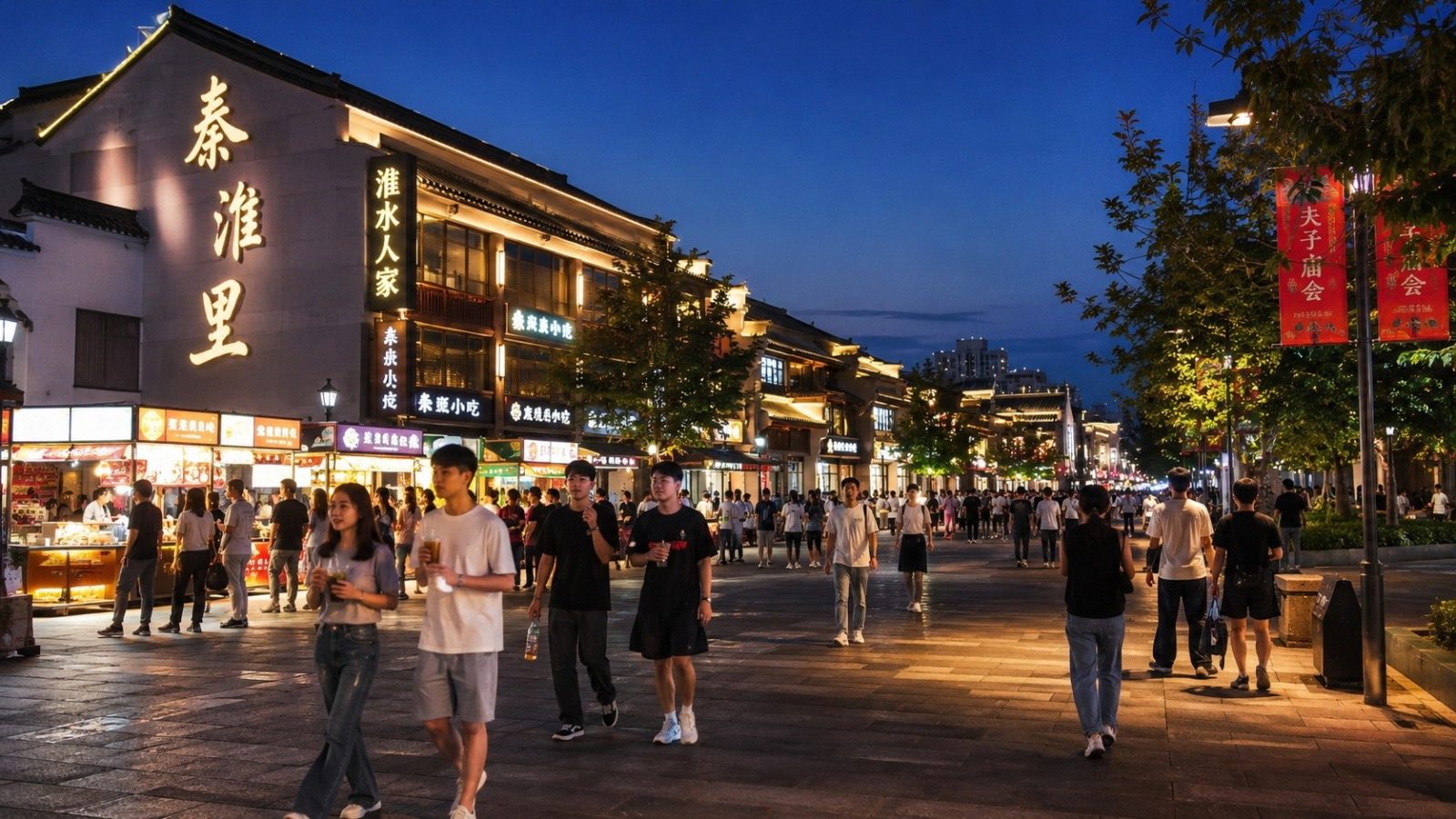
If you step out of a subway station in Hangzhou or Chengdu around 8 p.m., you might expect to see empty sidewalks or people rushing home with their faces lit by phone screens. Instead, you will find aisles packed with low conversations, the hiss of charcoal grills, and the occasional strum of an acoustic guitar. Young professionals in casual shirts, students in oversized hoodies, and couples walking side by side fill the evening air. They are not scrolling. They are eating, talking, and simply moving through the night.
For years, Western media often framed Chinese urban life around two extremes: hyper-digital convenience or relentless work pressure. The reality on the ground is more textured. Mobile payments and ride-hailing apps have actually lowered the friction of going out. You no longer need cash, a car, or a fixed itinerary to explore your own city after dark. This convenience, paired with a growing desire for offline socialization, has turned evening streets into a shared living room.
From Temporary Stalls to Curated Blocks
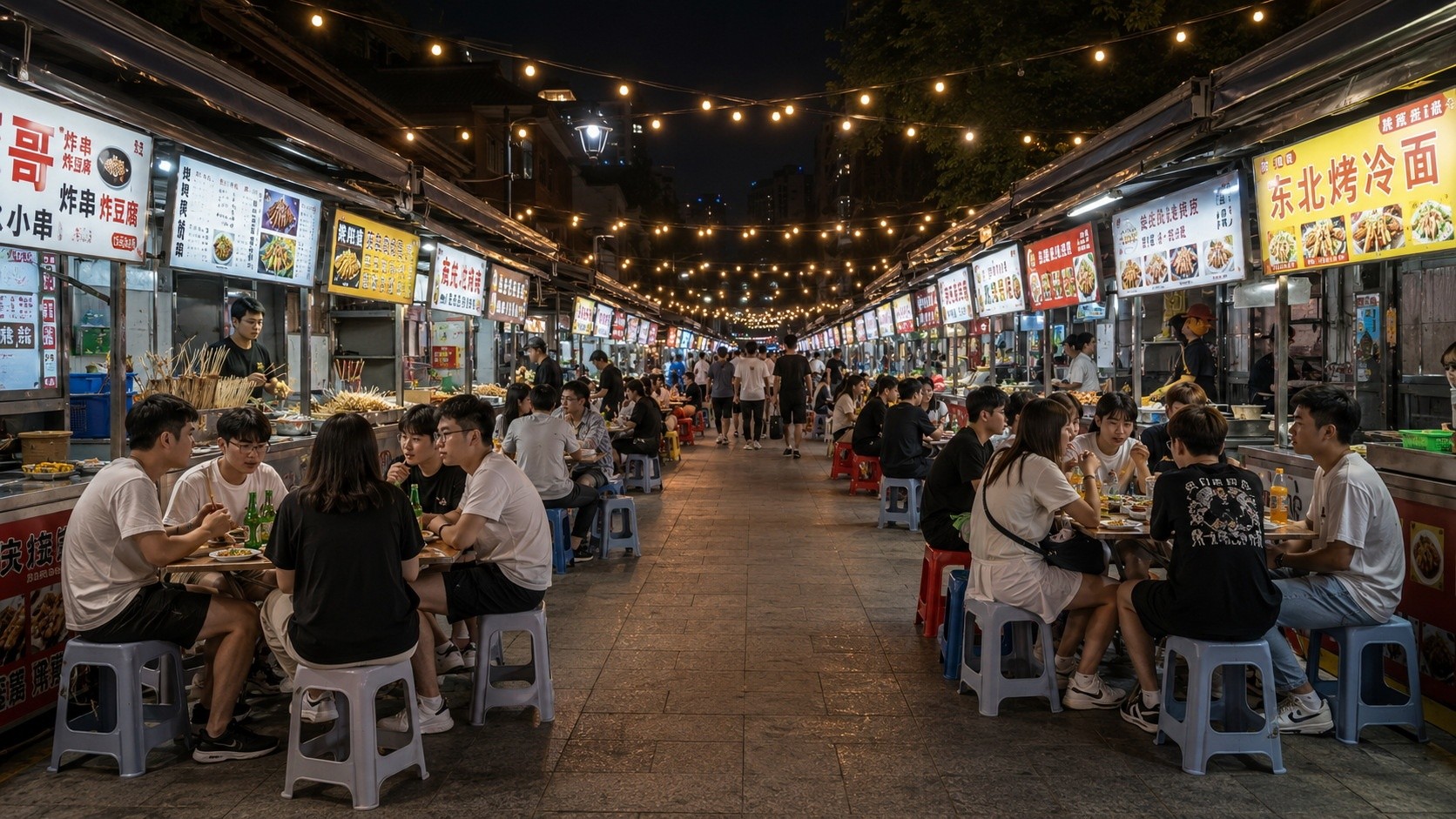
The night economy is no longer just about cheap skewers and plastic stools. In cities across the country, informal markets have evolved into structured blocks of micro-breweries, indie craft workshops, open-air performance stages, and specialty food halls. The experience feels familiar to anyone who has walked through Brooklyn or Shoreditch, but the density and accessibility are different. A meal, a drink, and a live set can all be found within a three-block radius, often without the premium pricing of Western commercial districts.
What makes this upgrade possible is a shift in how local governments treat street-level commerce. Rather than treating vendors as nuisances to be cleared, many cities now designate specific night economy zones. Within these boundaries, operators apply for simple digital permits, follow standardized hygiene and fire-safety guidelines, and pay modest management fees that fund street cleaning and security. The result is a hybrid space that balances spontaneity with order. You get the unpredictability of street food, but with reliable electricity, covered seating, and clear waste disposal.
The Hidden Operating System of the Sidewalk
What allows this to happen safely? The answer lies in what urban planners call flexible governance. Unlike the rigid zoning that often pushes street vendors to the margins in other countries, Chinese cities have experimented with proactive management. A small community police station sits at the edge of most major night markets, not to restrict movement, but to provide lighting, coordinate traffic flow, and offer rapid response if needed. Overhead, smart surveillance cameras monitor crowd density and safety, while municipal workers sweep streets by 2 a.m.
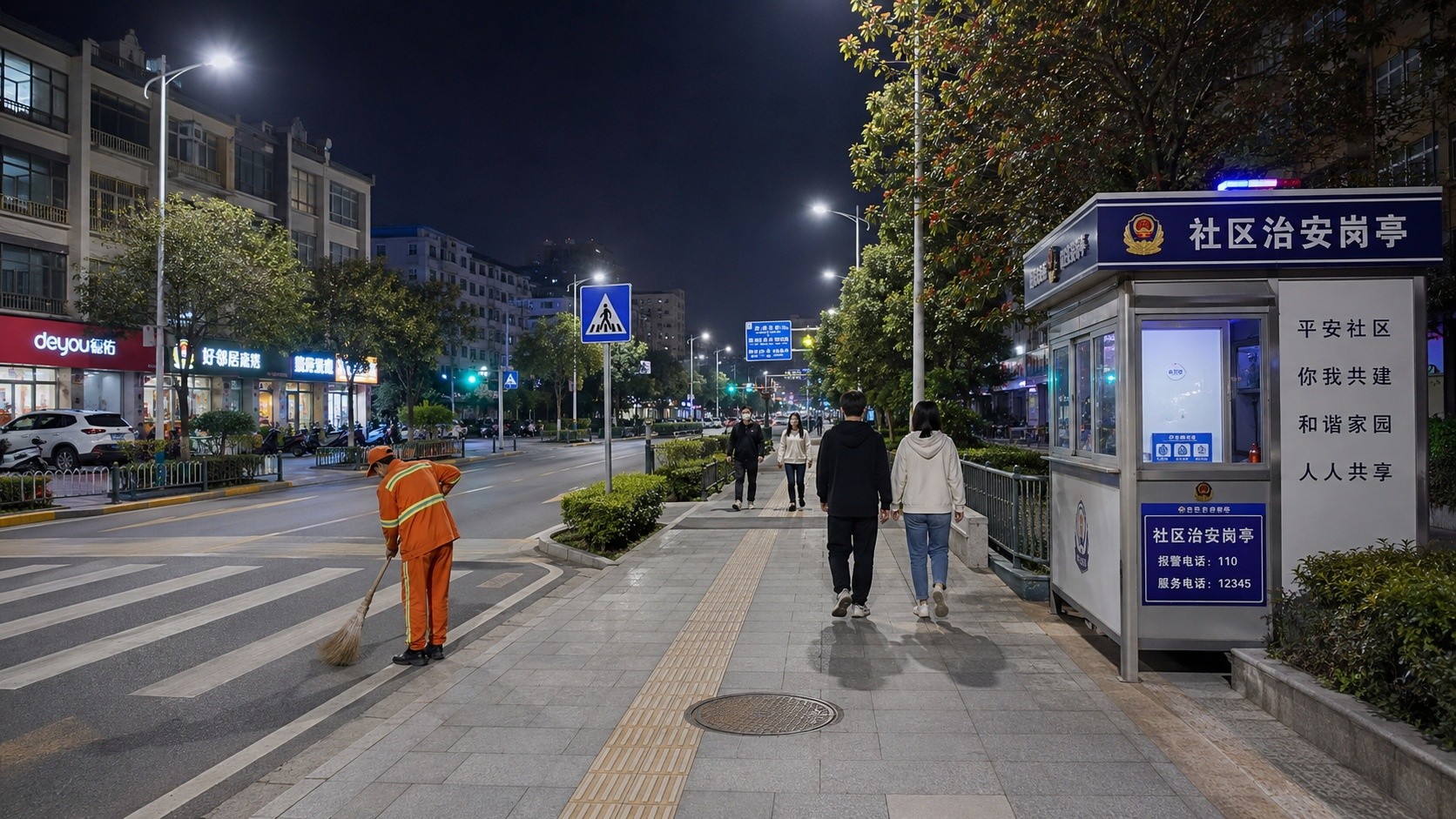
For an American or European reader, this might seem like a contradiction: strict regulation coexisting with vibrant spontaneity. But it works because the state treats public space as a shared resource rather than a purely commercial commodity. Bright LED lighting, well-marked crosswalks, and reliable late-night bus routes make walking home feel routine, not risky. The underlying logic is pragmatic: when people feel safe, they spend time outside, which supports small businesses, which in turn funds better public services. It is a feedback loop built on daily life, not top-down mandates.
Why People Choose to Step Out
Economic rationality plays a role, but it is only part of the story. Young Chinese consumers are increasingly prioritizing experiential spending over material goods. A three-hour walk through a night market, sharing plates of crayfish and drinking craft beer with friends, costs less than a single evening at a Western club, yet delivers higher social return. The decline of purely indoor entertainment after the pandemic also shifted habits. People want fresh air, unscripted encounters, and spaces where they can breathe.
Digital tools make this possible without sacrificing spontaneity. Real-time transit maps show which lines run past midnight. Food delivery apps double as discovery platforms for small vendors. Social media feeds showcase new pop-up stalls, but the actual experience happens offline. The phone becomes a compass rather than a cage.
Public Space as a Shared Resource
The revival of evening streets is also a reflection of changing work-life rhythms. After years of intense urban expansion, cities are recalibrating. Planners are reclaiming sidewalks from vehicles, widening pedestrian zones, and adding greenery to transit corridors. Night economy districts are often anchored by cultural facilities like libraries, theaters, or university campuses, ensuring that foot traffic remains diverse and balanced. Noise control agreements between vendors and nearby residents have become standard practice, with designated quiet hours and sound-dampening barriers where needed.
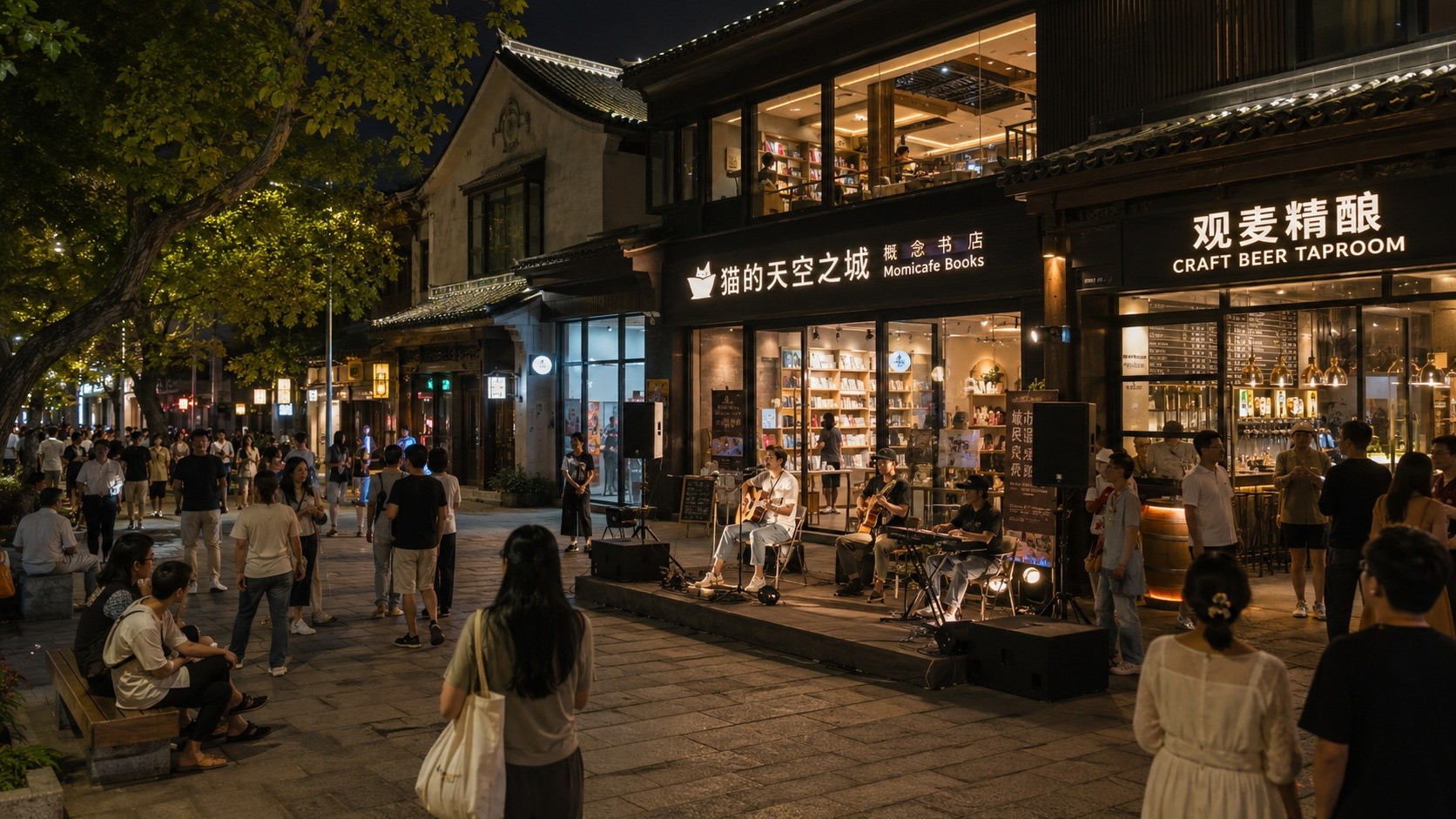
This approach contrasts with the Western tendency to separate commercial, residential, and recreational zones. Chinese cities integrate them at street level, creating mixed-use environments where you can grab dinner, catch a local band, and walk past apartment buildings without crossing into a different world. The boundary between public and private life blurs in a way that feels natural to residents, even if it surprises first-time visitors.
The Real Temperature of a City
The night economy is often reduced to GDP figures or consumption reports, but its real measure is human. It is where Gen Z trades WeChat for face-to-face conversation. It is where young workers decompress after long days. Walking through a Chinese city at night feels less like navigating a transactional space and more like stepping into a neighborhood that has learned to stay awake with its residents. Safety, convenience, and a little bit of unplanned friction are what make the streets breathe.
As cities worldwide look for ways to revitalize public life, China’s approach offers a quiet lesson: when you design for people first, the economy follows naturally. The glow of street lamps, the clatter of takeaway boxes, and the murmur of late-night conversations are not just signs of spending power. They are the everyday proof that a city is alive.