

The Ice-Cold Tuxedo
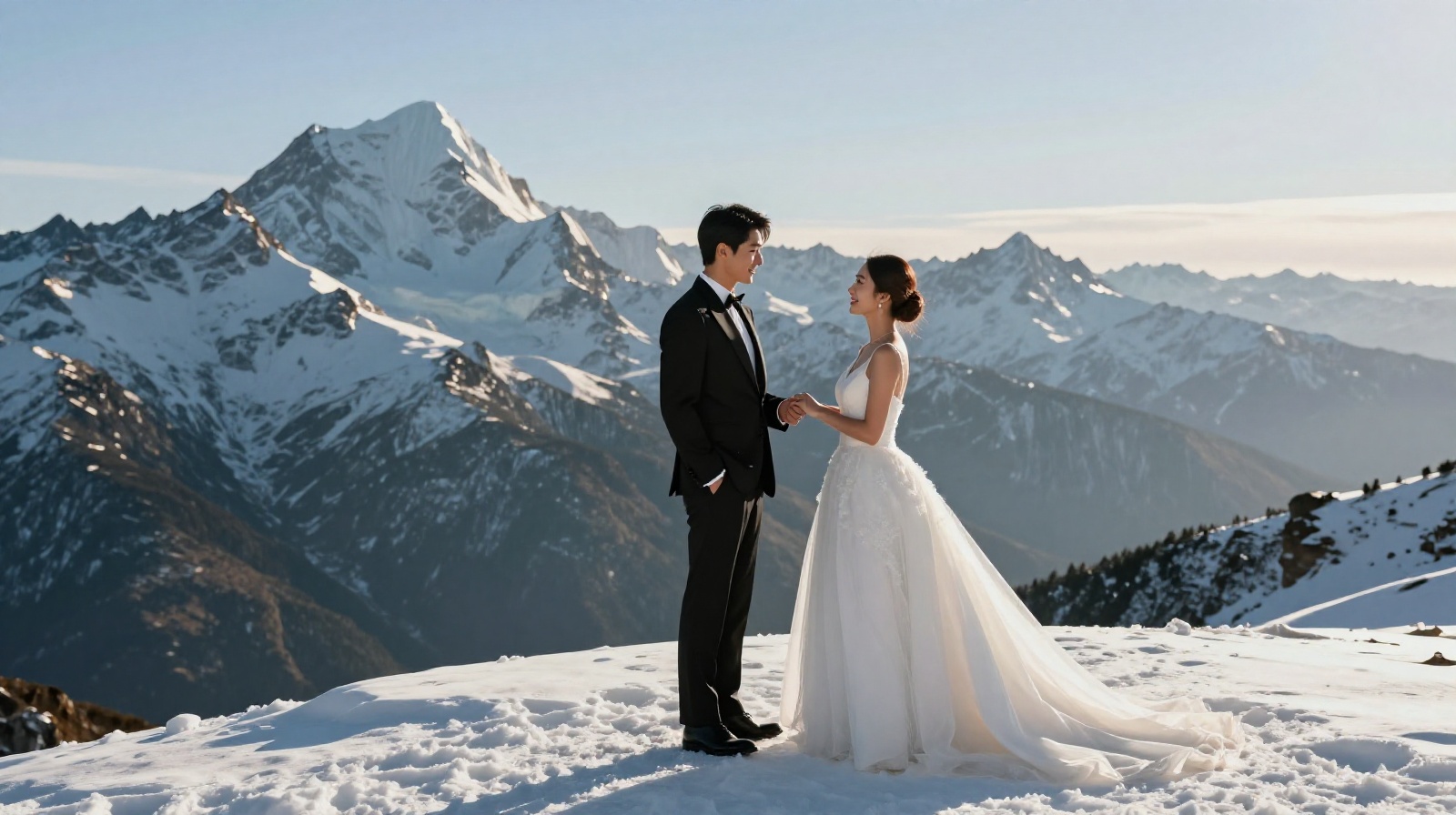
At 4,500 meters on the slopes of a glacier in Sichuan, the temperature hovers around -15°C. The wind bites through every layer. Yet, standing there is a groom in a slim-fit black tuxedo, no coat, holding his bride’s hand. She wears a flowing white gown that seems impossibly light against the harsh, icy backdrop. Their faces are red from the cold, lips chapped, but their eyes are fixed on the camera lens with intense focus.
This scene is becoming increasingly common in China’s wedding industry. It is not a rare anomaly found only in travel documentaries; it is a standard option offered by many professional studios. For couples born in the 1990s and 2000s, a traditional studio portrait in front of a painted backdrop is no longer enough. They want drama. They want scale. They want their wedding photos to look like scenes from a high-budget cinematic epic.
More Than Just Pretty Pictures
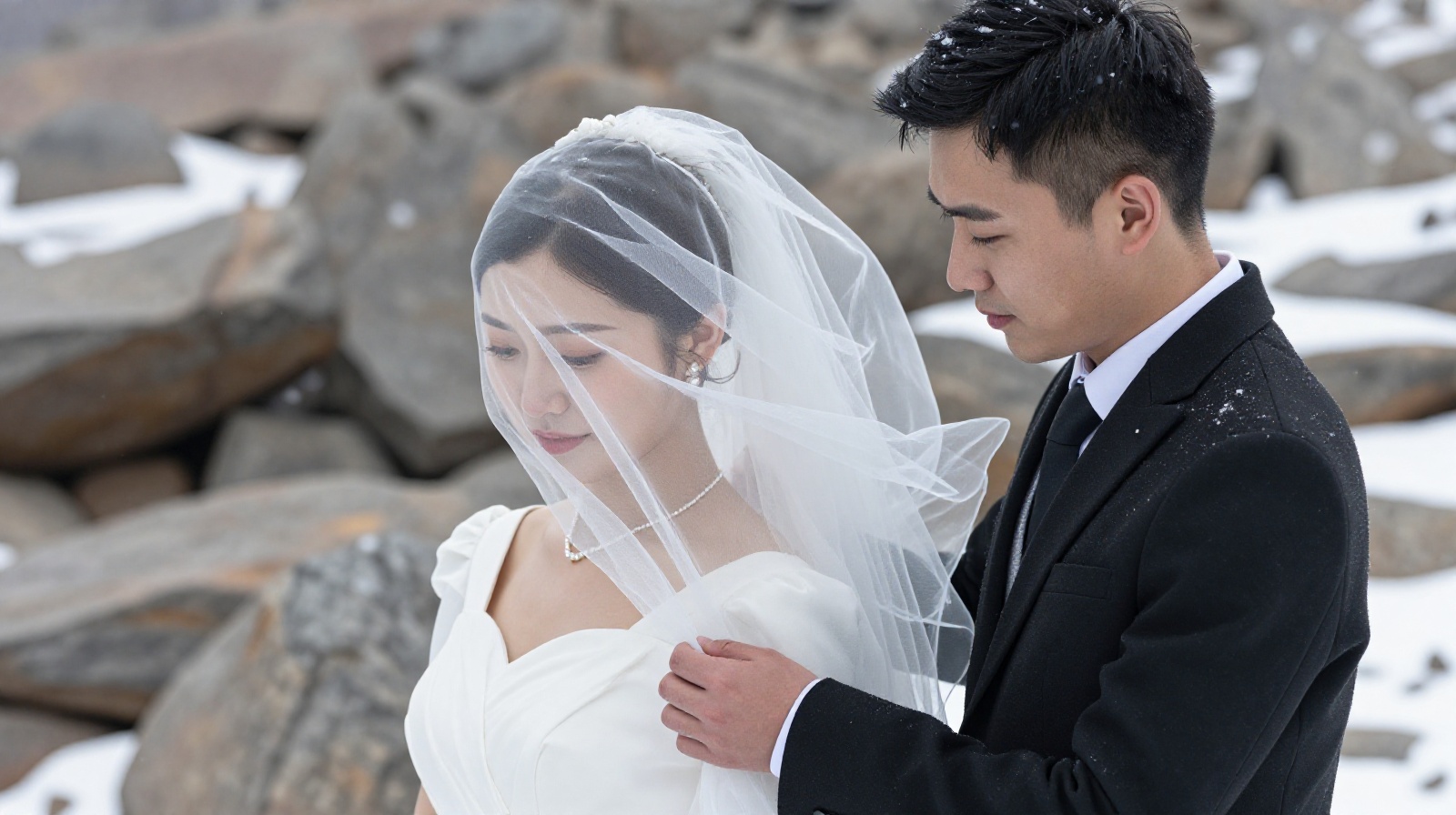
To an outsider, this might look like unnecessary suffering. Why endure frostbite risk for a few JPEGs? But in the context of contemporary Chinese culture, wedding photography has evolved into a form of “social currency.” In an era dominated by social media platforms like Xiaohongshu (Little Red Book) and WeChat Moments, visual presentation is a primary way young people signal their life milestones.
A stunning, extreme-environment wedding photo serves multiple purposes. First, it demonstrates a certain level of financial capability and planning sophistication. Second, it signals a shared sense of adventure and commitment. The effort required to reach the location—and stay there for hours in freezing weather—is seen as a proof of devotion. It tells friends and family: “We are willing to go through hardship together.”\p>
This is similar to how Western couples might share photos from a destination wedding in Italy or a hiking trip in the Alps. The difference lies in the intensity and the specific cultural weight placed on the wedding album as a permanent digital badge of honor.
The Industrial Engine Behind the Glamour
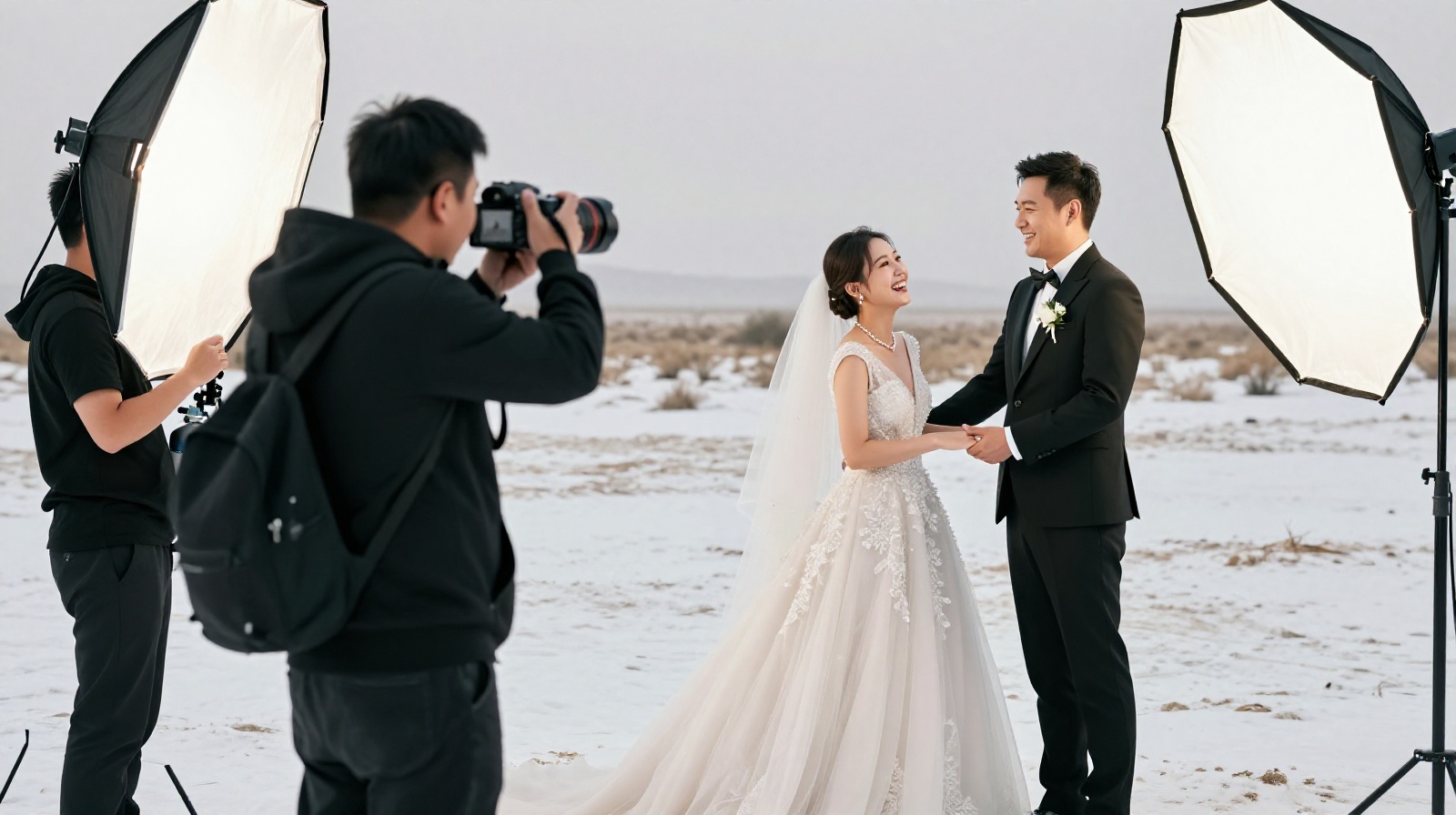
You might wonder, “How can they even do this? Isn’t it dangerous?” The answer lies in China’s highly developed, albeit fiercely competitive, wedding service industry. What looks like a chaotic, improvised shoot is often the result of meticulous logistical planning.
Modern Chinese wedding studios have upgraded from simple photo booths to full-service adventure agencies. They provide high-altitude oxygen tanks, thermal underwear worn under the visible costumes, heated vehicles for transit, and professional makeup artists who specialize in long-hour endurance shoots. The “extreme” look is carefully curated; the suffering is managed by professionals.
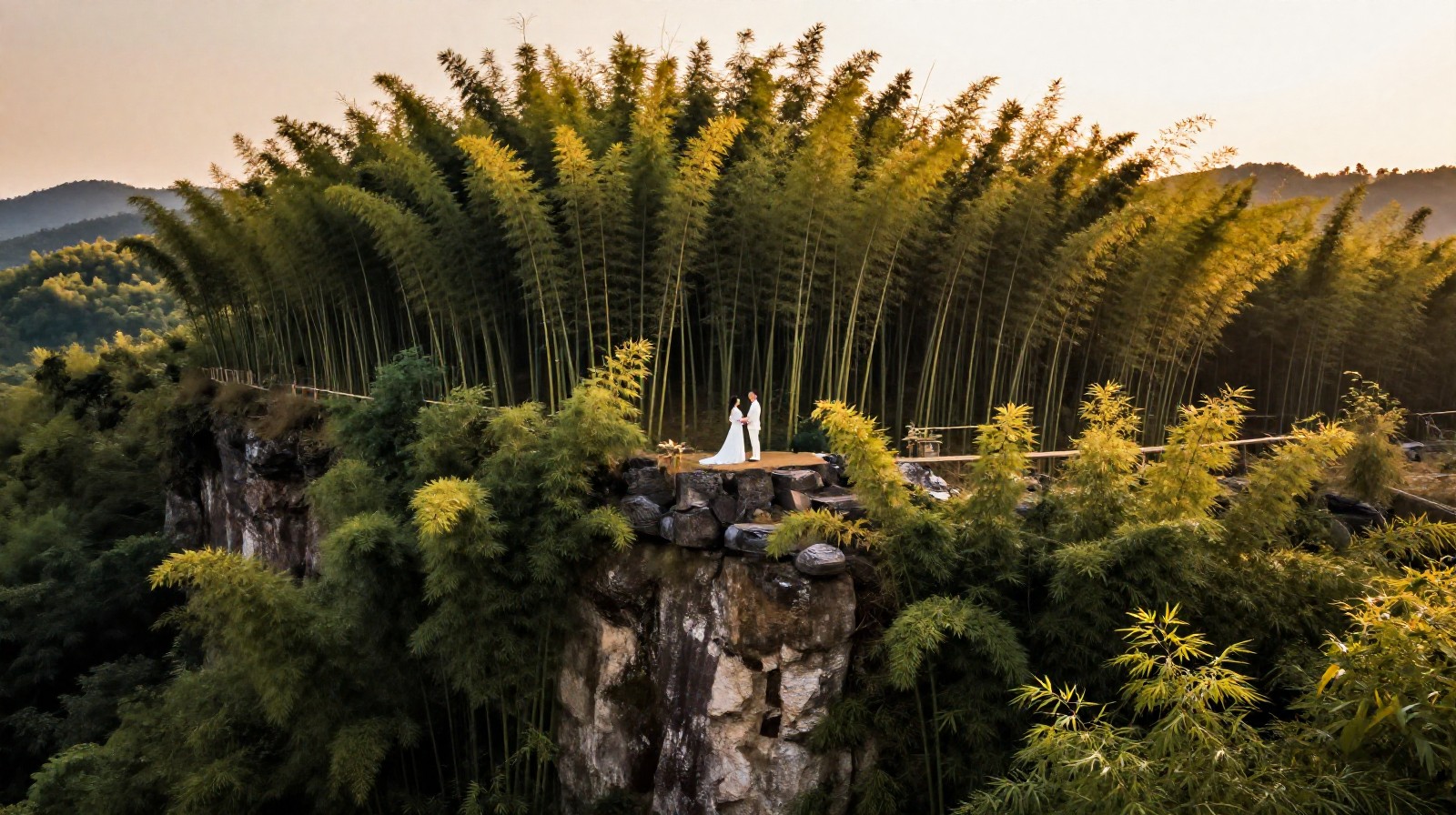
This competition, or “involution,” drives innovation. Studios compete not just on price, but on uniqueness. If one studio offers a desert shoot at sunset, another must offer a shoot on a glacier or in a bamboo forest during rain. This race for visual novelty has pushed the boundaries of what is considered a standard wedding photo package.
Buying Experiences, Not Just Objects
This trend reflects a broader shift in Chinese consumption habits. Young people are increasingly willing to pay a premium for experiences that create lasting memories. The wedding photo album is no longer just a collection of images; it is a narrative artifact.
For many couples, the process of shooting in extreme conditions becomes part of their love story. The shared struggle against the cold, the laughter in the face of difficulty, and the final beautiful result create a powerful emotional bond. The photo is merely the tangible proof of that shared journey.
In this sense, the extreme wedding photo is not about vanity. It is about meaning-making. It is a way for modern Chinese youth to assert their identity: adventurous, aesthetically conscious, and deeply committed to creating unique personal narratives in a rapidly changing world.