
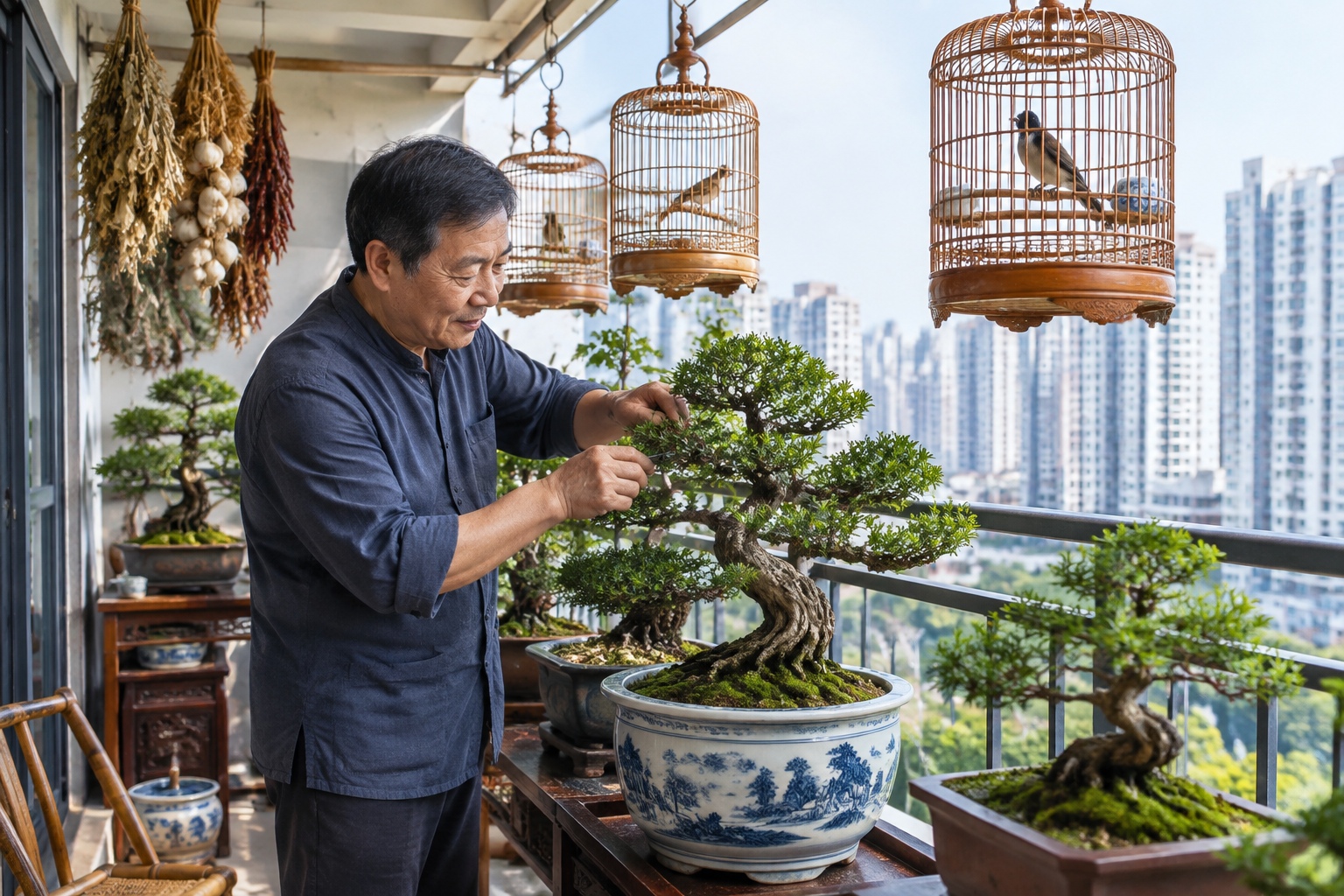

The Balcony That Isn’t for Drying Laundry
Walk through any residential compound in a Chinese city like Chengdu or Xi’an, and you will notice something unusual. Unlike the typical Western balcony, which often holds a barbecue grill, a few potted flowers, or a drying rack for shirts, these spaces are dense with life. They are vertical forests, miniature landscapes, and avian hotels rolled into one.
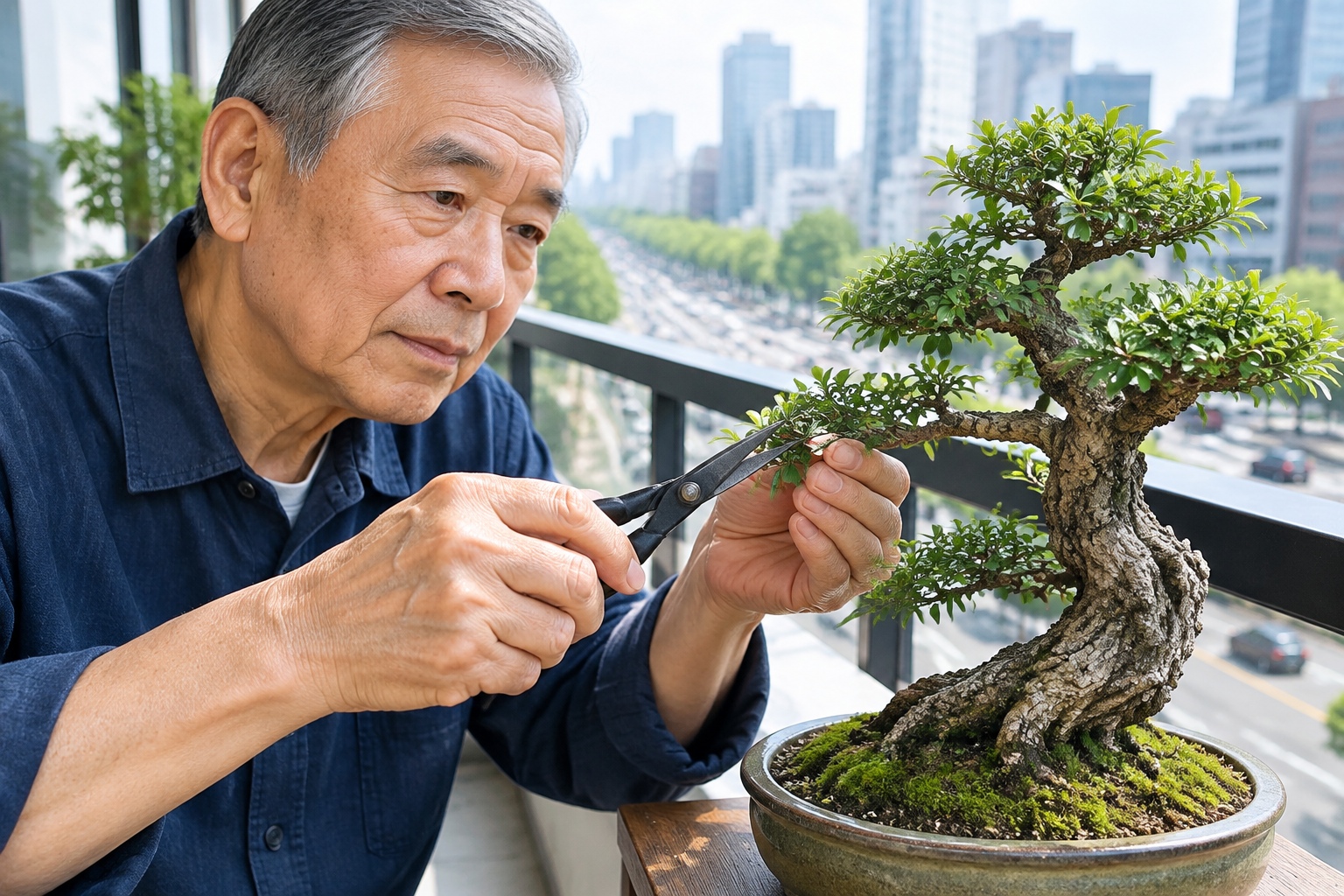
This is the domain of the da ye (city grandpas). To an outsider, it might look like clutter. To them, it is a carefully curated microcosm of nature. In a country where nearly 65% of people live in urban areas, and many reside in high-rise apartments with limited square footage, these balconies have become vital sanctuaries. They are not just storage spaces; they are extensions of the home into the natural world, defying the concrete constraints of modern urban living.
Bonsai: Compressing Mountains into Pots
At the heart of this hobby is pengjing (bonsai). While often associated with Japan in the West, its roots in China go back over a thousand years. For these grandpas, bonsai is not merely gardening; it is a philosophy of patience and control.
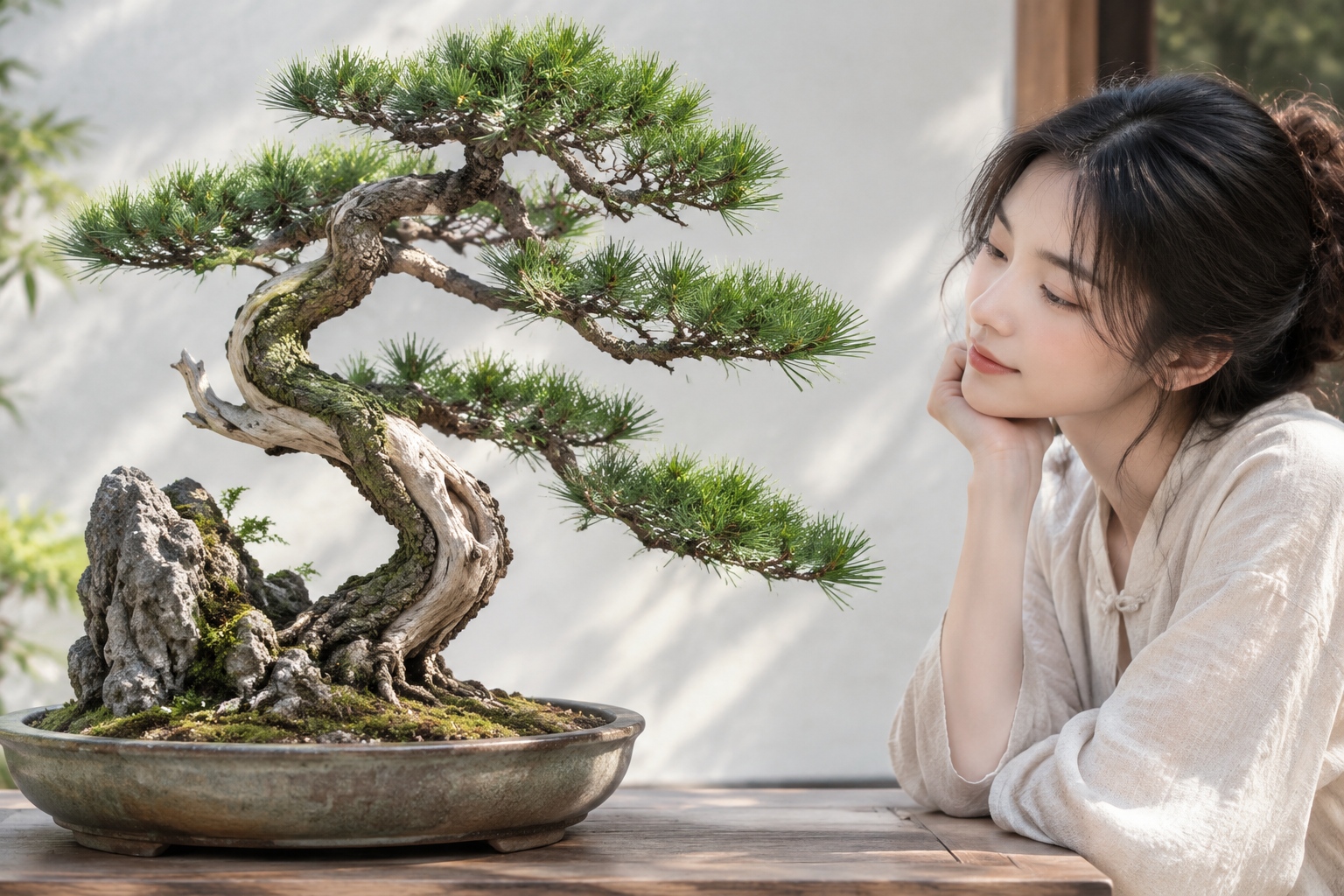
Look closely at a twisted pine or a dwarf maple on a balcony railing. These trees are decades old, shaped by wire and pruning shears to mimic ancient mountain landscapes. The aesthetic ideal comes from traditional Chinese garden design: it is not about growing a perfect tree, but about capturing the spirit of wild nature—wind-swept branches, moss-covered rocks, and asymmetry. Each pot is a “mountain and water” (shanshui) scene, compressed into a space no larger than a dining table.
This practice requires immense discipline. A single wrong cut can ruin a tree that has taken thirty years to grow. It reflects a cultural value where time is measured in seasons, not hours. In a fast-paced society driven by rapid development and digital speed, these grandpas slow down to a geological tempo. They are not just growing plants; they are cultivating tranquility.
The Birdcage: A Pocket of Wild Song
Next to the bonsai, you will likely see ornate birdcages, often made of bamboo or dark wood. This is another pillar of urban grandpa culture. The birds kept are typically species like the white’s warbler (bai ling) or the Chinese thrush (huang luan), prized not for their appearance but for their complex, melodious songs.
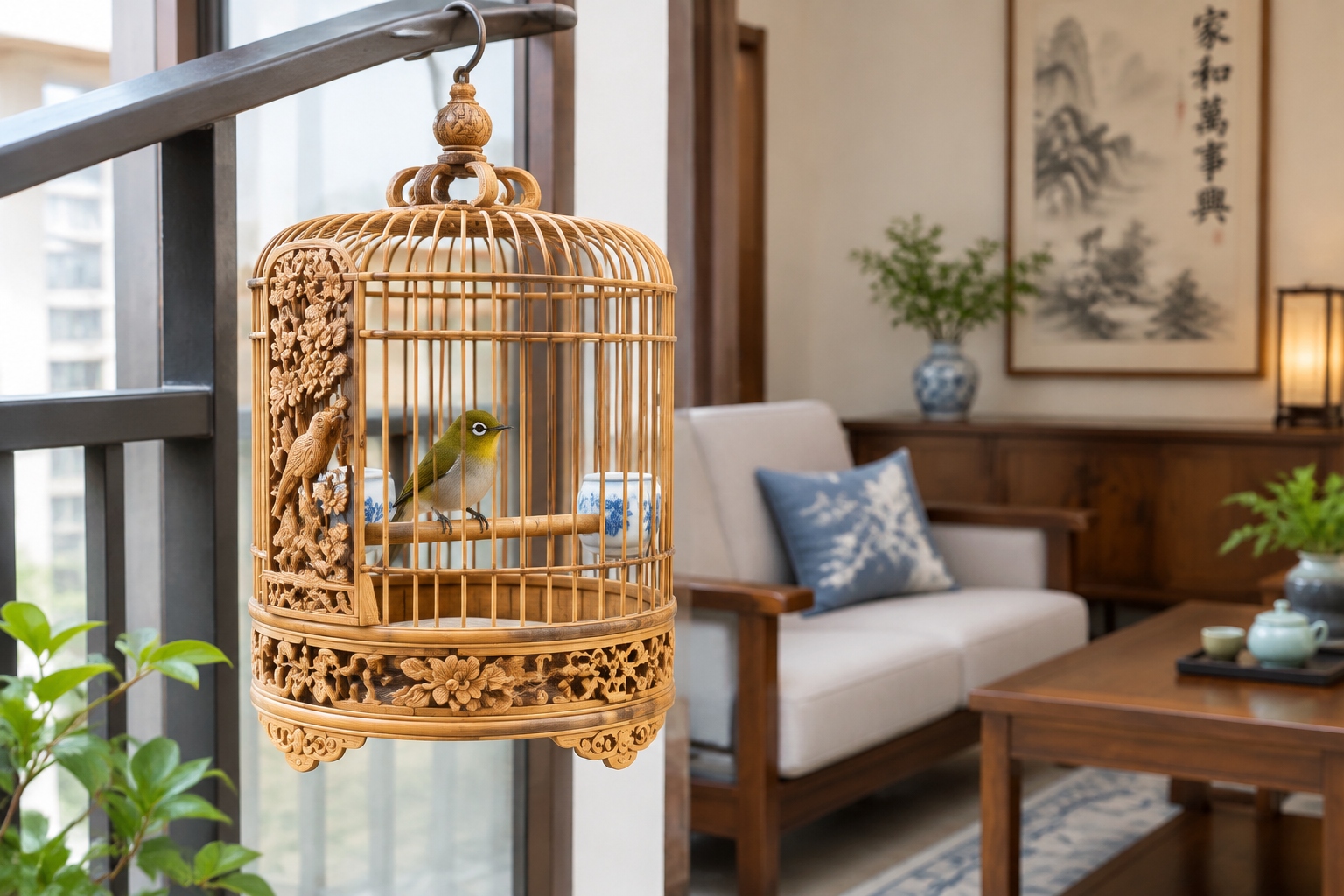
In the past, keeping birds was often seen as a leisurely pastime for the idle. Today, it carries a deeper psychological weight. For many retirees who spent decades in state-owned factories or government offices, the birdcage represents a connection to a fading rural past. The song of the bird is a reminder of the wild, of forests and streams that no longer exist in the city center.
However, modern bird culture has evolved. There is a strong ethic of restraint. Unlike the wild capture of the early 20th century, today’s grandpas prioritize legal, captive-bred birds or strict adherence to conservation laws. The joy is not in possessing the bird, but in listening to it. It is a form of “wildness” that is safe, controlled, and deeply respectful of nature’s boundaries.
Privacy, Community, and the “Unspoken Rules”
These balconies are private spaces, yet they are highly visible. This creates a unique social dynamic. The scent of pine, the glint of a glass feeder, and the dawn chorus of birds spill out into the corridor. This has led to the emergence of “street-level networking.”
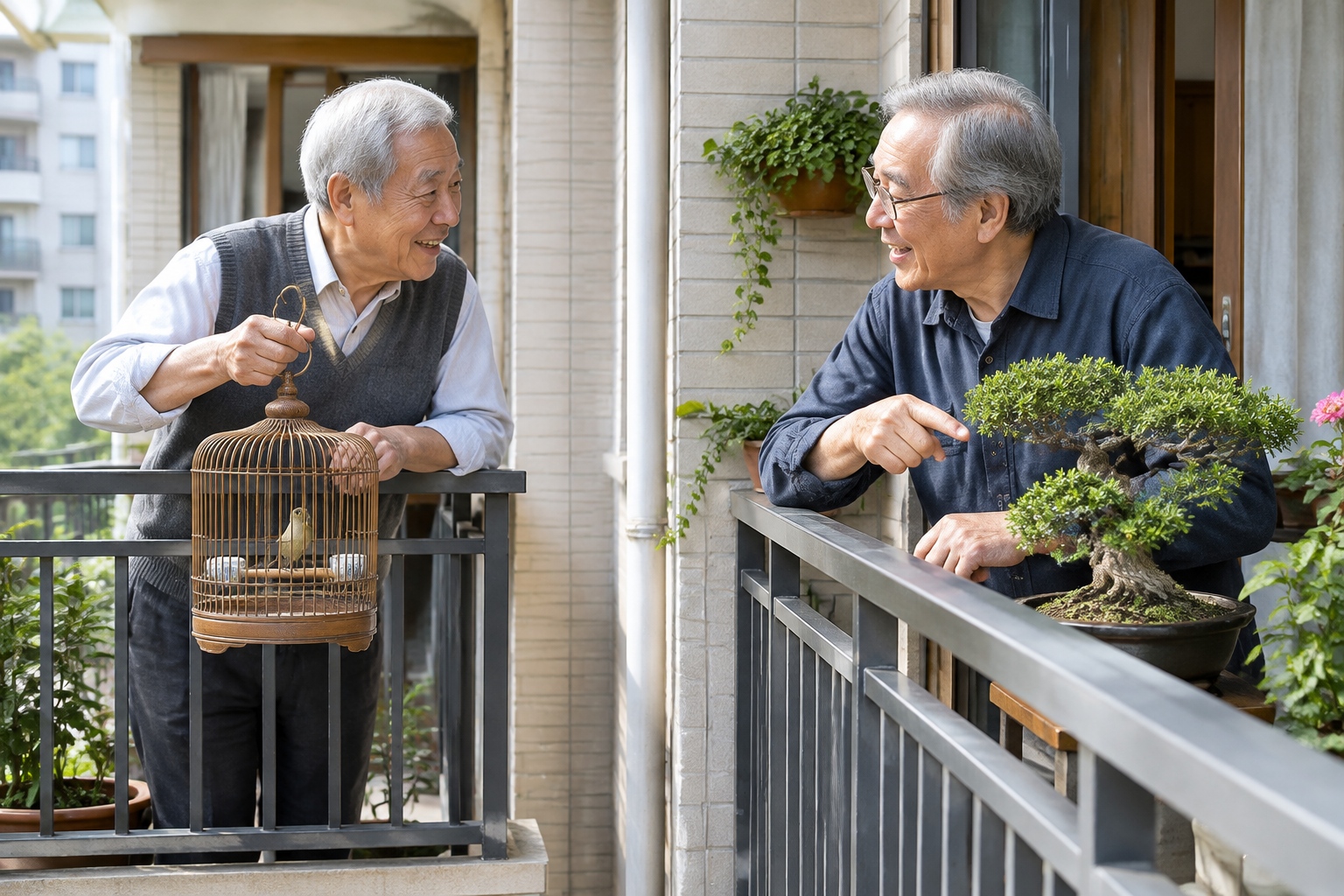
Grandpas will lean over railings to exchange tips on soil acidity or bird feed. They form informal clubs, judging each other’s creations with a mix of criticism and admiration. This is not just gossip; it is a mechanism of social cohesion. In the anonymity of high-rise living, where neighbors might not know each other’s names, these balconies serve as open doors. They turn isolated units into a community of shared interest.
There is also a subtle negotiation of space. While some might find the cages noisy or the trees obstructive, there is an unspoken rule of tolerance. The grandpas are often seen as pillars of stability in their communities—respected figures who bring a touch of ancient culture to the modern skyline. Their balconies are tolerated, even appreciated, as reminders of a slower, more deliberate way of life.
A Last Stand for Traditional Aesthetics
As China’s cities continue to verticalize, with skyscrapers piercing the clouds and green spaces reserved for parks rather than private homes, these balconies are becoming rare artifacts. Younger generations, busy with work and digital lives, rarely take up bonsai or bird-keeping. It is seen as too time-consuming, too traditional.
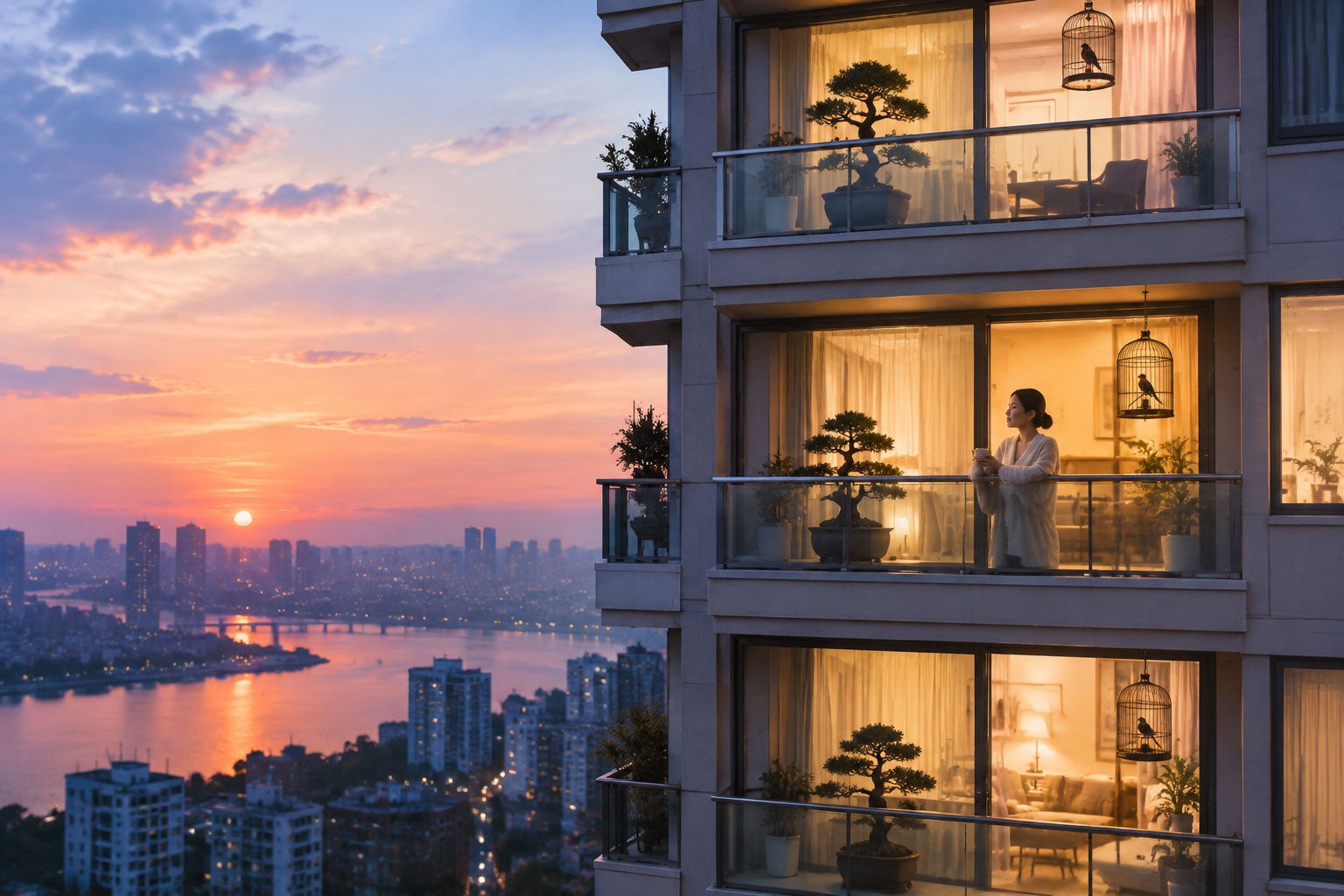
Yet, for the grandpas, this is non-negotiable. It is a form of resistance against the homogenization of urban life. In their hands, a concrete apartment becomes a landscape painting. They are not just hobbyists; they are custodians of a cultural memory that refuses to be erased by modernization.
So, the next time you look up at a Chinese high-rise, don’t just see windows. Look for the green twigs and the bamboo cages. Inside those small spaces, a different China is still breathing—one where nature is not something you visit on the weekend, but something you live with, every day, in the palm of your hand.
Start the discussion at forum.chinacomes.com