

The Sensory Overload of 3 AM Shenzhen
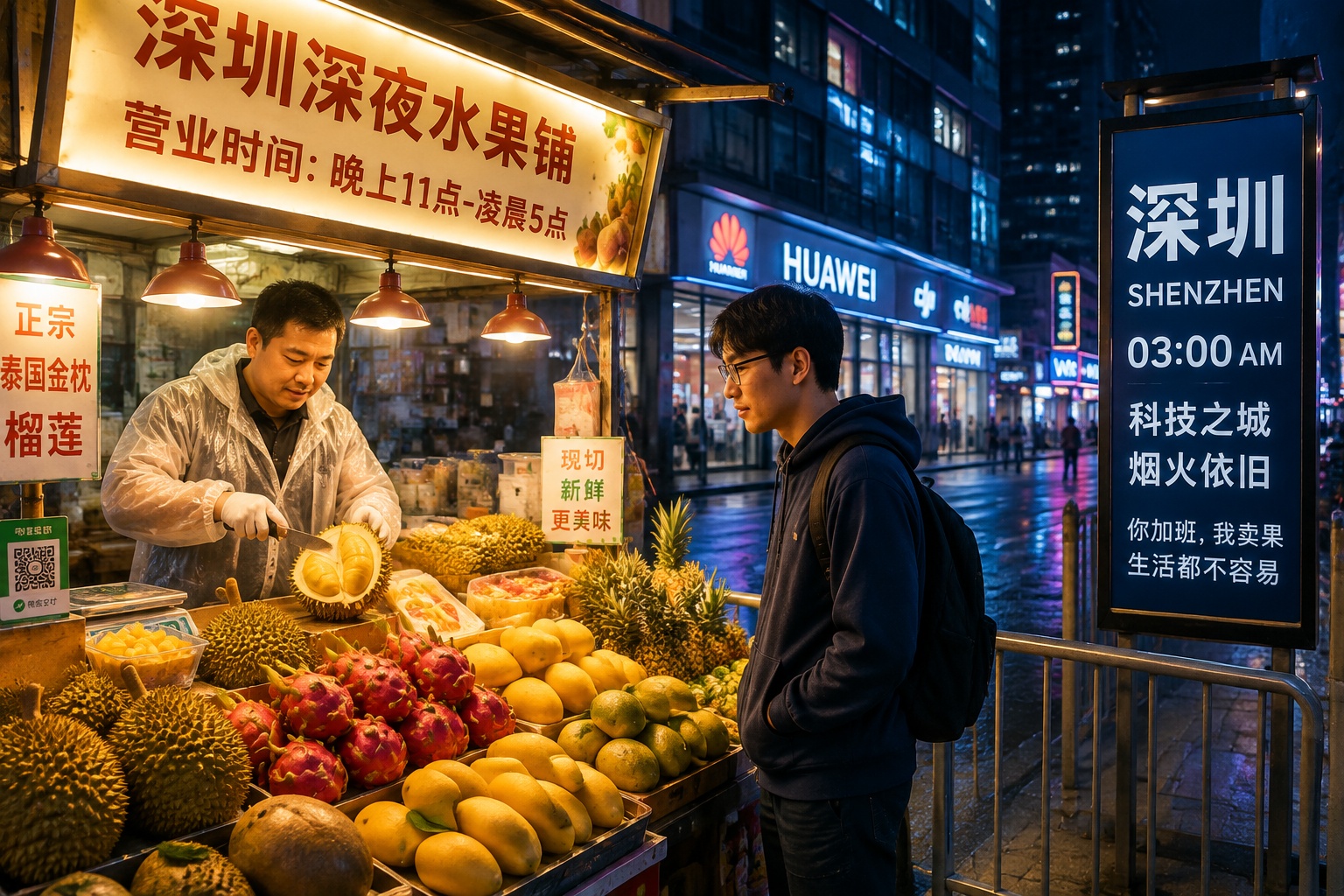
It is 3:15 AM in Futian District. The air hangs heavy with humidity, carrying the sharp, sweet scent of ripening mangoes mixed with the metallic tang of nearby server farms. In most global cities, this hour belongs to silence or sirens. In Shenzhen, it belongs to fruit.
Walk past the glass towers of Huaqiangbei, often labeled as the “hardware capital of the world,” and you enter a different reality. Neon signs from tech repair shops flicker above piles of dragon fruit, jackfruit, and durian. The contrast is jarring: here, the cold precision of electronics manufacturing collides with the messy, vibrant abundance of tropical agriculture.
The ‘Tropical’ Illusion vs. Geographic Reality
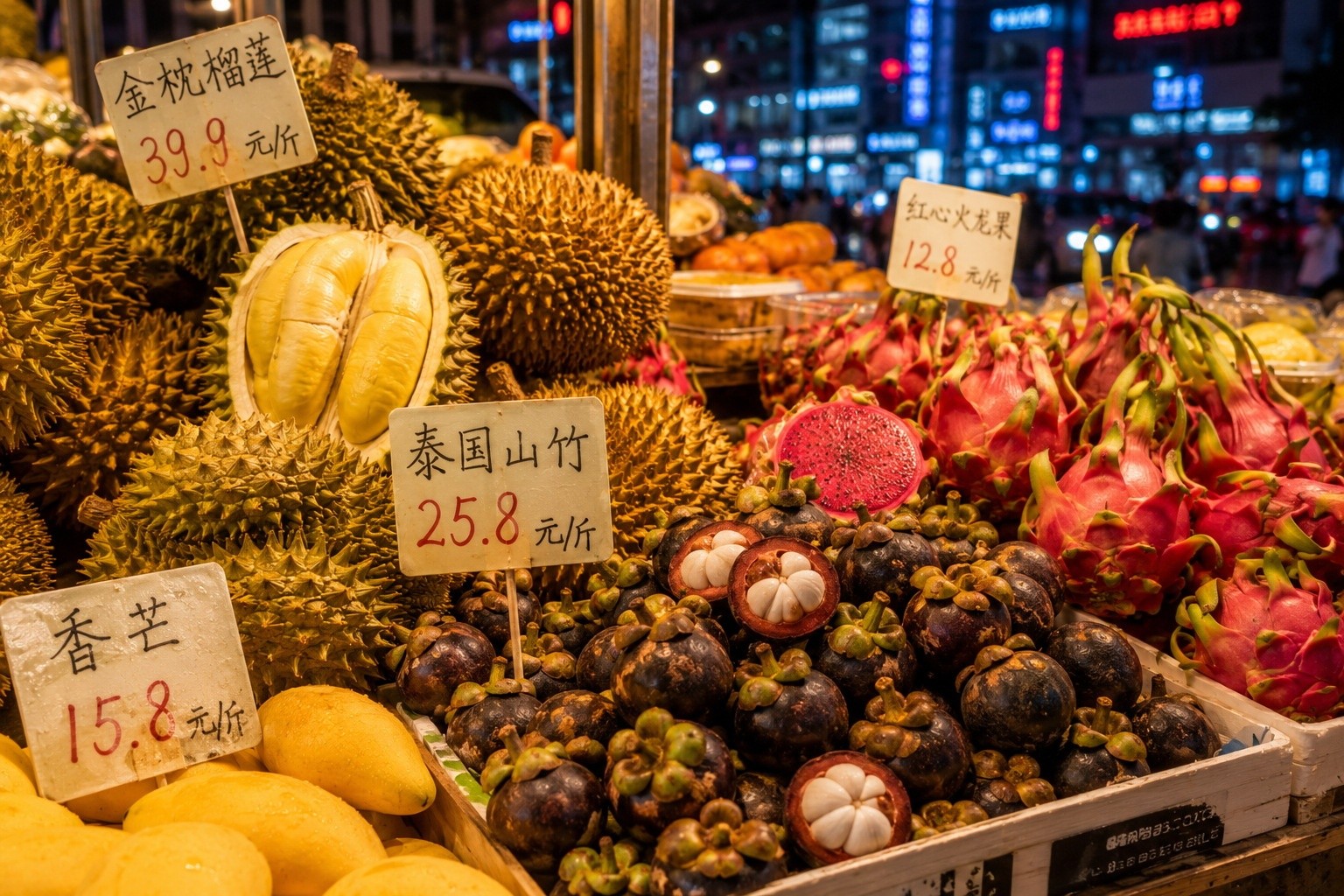
Why does this feel more “tropical” than New York? Geographically, Shenzhen is subtropical, but the sheer variety on display is a testament to China’s logistical integration. In New York, finding fresh durian or high-quality mangosteen at 3 AM is nearly impossible without expensive delivery fees from specialized stores.
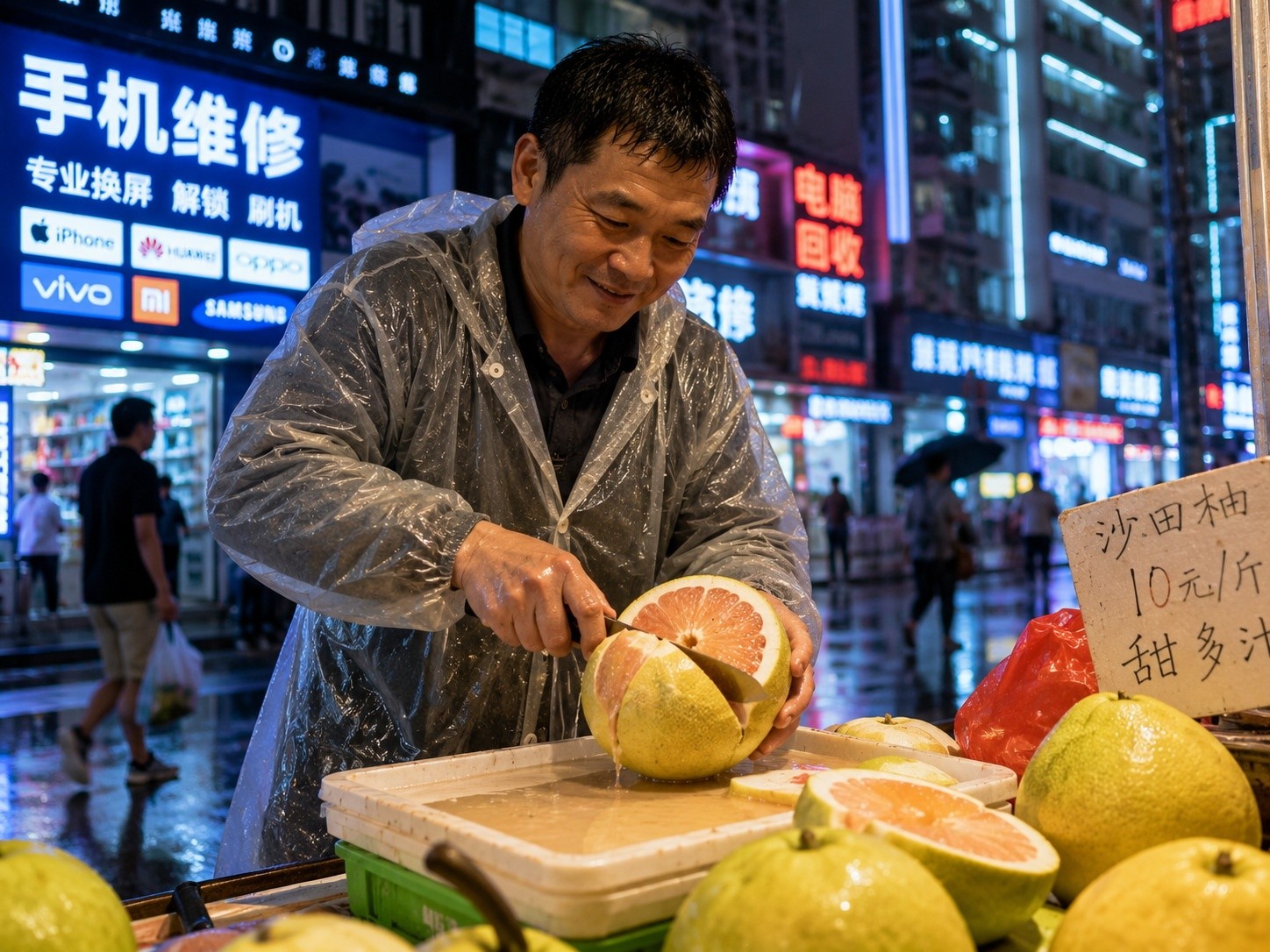
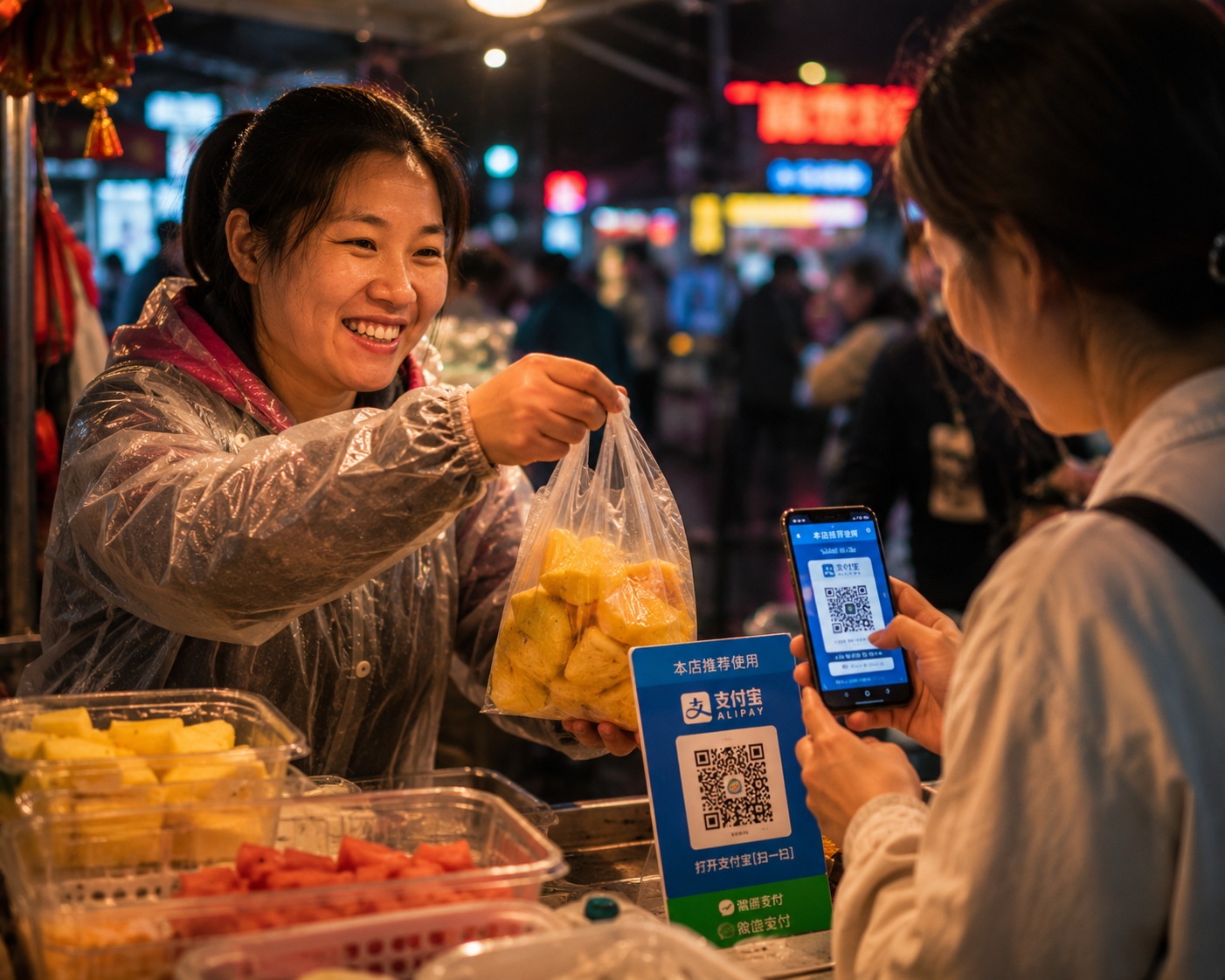
Here, a single stall offers a cross-section of Southeast Asia. A vendor in a raincoat slices open a glowing orange pomelo, the juice dripping onto a plastic tray. These fruits traveled thousands of kilometers through cold-chain logistics, arriving while still fresh. This isn’t just about weather; it’s about supply chains. The ease with which these goods appear on street corners reflects a highly optimized national infrastructure that brings global produce to local neighborhoods overnight.
The Night Shift Economy: Who is Buying at 3 AM?
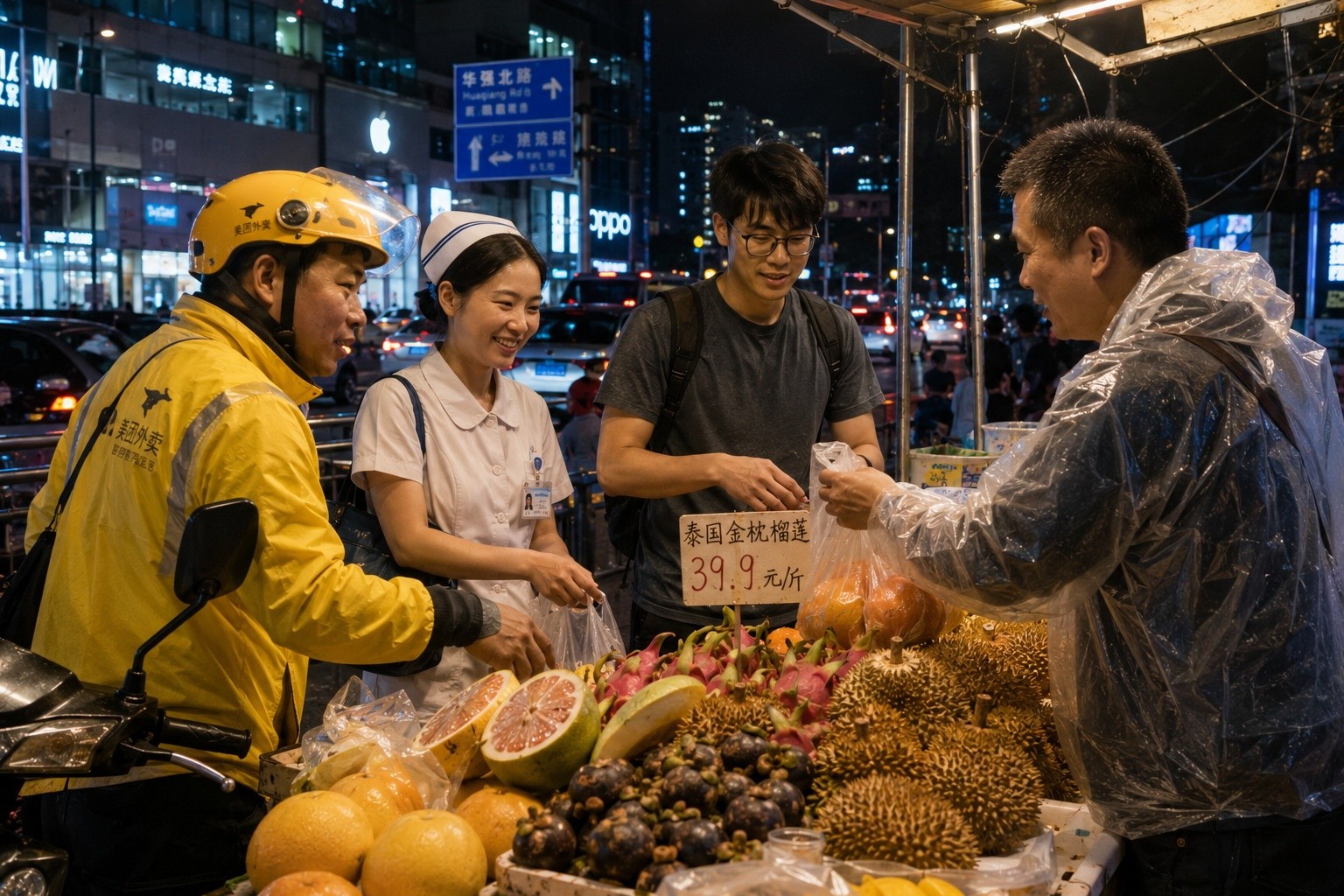
Who buys fruit at this hour? The crowd is a mix of Shenzhen’s nocturnal pulse. There are programmers in hoodies, eyes tired from debugging code, looking for a healthy snack to replace another energy drink. There are delivery riders on electric scooters, pausing to grab bananas for quick energy during their shifts.
Also present are nurses finishing night shifts at nearby hospitals and insomniacs seeking comfort food. This ecosystem is sustained by Shenzhen’s status as a “24-hour city.” Unlike many Western cities where nightlife is concentrated in specific districts, Shenzhen’s daily life spills into the night across entire districts. Public transport runs late, and safety allows people to move freely, creating a unique urban rhythm where work and rest overlap.
The Tech in the Traditional: Payment and Logistics
Observe the transaction. There is no cash changing hands. The vendor holds up a QR code stand—a ubiquitous sight in China. You scan it with your phone, and the payment is instant. This frictionless experience is normalized.
But the tech goes deeper than payments. Look up, and you might see the faint hum of delivery drones navigating the night sky, dropping packages to nearby residential towers. Some stalls use app-based pre-orders, where inventory data adjusts in real-time based on demand. Technology here doesn’t feel cold or distant; it serves the immediate needs of daily life, making the traditional act of buying fruit faster and more efficient.
Human Connection in a Digital City
Despite the high-tech backdrop, the interaction remains deeply human. The vendor, an older woman named Auntie Lin, remembers her regulars. She might toss in an extra piece of cut fruit for a frequent customer or ask about their day in rapid-fire Cantonese. In a city known for its speed and efficiency, these small moments of warmth ground the experience. It is a reminder that behind the data streams and logistics algorithms, there are people living, working, and eating.
More Than a City of Makers
Shenzhen is often reduced to stereotypes: robots, chips, and startup culture. But the 3 AM fruit stall reveals a softer, more complex truth. It is a city where global trade meets local daily life. The availability of exotic fruits at any hour signals not just economic power, but a lifestyle that values convenience, variety, and the continuous flow of urban life.
For outsiders, these stalls offer a tangible connection to China’s urban reality. They show that beneath the headlines about tech wars and manufacturing shifts, there is a vibrant, breathing city where life continues, hungry and hopeful, long after the servers go quiet.
Start the discussion at forum.chinacomes.com