
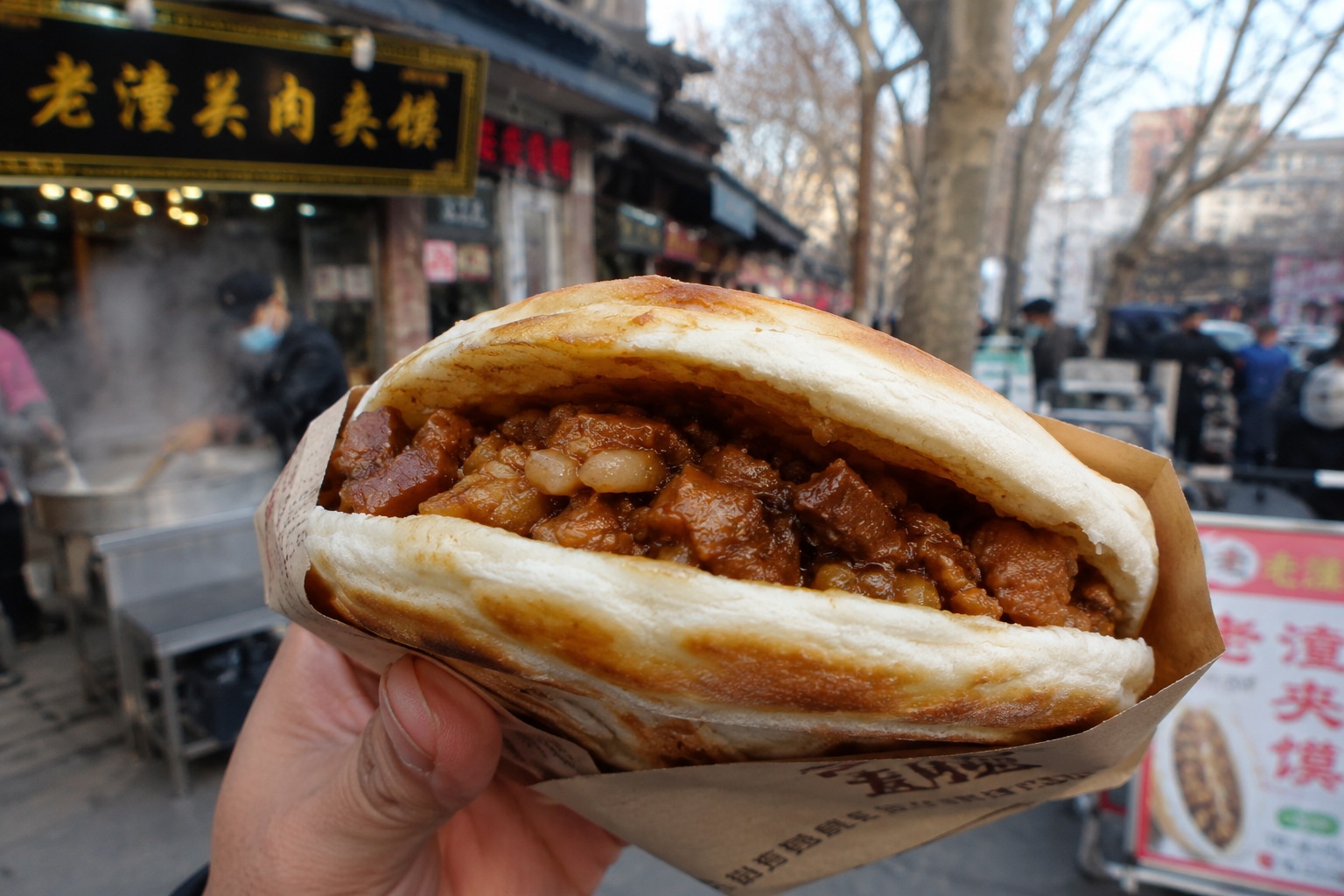

The Morning Rush in Xi’an
At 7:30 AM on a weekday, the air outside a small shop in Xi’an is thick with steam and the sharp scent of star anise. Inside, Master Li moves with practiced efficiency. He doesn’t use tongs; he uses his hands. With a heavy cleaver, he chops braised pork belly, mixing it with rich, dark gravy until the meat glistens. Then comes the bread: a round, flat loaf called bing, baked in a tandoor-style oven until its surface is blistered and golden.
He slices the bing open, stuffs it with the meat, and hands it to a customer in a construction vest. No paper wrapper. No plastic container. Just hot bread and savory meat in one hand. The customer takes a bite, and the sound is audible—a crisp crackle followed by the soft chew of the interior. This is Roujiamo, often translated as “Chinese burger,” but calling it that misses the point. It is not fast food in the industrial sense; it is a centuries-old tradition of feeding the working class.
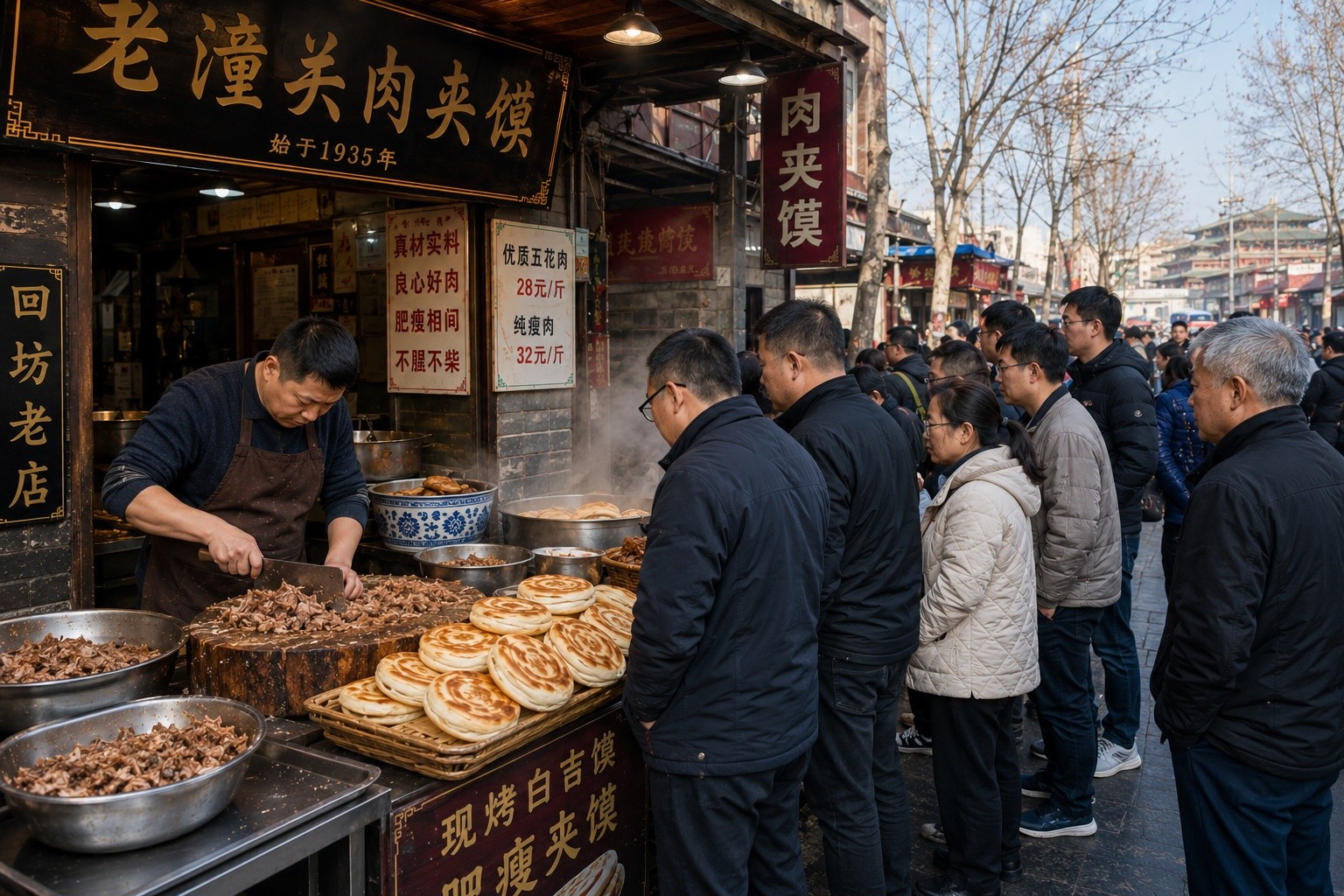
More Than Just Structure: A Historical Deep Dive
If you strip away the toppings, the structural comparison between Roujiamo and the American hamburger is undeniable. Both feature protein enclosed by starch. But while the hamburger has a lineage tied to 19th-century Germany and 20th-century America, Roujiamo’s roots dig much deeper.
Historical records suggest this dish originated during the Qin Dynasty (221–206 BC), nearly two millennia ago. Legend says it was known as “Rou Huomo” in ancient times, serving as a portable, high-energy meal for soldiers and laborers who needed sustenance that wouldn’t spoil quickly in summer heat. Unlike modern fast food, which is designed for speed and standardization, Roujiamo was designed for survival and satiety.
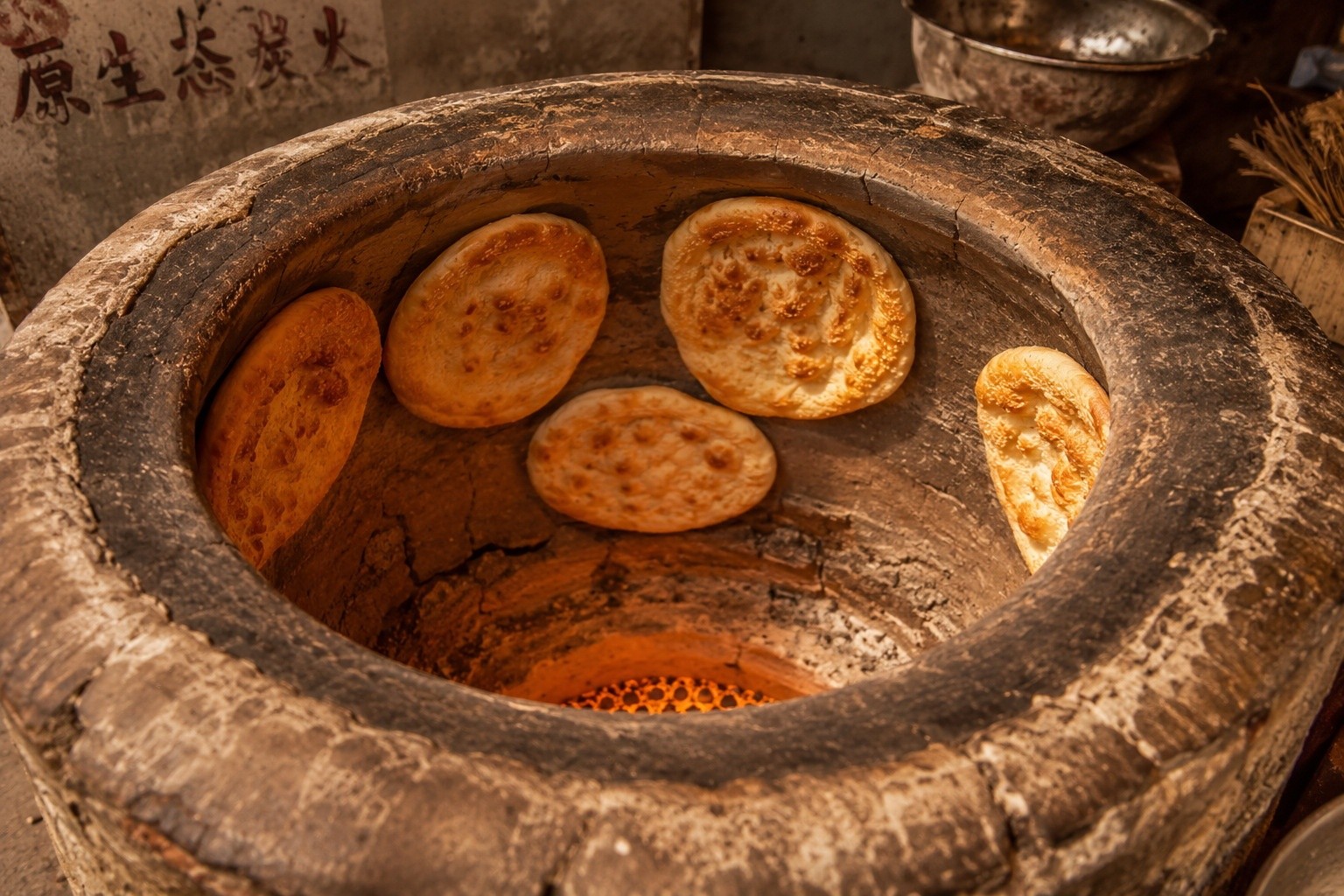
The Anatomy of Crunch and Softness
What makes Roujiamo distinct is the textural contrast. The bing is not a soft bun; it is a leavened flatbread with a crust that shatters like thin glass when bitten, giving way to a chewy, cloud-like interior. This texture is achieved through a specific baking process in vertical clay ovens, where the dough adheres to the inner walls and bakes in intense, dry heat.
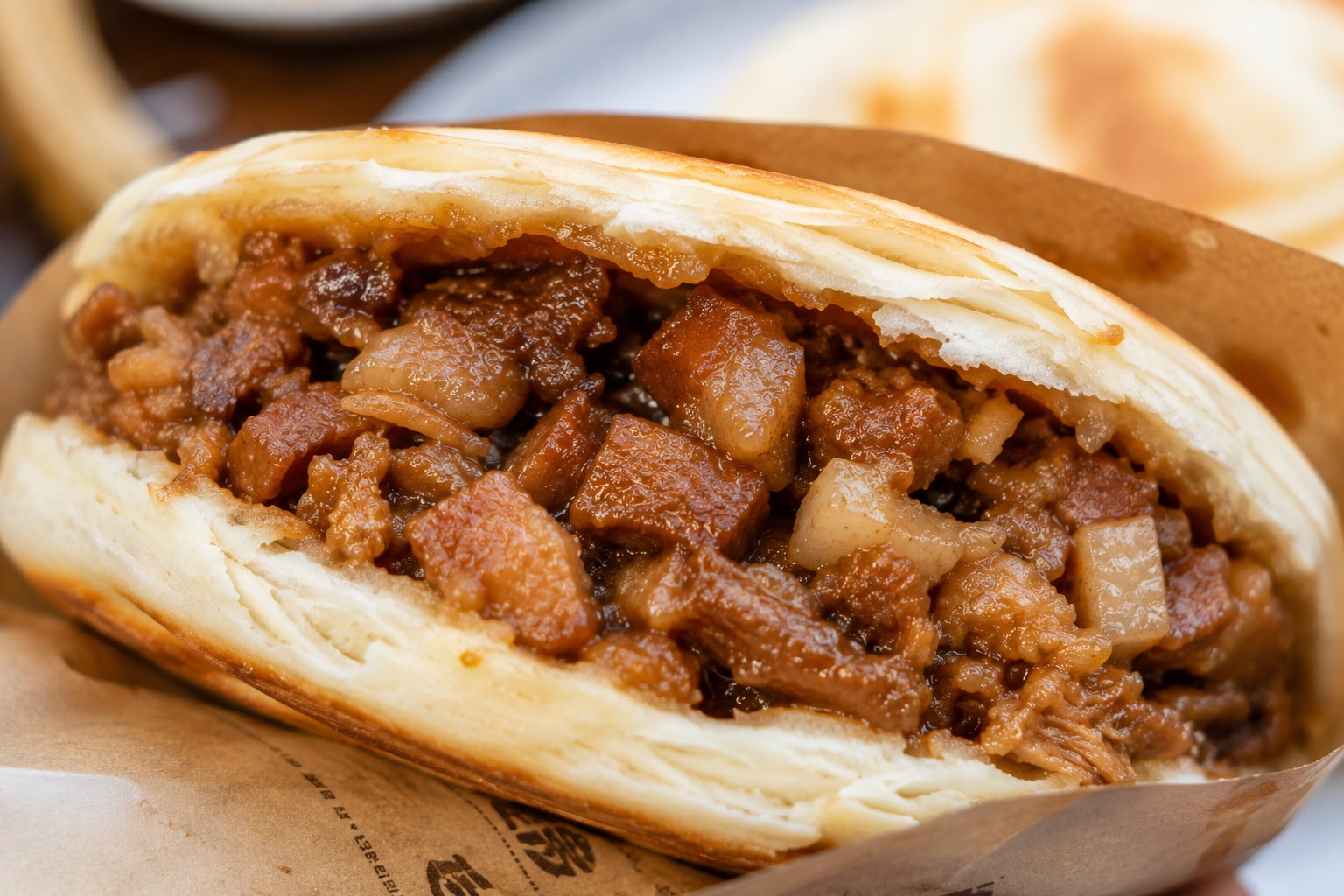
The meat filling is equally deliberate. In Shaanxi province, the gold standard is Zhi Rousimo (braised pork). The pork belly is slow-cooked for hours in a pot of spices—star anise, cinnamon, bay leaves, and Sichuan peppercorns—until it falls apart at the touch of a chopstick. The gravy is thickened and poured back into the meat before stuffing, ensuring every bite is moist.
Regional Variations: It’s Not Just One Thing
While Xi’an claims the crown for the pork version, Roujiamo varies across China. In the north, you might find it filled with spicy beef or lamb, reflecting the dietary habits of Muslim communities. In some parts of Shandong, the bread is made with millet instead of wheat, offering a grittier, nuttier flavor. Even the name changes slightly; in some dialects, it’s called Huomo, emphasizing the “homo” (stuffed) aspect rather than the “roujia” (meat夹) action.
These variations aren’t just culinary quirks; they reflect the agricultural and cultural mosaic of China. Wheat dominates the north, making wheat-based bing the norm. Rice and millet appear in other regions, adapting the “burger” concept to local grains. It is a flexible template for local ingredients.
Why It Still Matters Today
In an era where Chinese cities are filled with Starbucks and McDonald’s, Roujiamo remains a staple of daily life. It is not a nostalgic relic for tourists; it is the breakfast of choice for millions. You will see it in office districts, near subway stations, and in rural villages. The price point—usually between 10 to 20 RMB ($1.40–$2.80 USD)—makes it accessible to everyone from university students to factory workers.
What Roujiamo offers is not just calories, but continuity. In a country that has changed faster than almost any other in human history, the taste of braised pork in a crispy flatbread remains constant. It is a flavor that connects a modern tech worker in Xi’an to a laborer from 2,000 years ago. It is humble, hearty, and deeply Chinese.